
News
Lanka eyes December bailout, IMF says timing hard to predict

(Nikkei Asia) Sri Lanka’s government appears increasingly upbeat about its chances of receiving International Monetary Fund (IMF) board approval for a USD 2.9 billion bailout by December, but the multilateral lender has cautioned that the time frame remains uncertain, and much depends on discussions with the heavily indebted country’s creditors.
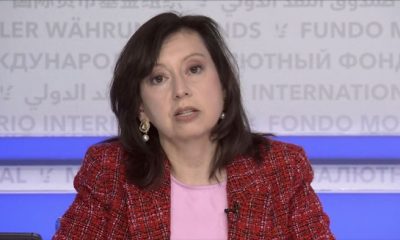
Peter Breuer, senior mission chief for Sri Lanka, and Masahiro Nozaki, mission chief for Sri Lanka, in written comments to Nikkei Asia, said, “It is difficult to predict the timeline, as the process of debt relief discussions takes time. All parties who are involved in the process should move expeditiously, so that Sri Lanka can emerge from the crisis as quickly as possible.”
On Sept. 1, Sri Lanka reached a staff-level agreement with the IMF to obtain the $2.9 billion, a crucial lifeline for a country wrestling with the worst economic crisis in its history. The country’s year-on-year inflation topped 70% in August, and the public continues to face severe shortages of essentials.
Earlier this year, Sri Lanka defaulted on a foreign bond for the first time, after its foreign reserves dwindled to next to nothing. “We announced that we are not in a position to pay,” central bank Gov. Nandalal Weerasinghe said in May, confirming the “pre-emptive default.”
“Our position is very clear. Until [the lenders] come and restructure, we can’t pay,” Weerasinghe said.
Last Friday, Sri Lanka’s Finance Ministry held an online presentation for external creditors to explain the situation and discuss the next steps toward restructuring. A handout cited “some past policy mistakes” along with the COVID-19 pandemic and the resulting crisis as key factors that crippled the economy, depleted reserves and forced the country to stop debt repayments.
The day before, President Ranil Wickremesinghe chaired a meeting with ambassadors from 23 Paris Club and non-Paris Club countries, including Japan, France and India, to discuss related matters.Wickremesinghe appealed to all creditor countries to offer the “financing assurances” on debt sustainability the IMF has said are essential for the board to give the final green light.
The Indian High Commission in Sri Lanka, for its part, expressed support even before the creditor briefings. On Sept. 20 it said that it had started discussions on restructuring Sri Lanka’s official debt to India. A spokesman told Nikkei Asia that the “cordial atmosphere” of the talks reflected New Delhi’s support for an “early conclusion and approval of a suitable IMF program.”
Noting the need for other creditors to work on ensuring Sri Lanka’s debt is manageable, he added that India would remain “closely engaged” with relevant stakeholders.
During last Friday’s presentation, Weerasinghe and Mahinda Siriwardana, secretary to the Treasury and Ministry of Finance, noted that as of the end of June, Sri Lanka’s public debt stood at 122% of gross domestic product. A figure equivalent to 70% of GDP was denominated in foreign currency.According to the presentation by the Ministry of Finance and the central bank, China, Japan and India were the country’s top three bilateral creditors, with China accounting for 52% in total, followed by Japan at 19.5% and India at 12%.
The Sri Lankan officials also pushed for the formation of an ad-hoc coordination group to expedite the process of obtaining financing assurances from multiple creditors. They explained that such a group would allow official bilateral creditors to give such assurances to the IMF collectively, after discussing the matter among themselves.
The Japanese Embassy in Colombo agreed that it is essential for all creditors to come to the table for debt restructuring discussions to ensure that the process is transparent and fair. “If all the creditor countries will participate in a coordination platform proposed by President Wickremesinghe, the government of Japan is ready to contribute to the discussion in a constructive way,” the embassy told Nikkei Asia.
But all eyes are on top creditor China, known for its preference for refinancing loans or deferring repayments rather than restructuring and settling for loss-making “haircuts.”
On the sidelines of the United Nations General Assembly last week, Sri Lankan Foreign Minister Ali Sabry met his Chinese counterpart, Wang Yi, who pledged China’s support for a Sri Lankan economic recovery.A Chinese Foreign Ministry readout of the meeting said that Wang promised China “is ready to work with Sri Lanka to carry forward the traditional friendship, consolidate strategic mutual trust and deepen and expand pragmatic cooperation.” He also said that China would “continue to offer assistance within our capacity to help Sri Lanka overcome temporary difficulties.”
Still, a highly placed Sri Lankan diplomatic source said that although debt discussions have started with some countries, it is “impossible” to say how long they will take and when a final decision will be made.









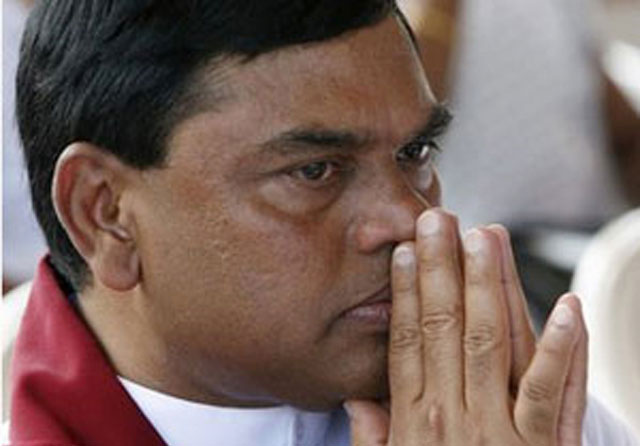
Govt. is finalising extradition proceedings against Basil to have him stand trial here in respect of several cases
By Norman Palihawadane
The process of having former Minister Basil Rajapaksa extradited from the US to Sri Lanka was being finalised, Police Headquarters sources disclosed yesterday.
The government has formally sought assistance from the United States government to extradite former Minister Basil Rajapaksa, as multiple courts have reissued arrest warrants over his failure to appear before them in connection with two separate criminal cases, a senior police officer told The Island.
The officer, speaking on condition of anonymity, said matters pertaining to obtaining US government authorities’ assistance to extradite Rajapaksa were now being finalised.
Police headquarters sources said law enforcement agencies were currently evaluating red notices, which request the location and provisional arrest of a person pending formal extradition.
The CID and Police Headquarters earlier initiated steps to seek INTERPOL assistance to secure Rajapaksa’s return to Sri Lanka to face court proceedings relating to the two cases in which arrest warrants have been issued against him.
Rajapaksa is believed to be residing in Los Angeles, United States.
The Matara Chief Magistrate’s Court on July 21, 2026, reissued an arrest warrant for Rajapaksa after he failed to appear before court for the second time in connection with a case involving the alleged purchase of a 1.5-acre coconut estate on Eliyakanda Road in the Brown’s Hill area of Matara.
The case relates to the purchase of the property for Rs. 60 million.
The case was filed by the Police Financial Crimes Investigation Division and names Basil Rajapaksa and several other accused, including Ayoma Galappaththi, identified in court reports as the sister of Rajapaksa’s wife, Tissa Galappaththi, and Muditha Jayakody.
However, officials acknowledged that seeking US assistance would only begin a formal international process and would not automatically result in Rajapaksa’s arrest or return to Sri Lanka. Sri Lankan authorities would need to submit court orders, details of the alleged offences, and other supporting documents through the appropriate diplomatic and judicial channels. Any request would then be considered by the relevant US authorities under American law and applicable legal arrangements.
Sources at the Foreign Ministry said sealed correspondence had been exchanged between Sri Lanka’s Ministry of Foreign Affairs and the Legal Department of the US State Department relating to corruption allegations against members of the Rajapaksa family residing in the United States.
The legal foundation for any extradition is the bilateral treaty between Sri Lanka and the United States signed in Washington on September 30, 1999. The treaty applies the principle of dual criminality, meaning authorities must show that the underlying conduct amounts to a crime in both countries. Rajapaksa’s status as a United States citizen would not, on its own, make him immune from a valid request under the treaty’s provisions.

Non-communicable diseases (NCDs) account for 80% of all deaths in Sri Lanka, with high blood pressure and diabetes among the leading causes, Secretary to the Ministry of Health and Mass Media, Dr. Anil Jasinghe, said early this week.
Dr. Jasinghe pointed out that the two conditions were interrelated and could lead to a range of serious health complications, with heart attacks being among the most severe consequences.
Dr. Jasinghe made these remarks while attending the commencement of construction of a modern Cardiac Care Complex at the Anuradhapura Teaching Hospital on Wednesday (16).
The Health and Mass Media Ministry Secretary said:
“The main issue is that these two diseases are interconnected and cause a range of complications in a person’s health. Looking at the current situation in Sri Lanka, only around 50% of those suffering from high blood pressure are under effective control. Similarly, only around 25% of diabetic patients are under proper control. As a result, this has now become a major problem in society.
“The most serious complication associated with both these diseases is Myocardial Infarction (MI), or a heart attack. This has also become the
leading complication. So, how do we control this modern epidemic? This is the biggest challenge before us.
“While establishing modern facilities across the country, our health system must also recognize the changes that have taken place in the demographic structure of our population and disease patterns. Accordingly, our health system must be adapted to suit these changing circumstances.
“Under the policies of the government led by the President and the guidance of the Minister of Health, the Ministry of Health and Mass Media is currently implementing a major programme in this regard. Its three main components are Arogya, Cluster Systems and High-End Care Institutions, which need to be developed to suit the requirements of our health system.”
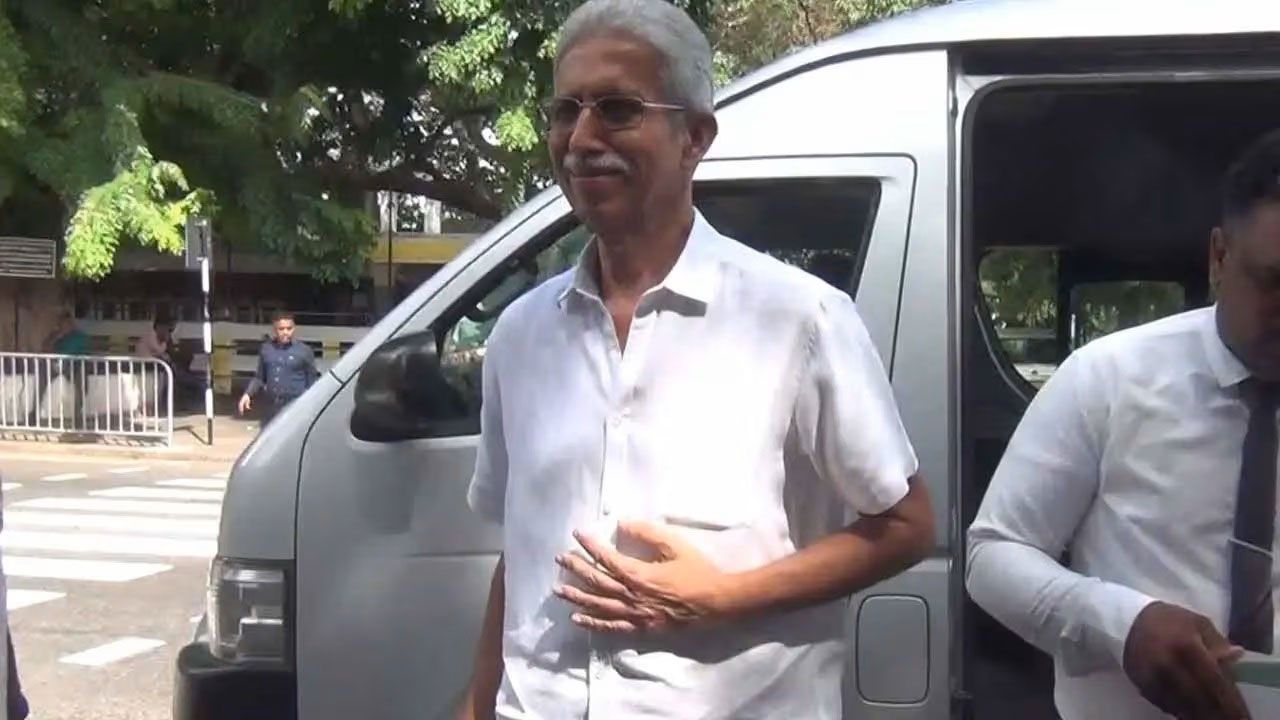
Former National Transport Commission (NTC) Chairman Renuka Perera was remanded until September 29 by the Colombo Magistrate’s Court after being arrested by the Commission to Investigate Allegations of Bribery or Corruption (CIABOC) over alleged corruption in the issuance of bus route permits.
Colombo Chief Magistrate Asanga S. Bodaragama issued the remand order after considering submissions by CIABOC officials and defence counsel.
According to CIABOC, Perera was arrested over allegations that he unlawfully issued route permits during his tenure as NTC Chairman, causing a financial loss to the government while conferring an unlawful benefit on an outside party.
Perera was arrested around 9.55 am yesterday (17) over allegations that he issued 56 passenger transport service permits for buses to operate on the Southern Expressway in violation of prescribed procedures and without collecting the applicable annual fees as a single payment.
CIABOC said the alleged offences were committed in contravention of the National Transport Commission Act No. 37 of 1991 and recommendations contained in a Cabinet decision dated September 19, 2014.
Perera, a senior member of the SLPP, currently serves as the party’s Administrative Secretary. He previously served as Chairman of state-owned dairy producer and marketer MILCO.

Abhishek Sharma hits record T20 ton as India beat Afghanistan by 127 runs

Trump administration approves sale of F-35 jets to Saudi Arabia

Banton steers England into unassailable 2-0 series lead

Showers expected in the Western, Norrh-western and Sabaragamuwa provinces and in Galle, Matara, Kandy and Nuwara-Eliya Districts.

Bid for Basil’s extradition nears final stage: Police

High blood pressure, diabetes lead to about 80% of deaths in Sri Lanka

‘Dates have the highest sugar content to fight Coronavirus’

Sunday Island 27 December – Headlines

#SundayIsland 17th December – Headlines

Sunday Island – 28th March

Sunday Island Headlines – 21 March

Sunday Island – 21st February – Headlines
-

 Latest News6 days ago
Sri Lanka thwart Fatima Sana challenge to secure Asia Cup final spot
-

 News5 days ago
Gnanasara Thero absconding after SC ruling
-

 News6 days ago
Ammunition cache found in old Kandy bungalow
-

 News6 days ago
Green Climate Fund (GCF) Regional Dialogue for East and South Asia will be held from 14 to 17 September 2026 at Cinnamon Life at City of Dreams Hotel, Colombo
-

 News6 days ago
Prof. Pieris says Buddha Dhamma recognised as source of law under Constitution
-

 News7 days ago
Bambalapitiya Railway Station renovated under the “Dream Destination” project opened to the public
-

 Opinion4 days ago
From Galkissa (Mount Lavinia) to Tambuttegama
-

 Latest News6 days ago
ITS Giuseppe Garibaldi’ departs Colombo