
News
Parliament faulted for deterioration of public finances


‘IMF won’t maintain ministers, excess staff’
By Shamindra Ferdinando
Dissident SLPP MP Prof. G. L. Peiris has alleged that the failure on the part of Parliament to fulfil one of its primary obligations, namely the responsibility for public sector finance caused the current crisis.
The incumbent government had been compelled to seek the International Monetary Fund (IMF) intervention as the country couldn’t address the balance of payments crisis on its own, the former Foreign Minister said. Addressing the media at the newly opened Nawala Office of Freedom People’s Congress on Wednesday (14), the academic questioned the need to appoint 38 State Ministers at a time the vast majority of the population was struggling to make ends meet.
Pointing out that in terms of Article 148 of the Constitution, the parliament exercised the power over public finance, the lawmaker explained how unbridled waste, corruption and mismanagement over the years contributed to the Geneva-based United Nations Human Rights Council (UNHRC) ultimately taking up the issue at hand.
The ex-FM dealt with the issue close on the heels of his successor Ali Sabry’s response to UNHRC making extensive references to ‘economic crimes’ perpetrated in Sri Lanka. Addressing the 51 Regular Session of the UNHRC in Geneva, President’s Counsel Sabry said that such references exceeds the mandate of the UN High Commissioner.
Prof. Peiris represented Sri Lanka at the last session. Following turmoil in the ruling coalition over the decision to back Ranil Wickremesinghe at the July 20 presidential contest, the newly elected on the advice of the SLPP dropped Prof. Peiris from the cabinet.SLPP National List MP Prof. Peiris stressed that the appointment of 38 State Ministers couldn’t be justified under any circumstances.
President Wickremesinghe, in the presence of Premier Dinesh Gunawardena appointed 37 State Ministers on Sept 08. Later, Ratnapura District SLPP MP Premalal Jayasekera, too, was appointed a State Minister. On March 31, this year the Court of Appeal acquitted Jayasekara from charges, including a death sentence issued over a political murder case filed in 2015. The former SLFPer along with two other persons were sentenced to death on July 31, 2021 over a killing during the 2015 presidential polls campaign.
The government could appoint two more State Ministers and 12 cabinet ministers as the Constitution allowed the appointment of 30 cabinet and 40 non-cabinet ministers.Prof. Peiris said that the expansion of the cabinet of ministers and non-cabinet rankers should be examined against the backdrop of the government not having the wherewithal to meet even the basic needs of the people.
Referring to Prime Minister Dinesh Gunawardena returning Rs. 1.5 mn saved from his fuel allocation for January 2020 to July 2020 period to the Office of the Leader of the House, Prof. Peiris pointed out such appreciable gestures meant nothing when the cash-strapped government had to allocate huge sums of money and resources to upkeep new ministers. Prof. Peiris said that 38 ministers and their staff would require about 230 vehicles. The former minister asked whether the government at least estimated the cost of the new lot in terms of vehicles, fuel and salaries for the staff.
Prof. Peiris warned the government that the IMF wouldn’t grant money for the maintenance of utterly useless ministers who didn’t have any specific projects to handle for obvious reasons. Sri Lanka and the IMF recently announced agreement on USD 2.9 bn funding over a period of four years subject to the former fulfilling conditions set out by the lending body.The former minister said that the country should be ashamed of what he called a pathetic and further deteriorating situation.
Referring to a spate of recent statements made by the US, UNHRC, World Bank as well as one attributed to the USAID Administrator Samantha Powers, Prof. Peiris said the international community appeared to have zeroed in on high profile corruption cases here regardless of attempts to suppress them. The former Vice Chancellor of the University of Colombo said that the World Bank recently went to the extent of questioning Sri Lanka’s auditing standards. Calling the World Bank move nothing but a disgrace and an affront to the once proud service, Prof. Peiris dealt with the violation of tender procedure in respect of the planned procurement of massive quantity of coal for the Norochcholai coal-fired power plant. The MP also made reference to explosive revelations made by Freedom People’s Congress member and SLPP rebel MP Prof Charitha Herath regarding misappropriation of Rs 1.3 bn. in the procurement of LP gas
Prof. Peiris urged the government to table the staff level agreement with the IMF without further delay. Pointing out that the SLPP admitted that even the Cabinet-of-Ministers hadn’t been briefed or consulted on the IMF deal, Prof. Peiris said that the government should take the parliament and the people as to how it intended to address the developing political-economic-social crisis.


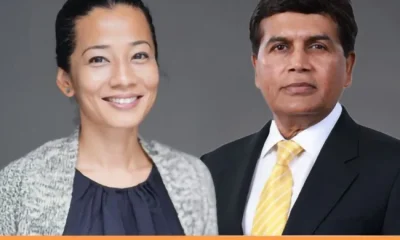

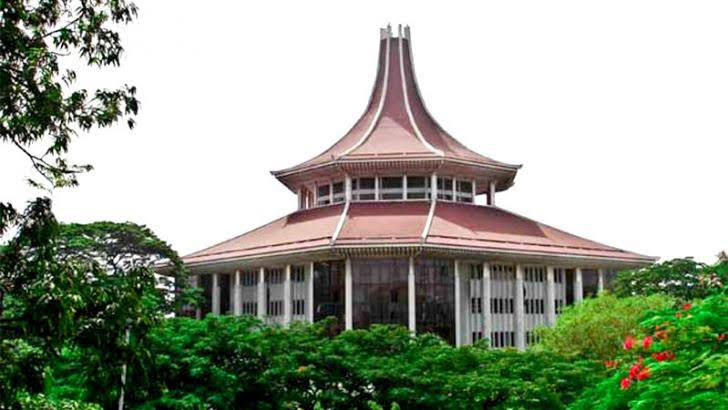
Attorney-at-Law Sugandhika Fernando, on behalf of the Vinivida Foundation, petitioned the Supreme Court yesterday (02), seeking a full bench, excluding Chief Justice Preethi Padman Surasena, to hear the petitions challenging the 22nd Amendment Bill. She also requested that the hearing be suspended immediately until the matter was fully heard and determined.
Among the respondents are Chief Justice Surasena, the first respondent, and Attorney General Parinda Ranasinghe. Justices Yasantha Kodagoda, Shiran Gooneratne, Achala Wengappuli and Priyantha Fernando have also been named as respondents.
The petitioner has sought to have quashed the decision of the first respondent to appoint a five-member bench, which she alleged was made in violation of the norms of public law. She also sought a bench comprising all Supreme Court judges, excluding those cited as respondents, to hear the special determination applications on the 22nd Amendment.
The petitioner further contended that Chief Justice Surasena, who is due to retire on December 1, 2026, would be the main beneficiary of the 22nd Amendment.
The hearing of the petitions continued for a second day yesterday (02) before a five-member Supreme Court bench comprising Chief Justice Preethi Padman Surasena and Justices Achala Wengappuli, Arjuna Obeyesekere, Sampath Abeykoon and Gihan Kulatunga.
The hearing, which commenced on Tuesday morning, continued for nearly 12 hours, until 10:30 p.m.
Solicitor General Viraj Dayaratne, appearing for the Attorney General, submitted yesterday that the Government had presented the 22nd Amendment Bill to the Constitution and the Judicature (Amendment) Bill with the objective of expanding and streamlining the country’s judicial system.
After the Solicitor General’s submissions concluded, counsel representing the petitioners requested an opportunity to respond to the Solicitor General and the intervening petitioners. However, the Chief Justice declined to allow the petitioners’ counsel to make further oral submissions, concluded the determination hearing and directed them to file written submissions instead.
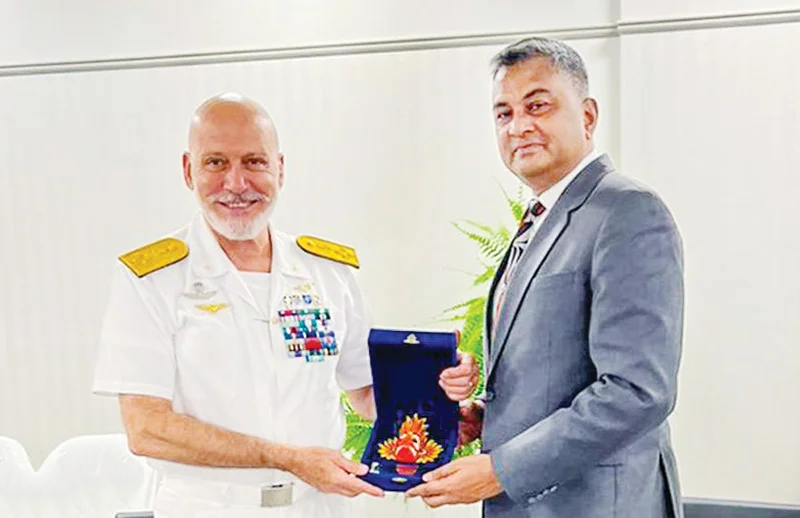
Sri Lanka has formally requested assistance from the North Atlantic Treaty Organisation (NATO).
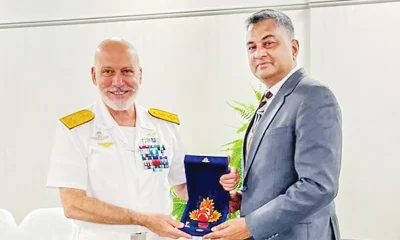
According to a press release issued by the Defence Ministry, Defence Secretary Air Vice Marshal (retd) Sampath Thuyakontha has discussed defence cooperation with NATO, with discussions focusing on military modernisation, advanced technology, cyber capabilities and disaster response.
This was during talks between AVM Thuyakontha and NATO Military Committee Chairman Admiral Giuseppe Cavo Dragone on the sidelines of the Chiefs of Defence Conference in Victoria, Canada.
During the meeting, Secretary Thuyacontha outlined Sri Lanka’s defence requirements and areas of interest, including the modernisation of military hardware, acquisition of advanced technologies, and strengthening cyber capabilities and surveillance platforms, the Ministry of Defence said in a statement.
The two sides also discussed opportunities for greater technical cooperation, including the exchange of military personnel, expanded education and training programmes, and increased sharing of expertise and information.
Humanitarian Assistance and Disaster Relief (HADR) was also identified as an area for potential cooperation. The discussions included the exchange of expertise and the effective use of unmanned aerial vehicles (UAVs) in disaster response and related operations.
Defence Secretary Thuyacontha invited NATO to further strengthen its engagement with Sri Lanka, emphasising sustained dialogue, information sharing and practical cooperation in areas of mutual interest.
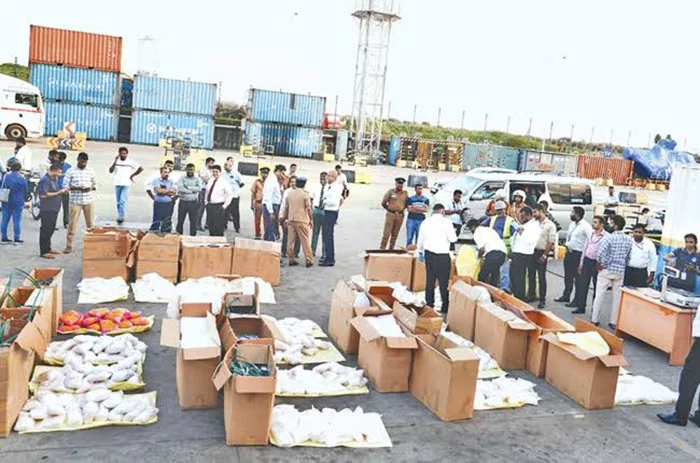
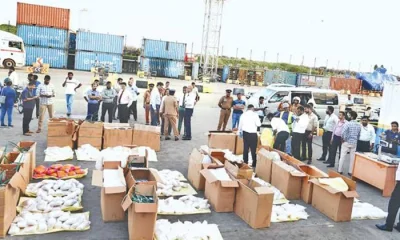
The US Embassy in Colombo yesterday (02) said the recent detection of 463 kg of Crystal Methamphetamine at the Colombo Port had been made possible by intelligence provided by the US. It noted that the detected narcotics were to be moved to international markets, via Colombo.
The text of the US Embassy statement: “The U.S. Drug Enforcement Administration’s (DEA) New Delhi Country Office and Sri Lanka’s Police Narcotics Bureau (PNB) conducted a successful joint operation disrupting a Pakistan-based narcotrafficking network attempting to smuggle crystal methamphetamine through Sri Lanka to international markets.
Acting on intelligence developed by DEA’s Foreign Counterparts Unit Pakistan Anti-Narcotics Force Special Investigations Cell between August 14–29 on suspicious maritime containers moving from Pakistan to Colombo, PNB seized approximately 463 kg of crystal methamphetamine—valued at $21 million—concealed in bath towels, and arrested several suspects, including Pakistani nationals. This operation underscores the strength of the U.S.-Sri Lanka partnership in dismantling transnational criminal organizations that fund terrorism and threaten communities in both our countries.
This cooperation builds on longstanding training and technical assistance provided through the U.S. Department of State’s Bureau of International Narcotics and Law Enforcement Affairs (INL) to the Sri Lanka Police and Customs. The United States remains committed to working with Sri Lanka and regional partners to aggressively pursue transnational criminal organizations, deny them the revenue from illicit drug trafficking, and protect our citizens from the dangers of narcotrafficking.”

22A: SC urged to suspend hearing, appoint full bench

Govt. seeks NATO assistance

Recent ‘Ice’ detection at the Colombo Port made on US intelligence – Embassy

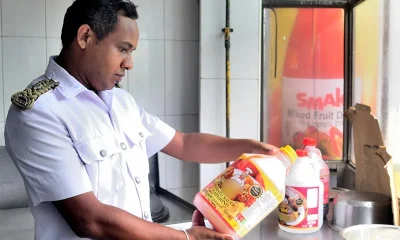
Sri Lanka launches National Food Safety Policy with support from FAO and EU

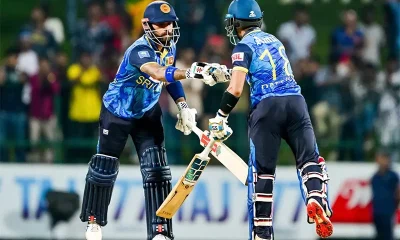
Mendis, Nissanka return for England white ball series

Janashakthi Life delivers 36% revenue growth, ‘outperforming the industry’

‘Dates have the highest sugar content to fight Coronavirus’

Sunday Island 27 December – Headlines

#SundayIsland 17th December – Headlines

Sunday Island – 28th March

Sunday Island Headlines – 21 March

Sunday Island – 21st February – Headlines
-

 News6 days ago
Eight politicians in drug kingpin probe
-

 Features4 days ago
“Wrap Me Up in My Blazer”— A Gentlemanly Bradby Reminiscence
-

 Business6 days ago
Sri Lanka opens up: A new season of direct connectivity
-

 Features3 days ago
When Sri Lankan stories find their own voice
-
 Latest News7 days ago
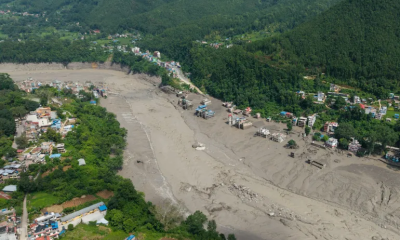
Nepal-Tibet floods: What happened, what caused them and who is missing?
-

 Features6 days ago
Redefining ageing in Sri Lanka
-

 Editorial6 days ago
The toxic legacy of two lakes
-
 Business6 days ago
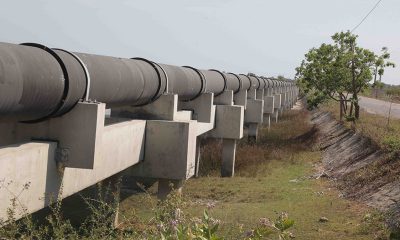
Jaffna Teaching Hospital secures lifeline water supply via ADB-funded Thalaiyadi sea water desalination plant