
Features
Ranil-SWOT: A Reappraisal

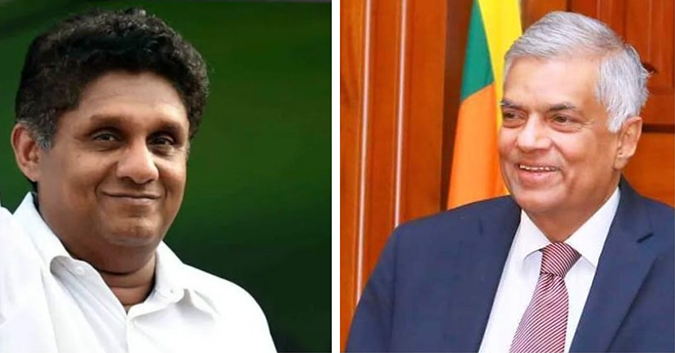
by Kumar David
Less than three months ago on June 10 (“Ranil: A SWOT Appraisal”) I offered readers an evaluation of the future that beckons then Prime Minister now President Ranil Wickremesinghe (RW). It is a sign of how quickly events move that I have to repeat the exercise so soon. If you track the Sunday Island, daily Island or other English language papers you will be familiar with what columnists are saying. For my purposes today the Home Page of Colombo Telegraph (CT) is more convenient. With one click you gain access to a large number of titles and with another click reach any of them. Of the 20+ currently on offer here are the 12 most hostile to RW. I have omitted author names because debate about specific opinions is not my purpose; it is the trend that I want you to observe. These 12 pieces see RW as dangerous and a threat to democracy and describe the economic prospects facing his Administration as hopeless.
“Ranil’s policy train-wreck, opposition own-goals, Dullas-GL game-changer”
“Taking dictatorial steps to control public Sri Lanka”
“Ranil’s perilous authoritarian alternative”
“Government’s attempt to redefine political discourse & direction through suppression”
“Sri Lanka’s PTA: Anti-terrorism law that promotes terrorism”
“Reliance on repression will worsen current crisis”
“Wickremesinghe/Rajapaksa – an axis of evil’
“Use of prevention of terrorism (Temporary Provisions) Act to stab the rule of law”
“Witch-Hunting Mudalige; Ranil-Rajapaksa repression & opposition’s confusion”
“Is Lanka heading towards the Myanmar model of governance?”
“Lanka’s determined non-compliance of UNHRC resolutions; defiance of UN & UNHRC Charters”
“Ranil & Dinesh Have A Past, Not A Future!”
People understandably are very angry about RW’s inordinate use of force to beat up protestors the moment he was sworn in as president. It provoked me to call him ‘Batalanda Ranil’ in my columns. Also see a damning 2015 report by Dharman Wickremaratne in Lankaweb. (Obviously I cannot vouch for it). https://www.lankaweb.com/news/items/2015/08/03/demons-of-batalanda-who-was-behind-them/.
Ranil was complicit in the notorious Batalanda torture chamber, furthermore Prime Minister Premadasa had knowledge and permitted the functioning of dozens of torture sites across the country.
The Research Directorate of the Immigration and Refugee Board of Canada in its joint website with the UNHRC (https://www.refworld.org/docid/3ae6acfd54.html) reports as follows: “The Batalanda Commission report that was submitted to President Chandrika on 27 March 1997 found the police Counter Subversive Unit (CSU) headed by (Douglas) Peiris “directly responsible” for the torture carried out at the semi-unofficial detention centre at Batalanda Housing Scheme. The report also found that Wickramasinghe knew of the centre’s existence”.
More recently a hard-hitting piece, titled “President Wickremesinghe’s first step was to inflict violence on protestors” appeared on 23 July in this US website jurist.org/news. It said: “RW made public declarations supporting people’s protest before being appointed Acting President under Rajapaksa and advised officials not to interfere or use force against protestors at ‘GotaGoGama’. Contrary to his words, his action on becoming President speaks volumes about his character. …. As the days progress the people of Lanka and the world wait to see whether he will reign through terror and hinder democracy”.
I have pulled out these three pieces to show why so many people fear that RW may go from bad to worse. The CT titles I listed convey the impression that most correspondents believe that RW is still a threat. However, I think they are not tracking trends. Good heavens I am not asking you to whitewash RW in the democracy department! Victor Ivan has done it for inexplicable reasons (and what’s the socio-economic programme which Ivan says the two of them have cooked up?) Nevertheless, we must evaluate trends as they progress. The reason I am undertaking a follow-up SWOT analysis is because I see a dynamic at work.

SWOT denotes Strengths, Weaknesses, Opportunities and Threats. The rest of this essay is how I see RW’s options shaping-up in the coming months. He has been attacked mercilessly by domestic opinion (trade unions, liberals, the left, churches, temples, the media, the diplomatic community in Colombo) as well as global human rights groups and world public opinion. The military option, the Kamal, Army Silva, Sarath Weerasekara, STF, murder-with-impunity and tiger-behind-every-cadjan-fence fairy tales, are dead for now. The Emergency will be allowed to lapse, PTA watered down, Tamil diaspora given some space and the RTI Commission, Transparency and civil society will gain some strength. RW is plastered to the wall and prevented from violating democratic rights. For how long? Maybe for long; he has no way of reincarnating a Batalanda avatar any time soon. Supporters will market this as a virtue, a return of the prodigal to godliness and peddle it as a Strength. The business community will buy it.
Secondly RW’s performance evaluation depends on two more factors; (a) can he sell belt-tightening to the people as unavoidable for say two years and a necessary measure on the road to economic recovery, and (b) how will any alliance he cobbles together perform at an election within a few months. Let’s not speculate beyond that in these fast-changing times. Even aragalaya militants grant that there will be hard times ahead on the economic front, their debate is about where the burden should fall. Only Lanka’s Mad Monetary Theorists (new style MMTs) say ‘switch on the printing press 24/7, flood the pockets of the poor with crisp new notes and let the middle-classes and businesses go fly a kite’. People know inflation, they have suffered at the receiving end for nine months and they can perceive what hyperinflation will do. Let’s watch the December budget for real indicators.
People are not stupid; they know that even if the Son of God is made president, substantial price inflation will persist. Were Sajith, Anura Kumara or some SLPP-Rajapaksa coot to say “Make me president in place of Ranil; I will bring down prices fast and Lanka will flow with milk and honey” he will be greeted with shrieks of derision. The gist of what I am saying is this: Price inflation and a slow economy will not kill RW if an election were to be conducted within a few months. People know that not much is possible pronto. The IMF and global capitalism prefer Ranil to Sajith, AKD or a Rajapaksa-coot. Western capitalism and India will nudge external economics (debt restructuring and procurement of fuel) in directions that will help RW survive and be re-elected. I am saying that global capitalism wants Ranil and will assist him in subtle and not so subtle ways: this I guess is obvious to most people.
In SWOT terminology this counts as an Opportunity and if RW plays his cards smartly a Strength. What then in my view is the most significant Weakness facing RW at this time? Without doubt it is that till the dissolution of Parliament he is a slave of pro-government and SLPP Members of Parliament and thence a retainer of the Rajapaksa Clan (Mahinda, Basil and Gota’s residual killers in Defence Ministry, military and the ex-Tripoli Market unit). Only after Parliament is dissolved can RW, if he has the guts, jettison the SLPP flotsam. Recollections of Rajapaksa linkages will be RW’s biggest electoral bugbear.
How will RW perform at an election held within a few months? A crucial caution is what will be the stance of Sajith and the SJB? I cannot imagine the SJB’s intelligent heavyweights going to the polls without some type of alliance with the formal UNP – that is without ‘going back home’. The SJB despite numerate persons like Eran (the clearest minded and most articulate), Harsha and Kabir cannot, by itself, present a credible national alternative, sans an alliance with the grand old party. Furthermore, a Sajith-Ranil union will do less well in urban areas than a Ranil-Sajith alliance; the converse is true in non-urban electorates. The SJB can outperform the UNP only in city areas and districts with a heavy minority (Ceylon Tamil, Muslim and Up-Country) presence, but only if a credible minority candidate splits the vote.
Far wiser men than I have busted their savings taking bets about elections so I am not going to say anything other than the obvious regarding an election which may be held within months. Obviously the SLPP, all pro-government contraptions, the nine-party circus, the twelve strong GL, Dullas Alahapperuma outfit and the Wimal-Udaya-Vasu comedy would all have been erased in toto in a first-past-the-post contest. In the proportional representation system, the whole lot together may win a dozen or two dozen seats. The electorate will shun anything tainted by Rajapaksa Robbery. Ditto for pissu Sira’s SLFP.
Last month’s Budget is bandage; it plasters over Basil’s preposterous crap. The real McCoy will be the one-year Budget due in December. Government, Central Bank, Treasury and RW’s inner circle will have to line up with the IMF’s stipulations. The IMF $2.9 billion pitch (Managing Director Kristalina Georgieva has approved the Staff Level agreement), not verbatim but conscientiously abbreviated is as follows:
“Raise revenue to support fiscal consolidation from one of the lowest revenue levels in the world. The programme must make major tax reforms; income tax more aggressive, broaden corporate tax and VAT and reach a primary surplus of 2.3% of GDP by 2024. Introduce cost-recovery based pricing for fuel and electricity to minimize fiscal risks from state-owned enterprises. The IMF welcomes the already announced substantial revenue measures and energy pricing reforms. Mitigate impact of the crisis on the poor and vulnerable by raising social spending, improving the coverage and targeting safety net programmes.
Restore price stability through data-driven monetary policy, phasing out monetary fiscal financing and a stronger central bank. Pursue flexible inflation targeting. A new Central Bank Act is a cornerstone of this. Rebuild foreign reserves through a market-determined and flexible exchange rate. Safeguard financial stability by ensuring a well-capitalised banking system. Reduce corruption, improve fiscal transparency, public finance management and the anti-corruption legal framework”.
This is the liberal-bourgeois, post neo-liberal rationale, and I alerted my regular readers to most of it during the last three months well before the Central Bank, RW or the Treasury mentioned the inevitability of a dual exchange rate, floating rupee, relaxed currency controls to entice money-market funds and FDI, fiscal reform and above all significant belt-tightening. If Lanka aligns with Western capitalism and the IMF and restores a liberal bourgeois state these changes will flow naturally. As for RW now licking the wounds of his July 23 fiasco, this is a destiny that aligns with his inherited class palate.


 It would not be particularly revelatory to say that the US is plagued by ‘gun violence’. It is a deeply entrenched and widespread malaise that has come in tandem with the relative ease with which firearms could be acquired and owned by sections of the US public, besides other causes.
However, a third apparent attempt on the life of US President Donald Trump in around two and a half years is both thought-provoking and unsettling for the defenders of democracy. After all, whatever its short comings the US remains the world’s most vibrant democracy and in fact the ‘mightiest’ one. And the US must remain a foremost democracy for the purpose of balancing and offsetting the growing power of authoritarian states in the global power system, who are no friends of genuine representational governance.
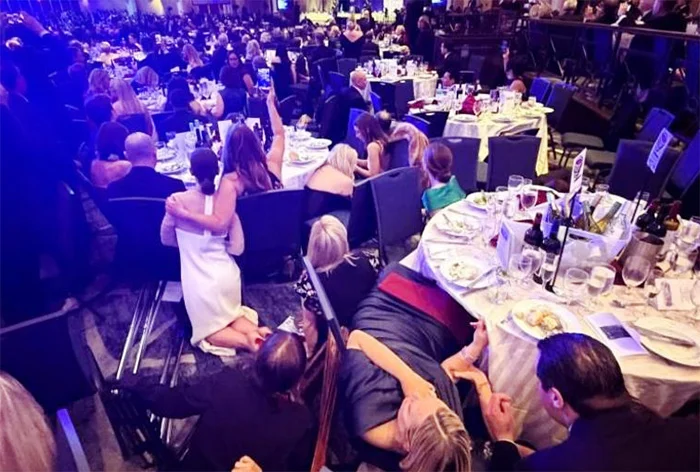
Therefore, the recent breaching of the security cordon surrounding the White House Correspondents’ Dinner in Washington at which President Trump and his inner Cabinet were present, by an apparently ‘Lone Wolf’ gunman, besides raising issues relating to the reliability of the security measures deployed for the President, indicates a notable spike in anti-VVIP political violence in particular in the US. It is a pointer to a strong and widespread emergence of anti-democratic forces which seem to be gaining in virulence and destructiveness.
The issues raised by the attack are in the main for the US’ political Right and its supporters. They have smugly and complacently stood by while the extremists in their midst have taken centre stage and begun to dictate the course of Right wing politics. It is the political culture bred by them that leads to ‘Lone Wolf’ gunmen, for instance, who see themselves as being repressed or victimized, taking the law into their own hands, so to speak, and perpetrating ‘revenge attacks’ on the state and society.
A disproportionate degree of attention has been paid particularly internationally to Donald Trump’s personality and his eccentricities but such political persons cannot be divorced from the political culture in which they originate and have their being. That is, “structural” questions matter. Put simply, Donald Trump is a ‘true son’ of the Far Right, his principal support base. The issues raised are therefore for the President as well as his supporters of the Right.
We are obliged to respect the choices of the voting public but in the case of Trump’s election to the highest public position in the US, this columnist is inclined to see in those sections that voted for Trump blind followers of the latter who cared not for their candidate’s suitability, in every relevant respect, and therefore acted irrationally. It would seem that the Right in the US wanted their candidate to win by ‘hook or by crook’ and exercise power on their behalf.
By making the above observations this columnist does not intend to imply that voting publics everywhere in the world of democracy cast their vote sensibly. In the case of Sri Lanka, for example, the question could be raised whether the voters of the country used their vote sensibly when voting into office the majority of Executive Presidents and other persons holding high public office. The obvious answer is ‘no’ and this should lead to a wider public discussion on the dire need for thoroughgoing voter education. The issue is a ‘huge’ one that needs to be addressed in the appropriate forums and is beyond the scope of this column.
Looking back it could be said that the actions of Trump and his die-hard support base led to the Rule of Law in the US being undermined as perhaps never before in modern times. A shaming moment in this connection was the protest march, virtually motivated by Trump, of his supporters to the US Capitol on January 6th, 2021, with the aim of scuttling the presidential poll result of that year. Much violence and unruly behaviour, as known, was let loose. This amounted to denigrating the democratic process and encouraging the violent take over of the state.
In a public address, prior to the unruly conduct of his supporters, Trump is on record as blaring forth the following: ‘We won this election and we won by a landslide’, ‘We will stop the steal’, ‘We will never give up. We will never concede. It doesn’t happen’, ‘If you don’t fight like hell, you’re not going to have a country anymore.’
It is plain to see that such inflammatory utterances could lead impressionable minds in particular to revolt violently. Besides, they should have led the more rationally inclined to wonder whether their candidate was the most suitable person to hold the office of President.
Unfortunately, the latter process was not to be and the question could be raised whether the US is in the ‘safest pair of hands’. Needless to say, as events have revealed, Donald Trump is proving to be one of the most erratic heads of state the US has ever had.
However, the latest attempt on the life of President Trump suggests that considerable damage has been done to the democratic integrity of the US and none other than the President himself has to take on himself a considerable proportion of the blame for such degeneration, besides the US’ Far Right. They could be said to be ‘reaping the whirlwind.’
It is a time for soul-searching by the US Right. The political Right has the right to exist, so the speak, in a functional democracy but it needs to take cognizance of how its political culture is affecting the democratic integrity or health of the US. Ironically, the repressive and chauvinistic politics advocated by it is having the effect of activating counter-violence of the most murderous kind, as was witnessed at the White House Correspondents’ Dinner. Continued repressive politics could only produce more such incidents that could be self-defeating for the US.
Some past US Presidents were assassinated but the present political violence in the country brings into focus as perhaps never before the role that an anti-democratic political culture could play in unraveling the gains that the US has made over the decades. A duty is cast on pro-democracy forces to work collectively towards protecting the democratic integrity and strength of the US.

 The Editor-in-Chief of The Sri Lankan Anchorman, a Toronto-based monthly, celebrating Sri Lankan community life in Canada, is none other than veteran Sri Lankan journalist Dirk Tissera, who moved to Canada in 1997. His wife, Michelle, whom he calls his “tower of strength”, is the Design Editor.
According to reports coming my way, the paper has turned out to be extremely popular in Toronto.
In fact, The Sri Lankan Anchorman won a press award in Toronto for excellence in editorial content and visual presentation.
However, the buzz in the air in Canada, right now, is The Sri Lankan Anchorman’s 22nd Anniversary Gala, to be held on Friday, 12 June, 2026, at the J&J Swagat Banquet Convention Centre, in Toronto.
An action-packed programme has been put together for the night, featuring some of the very best artistes in the Toronto scene.
The Skylines, who are classified as ‘the local musical band in Toronto’, will headline the event.
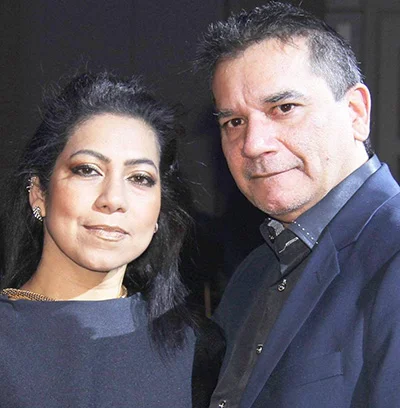
Dirk Tissera and wife Michelle: Supporting Sri Lanka-Canada community events, in Toronto, since launching The Anchorman
in 2002
They have performed and backed many legendary Sri Lanka singers.
According to Dirk, The Skylines can belt out a rhythm with gusto … be it Western, Sinhala or Tamil hits.
Also adding sparkle to the evening will be the legendary Fahmy Nazick, who, with his smooth and velvety vocals, will have the crowd on the floor.
Fahmy who was a household name, back in Sri Lanka, will be flying down from Virginia, USA.
He has captivated audiences in Sri Lanka, the Middle East and North America, and this will be his fourth visit to Toronto – back by popular demand,
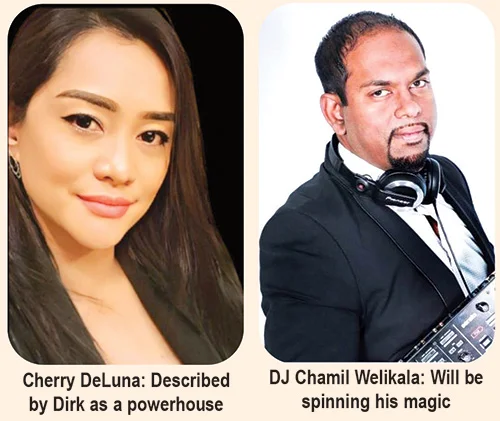
Cherry DeLuna, who is described by Dirk as a powerhouse, also makes her appearance on stage and is all set to stir up the tempo with her cool and easy delivery.
“She’s got a great voice and vocal range that has captivated audiences out here”, says Dirk.
Chamil Welikala, said to be one of the hottest DJs in town, will be spinning his magic … in English, Sinhala, Tamil and Latin.
Both Jive and Baila competitions are on the cards among many other surprises on the night of 12 June.
This is The Anchorman’s fifth annual dance in a row – starting from 2022, 2023, 2024 and 2025 – and both Dirk and Michelle, and The Anchorman, have always produced elegant social events in Toronto.
“We intend to knock this one out of the park,” the duo says, adding that Western music and Sinhala and Tamil songs is something they’ve always delivered and the crowd loves it.
“We have always supported Sri Lanka-Canada community events, in Toronto, since launching The Anchorman, in 2002, and we intend to keep it that way.”
No doubt, there will be a large crowd of Sri Lankans, from all communities, turning up, on 12 June, to support Dirk, Michelle and The Anchorman.
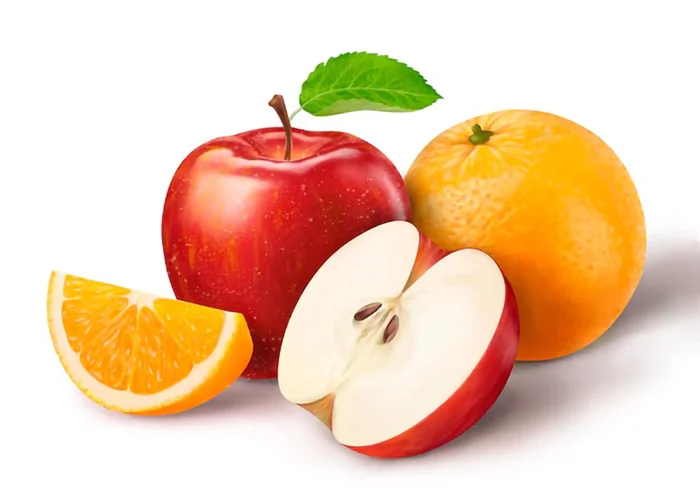
 * Apple and Orange:
Blend a few apple and orange pieces together. Add to it a pinch of turmeric and one tablespoon of honey. Apply it to the face and neck and rinse off after 30 minutes. This face pack is suitable for all skin types.
According to experts, apple is one of the best fruits for your skin health with Vitamin A, B complex and Vitamin C and minerals, while, with the orange peel, excessive oil secretion can be easily balanced.
* Mango and Curd:
Ripe mango pulp, mixed with curd, can be rubbed directly onto the skin to remove dirt and cleanse clogged pores. Rinse off after a few minutes.
Yes, of course, mango is a tasty and delicious fruit and this is the mango season in our part of the world, and it has extra-ordinary benefits to skin health. Vitamins C and E in mangoes protect the skin from the UV rays of the sun and promotes cell regeneration. It also promotes skin elasticity and fights skin dullness and acne, while curd, in combination, further adds to it.
* Grapes and Kiwi:
Take a handful of grapes and make a pulp of it. Simultaneously, take one kiwi fruit and mash it after peeling its skin. Now mix them and add some yoghurt to it. Apply it on your face for few minutes and wash it off.
Here again experts say that kiwi is the best nutrient-rich fruit with high vitamin C, minerals, Omega-3 fatty acids and vitamin E, while grapes contain flavonoids, which is an antioxidant that protects the skin from free radical damage. This homemade face pack acts as a natural cleanser and slows down the ageing process.

Food Security is vital to ensuring a Nation’s Sovereignty and National Security – Prime Minister

Showers or thundershowers will occur in the most parts of the island after 1.00 pm

Explanation sought from AKD on ‘Russian energy supplies’

US reiterates its commitment to enhancing relations with Northern Sri Lanka

Rooftop Solar at Crossroads as Sri Lanka Shifts to Distributed Energy Future

Indonesia-SL agreement on Visa Exemption for Diplomatic and Official passports soon

‘Dates have the highest sugar content to fight Coronavirus’

Sunday Island 27 December – Headlines

#SundayIsland 17th December – Headlines

Sunday Island – 28th March

Sunday Island Headlines – 21 March

Sunday Island – 21st February – Headlines
-
 News7 days ago
Whistleblowers ask Treasury Chief to resign over theft of USD 2.5 mn
-

 News7 days ago
No cyber hack: Fintech expert exposes shocking legacy flaws that led to $2.5 million theft
-

 News4 days ago
BIA drug bust: 25 monks including three masterminds arrested
-

 Business5 days ago
Nestlé Lanka Announces Change in Leadership
-
 News2 days ago
Treasury chief’s citizenship details sought from Australia
-

 News4 days ago
Banks alert customers to phishing attacks
-
 News5 days ago
Hackers steal $3.2 Mn from Finance Ministry
-
 Business7 days ago
Dialog Enterprise partners Star Garments: Pioneering 5G innovation in Sri Lanka’s apparel industry