
Business
SL clinches deal with IMF for 4-year EFF of $ 2.9 billion subject to debt restructuring and prior actions


By Hiran H.Senewiratne
The International Monetary Fund said it had reached a deal with Sri Lanka for a 4-year 2.9 billion US dollar extended fund facility subject to debt restructuring and prior actions.Under the program the Sri Lankan budget will have to generate a primary surplus (debt before interest) of 2.3 per cent by 2024. The 2022 expected primary deficit is 4 per cent of GDP, the IMF senior mission led by Peter Breuer said.
“These reforms include making personal income tax more progressive and broadening the tax base for corporate income tax and VAT. The program aims to reach a primary surplus of 2.3 per cent of GDP by 2024, Breuer said at a media conference at the Central Bank head office in Colombo yesterday. Breuer together with Masahiro Nozaki and other members of the IMF delegation visited Sri Lanka from August 24 to September 1 to continue discussions on IMF support for Sri Lanka and the local authorities’ comprehensive economic reform program.
Breuer added: ‘The 2022 primary deficit was projected by the government at -4.0 per cent of GDP. Sri Lanka will also have to negotiate with creditors to restructure debt.
“The agreement is subject to the approval by the IMF management and the Executive Board in the period ahead, contingent on the implementation by the authorities of prior actions and on receiving financing assurances from Sri Lanka’s official creditors and making a good faith effort to reach a collaborative agreement with private creditors.
“Debt relief from Sri Lanka’s creditors and additional financing from multilateral partners will be required to help ensure debt sustainability and to close financing gaps.
“The Central Bank will also have to stop printing money (monetary financing) and bring down inflation.’’
The full IMF statement is reproduced below:
“The Sri Lankan authorities and the IMF team have reached staff-level agreement to support the authorities’ economic adjustment and reform policies with a new 48-month Extended Fund Facility (EFF) with a requested access of about SDR 2.2 billion (equivalent to US$2.9 billion).
“The new EFF arrangement will support Sri Lanka’s program to restore macroeconomic stability and debt sustainability, while safeguarding financial stability, reducing corruption vulnerabilities and unlocking Sri Lanka’s growth potential.
“The agreement is subject to the approval by IMF management and the Executive Board in the period ahead, contingent on the implementation by the authorities of prior actions, and on receiving financing assurances from Sri Lanka’s official creditors and making a good faith effort to reach a collaborative agreement with private creditors. Debt relief from Sri Lanka’s creditors and additional financing from multilateral partners will be required to help ensure debt sustainability and close financing gaps.
“Sri Lanka has been facing an acute crisis. Vulnerabilities have grown owing to inadequate external buffers and an unsustainable public debt dynamic. The April debt moratorium led to Sri Lanka defaulting on its external obligations, and a critically low level of foreign reserves has hampered the import of essential goods, including fuel, further impeding economic activity. The economy is expected to contract by 8.7 per cent in 2022 and inflation recently exceeded 60 per cent. The impact has been disproportionately borne by the poor and vulnerable.
“Against this backdrop, the authorities’ program, supported by the Fund, would aim to stabilize the economy, protect the livelihoods of the Sri Lankan people, and prepare the ground for economic recovery and promoting sustainable and inclusive growth.
Key elements of the program are:
Raising fiscal revenue to support fiscal consolidation. Starting from one of the lowest revenue levels in the world, the program will implement major tax reforms. These reforms include making personal income tax more progressive and broadening the tax base for corporate income tax and VAT. The program aims to reach a primary surplus of 2.3 per cent of GDP by 2024.
Introducing cost-recovery based pricing for fuel and electricity to minimize fiscal risks arising from state-owned enterprises. The team welcomed the authorities’ already announced substantial revenue measures and energy pricing reforms;
Mitigating the impact of the current crisis on the poor and vulnerable by raising social spending, and improving the coverage and targeting of social safety net programs;
Restoring price stability through data-driven monetary policy action, fiscal consolidation, phasing out monetary financing, and stronger Central Bank autonomy that allow pursuing a flexible inflation targeting regime. A new Central Bank Act is a cornerstone of this strategy;
Rebuilding foreign reserves through restoring a market-determined and flexible exchange rate, supported by the comprehensive policy package under the program;
Safeguarding financial stability by ensuring a healthy and adequately capitalized banking system, and by upgrading financial sector safety nets and regulatory standards with a revised Banking Act; and Reducing corruption vulnerabilities through improving fiscal transparency and public financial management, introducing a stronger anti-corruption legal framework, and conducting an in-depth governance diagnostic, supported by IMF technical assistance.
The IMF team held meetings with President and Finance Minister Ranil Wickremesinghe, Prime Minister Dinesh Gunawardena, Central Bank of Sri Lanka Governor Dr. P. Nandalal Weerasinghe, Secretary to the Treasury K M Mahinda Siriwardana, and other senior government and CBSL officials. It also met with parliamentarians, representatives from the private sector, civil society organizations and development partners.











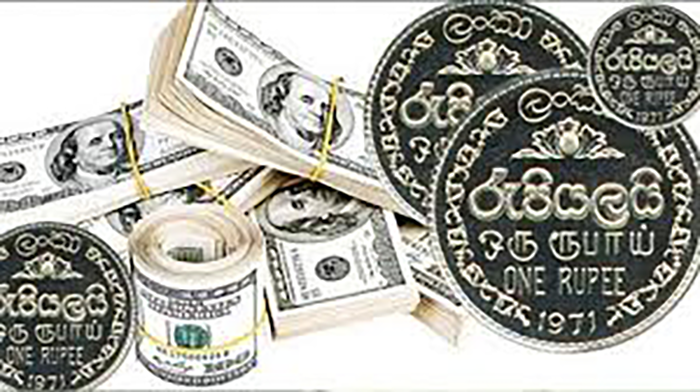
The sudden fall and equally rapid recovery of the Sri Lankan rupee within a matter of days has left many Sri Lankans confused about what truly happened inside the country’s foreign exchange market.
Within a short span, the rupee weakened sharply from around Rs. 324-325 against the US dollar to Rs. 354 in parts of the commercial market, before unexpectedly stabilising again close to previous levels. The speed of both the depreciation and the recovery triggered widespread speculation among businesses, importers and the public.
Responding to questions from the media regarding the abrupt divergence between official exchange rates and commercial bank quotations, Central Bank Governor Dr. Nandalal Weerasinghe recently explained that the volatility had emerged mainly outside the formal interbank foreign exchange market.
According to the Governor, Sri Lanka operates through two connected foreign exchange markets. One is the interbank market, where commercial banks exchange dollar liquidity among themselves. The other is the retail market between banks and customers, including importers, exporters and individual foreign exchange buyers.
Under normal conditions, customer buying and selling rates fluctuate within a narrow margin around the interbank market rate. However, during the week leading up to Friday, May 22, an unusual surge in dollar demand disrupted this balance.
The Governor said excessive speculation and panic-driven import demand created abnormal pressure on the market, pushing some customer transactions far above prevailing interbank rates.
“We observed that because of speculation and panic related to imports, there was excessive demand for US dollars,” he explained. “Transactions between banks and customers began taking place well above interbank market rates, which created a distortion.”
While the interbank rate remained around Rs. 320 to the dollar, certain customer transactions were reportedly taking place between Rs. 346 and Rs. 354.
The Central Bank viewed this widening gap as a breakdown in normal market transmission rather than a reflection of underlying fundamentals.
To restore order, the Central Bank held discussions with treasury officials of commercial banks on the evening of May 21 and introduced measures aimed at improving liquidity flows and reactivating smoother interbank trading.
According to the Governor, these measures helped reconnect the interbank market with commercial bank customer pricing, allowing exchange rates to realign rapidly.
“Liquidity returned to the market and buying and selling rates became fully aligned again,” he said. “The market has now normalised.”
The Governor emphasised that the Central Bank’s intervention was limited and intended only to smooth excessive volatility rather than artificially defend a specific exchange rate.
He noted that the authorities intervened only to a certain extent during the sharp depreciation phase and later carried out small operations to reduce market instability while allowing normal demand and supply conditions to function.
The episode has nevertheless raised broader questions about how fragile confidence remains in Sri Lanka’s post-crisis economy despite improving macroeconomic indicators.
Although foreign reserves and external sector conditions have improved significantly since the height of the economic crisis in 2022, the foreign exchange market remains highly sensitive to expectations, rumours and sudden shifts in import demand.
Many ordinary Sri Lankans believe the panic may have been triggered by a surge in Letters of Credit (LCs) opened for vehicle imports amid speculation over increased import activity and future dollar demand.
Meanwhile, Professor Wasantha Athukorale at the University of Peradeniya said remarks made by President Anura Kumara Dissanayake regarding rising US dollar outflows for fuel shipments may also have heightened importers’ anxiety over possible currency instability.
Economists say the episode demonstrates how market psychology can sometimes move exchange rates faster than economic fundamentals, particularly in relatively thin and fragile foreign exchange markets like Sri Lanka’s.
The speed of the rupee’s rebound suggests that the turbulence was driven more by speculative demand, temporary liquidity distortions and market sentiment than by a structural foreign exchange crisis.
Still, for a population that continues to carry memories of shortages, inflation and currency collapse, the brief rupee shock served as another reminder that confidence in Sri Lanka’s economic stabilisation remains delicate.
By Sanath Nanayakkare ✍️

The 21st edition of the “Build Sri Lanka” housing and construction exhibition concluded last week at the BMICH. On the surface, it was a modest success: stalls were staffed, catalogues were exchanged, and the usual dignitaries cut the usual ribbons. But beneath the low hum of polite conversation, a far more urgent story was unfolding – one that policymakers appear to have missed entirely.
For an industry that contributes nearly 8% to Sri Lanka’s GDP and employs over 500,000 people, the quiet profile of this year’s exhibition was telling – the kind that settles over an industry bracing for impact.
The Chamber of Construction Industry (CCI) President, Manilal Fernando, used the platform not to celebrate, but to warn. Two specific points he raised should be ringing alarm bells in the Treasury and the Ministry of Housing. But because the event lacked high-level political attendance, these warnings have so far fallen into a policy void.
Fernando noted that after a brutal slump from 2020 to 2023, the industry saw a fragile recovery in 2024. But that green shoot is now withering. “With the rupee volatility due to the war in the Persian Gulf,” he said, “again we are heading for uncertain times.”
According to CCI, Sri Lanka’s construction industry is an importer in disguise. Over 60% of construction materials from steel and cement to tiles, fittings, and MEP (mechanical, electrical, plumbing) components are either directly imported or have high import content. Even locally manufactured items rely on imported raw materials.
When the rupee depreciates, costs don’t just rise; they leap. And here is the crux according to Fernando : current contractual payment mechanisms do not automatically reflect these real-time cost increases. As he warned, unless cost escalations are correctly reflected in contract payments, many contractors and consultants will simply be unable to perform. That means stalled projects, abandoned housing schemes, and unfinished infrastructure – paid for, but not delivered.
The second issue is even more maddening because it is entirely within the government’s control to fix. Fernando revealed that a set of long-overdue amendments to the Construction Industry Development Act (CID Act) was finalised in 2024. These amendments were developed over six years by the National Advisory Council on Construction, approved by the Legal Draftsman, and could be enacted within two months.
But instead of enacting these ready-made fixes, CIDA is now pushing for a complete overhaul of the Act – a process that will take a minimum of two years to reach parliament.
He pointed out that without these amendments, the industry lacks a fair, transparent price variation mechanism. Right now, MEP contractors and others complain that CIDA’s official price indices do not reflect actual market price fluctuations. The CCI, therefore, proposed a simple solution: a joint committee (CCI + reputable contractors + CIDA) to oversee index compilation. But even that cannot be implemented effectively without the Act’s update.
The construction industry, once a bellwether of national economic health, is now whispering its crises in a conference hall with no television cameras to air high-decibel news stories or make it a headline event.
The builders of Sri Lanka are not asking for subsidies. They are asking for predictability, fairness, and speed. The war in the Persian Gulf is beyond Sri Lanka’s control. But the CID Act and contract index reforms are not.
By Sanath Nanayakkare
Business
Understanding the influence of Traffic Light Labelling and Pricing on the demand for sugar sweetened beverages in Sri Lanka

A new study by the Institute of Policy Studies of Sri Lanka (IPS) examines the effectiveness of sugar‑sweetened beverage (SSB) taxation and traffic light labelling (TLL) in influencing consumer behaviour and reducing sugar consumption in Sri Lanka. The findings show that although both policy instruments have proven effective, existing policy gaps limit their full potential.
The study provides strong evidence that demand for SSBs in Sri Lanka is price-responsive, with consumers continuing to purchase unhealthy beverages due to their lower cost, despite having adequate knowledge of TLL signals. A price sensitivity analysis of Carbonated Soft Drinks (CSD), using Household Income and Expenditure Survey data, shows that a 10% increase in CSD prices leads to an approximate 15% decline in quantity demanded.
Authors Priyanka Jayawardena, Nisha Arunatilake, and Usha Perera of IPS use a discrete choice experiment to assess the effectiveness of TLL on purchasing decisions. A nationally representative consumer survey reveals that approximately two‑thirds of consumers are aware of TLL, with higher awareness among younger, more educated, and higher‑income groups. The findings indicate that TLL discourages the selection of high‑sugar beverages and promotes lower‑sugar options, even when price and product attributes are considered. However, lower‑income consumers are less responsive to TLL cues, largely due to affordability constraints, highlighting the importance of maintaining effective SSB taxation.
In this regard, the study recommends the following actions: • Regular adjustments to tax rates to preserve their real value; and• Strengthening public awareness and understanding of nutrition labelling.
The study underscores the need to close critical policy gaps, particularly in awareness, equity, and effectiveness, to strengthen Sri Lanka’s response to diet‑related non‑communicable diseases and promote healthier, more equitable food environments.
Download the publication via the IPS website: https://www.ips.lk/understanding-the-influence-of-traffic-light-labelling-and-pricing-on-the-demand-for-sugar-sweetened-beverages-in-sri-lanka/

Tickner five-for wraps up innings win for New Zealand

Ambidextrous spinner Shashini Gimhani in Sri Lanka’s T20 World Cup squad

Pakistan’s famous cheerleader ‘Chacha Cricket’ to retire this year

South Africa Women’s maiden tour to Zimbabwe to feature five T20Is

Navy renders assistance to bring injured fisherman ashore

Applications called to recruit 400 public officers as Digital Champions for the Public Impact Champions Network

‘Dates have the highest sugar content to fight Coronavirus’

Sunday Island 27 December – Headlines

#SundayIsland 17th December – Headlines

Sunday Island – 28th March

Sunday Island Headlines – 21 March

Sunday Island – 21st February – Headlines
-

 News6 days ago
All-New GRAVITE launches at LKR 6.99 Mn
-

 Features6 days ago
The NPP’s pivot to the past
-

 News5 days ago
Police probe underway to ascertain links between criminals deported from UAE and local politicians
-

 News4 days ago
Easter Sunday carnage: Court told Maulana’s statement cannot be accepted without cross-examination
-

 Features6 days ago
End of Peacekeeping
-

 Opinion4 days ago
Undermining the democratic political framework
-

 News4 days ago
UK passport holder hiding here wants to have deportation order rescinded to leave without blemish
-

 News5 days ago
Dickoya double murder suspect arrested