
Sports
Shelly-Ann Fraser-Pryce runs fourth-fastest women’s 100m ever


Shelly-Ann Fraser-Pryce ran the fourth-fastest ever women’s 100m, 10.62 seconds, to win at the Diamond League in Monaco.The five-time world 100m champion, 35, bettered her own mark for the fastest 100m of the year, having clocked 10.66 seconds in Poland on Saturday.She has now run the third and fourth-fastest women’s 100m times ever.
Fellow world champion Jake Wightman of Britain won the 1,000m with the fastest time this year.Fraser-Pryce’s fellow Jamaican Shericka Jackson came second in Monaco with a personal best of 10.71 seconds, while Marie-Josee Ta Lou of Ivory Coast set an African record in third and Britain’s Daryll Neita finished sixth.
“I did what I needed to and we had fun and let the clock do the talking. To be able to run 10.60 consistently means a lot. It’s remarkable. It’s hard to keep up the speed at this high level,” said Fraser-Pryce.
“I’m in my late thirties and I feel I have more to give. I look forward to doing my personal best [10.60 run in August 2021] during the rest of the season.”
It was a third sub-10.70 run within a week for Fraser-Pryce, who missed the Commonwealth Games, as all seven starters went below 11 seconds.
She becomes the first woman in history to break 10.70 six times in the same season, having also won a record fifth women’s 100m world title last month in Oregon.
Wightman bounced back from disappointment at the Commonwealth Games, where he was unable to back up his 1500m world title in Oregon. The 28-year-old took 1500m bronze in Birmingham on Saturday but posted a time of two minutes 13.88 seconds in Monaco, the ninth fastest 1,000m of all time, ahead of Canada’s Marco Arop in second.
“I did not really know I was in shape to do this today,” he said.
“It was just very, very hard. This is a really nice step towards the European championships in Munich where I will run the 800m.”
American Clayton Murphy finished third, with Irishman Luke McCann setting a new national record of two minutes 16.40 seconds as he finished seventh.
Elsewhere, 1,500m world and Olympic champion Faith Kipyegon narrowly missed a sensational world record over the distance.The Kenyan ran the second fastest time ever, three minutes 50.37 seconds, half a second shy of Ethiopian Genezebe Dibaba’s world record set in 2015.
America’s Noah Lyles won his second 200m race of the Diamond League season, breaking his own meeting record from 2018 with a superb effort of 19.48 seconds. Erriyon Knighton and Michael Norman came second and third, respectively, to earn a podium clean sweep for the United States. (BBC Sports)


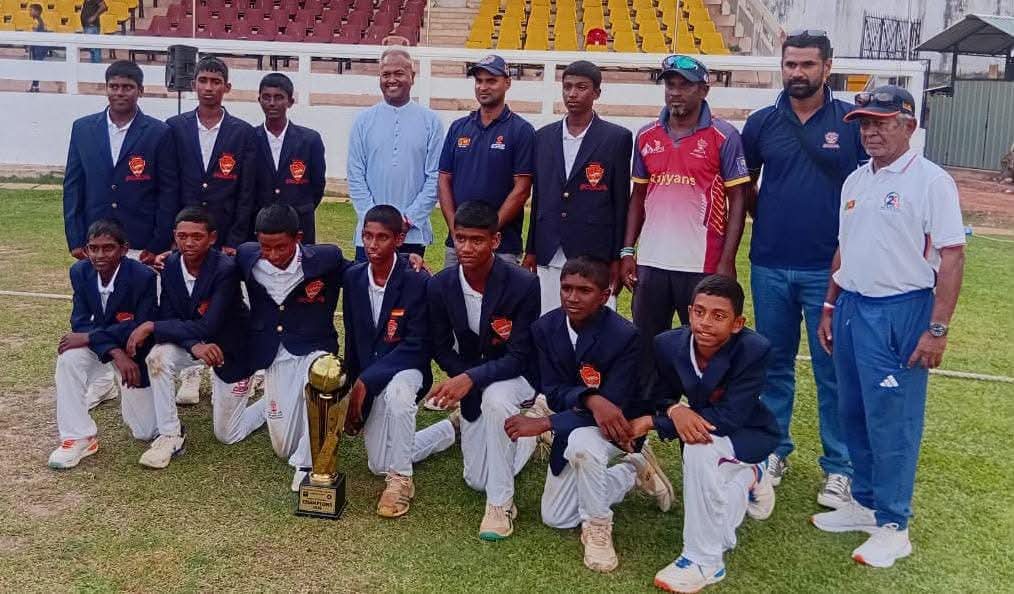
Devapathiraja College, Rathgama came up with a strong all-round performance to defeat Royal College, Colombo by 33 runs and secure the Under-15 Division I cricket title at the Ananda College Grounds on Thursday.
Chasing 193 to win, Royal looked well placed thanks to a determined 78 off 105 balls from Ramiru Thiranagama who scored eight boundaries. Herschel Dan chipped in with 33 off 69 balls and Ravinu Ranathunga made a brisk 22 off 21, but the middle and lower order struggled as Devapathiraja’s bowlers took wickets at regular intervals. After being 126 for three wickets at one stage, Royal lost their last seven batsmen for 33 run to be bowled out in the 44th over.
Diyath Sanjitha led the bowling attack with three for 47, ably supported by Deneth Dinuka’s three wickets, while Meneth Sankalana and Gauthem Surya picked up two apiece.
Batting first after winning the toss, Devapathiraja posted 192 for nine in their 49 overs. Shanidu Sineth Mikeshara anchored the innings with a patient 51 off 126 balls, while Gauthem Surya provided the acceleration with 45 from 56 deliveries, striking six fours and a six. Himansa Elithpriya (20), Denuwan Yositha (19) and an unbeaten 16 from Sineth Madhusanka helped push the total to a competitive mark.
Mahima Silva was Royal’s most economical bowler, returning figures of two for 22 from nine overs, while Wishmida Fernando also picked up two wickets.
The victory capped a successful campaign for Devapathiraja, who have now confirmed that they have formidable teams in each of the top three age categories. [RF]
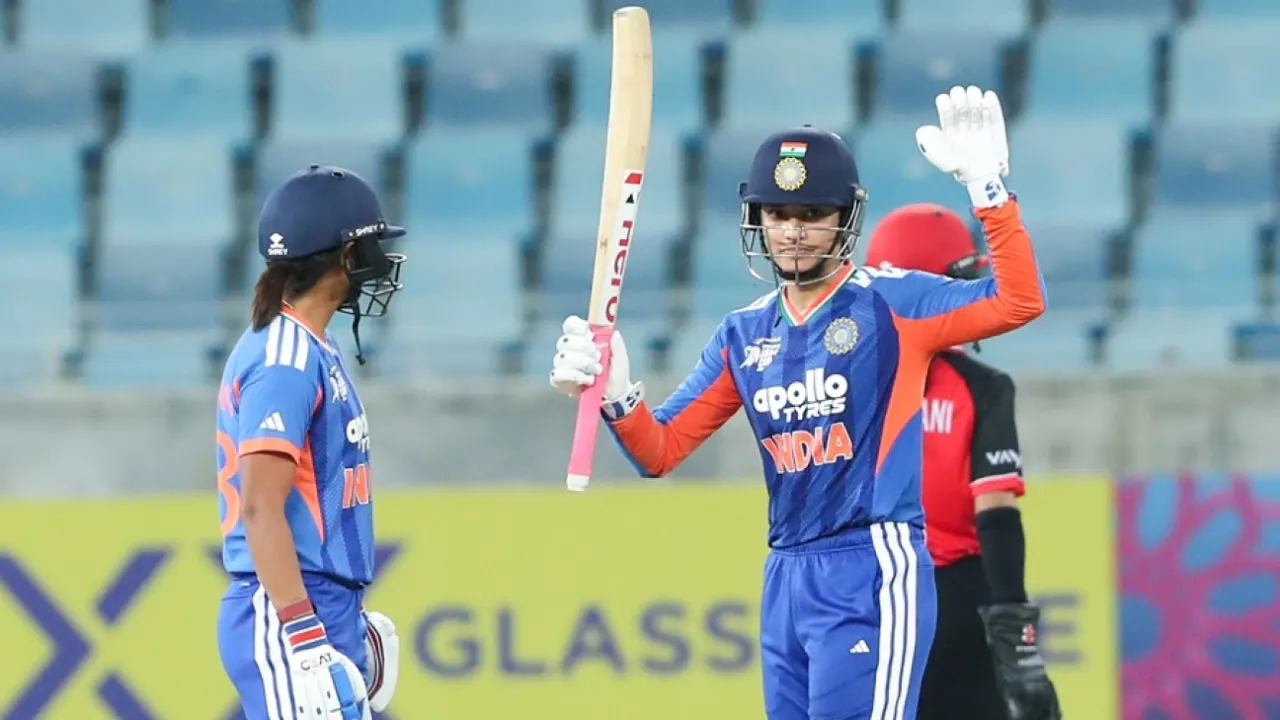
Smriti Mandhana filled her batting coffers with her second T20I century, along the way surpassing Mithali Raj for the record for most runs in women’s internationals, to help India secure a second straight win on Thursday night in Dubai.
Hong Kong’s nerves showed on the field when they fell flat at the first sign of attack from India’s batters, and their timid approach in the chase further exposed the gulf in quality and experience. In the end, they lost by 137 runs – 13 more than what Mandhana managed on her own.
A second straight loss meant Hong Kong will only have some pride to play for, as a berth in the next round is now out of the equation.
India’s cautious start
At the end of five overs, India were 38 without loss – not concerning, but not dominating enough either. They took a while to suss up the lack of pace from the bowlers. Mandhana hogged much of the strike; Shafali Verma faced just six balls in the first five overs. Hong Kong couldn’t have been happier at having kept a lid on the scoring.
Shafali steps up
After a tight first over that went for just seven, offspinner Maria Lamplough was clobbered by Shafali for two fours and two sixes in a 22-run over that helped India take off.
Lamplough struggled for consistency and kept looping the ball up, with Shafali needing no second invitation. The first of the two sixes was a shovel over deep midwicket; the next even better – lofted inside-out over deep extra cover.
Shafali’s brief surge ended on 28 in the eighth over, when Marina took an excellent catch running in and diving full stretch from long-on off Ruchita Venkatesh’s bowling. By then, the openers had put on 74.
Mandhana prances towards record century
As new No. 3 Pratika Rawal took a while to gauge the pace of the surface, Mandhana reached her half-century – her 36th in T20Is – off 40 deliveries with a flat six over deep square. Mandhana’s default setting for much of this period was moving over to the off-side to set herself up for several variations of the slog in the arc between wide long-on and deep square.
Her next fifty came off just 18 deliveries. The century could’ve been nipped in the bud had she been taken at deep square leg in the 16th over off Siu Wai, but she accelerated even more soon after bringing up her century that helped her climb atop the list for most international hundreds in women’s cricket.
In the 18th over, she clobbered Venkatesh for three consecutive sixes, and in the same over also went past Mithali’s record for most international runs. This helped India finish strongly, the second half of their innings brought them 107 despite losing a clutch of wickets.
Nandani’s dream run continues
Coming off a three-for against Thailand, Nandani Sharma’s seam presentation and control was immaculate with the new ball as Hong Kong crawled to 4 for 1 in four overs. The wicket, off Mariko Hill, one of their most experienced batters, came off a superb in-ducker on the back of three successive away-swingers. Nandani added one more wicket to her kitty to finish with 2 for 6 off her three overs.
The collapse
The highest partnership of the innings was the 27 between Yasmin Daswani and Natasha Miles for the second wicket; a period where they hardly threw any caution to the wind, choosing instead to bat overs and gain some match time against an opponent they were playing for the first time in 14 years.
The partnership ended when Daswani’s attempt to heave into the leg side was intercepted by a leaping Bharti Fulmali at midwicket to give Deepti Sharma a wicket. Six balls later, Miles was out attempting to cut Prema Rawat’s sharp leg break, nicking behind to Richa Ghosh.
That was the start of the collapse, as India’s spinners closed in, each one getting onto the scorecard with a bagful. There were eight single-digit scores, with 15 the highest. They lost their last five wickets in 11 deliveries, collapsing from 54 for 5 to 56 all out.
India couldn’t have asked for an easier route into the semi-finals.
Scores:
India Women 193 for 5 in 20 overs (Smriti Mandhana 124, Shafali Verma 28, Pratika Rawal 10, Richa Gosh 11, Harmanpreet Kaur 10; Marina Lamplough 2-46, Ruchitha Venkatesh 1-30, Joyleen Kaur 1-12) beat Hong Kong Women 56 in 16.2 overs (Natasha Miles 15, Yasmin Daswani 11, Marina Lamplough 14; Nandani Sharma 2-06, Shree Charani 2-16, Deepti Sharma 3-09, Prema Rawat 2-12) by 137 runs
[Cricinfo]
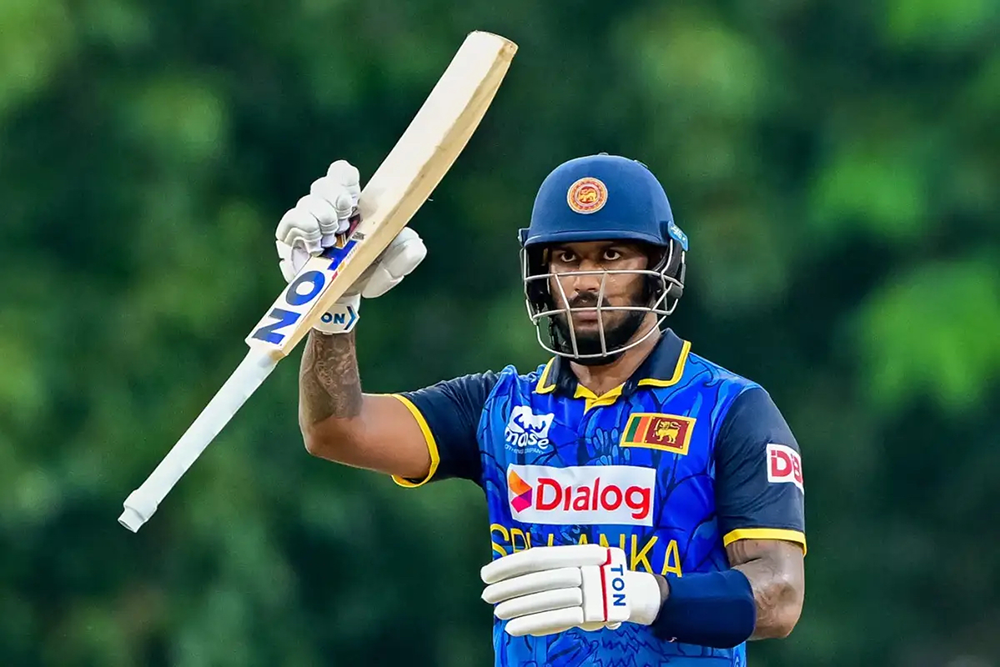
Sinhalese Sports Club produced a stirring run chase in their final group game of the ongoing domestic 50 over tournament, edging out Bloomfield to book their place in the semi-finals.
Set a daunting target of 330, SSC romped home in just 46.4 overs, with former international Avishka Fernando leading the charge with a superb 138 off 114 deliveries, studded with 15 fours and four sixes.
Avishka received excellent support from Nuwanindu Fernando (57) and Nipun Dananjaya (69), both of whom posted half-centuries, before Dunith Wellalage applied the finishing touches with an unbeaten 30 off just 19 deliveries, including one four and three sixes.
Bloomfield had earlier piled up a formidable total thanks largely to Janith Liyanage, who hammered 165 off 130 deliveries with 18 fours and five sixes.
SSC will now meet CCC in Monday’s semi-final, while Colts will take on Moors in the other last-four clash on the same day. The final will be played on Friday.
CCC topped the table in the other group following another high scoring encounter. Kamindu Mendis, stripped of the Sri Lanka vice-captaincy on Wednesday, responded in emphatic fashion less than 24 hours later, opening the batting and smashing 139 off 129 deliveries with 11 fours and six sixes.
He was involved in a mammoth 268 run opening stand with Lasith Croospulle, who made 148. Pavan Rathnayake then chipped in with an unbeaten half-century, while Test sensation Sonal Dinusha, leading CCC, suffered the rare indignity of a first-ball duck.
CCC eventually amassed 369 for five from their 50 overs. Tamil Union, in reply, could manage only 297 despite a century from Sineth Jayawardene.
Colts topped their group with five wins from six games and yesterday recorded a comprehensive 72 run win over Police.
Batting first, Colts posted 266 for six, with Sangeeth Cooray and Muditha Lakshan contributing half-centuries. Police were then shot out for 194 inside 40 overs.
Panadura SC, Ace Capital and BRC also recorded wins yesterday but were unable to press their claims for a semi-final berth.
There have been several high-scoring encounters during the tournament, with Sri Lanka Cricket placing considerable emphasis on producing good batting surfaces for both domestic and international cricket.

SLPP MP Namal Rajapaksa arrested by CIABOC

Devapathiraja clinch U15 Division I title with 33-run win over Royal

Mandhana’s record ton powers India into semi-finals

Sun directly overhead Nittambuwa, Algama, Malwana, Aranayake, Meegahakiula and Panamkadu about 12.09 noon today (04)

Showers expected in the Uva, Central and Eastern provinces and in Polonnaruwa and Mullaittivu districts after 2.00 p.m

Norochcholai digs into dwindling coal stocks, two units slash generation

‘Dates have the highest sugar content to fight Coronavirus’

Sunday Island 27 December – Headlines

#SundayIsland 17th December – Headlines

Sunday Island – 28th March

Sunday Island Headlines – 21 March

Sunday Island – 21st February – Headlines
-

 Features5 days ago
“Wrap Me Up in My Blazer”— A Gentlemanly Bradby Reminiscence
-

 Features4 days ago
When Sri Lankan stories find their own voice
-

 Features5 days ago
JVP/NPP government as seen from outside by Lionel Bopage now domiciled in Australia
-

 News4 days ago
BASL takes exception to Justice Ganepola being denied a place in SC
-

 Editorial6 days ago
Govt. trying to dupe UN Rapporteur?
-
 Features5 days ago
Prof. Savitri Goonesekere: What has she done?
-

 Features5 days ago
World Trade Politics: Canada rebuffs Trump’s tariff blackmail
-

 News1 day ago
Denied of promotion to SC despite vacancies, justice Gurusinghe retires