
News
New York based NGO points finger at Lanka again

The New York based Human Rights Watch has accused Sri Lanka of using emergency regulations to harass and arbitrarily detain activists seeking political reform and accountability over the country’s economic crisis.
In a statement, HRW said since Ranil Wickremesinghe was sworn in as President on July 21, 2022, the police and military have sought to curtail protests through the intimidation, surveillance, and arbitrary arrests of demonstrators, civil society activists, lawyers, and journalists.
Anti-government protests in Colombo and elsewhere in the country led the then-President Gotabaya Rajapaksa to flee the country before resigning on July 15. On July 22, President Wickremesinghe ordered security forces to disperse protesters and break up their main site in central Colombo. The police have subsequently targeted perceived protest leaders for arrest and detention.
“The Sri Lankan government’s crackdown on peaceful dissent appears to be a misguided and unlawful attempt to divert attention from the need to address the country’s urgent economic crisis,” said Meenakshi Ganguly, South Asia director at Human Rights Watch. “Sri Lanka’s international partners should be clear that they need to be working with a rights-respecting administration to address Sri Lanka’s deeply rooted economic problems.”
Security forces injured more than 50 people in the July 22 early morning raid on the main janatha Aragalaya (people’s struggle) site in Colombo. Security forces assaulted and beat three journalists from Xposure News – Chaturanga Pradeep Kumara, Rasika Gunawardana, and Shabeer Mohammed – and at least one other journalist, Jareen Samuel of the BBC, during the raid. Wickremesinghe berated foreign diplomats for criticising the security forces’ use of excessive force and took no action to hold those responsible to account.
A number of Buddhist monks and Christian clergy had joined the protests. The media reported that the Colombo Magistrates’ Court on July 25 had issued a travel ban on Father Jeewantha Peiris, a Catholic priest who had been prominent in the protests, and several others. Two days later police visited Father Peiris’s church and said that they had orders to arrest him. In a July 31 statement, 1,640 members of the Catholic clergy condemned targeting the priest, saying that they had all backed the protests.
On July 26, the authorities arrested another prominent protester, Dhaniz Ali, from an international flight about to depart from Colombo. On July 27, unidentified men in civilian clothes abducted Veranga Pushpika, a former student activist and journalist who had also been active in the protests, from a bus in Colombo. Police did not disclose his whereabouts to lawyers or the Human Rights Commission for several hours before acknowledging his arrest.
Human rights defenders said that the police sought to obstruct defense lawyers from meeting with four protesters who had been arrested after they handed over to the police a large sum of money taken from the president’s official residence after protesters had occupied it.
Lawyers and media organisations told Human Rights Watch that they have experienced increased intimidation, including threats of violence and surveillance. In one episode, a group of men claiming to be police officers, but not wearing uniforms, visited the office of an online publication, Xposure News, on July 27 and demanded that a security guard identify people shown in photographs and show them CCTV footage.
On July 31, a student protester said in a statement on Facebook that he had been detained and interrogated for three hours by security force personnel who warned him that they could plant drugs on him and arrest him. Police summoned the social media activist Rathidu Senarathna, known as “Ratta,” on August 1 and arrested him after questioning. A Colombo magistrate also issued a foreign travel ban on Senarathna and 11 others suspected of illegal assembly and causing damage to property. On August 2, the authorities seized the passport of a British national, Kayleigh Fraser, who had posted about the protests on social media.
The authorities arrested at least seven people for the July 9 arson attack on Wickremesinghe’s private residence. Activists said that at least some of those detained were known to have been bystanders. Police are investigating a hotel that allegedly provided food to protesters and has raided, sometimes without warrants, the homes or workplaces of several protesters who are in hiding.
In a statement, 175 Sri Lankan human rights defenders and civil society organisations expressed concern about “disturbing developments of abduction, arrest, intimidation, and reprisals against protesters.” Members of the Catholic clergy said the government should “stop the repression of those involved and supporting the Aragalaya and focus on listening to grievances and aspirations of people and take actions to address both immediate and long-term problems.”
Under the state of emergency that President Wickremesinghe declared on July 18, the period that a person may be detained before being brought before a magistrate has been increased from 24 to 72 hours. The authorities have been granted sweeping additional powers of search and arrest, and the military has been empowered to detain people for up to a day without disclosing their detention. These provisions increase the risk of torture and enforced disappearance.
Under international human rights law, protections against torture, the excessive use of force, and other fundamental rights must never be violated, including during a state of emergency. Provisions of the state of emergency contrary to international standards should be immediately revoked, Human Rights Watch said.
The emergency regulations also introduce extreme new sentencing rules for several offenses, including damage to property and trespassing, which can now result in a life sentence and carry a minimum term of 20 years in prison. Among the offenses subject to harsher sentencing is a provision of the penal code that has previously been used to prosecute same-sex conduct. The decree provides that bail will not be available for those accused of offenses under the emergency regulations.
The state of emergency also gives the president and the police broad powers to ban public gatherings, allows the police or military to order anyone to leave any public place or face arrest, and makes it an offense to cause “disaffection” or to spread “rumors.” These provisions are vague, overly broad, and disproportionate in violation of the rights to freedom of expression, peaceful assembly, association, and movement.
In a statement following the assault on protesters on July 22, the European Union noted that it “expects the new Government to work in full compliance” with its human rights commitments, made in exchange for tariff-free access to the EU market under the bloc’s GSP+ program. The World Bank said in a statement that the government should address “the root structural causes that created this crisis to ensure that Sri Lanka’s future recovery and development is resilient and inclusive.” Earlier, the United States Senate Foreign Relations Committee stated that any agreement with the International Monetary Fund “must be contingent on … strong anti-corruption measures and promotion of the rule of law.”
“The people of Sri Lanka are reeling under an economic crisis that has plunged millions into food insecurity, the closure of schools, and shortages of medicine, fuel, and other necessities,” Ganguly said. “The government needs to end its repressive policies and practices and act urgently to address people’s basic needs, win public trust, and uphold the rule of law by holding those responsible to account.”







The Landslide Early Warning Center of the National Building Research Organisation [NBRO] has issued landslide early warnings to the districts of Kandy and Nuwara Eliya valid from 06:00 hrs on 13.02.2026 to 06:00 hrs on 14.02.2026
Accordingly,
Level II [AMBER] landslide early warnings have been issued to the Divisional Secretaries Divisions and surrounding areas of Walapane and Nildandahinna in the Nuwara Eliya district.
Level I [YELLOW] landslide early warnings have been issued to the Divisional Secretaries Divisions and surrounding areas of Pathahewheta in the Kandy district.
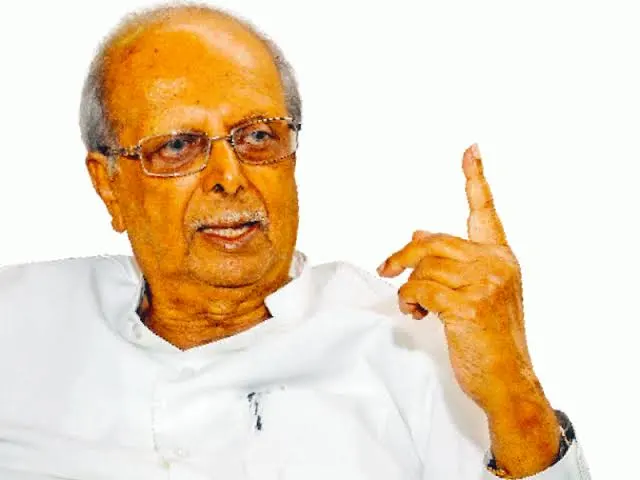
Former Minister Professor Tissa Vitharana has passed away at the age of 91, according to family sources

‘Media freedom will be in jeopardy’
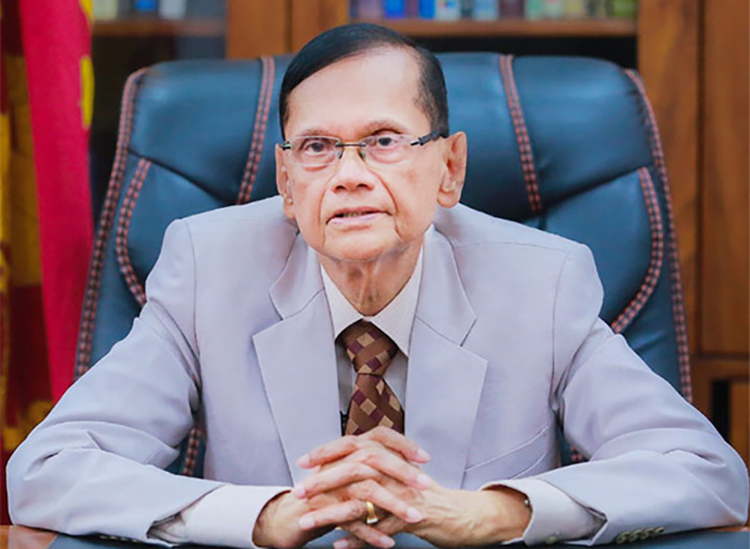
Former Minister of Justice, Constitutional Affairs, National Integration and Foreign Affairs Prof. G. L. Peiris has warned that the proposed Protection of the State from Terrorism Act (PSTA) will deal a severe blow to civil liberties and democratic rights, particularly media freedom and the overall freedom of expression.
Addressing a press conference organised by the joint opposition alliance “Maha Jana Handa” (Voice of the People) in Colombo, Prof. Peiris said the proposed legislation at issue had been designed “not to protect people from terrorism but to protect the State.”
Prof. Peiris said that the proposed law would sound the death knell for the rights long enjoyed by citizens, with journalists and media institutions likely to be among those worst affected.
Prof. Peiris took exception to what he described as the generous use of the concept of “recklessness” in the draft, particularly in relation to the publication of statements and dissemination of material. He argued that recklessness was recognised in criminal jurisprudence as a state of mind distinct from intention and its scope was traditionally limited.
“In this draft, it becomes yet another lever for the expansion of liability well beyond the properly designated category of terrorist offences,” Prof. Peiris said, warning that the elasticity of the term could expose individuals to prosecution on tenuous grounds.
Prof. Peiris was particularly critical of a provision enabling a suspect already in judicial custody to be transferred to police custody on the basis of a detention order issued by the Defence Secretary.
According to the proposed laws such a transfer could be justified on the claim that the suspect had committed an offence prior to arrest of which police were previously unaware, he said.
“The desirable direction of movement is from police to judicial custody. Here, the movement is in the opposite direction,” Prof. Peiris said, cautioning that although the authority of a High Court Judge was envisaged, the pressures of an asserted security situation could render judicial oversight ineffective in practice.
Describing the draft as “a travesty rather than a palliative,” Prof. Peiris said the government had reneged on assurances that reform would address longstanding concerns about existing counter-terrorism legislation. Instead of removing objectionable features, he argued, the new bill introduced additional provisions not found in the current Prevention of Terrorism Act (PTA).
Among them is a clause empowering the Defence Secretary to designate “prohibited places”. That was a power not contained in the PTA but previously exercised, if at all, under separate legislation such as the Official Secrets Act of 1955. Entry into such designated places, as well as photographing, video recording, sketching or drawing them, would constitute an offence punishable by up to three years’ imprisonment or a fine of up to Rs. 3 million. Prof. Peiris said. Such provision would have a “particularly chilling effect” on journalists and media personnel, he noted.
The former minister and law professor also criticised the breadth of offences defined under the draft, noting that it sought to create 13 categories of acts carrying the label of terrorism. This, he said, blurred the critical distinction between ordinary criminal offences and acts of terrorism, which require “clear and unambiguous definition with no scope for elasticity of interpretation.”
He cited as examples offences such as serious damage to public property, robbery, extortion, theft, and interference with electronic or computerised systems—acts which, he argued, were already adequately covered under existing penal laws and did not necessarily amount to terrorism.
Ancillary offences, too, had been framed in sweeping terms, Prof. Peiris said. The draft legislation, dealing with acts ‘associated with terrorism,’ imposed liability on persons “concerned in” the commission of a terrorist offence. “This is a vague phrase and catch-all in nature.” he noted.
Similarly, under the subheading ‘Encouragement of Terrorism,’ with its reference to “indirect encouragement,” could potentially encompass a broad spectrum of protest activity, Prof. Peiris maintained, warning that the provision on “Dissemination of Terrorist Publications” could render liable any person who provides a service enabling others to access such material. “The whole range of mainstream and social media is indisputably in jeopardy,” Prof. Peiris said.
Former Minister Anura Priyadarshana Yapa and SLFP Chairman Nimal Siripala de Silva also addressed the media at the briefing.
by Saman Indrajith ✍️

Landslide Early Warnings issued to the Districts of Kandy and Nuwara Eliya

Former Minister Professor Tissa Vitharana has passed away at the age of 91

Buoyant Zimbabwe plot massive upset against depleted Australia

Mexican ships arrive in Cuba with humanitarian cargo amid US oil blockade

Tarique Rahman’s BNP claims majority in Bangladesh election

Kishan, Hardik, spinners hand India record win

‘Dates have the highest sugar content to fight Coronavirus’

Sunday Island 27 December – Headlines

#SundayIsland 17th December – Headlines

Sunday Island – 28th March

Sunday Island Headlines – 21 March

Sunday Island – 21st February – Headlines
-
 Features5 days ago
My experience in turning around the Merchant Bank of Sri Lanka (MBSL) – Episode 3
-

 Business6 days ago
Zone24x7 enters 2026 with strong momentum, reinforcing its role as an enterprise AI and automation partner
-

 Business5 days ago
Remotely conducted Business Forum in Paris attracts reputed French companies
-

 Business5 days ago
Four runs, a thousand dreams: How a small-town school bowled its way into the record books
-

 Business5 days ago
ComBank and Hayleys Mobility redefine sustainable mobility with flexible leasing solutions
-
 Business2 days ago
Autodoc 360 relocates to reinforce commitment to premium auto care
-

 Business6 days ago
HNB recognized among Top 10 Best Employers of 2025 at the EFC National Best Employer Awards
-

 Midweek Review2 days ago
A question of national pride