
News
Sri Lanka: One in three families see changes in children’s mental health amid economic crisis

COLOMBO, 28 July 2022 – Nearly one in three parents responding to Save the Children’s survey in June 2022, have noticed negative changes in their children’s behaviour in the last 6 months.
Since the beginning of the economic crisis, children have showed signs of distress and withdrawal. The survey of more than 2,300 families across nine districts in Sri Lanka also found nearly three out of four households had to spend more time with their children to accommodate their emotional and mental health needs.
Soaring inflation, daily power cuts, and shortages of fuel, food and medicines have stretched families beyond their ability to cope. The economic stress on families has triggered one in 10 children to experience changes in their appetite and show more signs of aggression. Save the Children’s survey also found that one in five children experienced changes in their sleep patterns, had difficulty regulating their emotions, showed violence towards others, or wet their beds.
Lakmi*, is a 10 year old girl from Ratnapura, Sri Lanka. She can’t go to school on days buses aren’t available, and talks about witnessing long fuel queues in her town.
“The situation in the country makes me very sad. I am afraid that we won’t have a country at the end of all this. There are problems with fuel, and the prices of food have also increased,” said Lakmi. “If I had the chance to do something for my country, I would work for the betterment of the people.”
Thisal* is a 13 year old boy from Badulla and he shared: “I don’t have a way to continue my learning properly because schools are often closed. I am scared that if exams are held, I might get low marks.”
Nadeesha*, 37, a mother from Badulla, explained that the financial pressure this crisis is having on her as a parent is having an influence on her children’s mental wellbeing:
“I have observed many big changes in my children’s behaviour. They are sad about the situation, but they try not to show it. They tend to worry because I am unable to provide them with what they like, the way I used to do. They worry that their parents don’t have a steady income to support the family. They are not happy like before. They don’t go out much to play. They are worried about what’s going to happen tomorrow.”
According to the UN’s Sri Lanka Humanitarian Needs and Priorities Plan, although Sri Lanka’s economic crisis is leading to a significant rise in mental health issues, the country cannot provide adequate Mental Health and Psychosocial Support (MHPSS) for those who need it due to the lack of financial resources. Without appropriate MHPSS, the mental health impact of the crisis on children can worsen, leading to poorer chances of long-term wellbeing and resilience.
Save the Children’s National Director in Sri Lanka, Julian Chellappah, said:
“In difficult and unsettling situations, children may externalise their feelings by showing signs of distress, with more crying and screaming among young children, more aggressive behaviour or violence, as well as difficulties in emotional regulation. Some will internalise their feelings, resulting in withdrawal. This is what we’re seeing unfold in Sri Lanka.
“Children often find it hard to make sense of crisis and often need support from family and friends to help them understand and cope with the resulting adversities. If children do not get the support they need, their symptoms can worsen.
“The constant worry over accessing food, clean water, medicines and even education is taking an immense toll on Sri Lankan children. We are calling on the government to find a sustainable economic solution to this crisis, to get families back on their feet and ensure children’s long-term mental health needs are prioritised and adequately funded.”
Save the Children in Sri Lanka is releasing its first Rapid Needs Assessment report, aimed to understand how communities are impacted by the ongoing crisis. The organization is responding to the needs of vulnerable families with plans to provide cash and livelihood support for nearly 1 million people. Save the Children’s humanitarian response strategy will also prioritize Mental Health and Psychosocial Support (MHPSS) by raising community awareness and empowering communities, both adults and children, to support each other’s psychosocial wellbeing in these tremendously distressing times.
The survey data was collected from May to June 2022 from a total of 2,309 households across nine districts in Sri Lanka. Every household had children. The minimum sample size of 245 households in each province provides a 90% confidence interval and a 5% margin of error for the target population.
Aspects of mental health and psychosocial well-being in children and adults were measured through self-assessment and observational rating scales, covering a number of positive and negative feelings as well as changes in children’s behaviour.
12.7% of families noticed changes in their children’s appetite
21.5% of families noticed their children either experienced changes in emotional regulation, changes in sleep patterns, unusual crying and screaming, showing violence towards others, or wetting their beds.

Quarantine and Prevention of Diseases Ordinance No. 3 of 1897 is the principle law that regulates the prevention of the spread of communicable diseases and the implementation of quarantine measures.
However, at present, it has been observed that the risk of spreading communicable diseases across borders have significantly increased due to considerable increase in the
international and domestic movement of persons, goods, and services and frequent international travel and trade have led communicable diseases spread rapidly between countries.
Accordingly, although cabinet approval was granted in the 2016 to amend the Quarantine and Prevention of Diseases Ordinance No. 3 of 1897, the relevant amendment bills have not been presented to Parliament.
Therefore, as per the proposal made by the Minister of Health and Mass Media, the Cabinet of Ministers has approved the appointment of a Review Committee to study the amendment bill that has been prepared and propose suitable amendments to meet the current health challenges as well as challenges that may arise in the future, taking into consideration the experience obtained during the epidemic situations that have occurred in the past.
The Cabinet of Ministers granted approval to the proposal submitted by the President to make a donation of United States Dollars One million as humanitarian and economic relief to the government of Nepal
Latest News
Sun directly overhead Kalpitiya, Talawa, Sinharagama, Galkadawala, Nachchaduwa, Padikaramaduwa, Gomarankalla and Verugal about 12.10 noon today (01)


The sun is going to be directly over the latitudes of Sri Lanka from 28th of August to 07th of September due to its apparent southward relative motion.
The nearest places of Sri Lanka over which the sun is overhead today (01) are Kalpitiya, Talawa, Sinharagama, Galkadawala,
Nachchaduwa, Padikaramaduwa, Gomarankalla and Verugal about 12.10 noon.

Amendment of the Quarantine and Prevention of Diseases Ordinance No. 3 of 1897
Cabinet approves donation of USD One Million to the Government of Nepal

Nahida, Marufa help Bangladesh brush aside Indonesia

Showers will occur in the Western, Sabaragamuwa, Southern and Uva provinces and in Kandy and Nuwara-Eliya districts

Sun directly overhead Kalpitiya, Talawa, Sinharagama, Galkadawala, Nachchaduwa, Padikaramaduwa, Gomarankalla and Verugal about 12.10 noon today (01)

SJB asks what Speaker intended to do about allegations against CJ

‘Dates have the highest sugar content to fight Coronavirus’

Sunday Island 27 December – Headlines

#SundayIsland 17th December – Headlines

Sunday Island – 28th March

Sunday Island Headlines – 21 March

Sunday Island – 21st February – Headlines
-

 News5 days ago
Eight politicians in drug kingpin probe
-

 Features3 days ago
“Wrap Me Up in My Blazer”— A Gentlemanly Bradby Reminiscence
-

 Business5 days ago
Sri Lanka opens up: A new season of direct connectivity
-

 Features5 days ago
Redefining ageing in Sri Lanka
-
 Features7 days ago
Insights from Chieftains of Uva: Genealogy of two Kandyan Families – Part II
-
 Latest News5 days ago
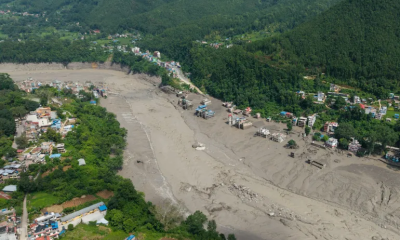
Nepal-Tibet floods: What happened, what caused them and who is missing?
-

 Editorial7 days ago
Warning of power cuts: El Niño and corruption
-

 Features7 days ago
Export diversification: Missing the wood for the trees – Part I