
News
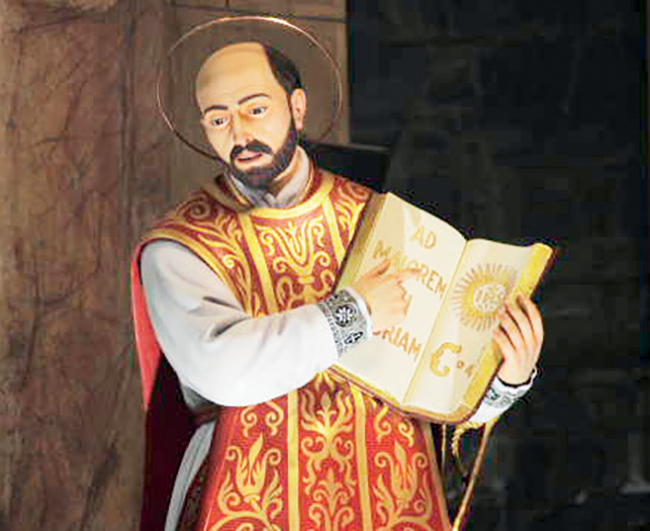
IGNATIUS – THE SPIRITUAL PATHFINDER

By: Shenal Fernando
Early Life· Ignatius De Loyola was born in the Basque region of Gipuzkoa in northern Spain in the year 1491 to a family of 13 and was the youngest child of a noble and wealthy family. When Ignatius was seven years old, he lost his mother. At the age of 16, he was appointed as a page to Juan Velazquez, the Kingdom of Castile’s treasurer. He was regular in the court as a member of the Velazquez household and tasted everything it had to offer.
Ignatius was a gambling addict, a thorn in the side, and not beyond participating in swordplay on occasions. When he was 30 years old in May 1521, he eventually found himself as an officer defending the castle of Pamplona against the French, who claimed the province as their own against Spain. Nevertheless, Ignatius persuaded the leader of the Spanish soldiers to fight for the dignity of Spain despite even losing. However, being injured severely, Ignatius was brought home by French troops rather than being in prison due to his bravery.
Conversion
It was Ignatius’ second phase of life when he began to live a saintly existence. He asked for some romantic literature to pass the time during the protracted weeks of his recovery because he was bored. Fortunately, there was none at Loyola’s house but there was a book about the life of Jesus Christ and the saints. Ignatius began reading them out of desperation. The more he read, the more he thought the saint’s deeds were worthy of imitation. Meanwhile, he continued to dream about recognition and triumph, as well as about winning the heart of a specific noble lady of the court.
Later, Ignatius discovered that by reading and reflecting on the books about the saints and the life of Christ, he realized a sense of peace and comfort in his life. However, he felt anxious and unfulfilled whenever his lengthy daydreams about his royal lady were through. This encounter marked not just the start of his conversion but also the beginning of spiritual awareness.
Meanwhile, Ignatius made up his mind to relocate to Jerusalem, where our Lord had lived throughout his time on earth. He started his journey from Barcelona and traveled to the Benedictine Shrine of our Lady of Montserrat where he made a general confession and kept vigil before the altar of the Blessed Virgin Mary through Chivalric customs. On February 2, 1528, he arrived in Paris, where he studied until 1535. Ignatius rapidly attracted a new group of followers in Paris, but their way of life led to many issues to the religious authorities that he was forced to defend himself. He was finally persuaded by this incident that he should delay engaging in any public religious activity until he was ordained.
Company of Jesus
Ignatius left Paris in the early months of 1535 before finishing his theology studies because of his health. After spending more than six months in Spain, he traveled to Bologna and Venice to continue his studies. His Parisian companions joined him in Venice on January 8, 1537. On June 24, 1537, Ignatius and most of his friends were ordained. They spent a lot of time praying throughout the subsequent 18 months and gained experience in the ministry.
Ignatius celebrated his first mass at Rome’s Church of St. Mary Major on Christmas Day 1538. In the third phase of his life his studies which were far from a formality ended. Ignatius had disabilities, but Diego Laynez, a co-founder of the Society of Jesus and an excellent observer, thought he showed as much diligence as any of his classmates. During the season of Lent in 1539, Ignatius requested his companions to join him in Rome to discuss the future.
They had started forming a religious order, but due to travel concerns, they had to consider how life could be continued together. Ignatius and his friends agreed in establishing a society with the Pope’s blessing in which they would swear loyalty to a superior general who would hold office after spending weeks in prayer and deliberation. A vow to this effect was added along with the customary vows of poverty, chastity, and obedience.
The First General and The Expansion
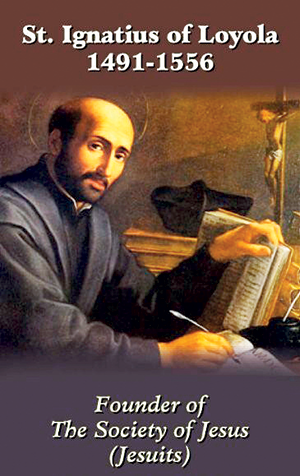
·The plan of the new order was approved by Pope Paul III in 1540. His friends chose Loyola to hold the position of general. With the blessing of Pope Paul III, Ignatius of Loyola established the Society of Jesus in 1540. He had formed a vibrant group of intelligent men who wanted nothing more than to aid others in their search for God. Jesuits originally intended to be mobile missionaries preaching and performing sacraments to achieve good according to Ignatius. The number of Jesuits worldwide began to mushroom from the initial 10 to large numbers up until the present day. As of January 1, 2022, there were 14,439 Jesuits in the world. The total figure can be categorized as follows: 583 novices, 2,587 scholastics, 837 brothers and 10,432 priests, respectively.
Death of a noble leader
· Loyola was the superior general of the order, yet he was often ill. He was so ill in January 1551 that he urged his coworkers to accept his resignation from the position of superior. He managed the order despite his health till his passing in July 1556. Loyola had been praying in a way that was ultimately recorded in ‘The Spiritual Exercises’ and seems to have been on par with the greatest mystics ever since his time at Manresa.
Spiritual legacy tendered
St. Ignatius Loyola created a collection of prayers, meditations, and contemplative practices called ‘The Spiritual Exercises’, to aid lay people, in developing a closer relationship with God. He always valued that getting closer to God is most important. All the exercises were traditionally taught as a ‘long retreat’ lasting roughly 30 days of isolation and silence. Spiritual Exercises have received increased attention as a lay or religious program and further, anyone who seeks to build a lasting relationship with the divine.
A ‘retreat in daily life’, which entails a months-long practice of daily prayer and meetings with a spiritual director, is currently the most popular method of completing the exercises. Ignatius received the exercises from God, but what we truly mean is that he paid constant attention to how God guided him, like a gentle teacher, to develop faith and freedom. He showed the way to the Kingdom of God through Joy and Pardon given by Jesus Christ.
Ignatius became convinced that his experiences should be shared for the benefit of others while reflecting on and writing about his spiritual journey. He also realized that specific practices of prayer, imagination, and self-denial would help others travel a similar spiritual path toward God and experience a profound sense of joy, serenity, and peace.
Ignatian Discernment in vogue
St. Ignatius throughout his spiritual journey explains that it’s important to be free from attachment to a specific decision or result. Ignatius also suggested that people discuss their considerations with a trusted friend or confidante; he took this counsel into account when coming to judgments. He also encouraged people to act in ways that will advance ‘the greater glory of God’. Ignatius taught people to make decisions based on reason, secure in the knowledge that they have put in the necessary time and effort to do so. He does, however, add that people ought to look for further evidence to see if reason supports their decision. If they experience feelings of peace, freedom, joy, love, or compassion after deciding, that could be a sign that they made the right choice.
The legacy continues
Ignatius did not order Jesuits to start schools, but he immediately realized how the lives of people could be improved by a well-rounded education system that was grounded in both the Renaissance’s humanistic renewal and Christian ideals. He started to believe that one of the most crucial methods to encourage ‘the betterment of souls’ is through the mission of education. The Jesuits immediately established themselves as respected academics and teachers.
European students flocked to the expanding schools, and Jesuit missionaries established schools where none had previously been. The Jesuits committed to educating everyone they could, and many of these institutions catered to pupils who might not obtain a formal education. In his later years, Ignatius largely devoted his life in obtaining money for these institutions so that students who couldn’t afford the tuition wouldn’t be turned away. Ignatius developed 35 schools before he passed away in 1556, and the Society of Jesus had 1,000 members at that time.
Conclusion
Pope Paul V beatified Ignatius Loyola in 1609, and Pope Gregory XV canonized him in 1622. St. Ignatius of Loyola is the patron saint of troops/soldiers and was named as the patron saint of all spiritual retreats by Pope Pius XI in 1922. The Feast of St. Ignatius of Loyola is celebrated on July 31.
I wonder whether there is a better way in ending this exercise than quoting a beautiful song I came across as I was praying, pondering, and preparing. A Jesuit priest ,who is a friend of mine shared it with me. This song has been initially based on the life and legacy of St. Francis Xavier, and I am confident that the same sentiments can be explicitly explained about Francis Xavier’s companion, St. Ignatius of Loyola as well. This song was initially named as ‘AMDG: A World is not enough’, hymn of St. Francis Xavier, by Cristobal Fones, S.J.
Let us pray that the fire which kindled the hearts of these saints will kindle our hearts as well.
“When the world shuts the sun in darkness,
when all dreams are swallowed,
deep beneath the sea;
When no one is so caring to dare crossing the ocean
that corners the poor and the broken;
Rise my light, my Jesus;
Set me soaring, flying;
Let me trust your promises;
Let me do your will.
Jesus, Fire in my heart;
My heart, aflame in love for the world;
Feel No limits, sees no boundaries, only God, my hope;
Feel No limits, sees no boundaries only God, my hope.

News
Prime Minister of Sri Lanka holds a bilateral meeting with Minister for Education and Skills Development of Bhutan

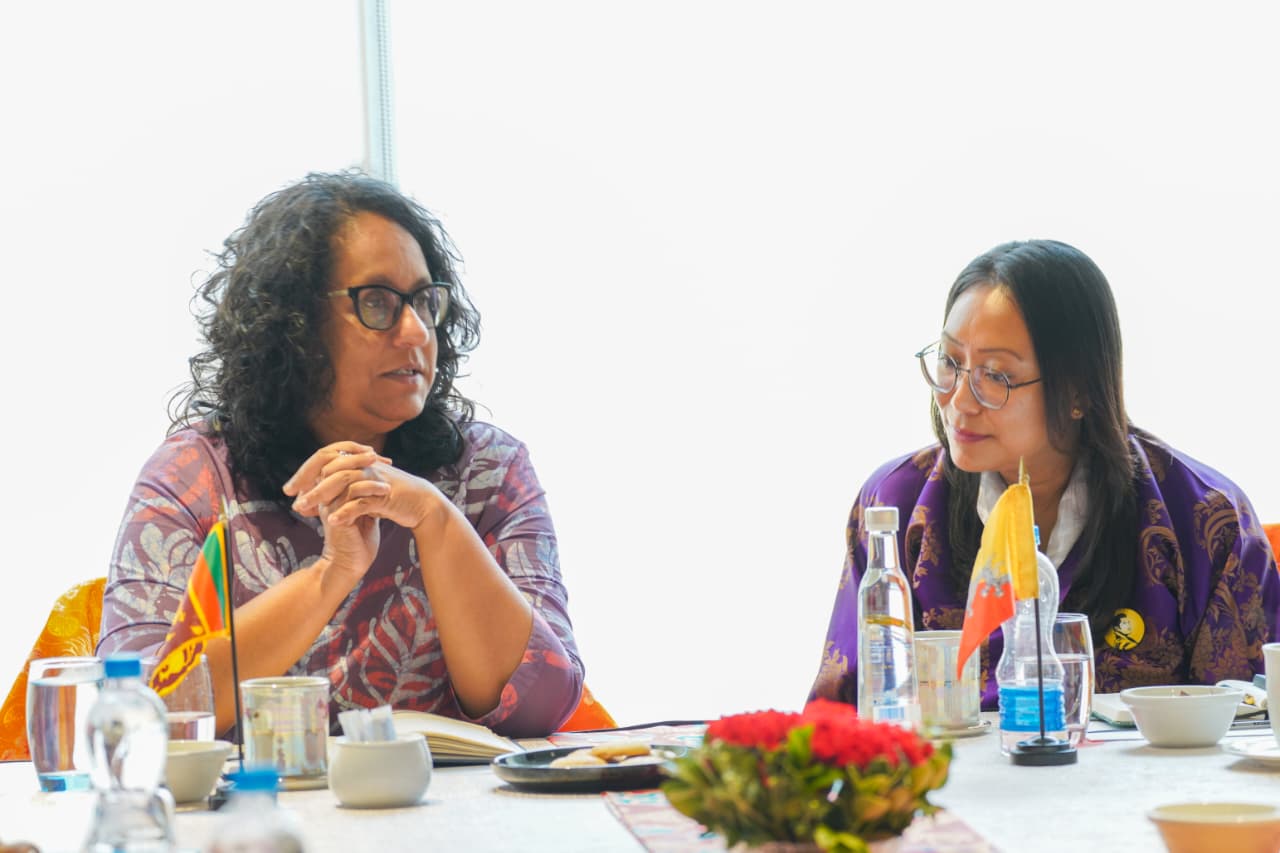
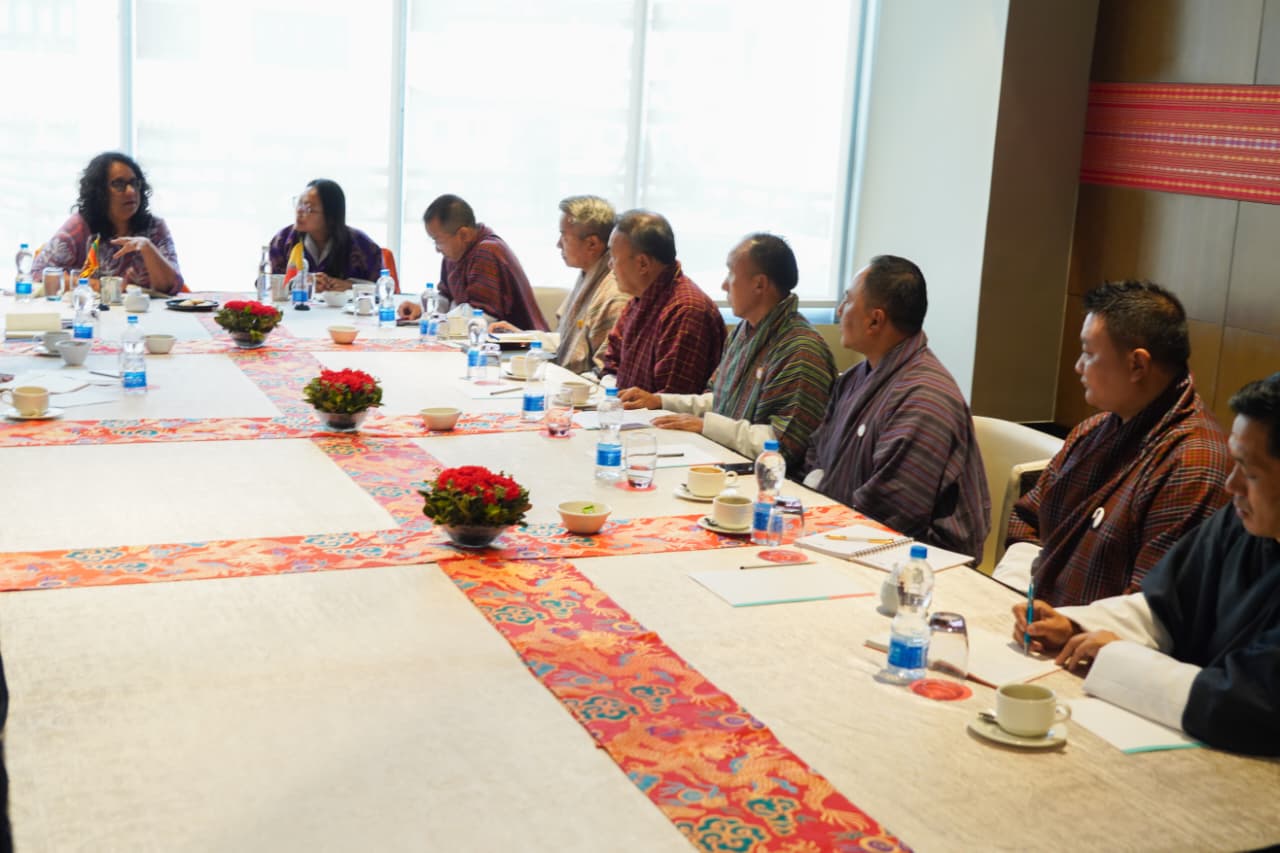
On the sidelines of the inaugural Global Conscious Food Systems Summit 2026, being held in Bhutan from 31 August to 4 September 2026, Prime Minister of Sri Lanka, Dr. Harini Amarasuriya, in her capacity as Minister of Education, Higher Education and Vocational Education, held a productive bilateral meeting with Yeezang De Thapa, Minister for Education and Skills Development of Bhutan, on 03 September 2026.
The discussions focused on further strengthening and expanding Sri Lanka-Bhutan cooperation in the education sector, with particular emphasis on developing mutually beneficial initiatives through enhanced Government-to-Government engagement.
Both sides underscored the importance of deepening institutional cooperation and exploring new avenues for collaboration in education, higher education and vocational training, with a view to creating greater opportunities for students, educators and academic institutions of both countries.
During the meeting, both sides agreed to initiate discussions towards the finalization and signing of a Memorandum of Understanding (MoU) on cooperation in the fields of education and vocational training. It was also agreed that the implementation of the MoU could be facilitated through the establishment of a Joint Working Group, headed at the Secretary level, with meetings to be convened annually to review progress, identify new areas of cooperation, and facilitate the effective implementation of agreed activities.
The major areas of cooperation discussed included enhancing collaboration among universities and academic institutions, promoting academic and faculty exchanges, joint research and university programmes, strengthening training and capacity-building opportunities for educators and teachers, and sharing expertise and best practices in the education and vocational training sectors.
The two sides also discussed strengthening child protection and safeguarding mechanisms, promoting ethical values among students, and addressing violence against children while ensuring their safety, protection, well-being and access to quality education.
Opportunities for Bhutanese students to pursue undergraduate studies at universities in Sri Lanka were also discussed, with particular emphasis on Dentistry, Medicine (MBBS), and allied health disciplines such as Physiotherapy. The discussions further covered opportunities for postgraduate studies in medical and health sciences at Sri Lankan universities, as well as enhanced collaboration among universities and other academic institutions of the two countries.
The meeting provided a valuable opportunity for Sri Lanka and Bhutan to advance cooperation in education and vocational training and explore new avenues for long-term collaboration for the mutual benefit of students, educators and academic institutions of both countries.
(Prime Minister’s Media Division)
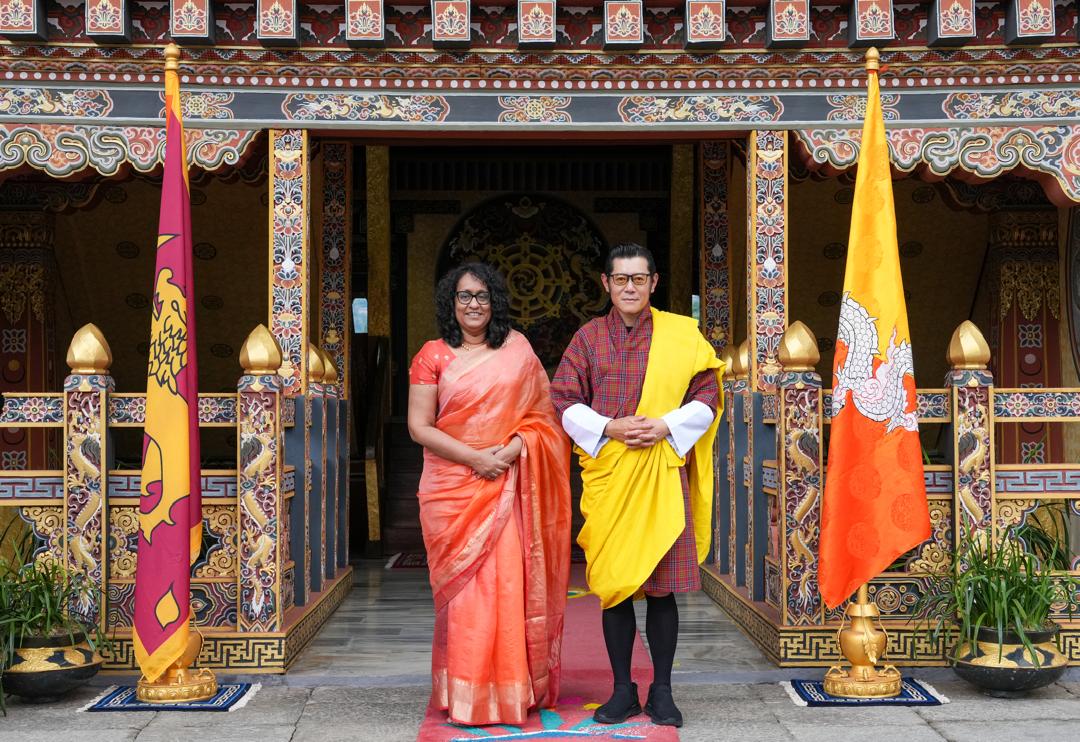
Prime Minister Dr. Harini Amarasuriya had an audience with His Majesty King Jigme Khesar Namgyel Wangchuck at the Tashichhodzong in Thimphu on September 02, during her official visit to the Kingdom of Bhutan.
The cordial discussion focused on Bhutan’s future development priorities and opportunities for cooperation between the two countries.
His Majesty expressed Bhutan’s interest in drawing on Sri Lanka’s experiences and expertise in areas relevant to its development plans. The discussion also focused on promoting investment between the two countries, including the possibility of establishing an investment zone in Bhutan.
The two sides also exchanged views on demographic challenges facing Bhutan, including the increasing migration of young people and its impact on the country’s population and future workforce.
The meeting highlighted the importance of strengthening bilateral cooperation and sharing experiences and best practices in support of the sustainable development of both countries.
(Prime Minister’s Media Division)
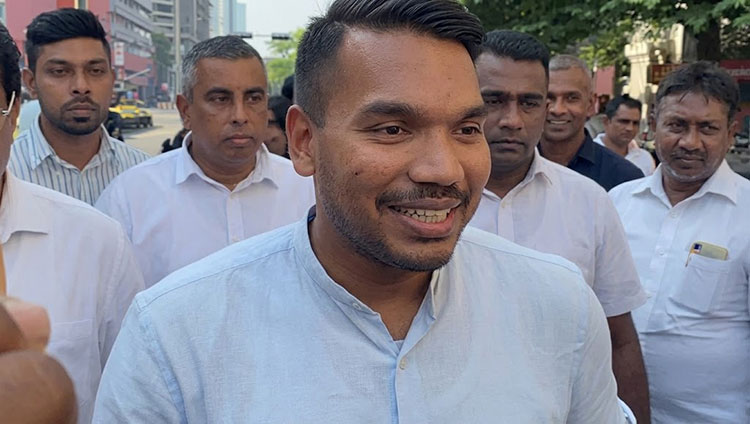
Sri Lanka Podujana Peramuna (SLPP) Member of Parliament Namal Rajapaksa has been arrested by the Commission to Investigate Allegations of Bribery or Corruption (CIABOC).
Namal Rajapaksa had been summoned by CIABOC to provide a statement in connection with investigations into the controversial Airbus deal. He was subsequently arrested by CIABOC after recording his statement for over 5 hours.

Prime Minister of Sri Lanka holds a bilateral meeting with Minister for Education and Skills Development of Bhutan

Prime Minister Meets His Majesty the King of Bhutan

Kusal Mendis, Binura Fernando ruled out of T20I series in England

SLPP MP Namal Rajapaksa arrested by CIABOC

Devapathiraja clinch U15 Division I title with 33-run win over Royal

Mandhana’s record ton powers India into semi-finals

‘Dates have the highest sugar content to fight Coronavirus’

Sunday Island 27 December – Headlines

#SundayIsland 17th December – Headlines

Sunday Island – 28th March

Sunday Island Headlines – 21 March

Sunday Island – 21st February – Headlines
-

 Features6 days ago
“Wrap Me Up in My Blazer”— A Gentlemanly Bradby Reminiscence
-

 Features5 days ago
When Sri Lankan stories find their own voice
-
 Features6 days ago
JVP/NPP government as seen from outside by Lionel Bopage now domiciled in Australia
-
 News5 days ago
BASL takes exception to Justice Ganepola being denied a place in SC
-

 Editorial7 days ago
Govt. trying to dupe UN Rapporteur?
-
 Features6 days ago
Prof. Savitri Goonesekere: What has she done?
-

 News2 days ago
Denied of promotion to SC despite vacancies, justice Gurusinghe retires
-

 Latest News2 days ago
Grade 5 scholarship exam results released