
News
Monkeypox: History, Symptoms, Vaccine, Treatment

It is a viral zoonotic infection that can spread from animals to humans, however, it is also contagious among humans.SNS:With over 16,000 cases and five deaths being reported from around 75 countries due to Monkeypox, the World Health Organisation (WHO) on Saturday finally declared the outbreak a global health emergency. Meanwhile, four cases have been reported in India, one from Delhi and the other three from Kerala.
Here’s all you need to know about the virus, its symptoms, treatment, history, etc.
What is Monkeypox?
Monkeypox is an illness caused by a virus of the same name. It is a viral zoonotic infection that can spread from animals to humans, however, it is also contagious among humans. This virus is transmitted via direct or indirect contact through infectious skin or lesions, face-to-face and skin-to-skin contacts, and the exchange of respiratory droplets.
Monkeypox virus is part of the variola virus family of viruses, the same virus that causes smallpox. Its symptoms are similar to that of smallpox but milder, and it is rarely fatal and is not related to chickenpox.
History
A viral infection resembling smallpox was first detected in humans in 1970. Monkeypox is less dangerous and contagious than smallpox, which was eradicated in 1980.According to a study of 528 people in 16 countries published in the New England Journal of Medicine, ninety-five percent of Monkeypox infections have been transmitted through sexual activity.
The disease is called Monkeypox because it was first identified in colonies of monkeys and kept for research in 1958. It was only later detected in humans in 1970.Monkeypox primarily occurs in central and west Africa, in areas with proximity to tropical rainforests, and has been increasingly appearing in urban areas. Animal hosts include a range of rodents and non-human primates.
Symptoms
Monkeypox can cause a range of signs and symptoms. While some people have mild symptoms, others may develop more serious symptoms and need care in a health facility.Those at higher risk for severe disease or complications include pregnant women, children and people who are immunocompromised.
The most common symptoms of monkeypox include fever, headache, muscle aches, back pain, low energy, and swollen lymph nodes. This is followed or accompanied by the development of a rash which can last for two to three weeks. The rash can be found on the face, palms of the hands, soles of the feet, eyes, mouth, throat, groin, and genital and/or anal regions of the body.
The number of lesions can range from one to several thousand. Lesions begin flat, then fill with liquid before they crust over, dry up and fall off, with a fresh layer of skin forming underneath.
Symptoms typically last two to three weeks and usually go away on their own or with supportive care, such as medication for pain or fever. People remain infectious until all of the lesions have crusted over, the scabs fallen off and a new layer of skin has formed underneath.Anyone who has symptoms that could be monkeypox or who has been in contact with someone who has monkeypox should call or visit a health care provider and seek their advice.
Vaccine
WHO recently approved a vaccine for the prevention of Monkeypox. Some countries are recommending vaccination for persons at risk. Many years of research have led to the development of newer and safer vaccines for an eradicated disease called smallpox, which may also be useful for Monkeypox. Only people who are at risk (for example someone who has been in close contact with someone who has the virus) should be considered for vaccination. Mass vaccination is not recommended at this time.
Treatment
The WHO recommends that people with monkeypox should follow the advice of their health care provider. Symptoms normally resolve on their own without the need for treatment. If needed, medication for pain (analgesics) and fever (antipyretics) can be used to relieve some symptoms.
It is important for anyone with monkeypox to stay well-hydrated, eat well, and get enough sleep. People who are self-isolating should take care of their mental health by doing things they find relaxing and enjoyable, staying connected to loved ones using technology, exercising if they feel well enough, and can do so while isolating.
People with monkeypox should avoid scratching their skin and take care of their rash by cleaning their hands before and after touching lesions and keeping skin dry and uncovered (unless they are unavoidably in a room with someone else, in which case they should cover it with clothing or a bandage until they are able to isolate again). The rash can be kept clean with sterilised water or antiseptic.
Saltwater rinses can be used for lesions in the mouth, and warm baths with baking soda and Epsom salts can help with lesions on the body. Lidocaine can be applied to oral and perianal lesions to relieve pain.Many years of research on therapeutics for smallpox have led to development of products that may also be useful for treating monkeypox. An antiviral that was developed to treat smallpox (tecovirimat) was approved in January 2022 by the European Medicines Agency for the treatment of monkeypox.

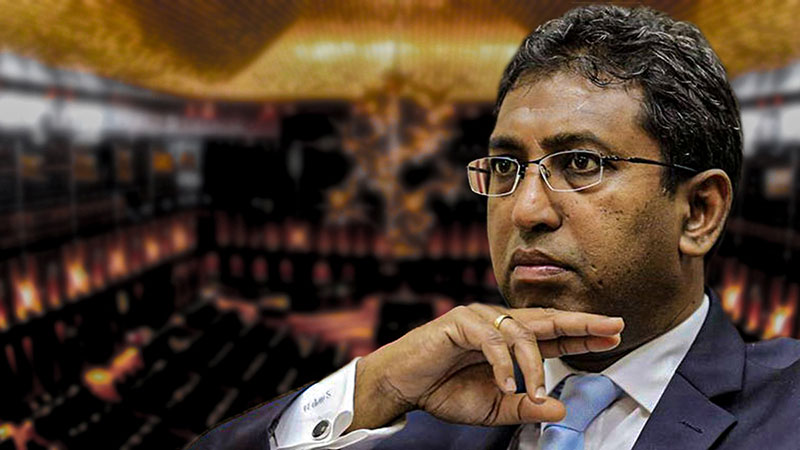
COPF final report on USD 2.5 mn cyber fraud recommends action against all responsible
The US$2.5 million loss incurred during Sri Lanka’s foreign debt repayment to Australia was a clear case of a cybercrime and theft, Committee on Public Finance (COPF) Chairman Dr. Harsha de Silva told Parliament yesterday.
Presenting the COPF final report on the cyber fraud, Dr. de Silva said the incident amounted to a serious financial crime and called for a comprehensive investigation, by law enforcement authorities, to identify and prosecute all those responsible.
The report revealed serious governance, procedural and operational failures that enabled the fraudulent transfer of public funds, while recommending sweeping reforms to strengthen cybersecurity, financial controls and public debt management systems.
According to the report, officials of the Treasury and the Central Bank bore responsibility for governance lapses that contributed to the failures. It also highlighted the fact that the Ministry of Finance was operating an outdated Microsoft Exchange Server after security support had ended, while basic safeguards, such as multi-factor authentication, had not been implemented.
The COPF said suspicious payment instructions linked to debt repayments involving India, the United Kingdom, Germany and Belgium had also been detected, preventing further losses. However, the US$ 2.5 million fraud materialised only in the repayment transaction involving Australia.
The report has noted that officials had failed to verify lender email domains, relied on unverified email communications and lacked adequate internal controls, allowing the fraud to continue for months.
Although the investigation uncovered system-wide weaknesses across several institutions, only four mid-level Finance Ministry officials had been suspended so far, the report said.
The COPF has recommended a special audit of the foreign debt repayment process, strengthened cybersecurity measures across state institutions, updated financial regulations and improvements to public debt management systems.
by Saman Indrajith
News
Opposition signs no-confidence motion against Justice Minister for dereliction of duty over Negombo Prison deaths
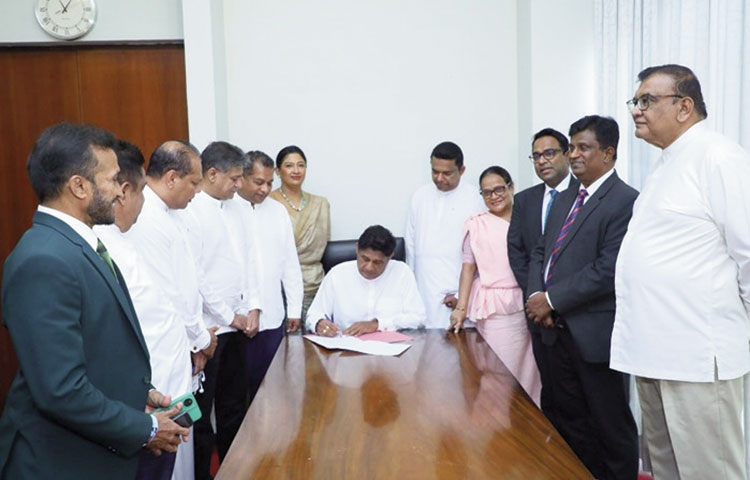
Opposition Leader Sajith Premadasa, together with Opposition MPs, yesterday signed a No-Confidence Motion (NCM) in Parliament against Justice Minister Harshana Nanayakkara.The move comes in response to the unrest at the Negombo Prison, where both prison officers and inmates were killed.
Opposition members said the Minister had failed to fulfill his responsibility and accountability regarding their safety.According to the Opposition group, the NCM seeks to hold the Minister directly accountable for lapses in ensuring protection within the prison system.

The Attorney General yesterday informed the Supreme Court that the government has decided to review the legality of agreements entered into by the previous administration to hand over the country’s electronic visa issuance operations to private companies.
Additional Solicitor General Viveka Siriwardena, appearing for the Attorney General, made the submission when the Supreme Court took up the fundamental rights petitions filed by former MPs President’s Counsel M.A. Sumanthiran, Patali Champika Ranawaka, and Rauff Hakeem, challenging the previous Cabinet’s decision to outsource the e-visa system.
The petitions were heard before a three-judge bench, comprising Chief Justice Preethi Padman Surasena and Justices Achala Wengappuli and Arjuna Obeyesekere.
The Additional Solicitor General informed court that the current Cabinet had appointed a subcommittee to examine the legality of the agreements with the private companies and requested time to report on its findings, stating that the review was still underway.
President’s Counsel Sumanthiran, appearing as one of the petitioners, told the court that although the present government had indicated its intention to cancel the transaction, the petitioners wished to proceed with the case.
He noted that members of the current Cabinet had been named as respondents in the petitions.The Supreme Court directed the petitioners to issue notice on the members of the current Cabinet, named as respondents, and fixed September 29 for further proceedings.

Spain leave it late to book semifinal date with France

Showers will occur in the Sabaragamuwa, Western and North-western provinces and in Galle, Matara, Kandy and Nuwara-Eliya districts

US$ 2.5 mn cyber heist exposes system failures

Opposition signs no-confidence motion against Justice Minister for dereliction of duty over Negombo Prison deaths

AG informs SC of e-visa agreement review

Navy, Coast Guard seize smuggled pharmaceuticals and cosmetics in Puttalam

‘Dates have the highest sugar content to fight Coronavirus’

Sunday Island 27 December – Headlines

#SundayIsland 17th December – Headlines

Sunday Island – 28th March

Sunday Island Headlines – 21 March

Sunday Island – 21st February – Headlines
-
 News6 days ago
Singapore-based Buddhist monk marks nearly four decades of humanitarian service
-
 News1 day ago
Herath warns prospective migrant workers not to get fleeced by racketeers
-

 News5 days ago
AI concerned over proposed SL military deployment in Haiti
-

 Midweek Review3 days ago
Unexpected focus on ‘pieces of tin’ worn by military men
-
 Latest News4 days ago
Nyamhuri and Ngarava stun Bangladesh by defending 141
-

 Features6 days ago
The NPP’s New Challenge: Balancing Easter Lawfare and Economic Welfare
-

 News2 days ago
Negombo Prison riot: Ensuring protection of prisoners fundamental responsibility of the state – UN
-

 Editorial3 days ago
Prison riots and political battles