Connect with us

News

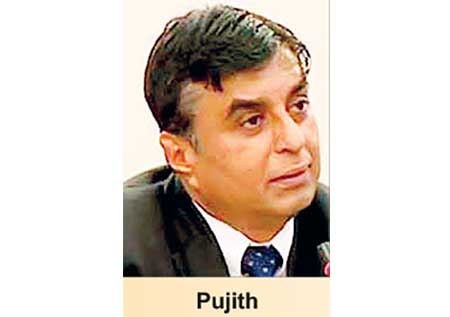
Pujith: Sirisena interfered with police transfers

Published

on

By Rathindra Kuruwita

Former President Maithripala Sirisena had interfered with transferring of senior police officers from 2018 although an independent Police Commission was established, through the 19th Amendment to the Constitution, former IGP Pujith Jayasundara yesterday informed Presidential Commission of Inquiry (PCoI) investigating the Easter Sunday attacks.

Jayasundara said that towards the latter part of the previous government, there had been confusion in many spheres, and that had prevented them from taking key decisions on national security.

The ex-IGP said that he had been asked not to attend the National Security Council (NSC) meetings in October 2018 and that led to serious issues.

“I was aware that an NSC meeting was to be held on October 23, 2018. Usually, I was informed of such events or on the same morning. I didn’t get a call and I called former Defence Secretary Kapila Waidyaratne to ask whether there was an NSC meeting scheduled for that day. He said President Sirisena had asked him not to invite me. That was very upsetting,”

Jayasundara said he had been invited to the NSC meeting on November 03, 2018 and on that day Sirisena had asked him to transfer former CID Inspector Nishantha Silva because he was handling a case against then Chief of Defence Staff (CDS) Ravindra Wijegunaratne and some Army officers.

President Sirisena had asked him to transfer Silva from the CID, but realising that it would lead to an uproar, he had attempted to dissuade Sirisena. He said he had informed Sirisena that former IP Nishantha Silva had faced no prior disciplinary action.

“The President agreed but he didn’t change his mind. Then, he left the country and a few days later former Defence Secretary Hemasiri Fernando called me and said that President Sirisena wanted me remove former IP Nishantha Silva immediately. I then transferred Silva to the Negombo Police station. I also submitted a report to the Police Commission informing that the decision had been at an NSC meeting.”

Jayasundara said Sirisena had asked him after returning from overseas who had ordered the transfer of IP Silva to the Negombo police station. He said he had told the President: “Sir, it was you who instructed me. He got very annoyed and said he had never such an order and disconnected the line.”

The Commissioners asked Jayasundara whether his absence from the NSC had had any impact on national security. Jayasundara said he had not been informed of what transpired at the NSC and that the fact that another senior officer of the Police was invited to the NSC had upset him.

Jayasundara said that the conflict between President Sirisena and Prime Minister Ranil Wickremesinghe had become a serious concern and that when both of them gave contradictory orders, he had chosen to follow presidential directives.



Continue Reading
Click to comment

Leave a Reply

Your email address will not be published. Required fields are marked *

Latest News

No change in death toll, stands at 639 as at 0600AM today [11th]

Published

on

By

The Situation Report issued by the Disaster Management Center at 0600 AM today [11th December 2025] confirms that there has been no addition to the death toll in the past 24 hours and remains at 639. The number of missing persons has reduced by ten [10] and stands at 193.

There is a slight reduction in the  number of persons who are at safety centers and, stands at 85,351  down from 86,040 yesterday.  Five safety centers have also closed down in the past 24 hours and  873 safety centers are still being maintained.

Continue Reading

News

Regulatory rollback tailored for “politically backed megaprojects”— Environmentalists

Published

on

Investigations have revealed that the government’s controversial easing of environmental regulations appears closely aligned with the interests of a small but powerful coalition of politically connected investors, environmentalists have alleged.

The move weakens key Environmental Impact Assessment (EIA) requirements and accelerates approvals for high-risk projects, has triggered a storm of criticism from environmental scientists, civil society groups and even sections within the administration, they have claimed.

Environmental Scientist Hemantha Withanage, Executive Director of the Centre for Environmental Justice, told The Island that the policy reversal “bears the fingerprints of elite political financiers who view Sri Lanka’s natural assets as commodities to be carved up for profit.”

“This is not accidental. This is deliberate restructuring to favour a specific group of power brokers,” he told The Island. “The list of beneficiaries is clear: large-scale mineral extraction interests, luxury hotel developers targeting protected coastlines, politically backed hydropower operators, industrial agriculture companies seeking forest land, and quarry operators with direct political patronage.”

Information gathered through government insiders points to four clusters of projects that stand to gain substantially:

Several politically shielded operators have been lobbying for years to weaken environmental checks on silica sand mining, gem pit expansions, dolomite extraction and rock quarrying in the central and northwestern regions.

High-end tourism ventures — especially in coastal and wetland buffer zones — have repeatedly clashed with community opposition and EIA conditions. The rollback clears obstacles previously raised by environmental officers.

At least half a dozen mini-hydro proposals in protected catchments have stalled due to community objections and ecological concerns. The new rules are expected to greenlight them.

Plantation and agribusiness companies with political links are seeking access to forest-adjacent lands, especially in the North Central and Uva Provinces.

“These sectors have been pushing aggressively for deregulation,” a senior Ministry source confirmed. “Now they’ve got exactly what they wanted.”

Internal rifts within the Environment Ministry are widening. Several senior officers told The Island they were instructed not to “delay or complicate” approvals for projects endorsed by select political figures.

A senior officer, requesting anonymity, said:

“This is not policymaking — it’s political engineering. Officers who raise scientific concerns are sidelined.”

Another added:”There are files we cannot even question. The directive is clear: expedite.”

Opposition parliamentarians are preparing to demand a special parliamentary probe into what they call “environmental state capture” — the takeover of regulatory functions by those with political and financial leverage.

“This is governance for the few, not the many,” an Opposition MP told The Island. “The rollback benefits the government’s inner circle and their funders. The public gets the consequences: floods, landslides, water scarcity.”

Withanage issued a stark warning:

“When rivers dry up, when villages are buried in landslides, when wetlands vanish, these will not be natural disasters. These will be political crimes — caused by decisions made today under pressure from financiers.”

He said CEJ was already preparing legal and public campaigns to challenge the changes.

“We will expose the networks behind these decisions. We will not allow Sri Lanka’s environment to be traded for political loyalty.”

Civil society organisations, environmental lawyers and grassroots communities are mobilising for a nationwide protest and legal response. Several cases are expected to be filed in the coming weeks.

“This is only the beginning,” Withanage said firmly. “The fight to protect Sri Lanka’s environment is now a fight against political capture itself.”

By Ifham Nizam

Continue Reading

News

UK pledges £1 mn in aid for Ditwah victims

Published

on

Acting UK High Commissioner Theresa O’Mahony inspecting a school damaged by floods, during a visit to the Sri Lanka Red Cross operations in Gampaha.

The UK has pledged £1 million (around $1.3 million) in aid to support victims of Cyclone Ditwah, following Acting High Commissioner Theresa O’Mahony’s visit to Sri Lanka Red Cross operations in Gampaha.

“This funding will help deliver emergency supplies and life-saving assistance to those who need it most,” the British High Commission said. The aid will be distributed through humanitarian partners.

During her visit, O’Mahony toured the Red Cross warehouse where UK relief supplies are being prepared, met volunteers coordinating relief efforts, and visited flood-affected areas to speak with families impacted by the cyclone.

“Our support is about helping people get back on their feet—safely and with dignity,” she said, adding that the UK stands “shoulder to shoulder with the people of Sri Lanka” and will continue collaborating with the government, the Red Cross, the UN, and local partners in recovery efforts.

She was accompanied by John Entwhistle, IFRC Head of South Asia, and Mahesh Gunasekara, Secretary General of the Sri Lanka Red Cross.

Continue Reading

Trending