
News
20 A: Decision on PM’s committee recommendations awaited

By Shamindra Ferdinando
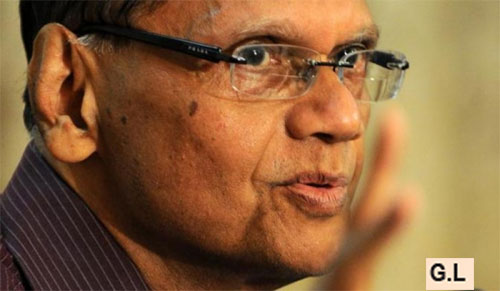
The government should decide whether to accommodate recommendations made by a committee that studied the 20th Amendment to the Constitution presented by Justice Minister Ali Sabry, PC, to parliament yesterday (22), SLPP Chairman Prof. G.L. Peiris told a media briefing at the Battaramulla party office.
Prof. Peiris, who is also the Education Minister, said that the opportunity to express different opinions on the proposed 20th Amendment underscored the importance of following what the former law Professor called the democratic process.
Prof. Peiris said so when the media asked whether recommendations in respect of the 20th Amendment made by a 9 member committee appointed by Prime Minister Mahinda Rajapaksa would be accommodated by the government. The committee handed its recommendations and observations to the Premier on Sept. 15.
The committee headed by Prof. Peiris, consisted of Ministers Ali Sabry, Udaya Gammanpila, Nimal Siripala de Silva and Wimal Weerawansa, State Ministers, Susil Premjayantha and S. Viyalendran and MPs Dilan Perera and Premanath C. Dolawatta.
The SLPP Chairman acknowledged that acceptance of their recommendations was subject to government decision.
Minister Peiris said that rescinding the relevant gazette issued on Sept 12 to pave the way for a new gazette hadn’t been an option under any circumstances. Whatever the alterations acceptable to the government could be moved at the Committee Stage, the minister said.
SLPP National List lawmaker Gevindu Cumaratunga on Sept.13 told a media briefing at the Sri Sambuddha Jayanthi Mandiraya, Thunmulla, that the gazette would be rescinded to pave the way for a new draft. The claim was made close on the heels of Cumaratunga along with Manohara de Silva, PC, making representations to the President in respect of the 20th Amendment.
At the commencement of the briefing, Prof. Peiris said that the SLPP throughout its parliamentary poll campaign declared that the 19th Amendment would be largely abolished leaving those sections that needed approval at a referendum intact. Prof. Peiris emphasized that the SLPP retained those sections as the government didn’t want another countrywide referendum in the wake of presidential and parliamentary polls in Nov 2019 and August 2020, respectively.
Pointing out that 113 seats would have been sufficient to govern the country, Prof. Peiris explained the SLPP pushed a for two-thirds majority as the party knew what it was aiming at.
Reiterating the SLPP’s commitment to fulfill pledges given at both presidential and parliamentary elections, Prof. Peiris said that as long as the 19th Amendment remained President Gotabaya Rajapaksa wouldn’t be able to go ahead with his plans.
Prof. Peiris said that those opposed to the proposed 20th Amendment could move the Supreme Court within a week from the day the government presented it in parliament.
Minister Sabry presented it in parliament yesterday.
Prof. Peiris said that the Supreme Court, in terms of the Constitution, would have to rule on the 20th Amendment within three weeks. The SC’s decision would be made known to the President and the Speaker, Prof Peiris said, pointing out that the apex court’s responsibility in that regard was limited to the examination of the 20th Amendment’s constitutionality. The minister explained the SC would examine whether the 20th Amendment contained sections that required approval at a referendum.
Prof. Peiris said that the 20th Amendment was the responsibility of the entire government.
Commenting on diverse views on the proposed piece of legislation, Prof. Peiris said that the alterations could be made at the Committee Stage.
When the media pointed out that the proposed law would deliver a deadly blow to independent commissions due to the abolishing of the 10-member Constitutional Council, Prof. Peiris said that the appointing authority was to be replaced by a five-member Parliamentary Council. Prof. Peiris said that the move was meant to empower the President to make necessary appointments, in consultation with the Parliamentary Council, if necessary, to ensure that the commissions represented the true interests of the public.
Referring to the inclusion of civil society members in the Constitutional Council, Prof. Peiris questioned the absurdity in allowing those who hadn’t been elected to exercise powers of the President. One-time External Affairs Minister alleged that external elements, too, had been engaged in local exercises to undermine the Sri Lankan State.
The Minister dismissed the assertion that abolishing the 19th Amendment meant re-activation of the 18th Amendment. How could that be when the 20th included three key provisions, restriction of presidency to two terms and both president’s and the parliament term 5 years in line with the 19th Amendment.

News
Showers will occur in the Western and Sabaragamuwa provinces and in Galle, Matara, Kandy and Nuwara-Eliya districts


WEATHER FORECAST FOR 02 SEPTEMBER 2026
Issued at 05.30 a.m. on 02 September 2026 by the Department of Meteorology
The atmospheric conditions are getting favorable for afternoon thundershowers in the Northern, North-central, Eastern and Uva provinces in the next few days.
Several spells of showers will occur in the Western and Sabaragamuwa provinces and in Galle, Matara, Kandy and Nuwara-Eliya districts. Showers or thundershowers may occur at a few places in the Eastern and Uva provinces and in Mullaitivu district after 2.00 p.m.
Fairly strong winds of about (30-40) kmph can be expected at times over the Western slopes of the Central hills, the North-central and North-western provinces and in Hambantota and Matale districts.
The general public is kindly requested to take adequate precautions to minimize damage caused by temporary localized strong winds and lightning during thundershowers.
Latest News
Sun directly overhead Anamaduwa, Moragollagama, Dambulla, Manampitiya and Valaichchenai, at about 12.10 noon today (02)

The sun is going to be directly over the latitudes of Sri Lanka from 28th of August to 07th of September due to its apparent southward relative motion.
The nearest places of Sri Lanka over which the sun is overhead today (02) are Anamaduwa, Moragollagama, Dambulla, Manampitiya and Valaichchenai, at about 12.10 noon.
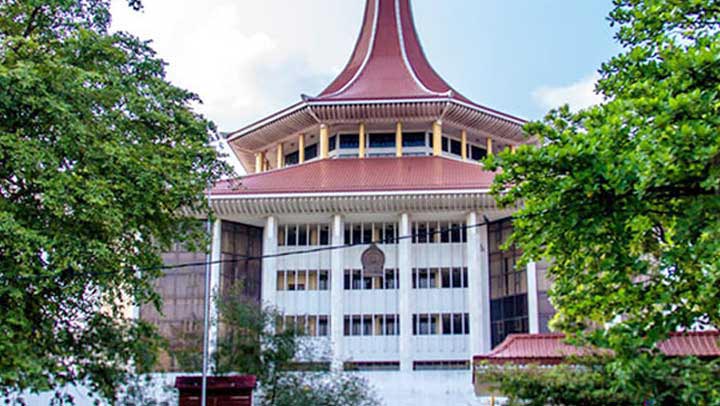
The Supreme Court yesterday rejected a request that the petitions challenging the 22nd Amendment to the Constitution be heard by a full bench of the Supreme Court.
Rejecting the request, Chief Justice Preethi Padman Surasena said the consideration of the petitions would proceed before the five-judge bench.
Appearing on behalf of one of the petitioners, President’s Counsel M. A. Sumanthiran made the request when the petitions were called for hearing yesterday before a five-judge bench of the Supreme Court, headed by Chief Justice Surasena.
President’s Counsel Saliya Pieris, Ali Sabry, Geoffrey Alagaratnam, Eraj de Silva, Srinath Perera, Anura Meddegoda, and Maithri Gunaratne, along with other counsel appearing for several other petitioners, also made the same request.
Solicitor General Viraj Dayaratne, appearing on behalf of the Attorney General, pointed out that the authority to determine the composition of a judicial bench rested with the Chief Justice. Refering to Article 132(3) of the Constitution, the Solicitor General argued that the discretion to determine the number of judges on a bench lay with the Chief Justice and that no other party had the authority to interfere in the matter.
Counsel including President’s Counsel Nigel Hatch, appearing for an intervening petitioner, also made submissions pointing out that the discretion to determine the composition of a bench rested with the Chief Justice.

Showers will occur in the Western and Sabaragamuwa provinces and in Galle, Matara, Kandy and Nuwara-Eliya districts

Sun directly overhead Anamaduwa, Moragollagama, Dambulla, Manampitiya and Valaichchenai, at about 12.10 noon today (02)

SC rejects petitioners’ request for full bench

Seven years RI for former Civil Aviation Minister Piyankara Jayaratne

40 professional organisations and TU oppose proposed 22A

Ai-CHA expands Lankan footprint with new Negombo outlet

‘Dates have the highest sugar content to fight Coronavirus’

Sunday Island 27 December – Headlines

#SundayIsland 17th December – Headlines

Sunday Island – 28th March

Sunday Island Headlines – 21 March

Sunday Island – 21st February – Headlines
-

 News5 days ago
Eight politicians in drug kingpin probe
-

 Features3 days ago
“Wrap Me Up in My Blazer”— A Gentlemanly Bradby Reminiscence
-

 Business5 days ago
Sri Lanka opens up: A new season of direct connectivity
-

 Features5 days ago
Redefining ageing in Sri Lanka
-
 Latest News6 days ago
Nepal-Tibet floods: What happened, what caused them and who is missing?
-

 Editorial6 days ago
Unfolding El Niño and burning issues
-
 Foreign News7 days ago
At least eight killed, hundreds missing after Nepal flash flood
-
 Latest News7 days ago
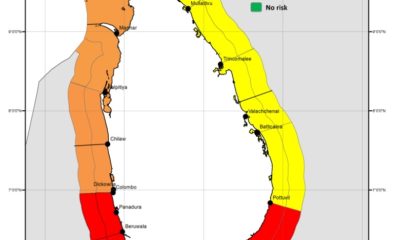
Advisory for High Waves for the sea areas extending from Colombo to Pottuvil via Galle, Matara and Hambantota