
Business
Ceylinco deal for Visa cardholders


Ceylinco General Insurance, the leading General Insurer in Sri Lanka, has entered into an agreement with Visa to offer attractive insurance services to all Visa cardholders across Sri Lanka at affordable rates, a company ews release said on Friday.
“As Sri Lanka is transitioning from a largely cash-based economy towards a digital economy, this partnership with Visa, the global leader in digital payments, will enable Sri Lankans to access insurance products through their Visa debit and credit cards,” it said.
The release explained that initially, cardholders can avail of three exclusive health insurance covers from Ceylinco General Insurance with benefits ranging from Rs. 100,000 , Rs. 200,000 and Rs. 500,000 per annum, priced at an affordable premium of Rs. 1,000/- , Rs. 2,000 and Rs. 5,500 per annum respectively.
This health insurance will cover hospitalizations as well as 20 serious illnesses. Hospitalization cover will include a daily allowance and the serious illness section will reimburse the hospitalization bill up to the limit of insurance cover. The uniqueness of the product is that cardholders can claim these benefits for hospitalizations in government and ayurveda hospitals too.
Visa debit and credit card holders can avail this special offer through https://www.visasloffers.com and VIP HUB web portal https://www.viphub.lk/visa of Ceylinco General Insurance or log into the Ceylinco General Insurance website prior to signing. They can also simply call the 0112393939 hotline for more details where they will be guided to complete the process, the release said.
Chairman / CEO of Ceylinco General Insurance Mr. Patrick Alwis while commenting on the partnership said, “We are pleased to offer general insurance solutions for Visa cardholders. As a customer-centric company, Ceylinco General Insurance has forged partnerships to make our cutting-edge products and services more accessible. Visa, with its wide local adoption will help to expand our footprint while benefitting cardholders with some comprehensive covers.”
Avanthi Colombage, Country Manager, Sri Lanka and Maldives, Visa said, “Seeking medical facilities often adds to the strain of a patient or caregiver. As a network working for everyone, Visa is pleased to partner Ceylinco General Insurance for their benefits on insurance services to Visa cardholders. We aim to ease the experience of hospitalization and medical treatment for Sri Lankans with this and provide better access to medical facilities as well.”
Ceylinco General Insurance currently operates over 550 branches and customer touch points numbering over 700 and a 24 x 7 call centre. It was recently crowned the ‘People’s General Insurance Brand of The Year’ at the 2022 SLIM Kantar People’s Awards, for an unprecedented 16th consecutive year.


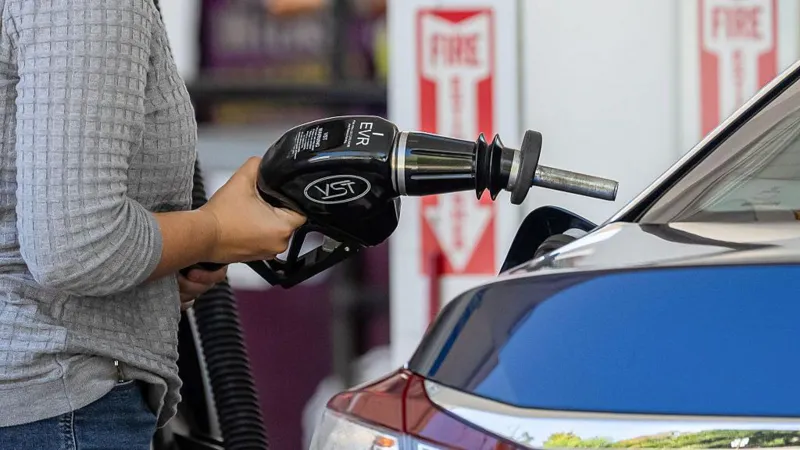
Oil prices hit $100 a barrel for the first time since May as the escalating conflict in the Middle East reignited fears over global energy supplies.
Brent crude – the global benchmark for oil prices – rose more than 6% on Thursday following several days of increases as the US stepped up military strikes against Iran.
Prices spiked after Houthi militia in Yemen attacked oil tankers in the Red Sea, threatening a key export route that Saudi Arabia has used to bypass the Strait of Hormuz.
Gas prices have also risen steadily over the past month, with the benchmark UK gas price currently at around 150 per therm, up from around 98p at the end of June.
Oil prices had been falling following a temporary ceasefire between the US and Iran.
They dropped back to levels last seen before the US and Israel began military action against Iran on 28 February.
However, the ceasefire has failed and this week US Secretary of State Marco Rubio said the people in charge in Iran were “not ready to make a deal”.
The ongoing conflict risks pushing up inflation for many countries, including UK and the US leading to higher prices for consumers.
Higher oil prices typically lead to petrol and diesel becoming more expensive.
While drivers are affected directly, households could also see prices of other goods, such as food, increase due to businesses passing on higher transportation costs to customers.
Inflation has fallen both in the UK – down to 2.6% in the year to June helped by slowing diesel and petrol prices – and in the US to 3.5%.
But questions remain whether the slow down will prove short lived due to the renewed conflict in the Middle East.
New data released on Thursday showed that UK petrol prices have risen by 5p a litre since the beginning of July, hitting reaching almost £1.56.
Diesel is at £1.72 a litre, on average, according to the RAC.
Average gasoline prices in the US have surpassed $4 a gallon once more, up from $3.92 a month ago, according to motorist advocacy group AAA.
“More expensive fuel and energy can ripple through the wider economy, increasing costs for businesses and ultimately feeding through into the price of food and other goods,” said Jonathan Raymond, investment manager at Quilter Cheviot.
“This creates another headache for central banks as they continue their battle against inflation.
“If energy prices remain elevated, policymakers may come under pressure to keep interest rates higher for longer or even raise them. This would come as a blow to mortgage holders and borrowers already feeling the strain.”
The Bank of England, which sets UK interest rates, has held them at 3.75% in its last four meetings.
Paul Dales, chief UK economist at Capital Economics, said he believed the Bank will “almost certainly” hold them again. But he said analysts still expected that interest rates could be cut next year if energy price rises ease.
Kevin Warsh, the newly-appointed chair of the US Federal Reserve, last week told Congress that the central bank had “no tolerance to persistently elevated inflation”.
US President Donald Trump had pushed Warsh’s predecessor, Jerome Powell, to cut interest rates.
Trump has made it clear he expects Warsh to fulfil his demand for reductions in borrowing costs for Americans.
But the Fed held US interest rates between 3.5% and 3.75% at Warsh’s first meeting last month. He also told Congress that he was committed to “restoring price stability” in the wake of the Middle East conflict impacting prices.
[BBC]
Business
SEC, CSE and CA Sri Lanka sign MOU to advance XBRL-based digital reporting for listed companies
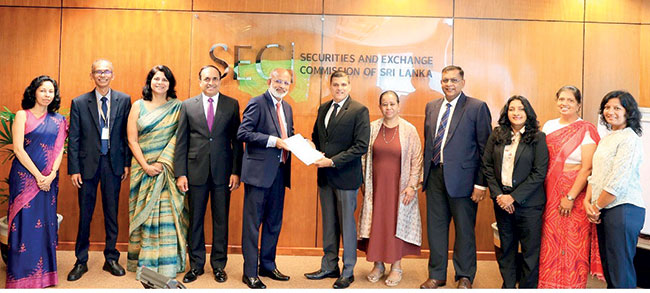
The Securities and Exchange Commission of Sri Lanka (SEC), Colombo Stock Exchange (CSE), and the Institute of Chartered Accountants of Sri Lanka (CA Sri Lanka) signed a Memorandum of Understanding (MoU) to collaborate on the implementation of eXtensible Business Reporting Language (XBRL) based reporting for companies listed on the CSE.
The agreement marks a significant milestone in Sri Lanka’s efforts to modernise corporate reporting and strengthen the digital infrastructure of the capital market. The initiative aims to streamline the submission of both financial and non-financial information by listed entities, enhancing transparency, accessibility and investor confidence.
The MoU formalises the partnership, following the establishment of a joint SEC-CSE committee tasked with driving the initiative. With the in-principle approval of the SEC, the committee has been working closely with CA Sri Lanka to develop the framework required for the successful rollout.
XBRL is the internationally recognised standard for digital business reporting, developed and maintained by XBRL International, a global non-profit consortium. The standard enables financial and business information to be reported in a structured, machine-readable format, facilitating more efficient analysis, comparison and interpretation of corporate disclosures by regulators, investors, analysts and other stakeholders.
The introduction of XBRL reporting is expected to deliver several key benefits for both listed companies and users of financial information. These include reducing reliance on manual data processing, improving the accuracy and consistency of reported information, supporting more advanced data analysis, and lowering long-term reporting costs. The flexibility of the XBRL framework also allows organisations to tailor taxonomies to meet specific reporting requirements. In addition, XBRL adoption will enhance market transparency and efficiency by enabling quicker access to comparable corporate information. It will also align Sri Lanka’s reporting framework with global standards, making the country’s capital market more accessible and attractive to international investors familiar with XBRL-based financial reporting.
Business
LOLC Insurance and Seylan Bank celebrate Bancassurance Excellence through “League of Greatness” 2025
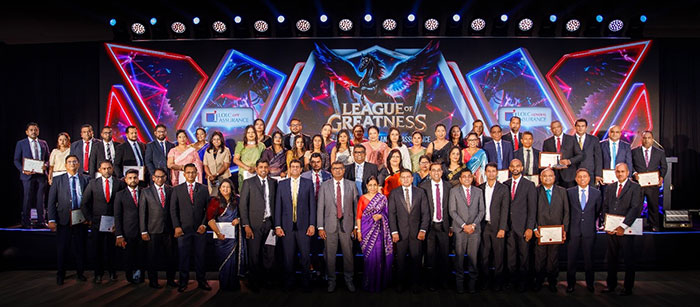
LOLC Insurance recently hosted the “LOLC Insurance – Seylan Bancassurance Felicitation Night 2025” under the theme “League of Greatness,” celebrating the success of its longstanding bancassurance partnership with Seylan Bank. The event marked another milestone in a strategic collaboration that has continued to grow since 2013.
The felicitation ceremony brought together senior management, sales leadership, branch representatives, and top-performing teams from both organisations to recognise excellence, appreciate contributions, and reaffirm the enduring partnership between LOLC Insurance and Seylan Bank. The collaboration currently spans 104 Seylan Bank branches across Sri Lanka, delivering accessible life and general insurance solutions islandwide.
Speaking at the event, Ramesh Jayasekara, Director/Chief Executive Officer, Seylan Bank PLC, stated, “Our partnership with LOLC Insurance continues to create meaningful value for customers while further strengthening the bancassurance proposition within the banking sector. The dedication and collaborative spirit demonstrated by both teams have been instrumental in achieving these milestones and sustaining the growth of this partnership. We look forward to enhancing our collaboration and delivering greater value to customers in the years ahead.”
Sharing insights during the event, Eugene Seneviratne, Deputy General Manager – Retail Banking, Seylan Bank, added, “The professionalism and operational efficiency demonstrated by the bancassurance teams have been instrumental in consolidating this partnership. Our branch teams continue to seamlessly manage day-to-day bancassurance functions with minimal operational escalations, reflecting the strength of a well-structured and highly efficient framework. This has contributed to a smooth and mutually beneficial working relationship, enabling the partnership to enhance coordination, execution, and overall performance.”
Addressing the gathering, Kithsiri Gunawardena, Chairman/Principal Officer of LOLC General Insurance and Director of LOLC Life Assurance, stated, “Successful partnerships are built on trust, shared values, and a common vision. The strength and longevity of this collaboration reflect the commitment of both organisations to delivering meaningful impact to customers while advancing the country’s bancassurance sector. The positive feedback and appreciation consistently received from Seylan Bank regarding the quality of service delivered and the steadfast support extended by the teams stand as a testament to the professionalism and service excellence upheld throughout the partnership.”

Sheikh Hasina ally resigns as Bangladesh’s president

Oil prices hit $100 for the first time since May

US hits dozens of trading partners with new wave of tariffs

Arachchige, Rathnayake and Malinga pump Jaffna

Hermann, Liyanage and Mujeeb steer Colombo Kaps to a 23 run win

Showers expected in the Western and North-western provinces and in Galle and Matara districts

‘Dates have the highest sugar content to fight Coronavirus’

Sunday Island 27 December – Headlines

#SundayIsland 17th December – Headlines

Sunday Island – 28th March

Sunday Island Headlines – 21 March

Sunday Island – 21st February – Headlines
-
 Features6 days ago
Two memorable excerpts from a former SLAF commander’s memoir
-
 Business6 days ago
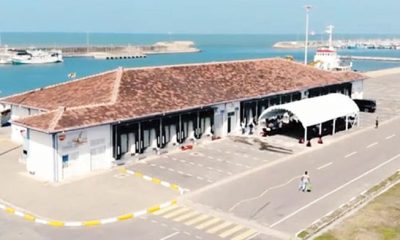
‘Giving up was never an option’: The fisherman who fought back after losing millions in SL
-

 Latest News6 days ago
Davis cup Asia/Oceania Group IV 2026 to be held in Colombo from 20th to 25th July
-
 Life style6 days ago
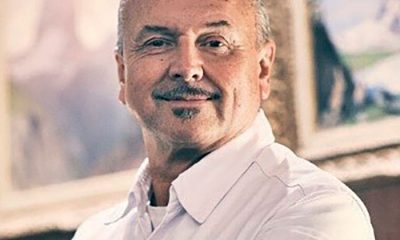
Taste of the Swiss Alps comes to Colombo
-

 Features6 days ago
Erdoğan’s New Republic
-
 Midweek Review3 days ago
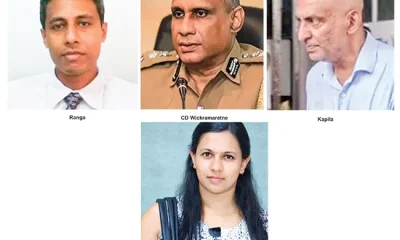
Three high-profile alleged suicides shaping key investigations
-
 News7 days ago
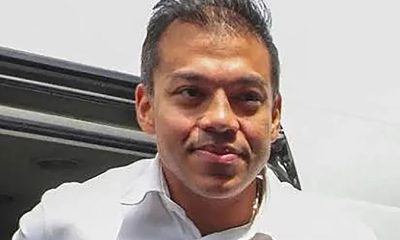
Evidence recorded in money laundering case against Yoshitha Rajapaksa
-

 News7 days ago
Dengue outbreak gallops ahead: Infections surpasses 73,455, leaving 50 dead