
Business
Learnings for Sri Lanka on SOE Reforms – Singapore’s Temasek Holdings

Introduction
A super-holding company for managing State-Owned Enterprises (SOEs) has been identified as a globally successful model for SOE management. This model allows the government to adopt a more arms-length approach to SOEs’ operational decision-making, relieving it of the direct responsibility of overseeing all the SOEs dispersed across various industries, and redirect its budget and energy elsewhere. The merits of this model have enabled countries such as Malaysia and Singapore, which have similar holding company structures, to ensure impressive performances of their SOEs.
This article is the first of a three-part series where part one and two provide an in depth analysis of the case of Singapore’s and Malaysia’s SOE holding company models (Singapore’s Temasek Holdings and Malaysia’s Khazanah Nasional), and their role in enabling economic growth and development for the respective countries. Part three will provide learnings for Sri Lanka, which can be adopted for the country’s SOE reform process. This series of articles is a joint effort by the Ceylon Chamber of Commerce (CCC) and the Colombo Stock Exchange (CSE).
Part One: Singapore’s Temasek Holdings
Overview
Temasek was incorporated in 1974 under the Singapore Companies Act to hold and manage assets previously held by the Singapore Government. The objective of transferring assets to a commercial company was to free the Ministry of Finance of the responsibility so that it could focus on its core role of policymaking and regulations, while Temasek would own and manage these SOEs (also known as Government-linked Companies – GLCs) on a commercial basis.
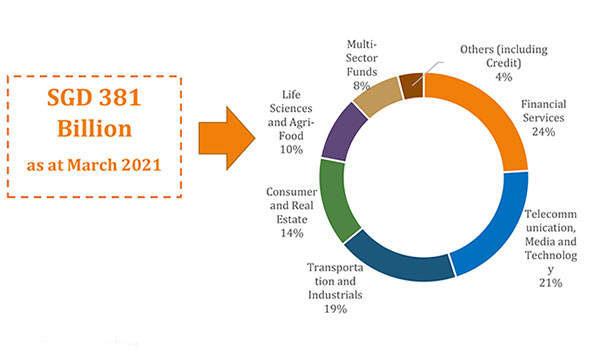
Similar to any commercial company, Temasek has its own Board of Directors and a professional management team. It pays taxes to the government and distributes dividends to its shareholders. Temasek was established to contribute to Singapore’s economic growth by nurturing entities into world-class companies through effective stewardship and strategically driven commercial investments. Today, it operates in 9 countries and its portfolio value amounted to SGD 381 billion as at the end of March 2021. This is equivalent to around USD 283 billion, which is about 6 times Sri Lanka’s external debt accumulated over the years and about 4 times the amount of Sri Lanka’s Gross Domestic Product (GDP).
Temasek invested mainly in Singaporean companies in its early days, but it has turned into a major global investor in recent years. Geographically, the majority of these investments are in China (27%) followed by Singapore (24%), America (20%) and rest of the world (12%). Temasek operates a diversified portfolio spread across many segments such as Financial Services, Telecom, Media, Technology and Transportation and Industry. Please refer figure 01 for a breakdown of sectors.
Source: Temasek Holdings
Why was Temasek Successful?
SOEs are generally regarded as inefficient firms because of political interference, and corruption. Despite this, various studies have shown that Singaporean SOEs exhibit higher valuations than non-SOEs, even after controlling for firm specific factors and also have better corporate governance practices.
The reasons for this lies in the political, social and economic context that Singapore faced during the period of self-governance to the early years of independence from the late 1950s to the early 1970s. The difficult economic conditions coupled with a challenging political environment in Singapore during this period played a significant role in nurturing good political governance in Singapore, which was in turn transposed to Singapore’s SOEs with good corporate governance practices. The Temasek corporate governance framework covers the following broad areas:
1. Board Governance
Temasek aims to help SOEs build effective boards by setting out guidelines on the appropriate composition of board, tenure of the directors, their size, and formation of specialized board committees.
2. Business Charters
Temasek encourages SOEs to stay focused on their core competencies and it will not disapprove of SOEs diversifying if it is done in the best interest of its shareholders.
3. Talent and Remuneration
Temasek encourages SOEs to recruit the best global talent and to reward them competitively.
4. Value Creation
Temasek works closely with their SOEs to adopt appropriate performance benchmarks to maximize returns on shareholder investments. It expects its companies to be profitable and generate a high rate of return on investment like any shareholder.
Therefore, Temasek’s stewardship has enabled SOEs to create value for their shareholders. This has led to the SOEs on average demonstrating higher valuations than non-SOEs, even after controlling for firm specific factors such as profitability, leverage, firm size, industry effect, and foreign ownership.
How has it Contributed to Development Goals?
Temasek is a government holding company that acts as a shareholder on behalf of the Singaporean government (Ministry of Finance). It pursues its developmental mandate by buying direct stakes in global companies, mostly in Singapore and Asian, and then reinvesting its proceeds from asset sales and dividend income into foreign assets, acting similar to a private equity fund.
The arms-length approach from the government has made it possible for Temasek’ to manage its financing and exercise independence. Temasek hasn’t received any regular financing from the government in its close to 50-year history, but receives ad-hoc occasional injections from time to time, which are publicly disclosed.
The compounded annualised total shareholder return since inception in 1974 is at 14% in Singapore dollar terms. The Temasek foundation oversees 23 non-profit philanthropic projects, and has positively impacted 1.5 million lives across Asia and Singapore through their community work.
Contribution to Reserves
In terms of the contributions to the Singaporean economy, the Singapore government can include around 50% of Temasek’s expected long term returns along with the Government of Singapore Investment Corporation (GIC) and Monetary Authority of Singapore (MAS) investment returns. These three institutions contribute to government reserves through the Net Investment Returns Contribution (NIRC). NIRC is comprised of up to 50% of the Net Investment Returns (NIR) on the net assets invested by GIC, MAS and Temasek, and the Net Investment Income (NII) derived from past reserves from the remaining assets.
The full brief can be accessed at: Holding Company for SOEs: Learnings for Sri Lanka.


FRELLA, Sri Lankan-born and internationally-respected natural beauty and wellness brand, is setting the stage to expand operations by entering the Sri Lankan retail market. As the country’s only dedicated wellness company operating at an international scale, this move marks a new chapter for a brand with a growing global presence that has already earned the trust of luxury hotels and international customers.
For over seven years, FRELLA has emerged as Sri Lanka’s leading wellness brand, serving clients and partners across more than 15 international markets. The brand’s entry into the Sri Lankan retail market marks a significant milestone, allowing local consumers to access globally respected wellness products developed from the island’s own healing traditions. This retail expansion is supported through a strategic partnership with Baurs, a trusted 170-year-old Swedish multinational company, ensuring sophisticated distribution and access aligned with international retail standards.
FRELLA is rooted in Sri Lanka’s ancient healing traditions and inspired by centuries-old Ayurvedic wisdom. All FRELLA products are specially designed as holistic wellness solutions for the body, skin, hair, and soul, and focuses on providing nourishment, balance, and healthy aging through refined, modern wellness systems.
Business
Writer Business Services enters Sri Lanka to partner with institutions to provide information management and payments solutions


Writer Corporation, one of India’s leading business groups, announced the launch of its subsidiary, Writer Business Services Pvt. Ltd., and the commencement of its operations in Sri Lanka. The expansion reflects Sri Lanka’s strategic importance in Writer’s regional growth plans and its role in supporting a highly regulated digital and financial services market which is currently undergoing digital transformation.
Sri Lanka’s continued focus on strengthening regulatory frameworks, digital platforms, and financial systems is shaping how institutions across banking, government, and enterprise sectors approach their business operations. There is a clear emphasis on secure, compliant, and resilient information and transaction environments that can scale with regulatory and business needs. Writer’s entry into Sri Lanka aligns with this direction, bringing global experience and a partnership-led approach to the market.
As part of its launch, Writer will establish a secure records and information storage facility in Seeduwa, Colombo. Designed to meet global standards for security, compliance, and disaster resilience, the facility will support banks, financial institutions, government bodies, and large enterprises in managing physical and digital information across its lifecycle.
Alongside information management, Writer brings established expertise in integrated payment services to support the modernization of transaction infrastructure across the banking and financial services sector. Its payments capabilities focus on strengthening availability, transaction continuity, and transparency across critical payment channels that underpin institutional reliability and customer confidence.
Writer’s digital payments offerings in Sri Lanka include end-to-end ATM and self-service terminal outsourcing, integrated channel ownership and managed services, field management applications, payment and reconciliation platforms, and remote monitoring with near real-time reporting. These solutions support financial institutions in improving uptime, strengthening governance, and enhancing operational efficiency across payment networks, in line with the continued evolution of electronic and automated payment systems.
Across information management and payments, Writer operates with an integrated portfolio spanning records and information management, business process outsourcing, cloud and digital services, data privacy, cybersecurity and enterprise payments infrastructure. These capabilities support institutions in addressing evolving regulatory requirements, digitization of legacy environments, and rising operational and cyber risks.
Writer’s local presence enables closer collaboration with clients and on-ground delivery, while supporting the development of Centres of Excellence across cybersecurity operations, SOC and NOC services, AI-led solutions, and payments operations and monitoring.
Writer’s Sri Lanka operations will be built, led, and run by Sri Lankan professionals, reflecting a long-term commitment to local talent growth and development.
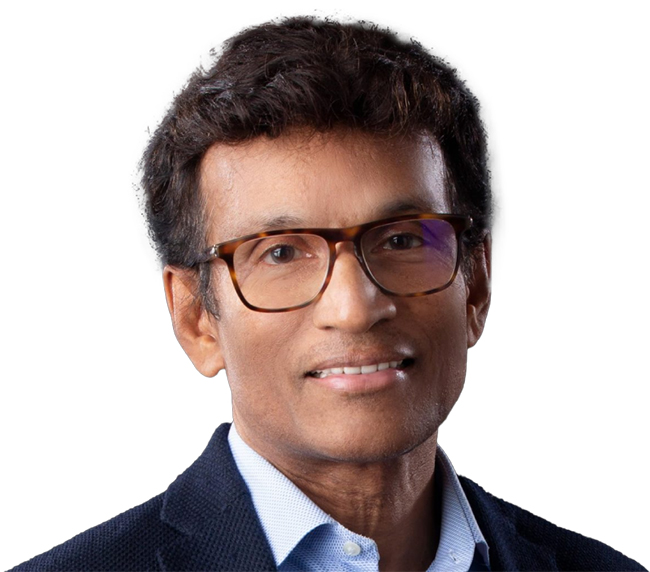
Commenting on this development, Satyamohan Yanambaka, CEO, Writer Global Services Pvt. Ltd., assured Writer’s long-term commitment to the country’s digital ambitions. He said, “Writer’s entry into Sri Lanka reflects our belief that digital ambition in regulated environments must be supported by trust, sound governance, and strong execution. As institutions scale digital services, the reliability of information and payment systems, channel operations, and governance frameworks becomes increasingly important to public and institutional confidence. Our experience across information management, digital transformation, and enterprise payments enables us to support secure, large-scale financial ecosystems, with a clear commitment to building and leading these capabilities locally.”
Sri Lanka’s Digital Personal Data Protection framework raises expectations around how personal and sensitive information is secured and governed.
Altair Residences have, over the past six months, seen more than 100 individual title deeds being executed by apartment owners, providing owners with a clear, registered, legal title to their apartments in accordance with Sri Lankan property law. This has been a key initiative by the new owners and management of Altair to improve governance and will continue in an orderly manner in the coming months.
With the transition of ownership to Blackstone India, Altair’s Management Council has also been formally constituted, enabling owners to play an active and proactive role in the management of the Altair building. In addition, the management council has appointed Realty Management Services (RMS), a subsidiary of Overseas Realty Ceylon PLC, as the new facility manager of Altair.
Commenting on these milestones, Thilan Wijesinghe, Chairman of TWC Holdings, who, together with a team from TWC, represents Blackstone’s interests in Sri Lanka, said, “The issuance of individual title deeds is a critical step in any professionally developed residential asset. Over the past six months, this process at Altair has moved forward in a structured and transparent manner, alongside the formal establishment of owner-led governance. This, combined with the appointment of experienced facility managers are fundamental building block for long-term value-creation for apartment owners and proper asset stewardship.”
With ongoing improvements to the building being undertaken by Indocean Developers Pvt Ltd (IDPL), the owning company of Altair, the issuance of deeds to owners is expected to accelerate over the coming months.

Tobacco and alcohol claim 22,000 lives annually

Development Officers hunger strike drags on for fourth day

IMF urges Lanka to diversify trade amidst global tariff risks

Shocking 10,455 complaints of Children’s rights violations lodged with NCPA last year

Sea Street gold prices gallop

Money laundering case against Namal: CID in court without legal advice

‘Dates have the highest sugar content to fight Coronavirus’

Sunday Island 27 December – Headlines

#SundayIsland 17th December – Headlines

Sunday Island – 28th March

Sunday Island Headlines – 21 March

Sunday Island – 21st February – Headlines
-
 Business4 days ago
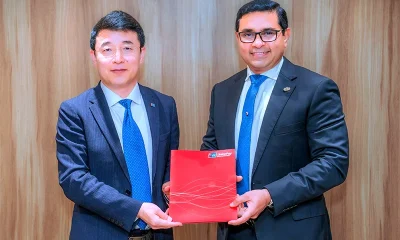
ComBank, UnionPay launch SplendorPlus Card for travelers to China
-
 Business5 days ago
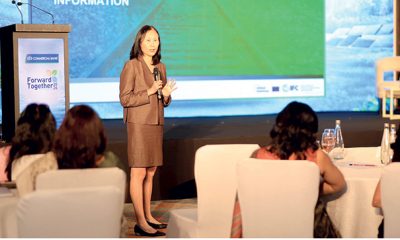
ComBank advances ForwardTogether agenda with event on sustainable business transformation
-
 Opinion5 days ago
Conference “Microfinance and Credit Regulatory Authority Bill: Neither Here, Nor There”
-
 Business1 day ago
Climate risks, poverty, and recovery financing in focus at CEPA policy panel
-

 Opinion4 days ago
Luck knocks at your door every day
-

 Business6 days ago
Dialog Brings the ICC Men’s T20 Cricket World Cup 2026 Closer to Sri Lankans
-
 News5 days ago
Rising climate risks and poverty in focus at CEPA policy panel tomorrow at Open University
-

 Business1 day ago
Bourse positively impacted by CBSL policy rate stance