
News
USD 587 needed for planned fuel imports

By Rathindra Kuruwita
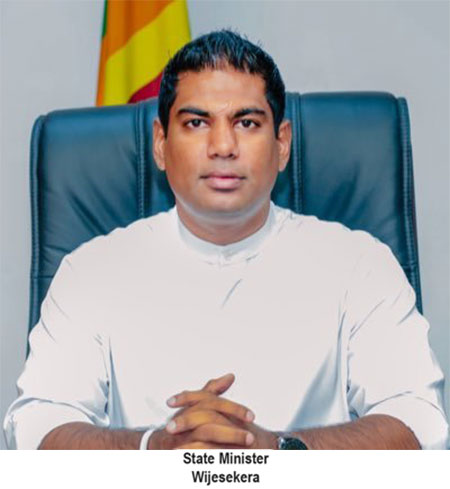
Sri Lanka must pay 587 million US dollars for planned fuel imports, until mid-August, Minister of Power and Energy, Kanchana Wijesekera yesterday (03) told the media in Colombo.This amount was equal to 217 billion rupees, at an exchange rate of 367 rupees per dollar, he said.
On Monday, Sri Lanka had to pay the Indian Oil Company (IOC) 34 million dollars and another 76 million dollars to a Malaysian company. On 06 July another 34 million dollars will have to be paid to the IOC.
“On 08 July, we need to pay for three shipments. 19.95 million dollars to the IOC. 49.54 million dollars to Singapore company Vitol and 66.53 million dollars for United Arab Emirates-based Coral Energy DMCC . This comes to 136.2 million dollars. On 10 July we must pay 36.43 million dollars for a furnace oil shipment, and 82 million dollars to Coral for a shipment of crude oil. These 316 million dollars are for ships that will arrive in July,” he said.The Minister added that 122 million dollars had to be paid to the IOC for two ships carrying petrol and 67 million for one carrying diesel in the coming weeks.
“These ships will arrive by mid-August,” he said.
The Minister said that they must pay for suppliers upfront and initially the Central Bank of Sri Lanka (CBSL) and the Treasury had insisted that they could allocate only 125 million US dollars for fuel imports.
“Given this limitation, we tried various methods to procure fuel, but without success. We tried new suppliers but that also led to many issues. So, ultimately, the President and Prime Minister decided that the Ministry has to be given money to purchase fuel,” he said.
Minister Wijesekera said that he had spoken to the Governor of the CBSL and Treasury Secretary for foreign currency to purchase fuel.
“It’s not easy. They have promised to give us rupees and we have to find dollars. We need to get the dollars from exporters or international banks. Will they give us dollars at 367 rupees? What will happen if they ask for a higher exchange rate? I will ask the Cabinet today to approve paying higher rates if the need arises,” he said.
Oil companies will only provide oil after payments are made because Sri Lanka owes these companies hundreds of million dollars. Between November 2021 and April 2022, alone CPC had to pay 326 million dollars to companies through the Bank of Ceylon, 242 million dollars through the People Bank and 80 million through other banks, he said.
“The CBSL Governor is talking to seven suppliers. He has given payment schedules so that weekly or monthly payments could be made. We have given them guarantees. Still, they won’t supply new shipments unless upfront payments are made.
Minister Wijesekera said Sri Lanka had, on 30 June, paid 11 million USD to buy 7500 metric tons of diesel from LIOC. The diesel consignment will be sent from LIOC facility in Trincomalee to Colombo today (04). By Sunday afternoon, CPC had 12,774 metric tons of diesel, 1,414 metric tons of petrol 92, 2647 metric tons of petrol 95, 233 metric tons of super diesel, 500 metric tons of jet fuel and 29,000 metric tons of furnace oil used to produce electricity, he said.The Minister said that the first fuel shipment to the country for July is a diesel shipment that will arrive on 08 or 09 July. This will be supplied by a UAE company. Singapore’s Vitol will send another ship carrying diesel between 11 and 14 July. Another diesel shipment might arrive between 15 and 17 July. However, this shipment had not been finalised yet, he said.
“On 22 or 23 July a patrol shipment will be provided by the IOC. The diesel shipment that might arrive between 15 and 17 July is also to be supplied by the IOC. The IOC has asked us to settle 50% of the payment by today and deposit the rest by Wednesday. We requested them to let us pay 30% by Wednesday. We have also spoken to the Malaysian government and they might provide us with 50,000 metric tons of petrol and 10,000 metric tons of kerosene. This has not been finalized. If this works out, we might get a petrol shipment by 10 or 11 July,” he said.
Wijesekera added that the crude oil shipment expected from UAE’s Coral will consist of 135,000 metric tons. On 12 August another crude oil ship is expected, he said.
Speaking about his visit to Qatar, Minister Wijesekera said he had met a number of officials and they might provide Sri Lanka diesel, crude oil, furnace oil and gas at a concessionary rate, at the discretion of the Emir of Qatar. “Even if this happens, it won’t happen overnight. If we need to buy oil, we could buy directly from their private companies, the Qatar officials said. Qatar is not an exporter of petrol or jet fuel. They are a gas giant, though. The Qatari officials said that they had proposed to build an LNG terminal in 2019, but there had been no response from Sri Lanka,” he said.
The Minister said that he had also spoken to the Qataris about oil exploration in Mannar.Minister Wijesekera said he had asked CPC officials to provide him with a procurement plan till December. He added that the CPC was overstaffed.
The Minister urged the expatriate Sri Lankan workers to send in remittances through the banking system and help revive the economy and ameliorate the suffering of fellow citizens.
“Once the fuel starts coming in the queues will disappear. I want to add another thing. There is now a token system in place. However, we have never asked for this system. What I said last month, announcing that we will only be providing fuel to essential services, was to give a token to people who were in the queue at that time. I specifically asked people not to join queues anew. Now only LIOC is distributing fuel to private vehicles, and they have started a token system. This is not what we wanted,” he said.





Latest News
Sun directly overhead Nittambuwa, Algama, Malwana, Aranayake, Meegahakiula and Panamkadu about 12.09 noon today (04)


The sun is going to be directly over the latitudes of Sri Lanka from 28th of August to 07th of September due to its apparent southward relative motion.
The nearest places of Sri Lanka over which the sun is overhead today (04) are Nittambuwa, Algama, Malwana, Aranayake, Meegahakiula and Panamkadu about 12.09 noon.
Plant’s output cut from 270 MW to 140 MW amidst dwindling stocks; energy analysts warn system remains “at a razor’s edge”
By Ifham Nizam
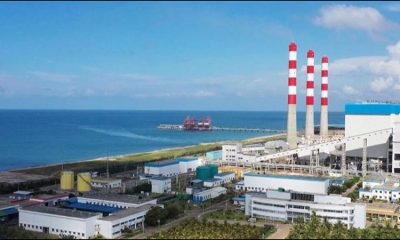
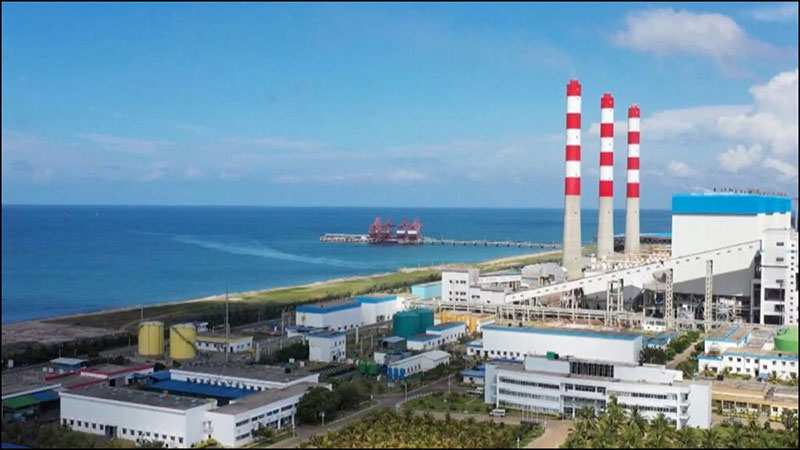
The Norochcholai coal-fired power plant is now digging into the last dredges of its coal stock, with two operational units forced to slash generation from around 270 MW to just 140 MW on Sunday as the plant ran critically short of fuel, according to independent energy analysts and sources familiar with the National System Operator (NSO).
The sudden reduction of approximately 130 MW in coal generation has once again exposed the fragile state of the country’s power supply arrangements, with the plant understood to have coal stocks sufficient only until Friday night.
“This is not how a coal plant is expected to operate. They are digging up the last dredges of coal from the plant,” an independent energy analyst told The Island.
The analyst questioned why the units had been allowed to reach this stage without earlier intervention, arguing that at least one unit should have been deloaded around 10 days ago to conserve the remaining coal.
Had that been done, the analyst said, the country could also have reduced its dependence on more expensive diesel-fired generation during the period when
coal stocks were being conserved.
The latest NSO generation figures highlight the continuing pressure on the system.
Around 7 p.m. on Sunday, when the night peak was reached, total demand stood at 2,552.7 MW. Coal contributed only 282 MW, while major hydro accounted for 1,215.8 MW and thermal-oil generation for 791.9 MW.
The night peak of 2,552.7 MW was substantially higher than the daytime peak of 2,246 MW, according to the NSO Generation Summary for August 30.
The most immediate concern is the remaining coal stock at Norochcholai.
Sources said the plant has coal only to Friday night, making the timing of the next shipment critical.
The first shipment under the emergency arrangement is expected to arrive on Friday, September 4, but the coal unloading will have to begin on the same day if
the power plant is to continue operating without further significant deloading.
That creates another potential vulnerability, with rough sea conditions posing an additional challenge to unloading operations.
Energy sector sources said that even the arrival of the September 4 shipment would not completely eliminate the danger.
The next shipment under the new coal tender would need to commence unloading around September 15. Any significant delay beyond that could again force the Norochcholai units to operate at reduced output.
“We are still at a razor’s edge”
The independent energy analyst said the situation should not be viewed merely as a question of whether a particular vessel arrives on time.
The situation also means that any further reduction in coal generation could have a direct impact on the use of oil-fired power generation, potentially increasing the cost of electricity generation.
The latest NSO figures already show the important role being played by thermal-oil generation during the evening peak, when demand rises sharply.
The analyst questioned the rationale behind allowing the coal units to continue operating at higher loading until stocks reached critically low levels instead of taking measures earlier to stretch the available inventory.
News
22A: BASL decides against making written submissions after SC refuses to grant it right of reply

The Bar Association of Sri Lanka (BASL) has informed the Supreme Court that it would not tender written submissions in respect of the petitions challenging the 22nd Amendment to the Constitution, which were heard on September 1 and 2.
The BASL said it had initially decided not to make written submissions after being deprived of the right of reply when the Solicitor General, appearing for the State, made submissions and explained the rationale and justification for the Bill.
The BASL pointed out that the Solicitor General, who made submissions at the end of the second day of the hearing, had not made a policy document available to the petitioners.
It also said the petitioners had not been given an opportunity to respond orally to the Solicitor General’s submissions or to address the Court on certain questions raised by the judges during their exchanges with the Solicitor General. (SF)

Devapathiraja clinch U15 Division I title with 33-run win over Royal

Mandhana’s record ton powers India into semi-finals

Sun directly overhead Nittambuwa, Algama, Malwana, Aranayake, Meegahakiula and Panamkadu about 12.09 noon today (04)

Showers expected in the Uva, Central and Eastern provinces and in Polonnaruwa and Mullaittivu districts after 2.00 p.m

Norochcholai digs into dwindling coal stocks, two units slash generation

22A: BASL decides against making written submissions after SC refuses to grant it right of reply

‘Dates have the highest sugar content to fight Coronavirus’

Sunday Island 27 December – Headlines

#SundayIsland 17th December – Headlines

Sunday Island – 28th March

Sunday Island Headlines – 21 March

Sunday Island – 21st February – Headlines
-

 Features5 days ago
“Wrap Me Up in My Blazer”— A Gentlemanly Bradby Reminiscence
-

 Features4 days ago
When Sri Lankan stories find their own voice
-

 Features5 days ago
JVP/NPP government as seen from outside by Lionel Bopage now domiciled in Australia
-

 News4 days ago
BASL takes exception to Justice Ganepola being denied a place in SC
-

 Editorial6 days ago
Govt. trying to dupe UN Rapporteur?
-
 Features5 days ago
Prof. Savitri Goonesekere: What has she done?
-

 Features5 days ago
World Trade Politics: Canada rebuffs Trump’s tariff blackmail
-
 News5 days ago
Legal avenues explored to bring back Mahendran, aka Harjan Alexander