
Opinion
Need to prioritise national needs


May the Gods give us timely rain,
May the harvests be bountiful,
May the people be happy.
And may the King be righteous.
I believe that there are many (here and abroad) who are ready to help our country to flourish and our people to enjoy the maximum benefits, out of the blessings that Nature has plentifully bestowed on us “Where every prospect pleases, and Man alone is vile”, or as that wonderfully expressive Stanza above, inspires us.
We have it all, but have (mis)managed comprehensively, to destroy our endowments, and reduced ourselves to disgraceful beggary. We have been blessed by our location in the Tropics. Had it not been so, we would have needed to invest all of our earnings, to merely keep ourselves warm in the biting cold of Winter and if we could not, possibly perishing.
One of the alarmingly helpless laments heard is this: “What is the point of writing or talking, when we are sure that nothing will happen?” The youth in the ‘Aragalaya’ have proven otherwise. The authorities seem to be deaf and blind, and ready to sacrifice all, in their greed for money or worldly comforts, for themselves and theirs – to hell with the “sovereign people”. Venality, like heroin, is addictive and is transmissible. We see this – crooked parents beget crooked children. Retribution, in this or future lives is bound to come.
Against the pessimism of several friends, and others, I am cautiously hopeful. This is what emboldens me to keep on writing. After all, it is the incessant beatings of little drops of rain that convert even the hardest of rocks into fertile soil. Persistence and patience in doggedly and relentlessly pursuing a worthy goal, are the operative words. The youth in the Aragalaya, display the courage of their conviction against corruption that we, the Seniors had not the guts to do.
Three imperative goals for us (among many others) are:
(i) Population,
(ii) Environment
(iii) Law and order.
Some Cosmetic changes first…
Drop the “Sri” from our title. “Great Britain”, became “Britain”. Likewise, “Lanka” would be more modest, and less pompous than “Sri Lanka”. So also “Deshapalanaya” which carries with it the flavour of subjugation and control. A word more suggestive of humility and compassionate scholarship might be better, and a lot more accurate.
For this, the well-endowed Parliament library may be worthy of more presence by members.
Of the three supporting columns of democracy, the “Judiciary” could remain as it is. It must however be admitted that certain rulings, particularly those concerning politicians, are disturbing. “The Executive” (President as of now), should move to, and Head “The “Legislative,” whose function is to formulate Laws and supervise their intended implementation. “The Executive”, should logically be what we now loosely call “the Administration”. To “execute” is to implement, to act, to perform and to deliver. It also has the closest contact with the public, and most in need of radical change. This brings us to a concept of “Governance,” having as its credo and primary responsibility, “to ensure convenient and orderly life to all citizens” and thereby not to be seen as an avoidable nuisance, but as a friendly helping hand.
(1) We, as a nation have a very poor work ethic. Responsibility, integrity, courtesy and courage against interference from any quarter, are necessary and inviolate. Every effort should be made to ensure that efficiency, honesty and economy should be key. In the words of John F. Kennedy, the US President, “Ask not what your country can do for you, but what you can do for yours,” That is, to maximize the “Give” and minimize the “Take”.
(2) Cabinets -should be established solely in the interests of serving the needs of the public. They have instead become an instrument, not for the common good but for electoral convenience. The first Cabinet at Independence, numbered only 11. Today, there could be near 50, (counting the Deputy, State, Subject and “over-seeing” Ministers), This is more to assure votes for the governing party, than to provide useful service. This is naked betrayal of trust.
Any subject that seeks to divide the citizenry should not be entertained. This is particularly so, when it ignores likely unrest. We have seen it happen. What need is there for portfolios such as for ‘Buddha Sasana, Christian Affairs, Hindu and Muslim Affairs”. It is sheer arrogance to think that these great religions need Cabinet support. How can we talk of Religious Amity, when these seek to divide rather than to unite?
Monks in Parliament have been a disaster. Likewise, Culture and Sports are entirely personal matters and need no Governmental interference.
Acts of supreme stupidity, even by our less than stellar Parliament, were the attempts to prevent conventional attire of Muslim women, the “Halal” issue, and burial of their dead. The worst was the opposition to singing of the national anthem in Tamil. No wonder that our country is near bankruptcy, when our Legislators were busily engaged in pettiness, trivialities and robbery.
(2) We do need radical reforms, if we are to have the three arms (or legs) of Government, to serve the Public, who are their ultimate paymasters. “He who pays the piper calls the tune.” No system driven without this doctrine, can survive. Punctuality (the courtesy of Kings), application and pride in one’s job, are also crucial. Even in domestic employment, the first and dominant question is “How much will I get?” Seldom is it asked, “How can I help?” The ‘Public Service’ amounts to some 80 percent of the employed, while consuming about 70 percent of the Budget, makes it predominantly ‘an employment sink’ and a wide-open door for tempting or enticing marauding politicos. The diabolical dissolution of the former CCS, mostly comprising an elite and fearlessly independent set of Administrators, was a tiresome barrier to the corrupt. It had to be destroyed, and Felix Dias was the man to willingly and wilfully do it. Today, we have for the crooked politician, a comfortably compliant service in place of what should be one of such formidable propriety, that none will dare corrupt. A Public Servant who seems willing to double as Toilet Paper for a corrupt boss, is an unforgiveable scoundrel. One can identify several such. We were shocked to hear, from one of them, that half his colleagues in Cabinet were heroin addicts. So, then what?
(3) No politician can rob alone. There have to be compliant officials. It may take many courses of fierce purgatives to totally cleanse our corrupt Governance system. Corruption is so entrenched in every nook and cranny of the system, that unbelievably drastic action has to be taken. The complicit quickly learn the ways of the game and gleefully violate all principles of honesty, integrity, decency and culture. The whole structure cries out for urgent reform, and to be made leaner by trimming the superfluous. Some will need a new spine and, some others would warrant castration. In view of the fact that the Politician is often the source of the evil pollutant and source, I began to write about this in some detail. The text got to be so long, that I decided to leave it for the present, and resolved to honor it with an article on its own.
Population Issues
Every livestock farmer is familiar with the concept of “Carrying capacity” – which determines the number of chickens that can be sustained in a cage, or cows in a field.
What applies to animals surely should apply to the species, Homo Sapiens. Natural Laws are universally valid. A farmer culls his stock when it exceeds his capacity, by “culling”. This cannot be applied to human populations. Has Nature taken over, by inflicting periodic natural or self- inflicted disasters (conflicts or diseases), to restore some stability?
In 1798, Reverend Thomas Malthus, FRS, postulated that populations would increase beyond the capacity to provide adequate food. Population increases exponentially, while productivity of (food), does only increase linearly. Thus, sooner or later the latter outgrows the latter. At that time, this was condemned as a diabolical plot to deny the Benefits of the Industrial Revolution to the poorer countries or the poorer segments of society. It seems that the dire warning is proving its validity. Even at the risk of rejection as being unprofessional or superficial, the situation that confronts Sri Lanka is serious. Making some assumptions, our population of 21 million and increases (growth- rate) of 2 %, the annual population increase, (excluding deaths), would be 420,000, and birth rate would be roughly 1,000 per day.
The requirements of a few crucial sectors would be as follows, Rice (additional acreage), Schools (4 x 250), houses (assuming that all marry) 500, Universities (assuming 10%) 10, Transport (50- seater buses) 20, Hospital beds (assuming 1% sick) 10, Jobs (at 50 %) 500 and so on. One has to note that these are estimated daily requirements. Even If today’s requirements are met, tomorrow’s will loom menacingly. This assumes that the present standards of living remain as they are. This seems an impossible task. The only option is some sort of population planning, which of course be resisted.
The environment,
Global warming might seem a distant prospect that may not bother us at the moment. This is so, although recent observations suggest that the earlier projections were in error, and the worry is more severe than at first feared.
Several of our major rivers flow brown from eroded soil. This points to serious flaws in our land and water use. The Soil Conservation Act, prohibited forest clearance above high elevations but that continued nevertheless, mainly for tea planting. If such tea is left unplucked, (i) they would soon grow up to about 10-15 feet and also allow the establishment of secondary forests of tree types n natural to the area.
(ii) Sand for construction requirements are normally met by river sand. Remembering that most soils, have only a small percentage of sand, every ton of sand removed, would mean that several tons of soil has been eroded. It would take centuries to build back an inch of topsoil thus washed away.
(iii) Our forest cover, which is estimated to have been about 50% of the land area at the beginning of the last century, is now below 20% due to resettlement, urbanization and wanton destruction. It has to be noted that in even the much-decried Chena system, vegetation is only thinned. The land cultivated changes from time to time rotationally and thus the natural forest regenerates. Large scale clearance is manifest in mechanized logging operations and unsupervised encroachments. The same applies to illegal timber extraction and sand mining. Experience shows that co-operating with regular entrants to forested areas, is far better than the total exclusion of entry into forests. Firewood collection, from naturally shedding tree branches, and collection of medicinal herbs, are a centuries-old tradition.
Attention has been increasingly drawn to the question of pollution, particularly by long-life plastic wastes. Some regulation is sorely needed as the menace grows.
Law and order issues
There is an increase in the civilian protests – related mostly to shortages of fuel and cooking LPG. Adding to this are civilian protests as is manifested in the ongoing “Gota go home’ rallies and the unleashing violence and destruction of Private properties, consequent to the raid of Gotagama protesters, and lately in gas and fuel shortages. The peace keeping apparatus is showing signs of fatigue and the crowds more and more hostile, ending often in unseemly confrontations. The situation is menacingly volatile. Open revolt the last thing we need now.
Dr Upatissa Pethiyagoda


The special exhibition displaying original manuscripts relating to the Panadura Debate at Rankoth Vihara is welcome and, as Nishantha Peiris mentions (News, 30 Aug), the debate gained international interest following the publication of a book containing the speeches made in the debate. The credit for this must be given to John Capper, the then editor of the Ceylon Times. He published an account of each day’s proceedings in his paper and the full text of the speeches in a book entitled ‘Full Account of the Buddhist Controversy Held at Pantura in August 1873.
The preface of the book stated: ‘In the belief that an authentic account of the Controversy which took place at Pantura in August last, between a Buddhist Priest and two Ministers of the Protestant religion, will be read with interest by a large number of persons here and in Europe. I have produced the proceedings in the present form. The report has been revised by the respective disputants, so that it may be taken as a correct account of what passed’.
Capper’s book was picked up by J M Peebles who was in India, who then published an extended version in the United States. If an original copy of Capper’s book is available in Sri Lanka, it should be exhibited in the Rankoth exhibition.
Yours faithfully,
Dr R P Fernando,
19 Danetree Close,
Epsom UK
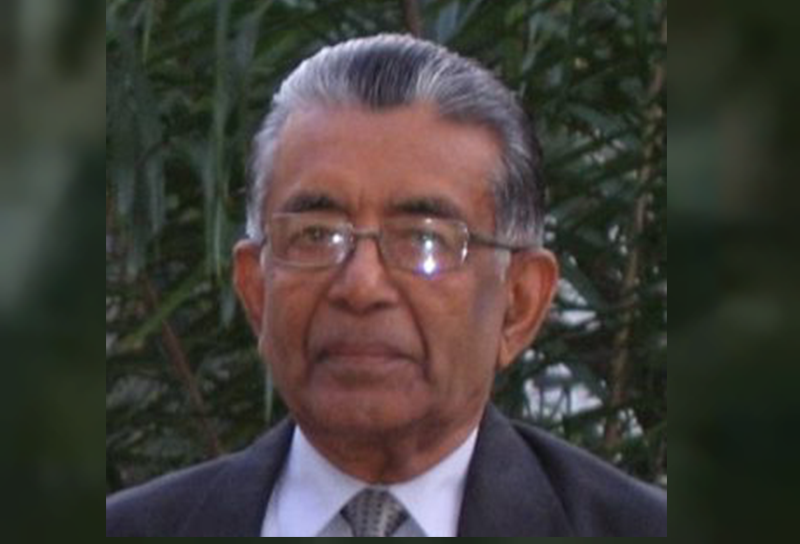
It is with a deep sense of sadness that I record the passing of Dr Upatissa Pethiyagoda, who died on 27 August 2026 at the age of 94. To many, he was a distinguished scientist, accomplished administrator, diplomat and public intellectual. To me, he was much more than that.
Dr Pethiyagoda was a proud product of Trinity College, Kandy. At a time when a first class in Botany was a rarity, he obtained one and subsequently pursued postgraduate studies in London. His scientific career reflected not only his knowledge but, more importantly, an enquiring and restless mind that was never satisfied with simply accepting what was known.
In the 1970s, he headed the Plant Physiology Department of the Tea Research Institute of Sri Lanka. He was part of a formidable team of scientists that included Drs R L de Silva, R L Wickramasinghe, P Sivapalan, Tilak Wettasinghe and W Danthanarayana. They were scientists who contributed enormously to the development of the tea industry in Sri Lanka, and Dr Pethiyagoda stood comfortably among them.
In 1978, he moved to the Coconut Research Institute as its Director. It was there that I had the privilege of working with him. Those years left a lasting impression on me.
Dr Pethiyagoda was, in every sense, a complete scientist. Although his formal specialisation was plant physiology, he was remarkably comfortable discussing almost anything scientific. What distinguished him was his curiosity. He questioned the science behind the ordinary things that most of us simply accepted. I remember his asking questions such as, why is an orange green in Sri Lanka? It was typical of him: an apparently simple observation would lead him to ask what lay behind it.
That curiosity never left him.
After his tenure at the CRI, he undertook an FAO assignment in the Middle East, working on the improvement of date palms. There he was exposed to agriculture under conditions of severe water scarcity. He pursued this further during a visit to Israel, learning about agronomic practices suited to such environments. Later, when he worked with the Mahaweli Authority, he was able to translate that knowledge into practice, introducing high-value horticultural crops to Systems B and C.
What impressed me was not merely that he acquired knowledge, but that he connected knowledge from one context to another and turned it into practical solutions. His enquiring mind and analytical ability enabled him to do this with remarkable effectiveness.
He was equally impressive as a communicator. Dr Pethiyagoda was an eloquent speaker, whether he was talking about science, agriculture, public policy or the everyday affairs of our country. His speeches were often laced with wit, humour and the occasional tongue-in-cheek remark. But beneath the humour was a very serious mind. He was forthright in his opinions and, importantly, he was not afraid to express them, whatever the possible repercussions.
His contributions to the media demonstrated this courage.
Writing about the travel to London by a former President, he observed:
“Where a person enjoys immunity by virtue of his position, this carries a reciprocal obligation to exercise an abundance of exemplary behaviour. In effect, immunity is best exercised, when the need to invoke it, is never allowed to arise.”
[Immunity Does Not Confer Impunity – Colombo Telegraph]
That was quintessential Pethiyagoda—precise, pointed and impossible to misunderstand.
He was equally outspoken about the government’s decision to ban inorganic fertiliser with ‘immediate effect’. He was deeply distressed by what he believed would be the consequences for farmers, particularly the poorer farming community. He would speak about it almost every day, driven not by political considerations but by his conviction that science and evidence had been disregarded.
In one of his writings on the subject, he remarked:
“What the ‘Vipathmaga’ caper taught us was that advice of sundry ‘Experts’ can be disastrous. Professors of Surgery, clergymen and Pediatricians are not the best equipped to advise on fertilisers, as much as a Soil Scientist should not prescribe treatment for a sick child.’ [Some Lessons That Can Be Learned Even From Disasters – Colombo Telegraph]
And in another article, his frustration was summed up in the memorable words:
“Stupidity, like History, has a way of repeating itself.”
[Unscrambling eggs – Colombo Telegraph]
These were not simply provocative statements. They reflected a scientist who believed deeply that public decisions, particularly those affecting agriculture and the livelihoods of farmers, should be based on evidence and sound scientific advice.
Perhaps, what I will remember most about Dr Pethiyagoda is that his curiosity survived almost to the very end of his life.
Very recently, he was still asking questions and pursuing ideas. He was interested in the possible genetic differences between the waraka and wela varieties of jak, because he wondered whether the wela variety might have commercial potential for cellulose extraction. He was disappointed that he could not find relevant scientific literature in Sri Lanka. More than the particular subject, what struck me was that at 94 he was still thinking about a scientific question, looking for evidence and wondering whether an apparently ordinary resource could have an important national application. He lamented the lack of interest among scientists and academics in such questions of national importance. That concern, too, was very much part of who he was.
Dr Pethiyagoda also served as President of the National Academy of Sciences, Sri Lanka. Unfortunately, he was unable to complete his term because he was appointed Ambassador to Italy, with representation at the Food and Agriculture Organization in Rome. Even in that role, he remained very much the scientist. I understand that he made a significant contribution to FAO discussions. As Ambassador, he also had the unenviable task of entertaining Sri Lankan Ministers of Agriculture who attended FAO sessions. I know from my own conversations with him that those informal dinners were not merely social occasions. He would discuss agricultural issues with the Ministers, and I have little doubt that his views—and the force with which he expressed them—sometimes influenced their thinking.
Looking back, what I admired most about Dr Pethiyagoda was not any particular position he held or any particular achievement. It was the way he thought.
He questioned.
He analysed.
He connected ideas.
He challenged conventional wisdom.
And he was willing to say what he believed to be true.
He also demonstrated that science should not remain confined to laboratories, research papers or academic institutions. For him, science was a way of looking at the world and, ultimately, a means of improving the lives of people.
It is perhaps ironic that, only a few months ago, he wrote about “The Cost of Dying”, as distinct from the “Cost of Living”. In that article, he reflected on the manner in which our mortal remains should be disposed of, observing: “I am in two minds regarding the manner in which the mortal remains are disposed of, ‘according to the will of the deceased’. But with the cessation of the breath, ownership or tenancy ceases.” Even in contemplating death, he brought his characteristic questioning mind to the subject. What particularly caught my attention, however, was his explanation of the Buddhist practice of holding dânes (almsgivings) for monks of the local temple in the seventh day and third month following a death. I had never really thought about the significance of this practice before. That, too, was typical of Dr Pethiyagoda: he could take something that we had accepted as ordinary and familiar and make us stop, think and see it differently.
His passing has created a colossal vacuum in Sri Lanka’s scientific community. People of his intellectual breadth, curiosity, courage and independence are rare. We may not always have agreed with everything he said, but we could never doubt that he had thought deeply about it and that he had the courage of his convictions.
For those of us who had the privilege of knowing him, there is sadness in his passing. But there is also gratitude—for having known such an extraordinary mind, for having learnt from him, and for having witnessed at close quarters his unwavering commitment to science and to the development of our country.
I shall remember Dr Pethiyagoda with great affection and immense respect.
Ranjith Mahindapala
Past President, National Academy of Sciences of Sri Lanka.

What India chooses to do with the strategic freedom it has built over eight decades may be the defining question of its next phase
 by Milinda Moragoda
In the emerging global economy, countries will increasingly seek multiple sources of energy, technology, capital, minerals and markets. India can contribute by helping create an open network rather than another exclusive bloc.
As India marks eight decades of Independence, its strategic position has changed almost beyond recognition. Yet the central question of strategic autonomy remains. What India chooses to do with the strategic freedom it has built over eight decades may be the defining question of its next phase.
India has spent the past decade expanding its strategic choices — deepening ties with the US, Europe and Japan while maintaining important ties with Russia and strengthening engagement with the Gulf, Africa and Southeast Asia. Australia and New Zealand are also becoming increasingly important partners in the wider Indo-Pacific. At the same time, India has sought a larger voice for the developing world in international institutions. Strategic autonomy has traditionally been understood in diplomatic terms: the ability to maintain freedom of action without being drawn into competing power blocs. In an increasingly interconnected world, however, that freedom will depend just as much on economic choices.
The objective should be strategic interdependence — building sufficiently diverse relationships that dependence on any one country or economic system does not become a vulnerability. India is unusually well placed to pursue this. Its geography connects the Gulf and wider West Asia, the manufacturing economies of Asia, Africa across the Indian Ocean and the Eurasian space extending through Russia. The opportunity, therefore, is to become a connector between economies increasingly fragmented by geopolitical competition.
India’s relationship with Japan is extending into advanced manufacturing, technology, energy, semiconductors and critical minerals. Its engagement with the US is deepening across technology, investment, advanced manufacturing, energy and strategic cooperation, while its engagement with Europe is becoming increasingly economic and technological. Its relationships with the Gulf are expanding beyond energy into investment and connectivity. Australia and New Zealand add an important southern dimension to its wider Indo-Pacific engagement, while Southeast Asia provides pathways into wider Asian production networks.
Russia remains an important part of this equation. India’s continuing engagement with Moscow, alongside its deepening relationships with Washington, Tokyo, Europe and the Gulf, demonstrates that strategic autonomy gives India the flexibility to maintain important relationships across geopolitical divides.
China inevitably occupies a special place in this landscape. India’s answer cannot be either excessive dependence or complete separation. It will require strengthening domestic capabilities, diversifying supply chains and building partnerships elsewhere, while retaining space for engagement where interests permit.
India possesses another asset that few countries can match: a large, globally active and influential diaspora. Yet the diaspora can also present challenges, as political currents within these communities do not always align with India’s interests and can occasionally create sensitivities in its relations with host countries. The greater opportunity lies in nurturing the economic, intellectual and cultural connections the diaspora can create, while respecting its diversity and independence. In the emerging global economy, countries will increasingly seek multiple sources of energy, technology, capital, minerals and markets. India can contribute by helping create an open network rather than another exclusive bloc.
Ports, shipping routes, energy corridors, digital infrastructure, supply chains and trade agreements increasingly shape strategic influence. India’s challenge is to bring these strands together without turning them into a closed sphere of influence.
India’s economic rise will be more sustainable if other countries see themselves as participants in its growth rather than simply as markets for it. The value for India lies in making these relationships complementary rather than choosing among them. India’s leadership of the Global South can now move beyond representation in international forums towards creating an international economic environment in which developing countries have greater choices. India’s own experience is relevant here. It has moved from a relatively closed economic model towards deeper global integration while retaining a strong emphasis on domestic capability. The lesson is that openness and strategic autonomy need not be contradictory.
As the G20 meets again in Miami in December, India can continue to argue that the Global South should not merely seek greater representation within existing institutions, but a greater stake in shaping the economic networks and institutions of the future. An economically integrated Indian Ocean could allow countries such as Sri Lanka, Bangladesh and the Maldives to participate more deeply in regional supply chains, logistics, energy, tourism, technology and services. Influence based on shared prosperity is more durable influence based on dependence. India’s strategic opportunity, therefore, lies in becoming one of the principal connectors of a changing world.
(Milinda Moragoda is founder of the Pathfinder Foundation, strategic affairs think tank, and can be contacted via email @milinda.org.)
Courtesy Hindustan Times

Shree Charani, Prema Rawat spin Pakistan out for 55 in one-sided contest

Sun directly overhead Bentota, Thiniyawala, Iththakanda, Udawalawe, and Kataragama about 12.08 noon t9day (06)

Showers above 75 mm are likely at some places in the Uva and Eastern provinces.

Tharanga creates history with Diamond League crown in Brussels

UN welcomes Lanka’s anti-graft drive, seeks end to impunity

Dispute which triggered listed company director being detained at BIA resolved

‘Dates have the highest sugar content to fight Coronavirus’

Sunday Island 27 December – Headlines

#SundayIsland 17th December – Headlines

Sunday Island – 28th March

Sunday Island Headlines – 21 March

Sunday Island – 21st February – Headlines
-

 Features6 days ago
When Sri Lankan stories find their own voice
-

 News6 days ago
BASL takes exception to Justice Ganepola being denied a place in SC
-

 News3 days ago
Denied of promotion to SC despite vacancies, justice Gurusinghe retires
-

 Latest News4 days ago
Grade 5 scholarship exam results released
-

 News3 days ago
22A: SC urged to suspend hearing, appoint full bench
-

 Midweek Review4 days ago
The local and global dynamics of Sri Lanka’s 22nd Amendment
-

 Business6 days ago
ADB-funded Thalaiyadi plant serves as blueprint for vulnerable dry zones in Sri Lanka
-

 News4 days ago
Ai-CHA expands Lankan footprint with new Negombo outlet