
Sports
Dickwella, Chandimal help Sri Lanka draw opening Test

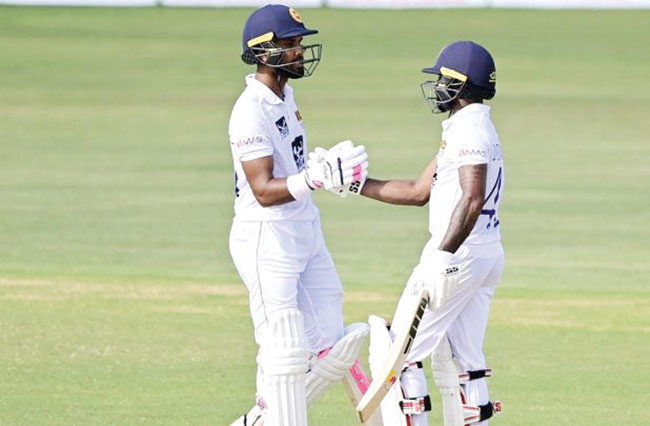
Dinesh Chandimal and Niroshan Dickwella dug deep with the Chattogram surface staying true to its nature of being a batting paradise as the first Test between Sri Lanka and Bangladesh, ended in a draw. Things, however, could have been different if not for the pair’s dogged 99-run stand for the seventh wicket on the fifth and final day.
Having started the morning on a brisk note, Sri Lanka lost two wickets each on either side of the lunch interval to stumble to 161 for 6, with a narrow lead of 93. But both Chandimal and Dickwella showed grit and determination keeping the Bangladesh bowlers at bay for 203 deliveries to eke out a draw. Dickwella, more adventurous with his shot-making, brought up his 20th Test half-century and finished with an unbeaten 61 off 96 balls. Chandimal, on the other hand, was more measured during his 135-ball 39 not out. The two teams shook hands an hour before the scheduled close of play, with Sri Lanka on 260 for 6 in 90.1 overs.
The Bangladesh bowlers, particularly Taijul Islam and Shakib Al Hasan, stuck to their lines, but were unable to break the seventh-wicket stand. Taijul was the pick of the bowlers returning 4 for 82. Angelo Mathews was named Player of the Match for his 199 in the first innings.
It took Sri Lanka all of 24 balls to wipe off the 29-run deficit in the first session with Kusal Mendis taking the attack to Bangladesh. He was the aggressor while Karunaratne, more circumspect in his approach, rotated the strike well as runs came at a premium in the first hour of the morning.
Kusal started off the day by clattering Taijul for two fours in the first over before slamming Khaled Ahmed for a hattrick of four either side of the wicket as Sri Lanka scored 59 runs in the first nine overs of the first session. It did not help that Bangladesh were a bowler short with Shoriful Islam ruled out of the series, after fracturing his right hand courtesy a Kasun Rajitha bouncer late on day three.
Shakib and Taijul then restored some parity with the latter striking twice. He first removed Kusal Mendis with a peach of a delivery that pitched on middle stump to turn and trim the off bail for a 43-ball 48 before accounting for Mathews with a stunning return catch for a duck. Mathews, who was visibly frustrated having not scored for 14 balls launched a straight drive back at Taijul, who somehow got both hands to it and completed the catch above his head.
Sri Lanka, ahead by 60 runs at lunch, started off after the break on a positive note collecting seven runs from each of the first two overs. Karunaratne reached his 28th half-century with a thick outside edge off Shakib. However, his joy was short-lived as he fell soon after to Taijul. Going the aggressive route, Karunaratne skipped down the track but his mistimed flick could only travel as far as Mominul Haque at midwicket, who completed a good catch diving to his right.
Dhananjaya de Silva continued taking the attacking option and he did succeed to an extent before falling to a rank long-hop for 33. Shakib, to his credit, floated the short of a length delivery, enticing the batter, who took the bait and pulled straight to Mushfiqur Rahim. Shakib could have had another wicket the very next ball but Dickwella’s sweep just evaded a leaping Taijul at backward square.
Sri Lanka were staring down the barrel at that stage but Chandimal and Dickwella dug in to rescue the visitors.
Brief scores:
Sri Lanka 397
(Angelo Mathews 199, Dinesh Chandimal 66, Kusal Mendis 54; Nayeem Hasan 6/105) & 260/6 (Niroshan Dickwella 61*, Dimuth Karunaratne 52, Kusal Mendis 48; Taijul Islam 4/82) drew with Bangladesh 465 (Tamim Iqbal 133, Mushfiqur Rahim 105, Liton Das 88; Kasun Rajitha 4/60, Asitha Fernando 3/72).





[Cricbuzzz]
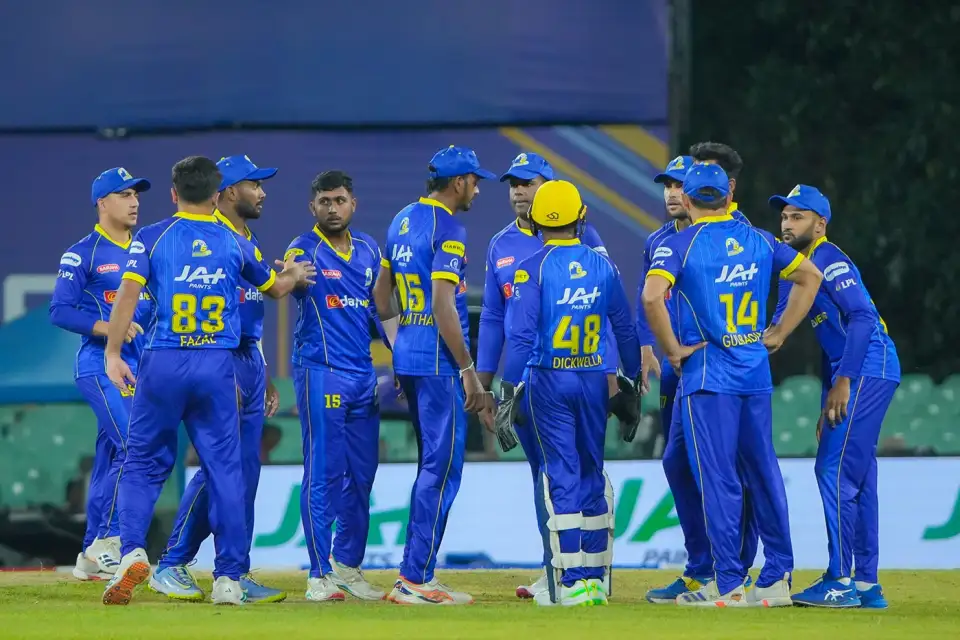
Dambulla Sixers powered by an all-round performance from Marques Ackerman [2-27 and 35] and an unbeaten 64 off 37 balls from Reeza Hendricks handed the Galle Gallants their first defeat in LPL 2026. The match, the 8th game in LPL 2026 was played on Wednesday [22nd July] at Dambulla. The Gallants used nine bowlers but were unable to restraint the Dambulla batsmen who won with six wickets in hand 23 balls remaining.
Scores:
Galle Gallants 178/8 in 20 overs [Lasith Croospulle 12, Sam Harper 40, Charith Asalanka 25, Chamika Karunarathne 45, Dasun Shanaka 20, Mehidy Hasan Miraz 16; Vishwa Lahiru 1-20, Fazalhaq Farooki 3-39, Maheesh Theekshan 1-29, Gulbadin Naib 1-23, Marques Ackerman 2-27]
Dambulla Sixers 180/4 in 16.1 overs [Niroshan Dickwella 14, Shaibzada Farhan 13, Reeza Hendricks 64*, Pavan Rathnayake 29, Marqes Ackerman 35, Gulbadin Naib 20*; Dasun Shanaka 1-18, Mohammad Nawaz 1-40, Eshan Malinga 1-35, Chamika karunarathne 1-07]

Colombo District Waste Management subcommittee convenes at Parliament

Government to coordinate Kotte Rajamaha Viharaya Sri Dalada Maha Perahera

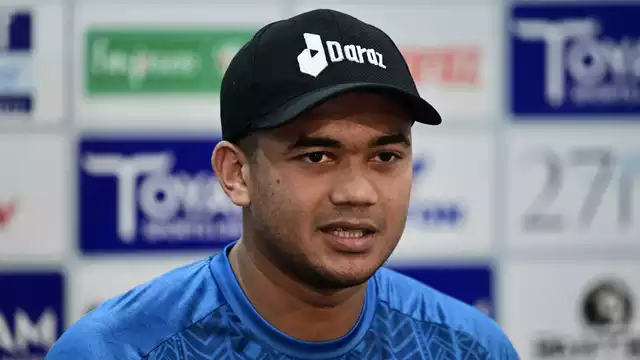
Taskin Ahmed withdraws from LPL to prepare for Australia tour

US and Saudi Arabia announce nuclear cooperation deal

Navy seize Indian fishing trawler, nine fishermen poaching in Sri Lankan waters

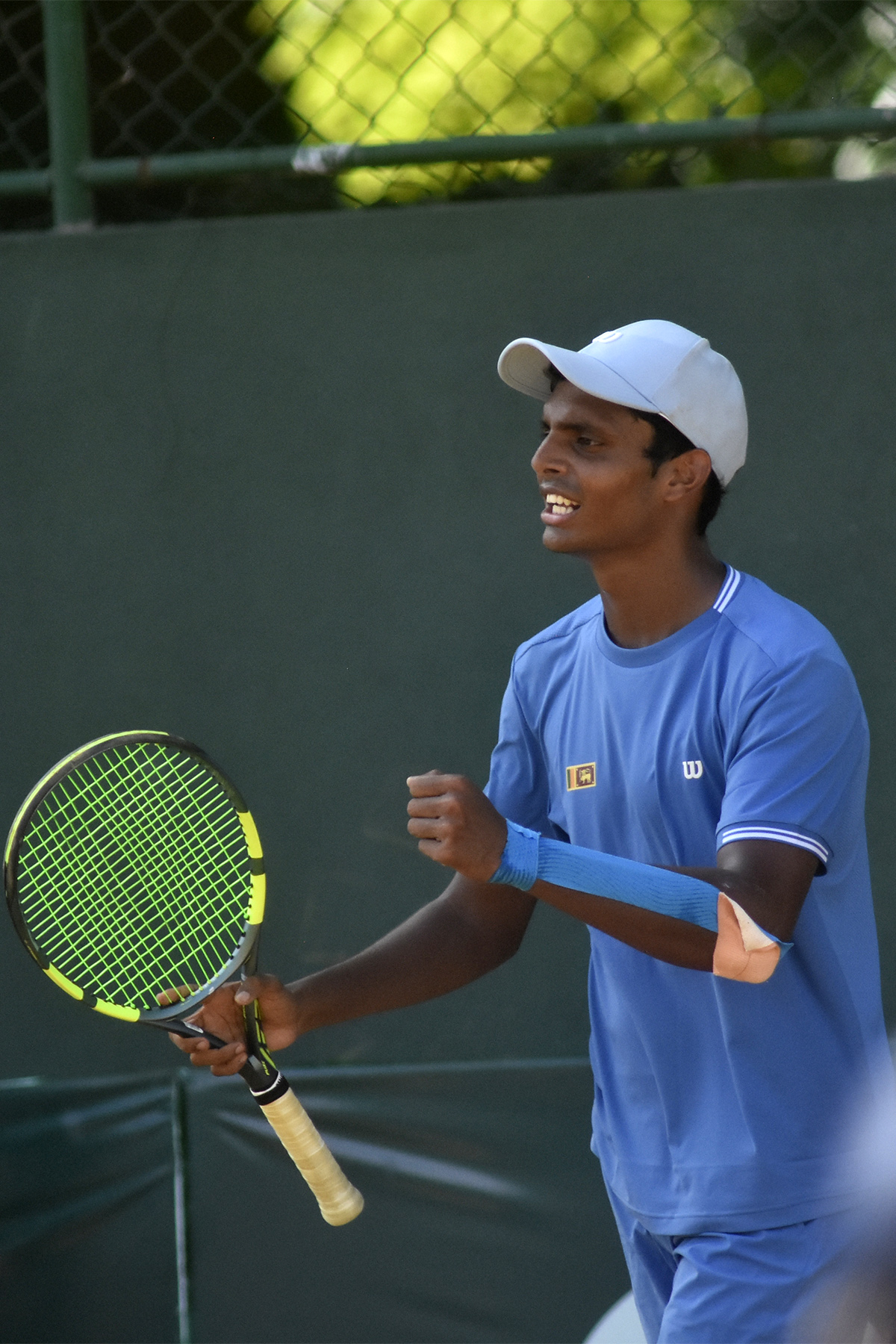
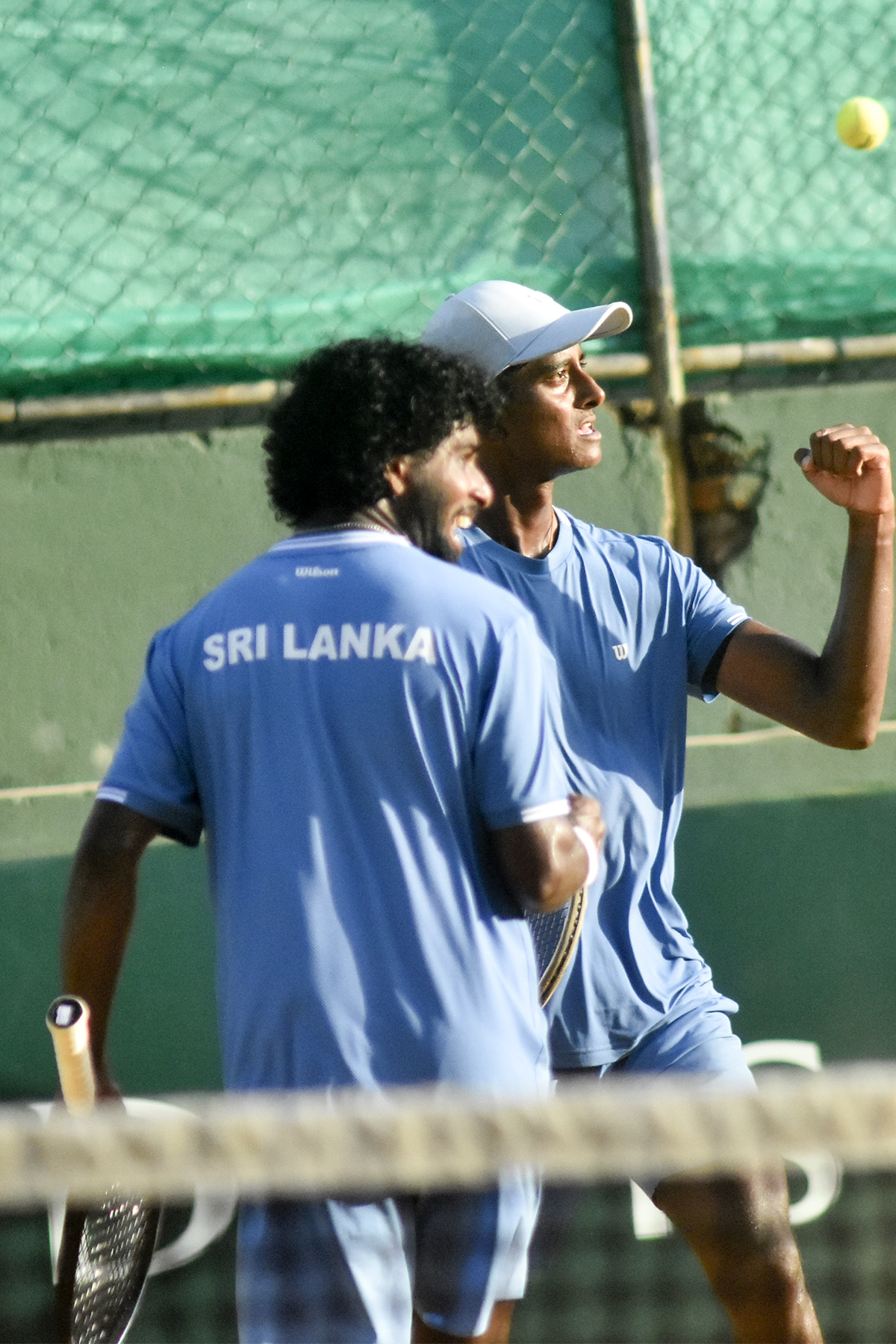
Sri Lanka edge Qatar in Davis Cup opener

‘Dates have the highest sugar content to fight Coronavirus’

Sunday Island 27 December – Headlines

#SundayIsland 17th December – Headlines

Sunday Island – 28th March

Sunday Island Headlines – 21 March

Sunday Island – 21st February – Headlines
-

 Features5 days ago
Two memorable excerpts from a former SLAF commander’s memoir
-

 Business5 days ago
‘Giving up was never an option’: The fisherman who fought back after losing millions in SL
-
 Latest News5 days ago
Davis cup Asia/Oceania Group IV 2026 to be held in Colombo from 20th to 25th July
-

 Features5 days ago
Erdoğan’s New Republic
-

 Life style5 days ago
Taste of the Swiss Alps comes to Colombo
-

 News6 days ago
Evidence recorded in money laundering case against Yoshitha Rajapaksa
-

 News6 days ago
Dengue outbreak gallops ahead: Infections surpasses 73,455, leaving 50 dead
-
 Midweek Review2 days ago
Three high-profile alleged suicides shaping key investigations