
Business
Clarification on default status helps boost share market

By Hiran H.Senewiratne
Business confidence will likely build up in the wake of Central Bank Governor Dr Nandalal Weerasinghe telling the media yesterday that Sri Lanka was not facing a hard default but a pre-emptive default, which entailed informing about the payment of funds beforehand until the IMF debt restructure plan comes into play.Further, JP Morgan, a leading investment bank in the United States is on record that with the recent political changes, the current political crisis in Sri Lanka will stand defused and the value of bonds will rise. This would also create some impetus for the stock market, analysts said.
They point out that political stability will lead to a rise in the value of bonds above current lows. The Bank predicts that this will facilitate discussions with the International Monetary Fund as well as the process of appointing legal and financial advisors.
“We think this stability should result in both IMF discussions and the process of appointing legal and financial advisors moving forward,” Reuters said quoting JPMorgan analysts.
“Political stability should pave the way for bonds to move higher from near all-time lows,” JPMorgan analysts added.
Amid those developments stock market trading activities started on a positive note and later moved downwards. The All- Share Price Index went down by 243 points down and S and P SL20 declined by 94.9 points. Turnover stood at Rs 1.5 billion minus a crossing.In the retail market top seven companies that mainly contributed to the turnover were; Expolanka Holdings Rs 777 million (3.7 million shares traded), Browns Investments Rs 204 million (24.8 million shares traded), LOLC Finance Rs 130 million (13.9 million shares traded), LOLC Holdings Rs 70.7 million (127,000 shares traded), Softlogic Life Insurance Rs 56.8 million (914,000 shares traded), Royal Ceramic Rs 33 million (one million shares traded) and Lanka IOC Rs 30.3 million (752,000 shares traded). During the day 69 million share volumes changed hands in 17000 transactions.
It is said that following four sessions of sharp gains recorded in the CSE soon after the appointing of Ranil Wickramasinghe Prime Minister, indices edged down due to profit-taking in heavyweight stocks across sectors due to faulty speculation on the market. However, activity picked up to stronger levels with turnover surpassing Rs. 3 billion for the first time in nine weeks, largely boosting blue- chips, market analysts said.Yesterday, the Central Bank announced the US dollar buying rate as Rs 354.56 and the selling rate as Rs 364.53. The rupee rate has appreciated as against the dollar as certain policy measures have been adopted to bridge the gap between the Central Bank rate and the kerb market rate.

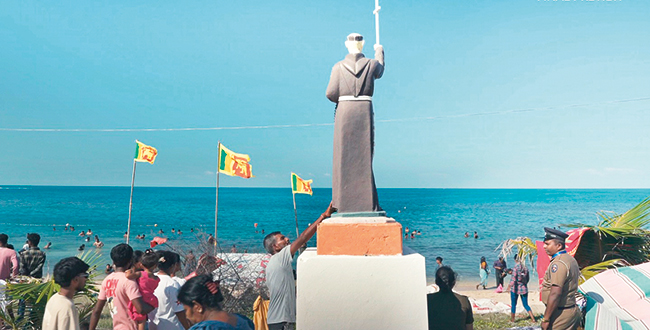
The International Centre for Ethnic Studies (ICES) will premiere its latest documentary, ‘The Saint of the Islands’ on 28th March. The 72-minute documentary, directed by Anomaa Rajakaruna, will be screened at the Tharangani Theatre of the National Film Corporation in Colombo, Bauddhaloka Mawatha, Colombo 7, starting at 4 pm on the 28th.
The film explores the shared devotional traditions surrounding St Anthony of Padua, the patron saint of sailors and fishermen, against the backdrop of the annual feast on the island of Kachchateevu. In Sri Lanka, devotion to St Anthony often crosses religious and cultural boundaries, bringing together different communities that unite across practices of prayer and veneration. At the centre of the story is the annual gathering of devotees from Sri Lanka and India at the St. Anthony’s Shrine on the island of Kachchatheevu, located near the maritime border between the two countries.
Filmed during the annual feast at Kachchatheevu and on the nearby island of Neduntheevu (Delft Island), the documentary reflects on the intersection of faith, livelihood, and geopolitics in the Palk Strait. Kachchatheevu itself is a small, uninhabited island that remains deserted for most of the year.
Yet for two days every year, during the annual feast of St Anthony, it is transformed into a vibrant pilgrimage site as thousands of devotees brave the rough seas, and arrive by boat from both Sri Lanka and India. This year alone, almost 12,000 people from India and Sri Lanka, gathered on the island for prayer, worship, and community.
The film also captures the nearby island of Neduntheevu (Delft Island), one of the northernmost inhabited islands of Sri Lanka. Known for its distinctive landscape, coral-stone architecture, and long maritime history, Delft serves as an important point of departure for pilgrims travelling to Kachchatheevu. Through scenes of travel, pilgrimage, and worship, the documentary reflects on how the sea shapes the lives of coastal communities while also connecting people across national borders and across different religions.
More information can be found on the ICES website, www.ices.lk or by emailing uvini.ices@gmail.com
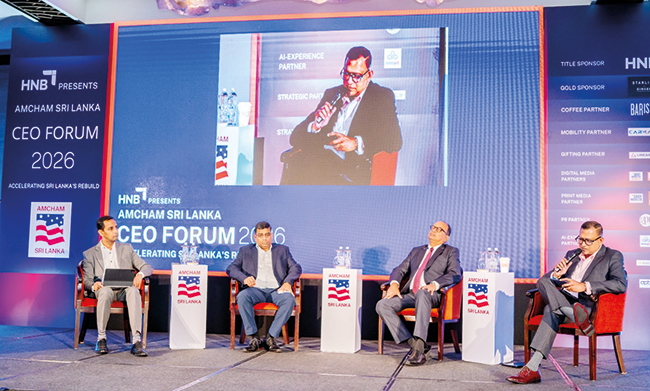
The American Chamber of Commerce in Sri Lanka concluded its flagship CEO Forum 2026 on 25 February with government officials outlining an ambitious plan to achieve 7% annual economic growth and progress toward a LKR 200 billion economy. The day-long summit, held under the theme “Accelerating Sri Lanka’s Rebuild,” brought together more than 200 C-level executives, senior policymakers, and international partners at Cinnamon Grand Colombo.
Dr. Harsha Suriyapperuma, Secretary to the Treasury, outlined priority reforms including strengthening fiscal stability, maintaining inflation at 5%, improving governance to attract foreign investment, upgrading port infrastructure, supporting IT and pharmaceutical sectors, accelerating digitization, and consolidating the banking sector. The government aims to double the economy within a decade while creating a more predictable business environment.
Opening the Forum, Her Excellency Jayne Howell, Chargé d’Affaires at the U.S. Embassy, called for expanded two-way trade and highlighted opportunities for Sri Lankan buyers to access American technology and energy solutions. She emphasized that growth in trade and logistics, including Port of Colombo expansion, strengthens supply chains and drives economic growth in both countries.
Deputy Minister Chathuranga Abeysinghe announced the establishment of the Industrial Transformation and Innovation Agency (ITIA), with LKR 300 million allocated for capacity-building and a “Level Up” program targeting 6,000 SMEs. Currently, only 20% of financial sector credit is accessible to SMEs, a constraint the new initiatives aim to address through simplified registration, expanded financial literacy, and improved equity financing access.

Sri Lanka’s apparel industry has earned its place in the global market through consistency, trust, and a strong reputation for ethical manufacturing. Over many years, we have shown that Sri Lanka can deliver quality, compliance, and reliability at a level that global brands value. That foundation remains one of our greatest strengths. But the next chapter for this industry cannot be built on reputation alone. It has to be built on growth that is measurable, broader in base, and more resilient in the face of global change. As Chairman of the Joint Apparel Association Forum, I believe the task before us is clear: Sri Lanka must move with greater purpose toward the long-discussed ambition of becoming a US$8 billion apparel export industry.
That ambition is important because it gives the industry a shared direction. But it must now be treated as more than a headline target. It must become a practical national agenda. Sri Lanka Apparel’s published export data show that textile and apparel exports for 2025 amounted to just over US$5.0 billion. That is a meaningful achievement, particularly in a demanding global environment, but it also shows that there is still a substantial gap between current performance and where we say we want to go. Closing that gap will require more than incremental improvement. It will require sharper execution, stronger coordination, and a more deliberate growth model.
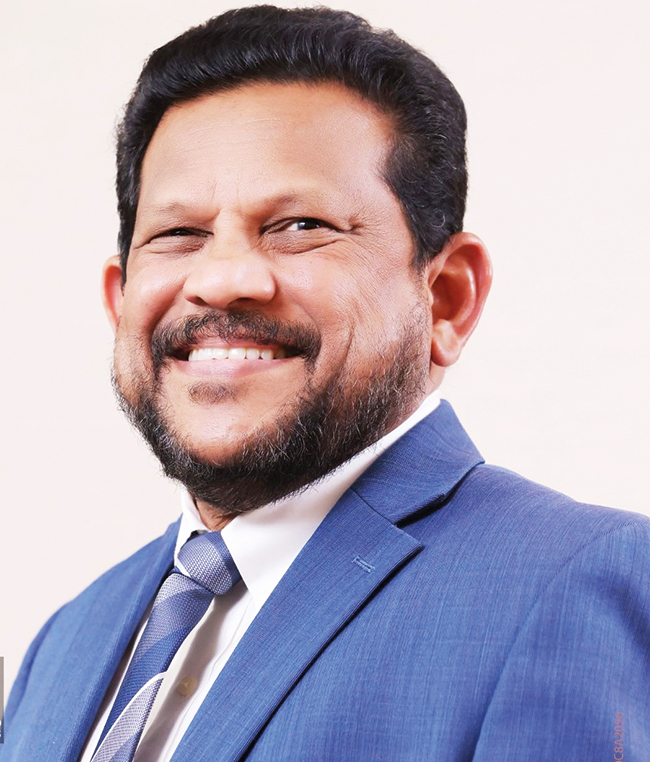
By Felix Fernando, Chairman, Joint apparel assoCiation Forum(JaaF)
One of the most important realities we must confront is market concentration. Our industry has traditionally depended heavily on the US, EU, and UK, and together these destinations account for about 85 percent of Sri Lanka’s apparel exports. That concentration has served us well in some respects, because these are mature and valuable markets where Sri Lanka has built long-standing relationships. But concentration at that level also creates vulnerability. When consumer demand weakens, tariffs shift, compliance expectations tighten, or brands change sourcing patterns in those markets, the effects are felt across our entire industry.
This is why diversification must now move to the centre of our export strategy. If Sri Lanka is serious about reaching US$8 billion, we cannot rely on the same market mix and expect a fundamentally different outcome. We need to build stronger export pathways into newer regions and expand our relevance in markets that have not yet been fully developed. ASEAN, the Middle East, Africa, and parts of Asia must become part of a structured and sustained growth effort. This is not about replacing our traditional markets. It is about reducing risk, widening opportunity, and building a more balanced export portfolio over time.
At the same time, diversification should not be understood only in geographic terms. It is also about moving up the value chain. Sri Lanka cannot compete on volume alone, and it should not try to. Our advantage lies in being a premium sourcing destination, one that brings together product integrity, speed, sustainability, technical capability, and increasingly, stronger design and development input. We must ensure that Sri Lanka is not viewed simply as a production base that executes instructions, but as a partner that contributes value, thinking, and innovation throughout the sourcing relationship.
That means we also need to become more disciplined in how we define progress. Export growth should not be reduced to one annual number. We must measure what kind of growth we are generating, where it is coming from, and whether it is making the industry stronger. Are we increasing our share in higher-value categories? Are we entering new markets in a meaningful way? Are we improving lead times and deepening customer relationships? Are we strengthening design capability and sustainability performance in ways that help us command better value? These are the questions that should shape our next phase.
No industry can achieve an ambitious export target, however, without the right operating environment. Sri Lanka must improve the systems that support trade. Faster customs processes, stronger digital integration across approvals, lower administrative friction, and more predictable policy are not side issues. They are core to competitiveness. In an industry where delivery timelines matter, delays at any point in the system affect confidence, planning, and future order allocation. Trade facilitation must therefore be treated as an export growth issue, not merely an administrative reform issue.
The same applies to the broader investment climate. If Sri Lanka wants to attract fresh capital, deepen value addition, and strengthen its manufacturing base, we have to be seen as commercially responsive as well as ethically strong. Investors look for clarity, speed, stability, and confidence that business can be done efficiently. This matters not only for foreign investment, but also for the expansion decisions of companies already operating in Sri Lanka.
The opportunity is still very much in front of us. Sri Lanka apparel has the capability, the reputation, and the institutional knowledge to grow beyond its current scale. But the route to US$8 billion will not come from doing more of the same. It will come from measurable export growth, deliberate diversification, stronger systems, and a clear commitment to higher-value positioning. If we align around those priorities and act with consistency, the industry can move into its next chapter with greater strength and greater confidence.
By Felix Fernando, Chairman, Joint Apparel Association Forum (JAAF)

“Fairfirst Trophy at stake when undefeated HNB Assurance meet McLarens Group today

St. Servatius’ looking to break deadlock

‘The Saint of the Islands’

AmCham Sri Lanka CEO Forum 2026 concludes successfully

To reach US$8 billion, Sri Lanka apparel must grow differently

Bourse indices plunge as oil hits the USD 112 per barrel mark

‘Dates have the highest sugar content to fight Coronavirus’

Sunday Island 27 December – Headlines

#SundayIsland 17th December – Headlines

Sunday Island – 28th March

Sunday Island Headlines – 21 March

Sunday Island – 21st February – Headlines
-

 Business4 days ago
Browns EV launches fast-charging BAW E7 Pro at Rs. 5.8 million
-

 Life style5 days ago
From culture to empowerment: Indonesia’s vision for Sri Lanka
-

 News2 days ago
CIABOC questions Ex-President GR on house for CJ’s maid
-
 Business6 days ago
Sri Lanka Institute of Information Technology raises the bar for academic excellence
-

 Opinion7 days ago
M. D. Banda: Memories of Appachchi – II
-

 Life style5 days ago
Ranjith Fernando celebrates cricketing journey with Hob Nails to Spikes
-

 Latest News5 days ago
QR code system will be implemented for fuel with effect from 06.00 a.m. today (15th)
-

 News3 days ago
Australian HC debunks misleading travel risk claims for Sri Lanka