
Editorial
Violence begets violence


Tuesday 10th May, 2022
Yesterday’s dastardly attacks on anti-government protesters in Colombo must be condemned unreservedly. It is not difficult to identify the perpetrators of violence, and they must be brought to justice forthwith. They could easily have been prevented from taking on the Gota Go Gama protesters if the police had cared to use reasonable force when their march commenced from Temple Trees.
The timing of yesterday’s mob attacks makes one wonder whether those violent incidents were part of a sinister plan to perpetuate political instability in the country and scuttling the ongoing efforts to resuscitate the economy. It was obvious that they were premeditated, and some SLPP leaders were behind them.
Media reported, last week, that Prime Minister Mahinda Rajapaksa would announce his resignation, yesterday. The Bar Association of Sri Lanka (BASL), religious leaders, and others had managed to make the government and the SJB find common ground anent a multi-party interim administration to be formed under a new Prime Minister. If Mahinda had quietly tendered his resignation yesterday, it would have been possible to defuse the massive pressure build-up in the polity, and pave the way for the proposed coming together of the SLPP, the SJB, and the dissident government MPs to resolve the current crisis.
Those who organised the pro-Mahinda protest march, yesterday, did so to incite violence and derail efforts being made to set up a caretaker government to put the economy back on an even keel. They are determined to prevent the country from coming out of the present crisis, and settle political scores with their rival factions in the SLPP.
President Gotabaya Rajapaksa should have ordered the police to stop the SLPP mobs before they entered the Galle Face Green. He couldn’t have been unaware that there would be a confrontation between the SLPP marchers and the anti-government protesters. A large number of riot police personnel had been deployed in the area with water cannon at the ready, and they could have dispersed the SLPP supporters easily, but they chose to give the latter kid-glove treatment, until the situation got out of control. Then they used tear gas and water cannon, but to no avail.
The police are capable of controlling crowds as we have seen on so many occasions; they did not allow a group of protesting university students to enter the Parliament premises, the other day, did they? They must be made to explain why they did not stop the protest march yesterday.
Some government politicians’ houses were torched yesterday. They were not spontaneous incidents. Ordinary people protest and boo politicians, but never do they go so far as to burn houses, and the arson attacks at issue were carried out by organised groups, who were making the most of the current situation.
All arson attacks were carried out systematically within hours of the pro-Mahinda protest march. This portends trouble, and the law enforcement authorities had better remain alert. Nobody must be allowed to take the law into his or her own hands; arsonists must be arrested and prosecuted if further trouble is to be averted.
It is unfortunate that Opposition Leader Sajith Premadasa also came under attack at the Galle Face Green yesterday. The assailants can be easily identified, and they must be arrested and prosecuted immediately. The President must intervene to ensure that justice is done.
One can only hope that yesterday’s unfortunate incidents would not stand in the way of the ongoing efforts to establish an interim administration proposed by the BASL, which has also undertaken to ensure that the goons responsible for violence will be brought to justice.



Thursday 15th Octobber, 2026
Israeli Prime Minister Benjamin Netanyahu is reportedly cranking up pressure on US President Donald Trump to resume military strikes on Iran ahead of the upcoming elections in Israel and the US. Trump recently declared that there would be no military operations against Iran until the conclusion of the US midterm elections in November, but speculation is rife that Netanyahu may be able to persuade him to change his mind.
Netanyahu appears to view the Iran conflict through the Clausewitzian lens. Prussian General and military theorist Carl von Clausewitz has argued that war is not an isolated military undertaking divorced from political considerations; it is an instrument used by states to achieve political objectives when other means prove insufficient or when leaders choose to resort to force. Critics of Israel claim that Netanyahu is trying to further his own political interests by escalating an international conflict. They argue that Netanyahu’s support base has shrunk considerably at home as he is facing criminal charges of bribery, fraud and breach of trust in three separate cases, and therefore he is using the Iran conflict, etc., to portray himself as a leader best equipped to deal with threats to Israel’s security.
Renewed military confrontation with Iran could give a big fillip to Netanyahu’s election campaign. Political scientists call this phenomenon ‘diversionary war theory’; leaders facing declining popularity, domestic unrest or threats to their tenure tend to use an international confrontation to redirect public attention, stimulate patriotism and rally citizens around their governments.
In the US, the Republicans face a serious risk of suffering a huge setback at the upcoming midterms and losing control of the House of Representatives, while their chances of retaining the Senate are believed to be considerably better, although Democrats now have a realistic opportunity to capture it as well. Current forecasts favour the Democrats in both chambers, but the Senate contest remains much closer. This is an unsettling proposition for President Trump, who will not hesitate to do everything in his power to improve his party’s electoral chances.
Meanwhile, Netanyahu’s desperation to retain his hold on power amidst the Israeli Opposition recovering lost ground has given rise to several conspiracy theories, the most prominent among them being that the recent attempted hijacking of Flydubai flight was an Israeli false-flag operation; the incident was staged for political purposes. It may be recalled that a conspiracy theory about the Hamas attack on Israel in 2023 alleged that Netanyahu had prior knowledge of the assault but deliberately allowed it to happen because the resulting war would strengthen his political position.
World history is replete with instances where rulers fought wars to consolidate their power at home. Historians tell us that Napoleon III involved France in the Crimean War so as to strengthen its legitimacy and restore France’s international standing. Russia’s war in Chechnya enabled Vladimir Putin to establish his image as a decisive leader.
The next phase of the Iran war is very likely to be far more destructive than the previous ones. Future military operations against Iran are bound to have unprecedented global consequences. Oil prices will soar again, making economies scream the world over. Worse, Iran has explicitly threatened to target regional digital infrastructure, including submarine cables and data centres if war resumes. Iran’s threat is credible enough to merit attention, although it does not establish that attacks on every category of infrastructure are inevitable or that Iran has announced a specific operation against US-based facilities.
If Iran carries out its threat in case of the US and Israel resuming strikes, the UAE and Bahrain will face direct risks; the UAE, Bahrain, Qatar, Kuwait and parts of Saudi Arabia will be exposed to damage affecting Gulf submarine cables. Sri Lanka and India are among the potential secondary victims of a wider outage, especially if Red Sea cables are damaged. The possibility of attacks on cables causing widespread disruption to European internet connectivity cannot be ruled out, according to experts, but military might blinds powerful nations to reality and drives them to act recklessly. All one can do is hope that what is feared will not come to pass.

Wednesday 14th October, 2026
Sri Lankan political leaders never miss an opportunity to moralise, and their oratory often helps them win elections. But their words are rarely matched by deeds, so much so that they have come to be dubbed NATO (no action, talk only) leaders. These self-righteous characters portray themselves as paragons of virtue while condemning their political rivals as rogues.
Leaders of the previous government wrapped themselves in the flag and branded their critics as traitors. Their successors are treating key Opposition figures as rogues who deserve to be thrown behind bars. President Anura Kumara Dissanayake has declared that drug money is used to finance media outlets and protests as part of a strategy to unsettle the government, which has taken on the drug Mafia with might and main. Addressing a recent public rally, the President said some sinister characters with links to drug cartels were all out to derail the government’s efforts to eliminate organised crime.
If President Dissanayake has credible evidence that drug barons are funding any media organisation, he should initiate legal action against it, shouldn’t he? Similarly, if there is irrefutable evidence that drug dealers are behind any protest campaign, legal action must be instituted against its organisers. However, no witch-hunts must be launched on the basis of unsubstantiated allegations, with arrests being prematurely made even before investigations get underway.
One may recall that last year President Dissanayake reportedly said he had credible information that some local government members had been funded by drug dealers. He said he had directed the law enforcement authorities to launch an investigation. It is believed that Kudu Lal, a drug dealer operating from overseas, backed a group of independent candidates at the 2025 local government polls in Colombo and some of them were elected. Have the police failed to find out who benefited from drug barons’ largesse? If the JVP/NPP had allowed all local council heads to be elected by open ballot, the public would have been able to see whether it was the government or the Opposition that had benefited from the support of the councillors with alleged narcotic links.
We also have former ‘NATO’ leaders claiming the moral high ground. Former Speaker Mahinda Yapa Abeywardena has gone on record as saying that he thwarted an attempt by an influential Colombo-based foreign diplomat and some religious leaders to persuade him to assume the presidency following Gotabaya Rajapaksa’s resignation at the height of the Aragalaya protests in 2022. He claimed that those behind the move wanted to establish an unconstitutional government and plunge the country into anarchy. He has not made any official complaint about that serious incident. During a discussion at a national conference of the Chartered Accountants of Sri Lanka in Colombo, in 2024, former President Chandrika Bandaranaike Kumaratunga said she had been offered a US$5 million bribe by the husband of a junior minister in her Cabinet and a foreign businessman, when she was the Prime Minister. She said she had rejected the offer out of hand and threatened to have them arrested. Why she did not carry out the threat is the question. In 2013, the then Health Minister Maithripala Sirisena claimed the tobacco industry had offered him a huge bribe and he had turned it down. He did not take any action against the culprits.
Refusing a bribe is the minimum expected of a public representative. Reporting such an attempt is what helps ensure that the person who offers a bribe is held accountable. Anyone cannot credibly claim to be fighting corruption while treating an attempt to bribe him or her as a private matter. Whatever the law may say, the ethical obligation is clear; a political leader who is offered a bribe should document the incident and report it promptly to the appropriate investigative authority so that the matter can be investigated. Those who do not do so undermine the rule of law.
Meanwhile, President Dissanayake’s claim that drug dealers are using protesters and media outfits against his government reminds us of a similar claim made by President Maithripala Sirisena in 2019 after the Easter Sunday terror attacks. He claimed that drug cartels he had taken on had orchestrated the terror strikes to discredit him and scuttle his anti-narcotics drive.
Political leaders who claim to have rejected bribes or possess credible information of conspiracies by drug dealers against governments must resort to legal action. They must fish or cut bait.
Tuesday 13th October, 2026
The Opposition and the government engaged in an interesting thrust and parry over secret political deals in Parliament the other day. SJB MP Mujibur Rahman lashed out at the JVP, accusing it of having struck a deal with what he described as the corrupt political forces and helped them rise to power in 2005. He argued that the JVP’s political history was replete with similar deals.
Prime Minister Dr Harini Amarasuriya promptly stuck her oar in to defend the JVP, arguing that even if the SJB’s points were conceded for the sake of argument, the JVP had never struck secret political deals under cover of darkness, unlike its critics in the Opposition. But history tells a different story. The JVP has failed to distinguish itself from other political parties when it comes to deal-making. Like its rivals, it has shown that it does not scruple to subjugate principle to political expediency in pursuit of its own interests.
The JVP-led NPP government has faced severe criticism over ‘deals with foreign governments’, particularly its failure to make public the full texts of several agreements and memoranda of understanding (MoUs) signed with India, China and the United States. Critics have questioned whether the current administration is living up to its promises of transparency and accountability, especially where the agreements concern defence, national security, foreign policy and the media. This wall of secrecy, as it were, has made a mockery of the government’s much-advertised commitment to upholding transparency and accountability.
Can the JVP-NPP government reconcile what it describes as legitimate confidentiality requirements with its stated commitment to transparency? Signing international agreements is an ordinary function of any government, but withholding their terms can undermine public confidence when the arrangements may affect national security, economic interests or even sovereignty.
Founding Leader of the JVP Rohana Wijeweera would turn in his grave if he knew of the agreements between India and the JVP-led government. It was during a violent anti-India campaign that Wijeweera met a tragic end in 1989.
The JVP has struck deals with both the SLFP and the UNP. Adversity and expediency are said to make strange bedfellows. In 1970, the JVP actively took part in the election campaign of the SLFP-led United Front (UF), with its stalwarts like Mahinda Wijesekera leading the propaganda campaign of the UF. It took up arms against the UF government in 1971. In 1977, it gravitated towards the UNP. The Batalanda Commission report, which the JVP is using against former President Ranil Wickremesinghe, has revealed that “by the time the 1977 General Elections were declared, the peripheral organizers of the JVP were active, and in fact went to the extent of directly supporting the United National Party, which had been during that period classified as a right-wing capitalist political force” (p. 14). Following its abortive second uprising, the JVP entered into what could be described as a political deal with the SLFP in 1994. Ten years later, it coalesced with the SLFP-led United People’s Freedom Alliance, obtained 39 seats and secured Cabinet posts. It left the UPFA government the following year. However, it campaigned hard for SLFP presidential candidate Mahinda Rajapaksa, playing a crucial role in ensuring his victory in 2005. Thereafter, it closed ranks with the UNP-led political alliances at the 2010 and 2015 presidential elections, and had representation on the National Executive Council of the Yahapalana government.
It is popularly said in this country that when floods strike, even mongooses and cobras forget their enmity and cling to floating logs to stay afloat. When the floodwaters recede, however, their fights resume. This is precisely what we are witnessing on the political front. In Sri Lanka, there is hardly a political party that has not played the role of either the mongoose or the cobra, depending on the circumstances. One may recall that the vociferous SJB bigwigs now berating their JVP counterparts were prominent members of the UNP-led Yahapalana government, which enjoyed a political honeymoon with the JVP between 2015 and 2019.

Prison rules to be revised over monks’ attire

AC President recuses himself from hearing prison attire case pertaining to Gnanasara Thera

Court orders steps to obtain INTERPOL Red Notice against Basil

CID informs Fort Magistrate’s Court investigation into money laundering case against Namal completed

No force used to make Gnanasara Thera wear prison garb – Prisons

Saudi SC sets aside death sentence imposed on Lankan

‘Dates have the highest sugar content to fight Coronavirus’

Sunday Island 27 December – Headlines

#SundayIsland 17th December – Headlines

Sunday Island – 28th March

Sunday Island Headlines – 21 March

Sunday Island – 21st February – Headlines
-

 News6 days ago
NDB fraud Rs 60mn more than reported
-

 News6 days ago
Removing monk’s robes matter for Sangha to decide: Mahanayake Theras
-

 News4 days ago
Sri Lanka escalates anti-graft drive with Shiranthi’s jailing
-
 News5 days ago
NPP govt. reminded of its responsibilities as US warship leaves Colombo
-
 Latest News5 days ago
Farhan, Sadaqat help Pakistan ace 183 chase to go 1-0 up
-
 News6 days ago
BHC, Colombo: “LTTE remains a proscribed org. in the UK”
-
 News4 days ago
Iranian ships stranded, Lanka fears US sanctions
-
 Latest News3 days ago
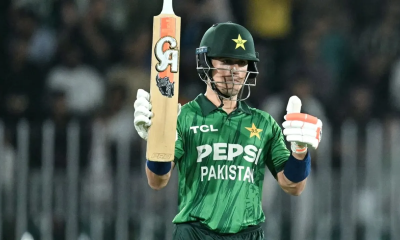
Farhan and Sadaqat help Pakistan seal series in style