
Sports
‘Buttler’s great at understanding what the game is telling him to do’ – Sangakkara


A little over halfway in the IPL, Jos Buttler is by a distance the most prolific batter in the competition, having made 588 runs at a strike rate of 151. Rajasthan Royals’ director of cricket Kumar Sangakkara talks about the season his team’s star batter is having.
Jos Buttler is no stranger to success at the IPL, but this season he’s been far and away the best of the batters so far. Why do you think that is?
He’s been given a very clear role as an opener, without having to think about batting No. 4 or 3, or his role being questioned in terms of how the team might benefit from his position being changed.
The franchise has also recognised that he’s been the best T20 opener in the world for the past few years. We’ve done our data and analytics for seven months. We had a separate analytics team that looked at player valuation quite differently and went into granular detail, and that helped us in terms of retention and in terms of auction strategy, and giving players clarity in their roles, and that’s helped Jos.
In terms of his technique, he’s done a lot of work in identifying what his best hitting position is, and how he changes from the first two to three overs in the powerplay to that power-hitting position the moment he feels he’s got rhythm. That’s been really good.
He tends to start somewhat slow…
Jos has realised that his strike rate right throughout the innings gets better and better, so he knows not to get fazed when the ball is swinging or seaming – to fight through those periods and give himself the best chance of success. If he’s batting in the 14th or 15th over, he’s well on the way to scoring a hundred. Last season the Sunrisers game was an example. He was about 35 runs off 35 balls and ended up scoring a hundred off 56 deliveries I think. He’s great at understanding what the game is telling him to do and the pitch is telling him to do. And giving himself the best chance of taking his innings deep and scoring the runs for the side. He’s got amazing skills, amazing hands and bat speed, so that does the rest of the job.
Then he explodes in the next ten balls to the point where balls ten to 20 are one of his most productive periods. Is this a game plan he has?
For him it depends on feel. If you take the first Mumbai game – Bumrah bowled a really good over, Daniel Sams not such a good over, and then Basil Thampi comes on and suddenly, I think he felt that was an over where he could really take him down. I think he took 26 or something in that over. When he gets that feeling, how he arranges his feet in terms of his ready position is really important for him to have that maximum output.
He starts off in the normal fashion but changes into his power-hitting position when the moment comes along. When there’s another tough period, he changes back. He’s brilliant at reading the game. He knows how to switch back and forth. That’s been a hallmark of why he’s been so successful this season.
No type of bowler seems to have had an advantage over him this season. What’s given him that unique edge?
He’s good against spin and pace, which is not always the case with even the great players. He also has a very good shot repertoire that he’s comfortable with. He paddles, sweeps, reverse sweeps. And he’s got great hand speed and a lot of power. He’s a very, very strong guy. You can see that even off a back-foot punch, how he clears the line. So when you have those shots and that strength in your armoury and those quick hands – it gives you a huge amount of confidence.
When I was playing, I had to calculate a six, and reverse sweeps were not something I did naturally. I had certain ways of scoring. But Jos is exceptional because of his range of scoring. He’s all around the wicket. He paddles pace, he hits down the ground, and he hits over extra cover. There’s no real weakness, when he gets going [for you] to tie him down. The only thing that can affect him a little bit is sticky or slow wickets. But then when he fights through those periods, those attributes that he has really help him.
He looks at his T20 innings as a long innings. He’s not a guy who’s just satisfied batting in the powerplay. He’ll take it to the 12th, 14th, 15th over, which really helps the side do well. That overall game arrangement that he has makes it tough for bowlers to tie him down.
As good as he has been against pace, he’s prospering even more against the spinners – he has faced 103 balls of spin in the tournament, been out just once, and scored at 9.9 runs an over against them, with almost a quarter of the balls he’s faced being boundaries. Could you break down his technique against spin?
It’s risk and reward, and he understands that very well. He will use his feet against certain spinners. He understands which spinners he’s struggling against, so he’s more than happy to take a couple of singles and give the strike over to the other guy. He hits off the back foot really well now over cover, and straight down the ground really well. In the first KKR game, he back-foot-punched Varun Chakravarthy into the sightscreen. The moment they go full, he hits down the ground off the front foot. There’s very little margin in terms of spin unless there’s a lot of purchase on the pitch. As a bowler, when your margins decrease, there’s a lot of pressure to be almost perfect, which, again, can lead to a lot of mistakes, and that again is an advantage to Jos.
Spinners – except for a Rashid Khan or a Sunil Narine to an extent – have been able to bowl good balls at him, but they’ve not been able to tie him down or get him out. Sometimes we get carried away with the boundaries only, but the way he’s rotated the strike, minimised risk, and really taken down bowlers when he knows he can – that’s the kind of back-and-forth in his batting that’s really helped him against spin.
He very famously once had “f*** it” written on the top of his bat handle. As a director of cricket, for you is he the kind of player that you just leave alone to prepare their own way?
Jos is someone who thinks about his technique and his batting quite a lot – much more than I expected he would. He’s always ready to learn. He talks about his batting with a lot of knowledge and authority. He has a very set way of training and keeping his body position. He works very hard at training.
My job is really to show him what the results are and why that is happening. And to convince him to keep doing the same thing – not any less or any more. Just to build that tempo into his innings and understand that each day it’ll be different. That tempo could come at different times. It could be the second ten balls, or it could be from balls 30 to 40. Just to fight through the tough parts and give himself the best chance to be impactful for the side. There’s been times when he’s struggled through with a very average strike rate, and ended up with a 150 or 160 strike rate. Sometimes it’s over 200. My job is to get him comfortable in that and give him ownership.
Are you finding that because he’s having such an incandescent season, the oppositions’ tendency to prioritise the match-ups against him, or use different bowlers while he’s at the crease, is having knock-on effects for the rest of your batters?
With the new balls they’ll always try to get him out with set ways, which he knows about. There’s yorkers, there’s change of pace, or two fielders on the leg side to stop him from using his paddle against pace. He knows what’s coming at him and he gets prepared for that. When you’re hitting a six, you don’t really care where the field is. You’re just trying to clear the field anyway. He’s got that really clear mindset.
With a lot of the sides, if he’s going well, they will have to try and bring their best bowlers back on to try and get him out or to try and get someone else out. And that gives the rest of the batters a little bit of an easier time, facing bowlers that they might manoeuvre or find to their liking or take down. It’s had a positive effect on the side. The others have been able to bat in situations and positions that suit them because Jos has been so effective.
Which of his innings have been the most important this season, for you?
That RCB game, he struggled through and managed to accelerate at one particular point. For me that reinforces his actual strength and shows him very clearly that if he fights through periods that are tough, he accelerates so quickly, he gets us to positions from where we should win. Those kinds of innings show him his real ability rather than scoring a hundred at a canter. He organises his game and his mindset in a way that benefits the side when the pressure is on. Innings like that are really crucial.
He also hit a fantastic century against KKR, against a very good attack featuring Pat Cummins, Sunil Narine, Varun Chakravarthy, and Umesh Yadav. Could you break that knock down for us?
We all know his ability against pace – he plays so straight and his commitment to his boundary-hitting. I think the significance was that back-foot punch for six against Chakravarthy. That really put the KKR bowlers under threat, because Chakravarthy, whom we’d spoken so much about, was nullified. And then all the batters started taking runs off him, and Jos was leading that. That particular shot gave not just Jos but everyone else confidence as well.
It’s not easy to get to 100 in T20 cricket. You can get to 50 or 60 and feel like you’ve done your job. But Jos is not like that. He’ll push through.
(Cricinfo)







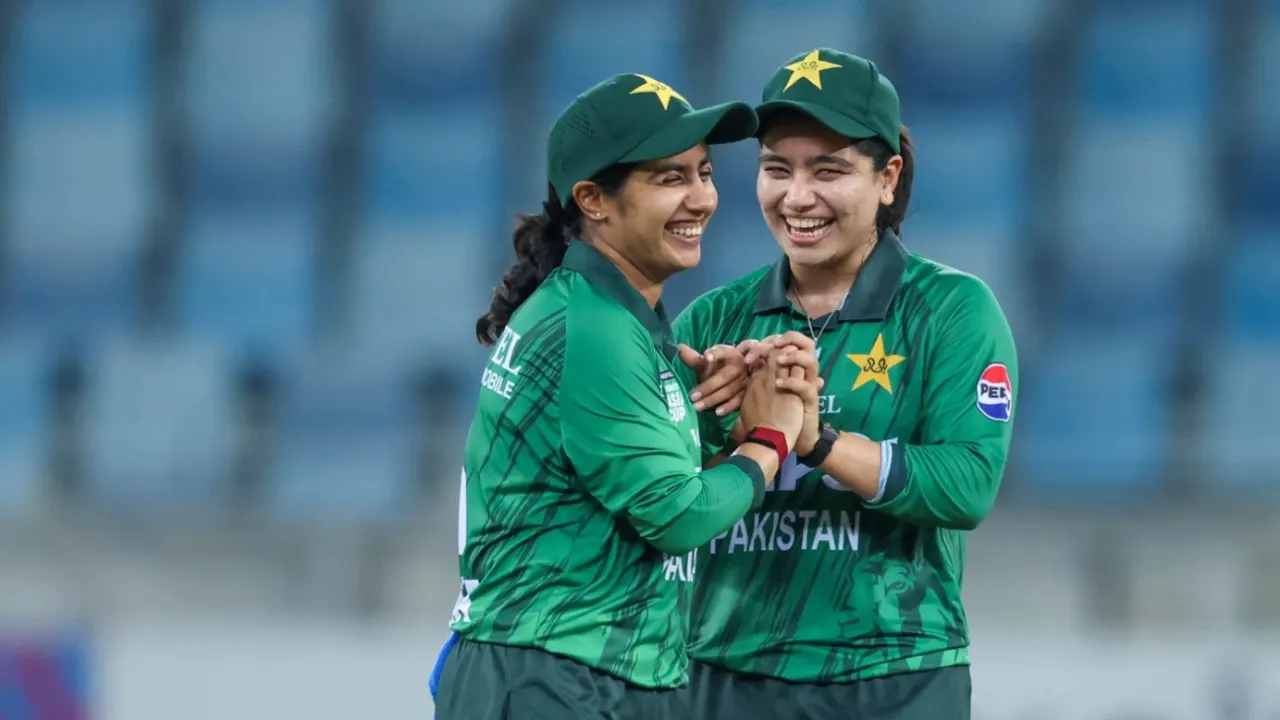
Pakistan will play Sri Lanka in the Women’s Asia Cup semi-final on Friday after they secured a thumping win over Hong Kong in the final Group A contest. They finished second in their group with a 72-run win set up by a record-breaking spell of 6 for 7 from Nashra Sandhu and a resolute 35-ball 47 from Shawaal Zulfiqar.
Pakistan scored 143 for 8 after electing to bat first for the third time in as many matches, with Ayessha Zafar and captain Fatima Sana making valuable contributions of 26 off 19 and run-a-ball 24, respectively, before an excellent display of bowling saw Hong Kong fold for 71 in 19 overs.
Zulfiqar lives up to expectations
Zulfiqar made a thumping comeback to the T20I side last month in Sri Lanka and it made Pakistan persist with her at the top of the order despite the return of experienced Gull Feroza, who slid down to one-down. She could not build on a start against India with the wickets tumbling from the other end and the pressure mounting. But the right-hander fought through on Monday, despite the dismissals of experienced batters around her in Muneeba Ali (6 off 7) and Feroza (3 off 4).
Despite batting on a challenging surface that played slow and gripped, Zulfiqar timed the ball well as she struck six boundaries. She hit a few sparkling cover drives and stitched a sparkling partnership of 47 off 34 with Zafar before the latter fell in the 10th over. No Pakistan batter, barring Zafar and Fatima, was able to emulate the 21-year-old in an innings which saw only four batters post in the double digits.
Zulfqar was eventually outsmarted b Joyleen Kaur as she smashed a flighted ball outside off right back to the bowler to be caught and bowled in the 12th over. Pakistan seemed well in control until she was at the crease, but could add only 51 runs in 8.4 overs after her dismissal.
Joyleen brings joy to Hong Kong
Pakistan’s bowlers too good for Hong Kong
Nashra Sandhu makes history
Pakistan Women 143 for 8 in 20 overs (Shawaal Zulfiqar 47, Ayesha Zafar 26; Fatima Sana 14; Iqra Sathar 2-27, Kary Chan 2-33, Joyleen Kaur 4-19) beat Hong Kong Women 71/10 in 19 overs (Yasmin Daswai 13, Kary Chan 30, Joyleen Kaur 10; Fatima Sana 1-07, Sadia Iqbal 1-08, Um e Sabi1 1-21 Nashra Sandhu 6-07, ) by 72 runs

The Indian Naval Ship (INS) Udaygiri arrived at the Port of Colombo on an official visit today, 8 September 2026, where it was received by the Sri Lanka Navy in accordance with time-
honoured naval traditions.
INS Udaygiri is a 149.02m long Frigate, Commanded by Captain Vikas Sood. Meanwhile, the Commanding Officer of the visiting ship is scheduled to call on Commander Western Naval
Area, Rear Admiral Harsha De Silva at the Western Naval Command Headquarters.
Captain Sood served as the Defence Adviser at the Indian High Commission in Sri Lanka from July 2020 to October 2023.
During their stay in the island, the crew of INS Udaygiri will participate in several goodwill events organized by the Sri Lanka Navy to enhance camaraderie between the two forces.
The visiting personnel are also scheduled to visit prominent tourist and cultural locations across the island.
Additionally, Sri Lanka Navy personnel are expected to visit the ship for capability observation and knowledge sharing, and will conduct onboard training during its stay.


Sri Lanka’s women continue to provide compelling evidence that they could be genuine contenders for the next World Cup, while their male counterparts have, in recent years, largely been making up the numbers at global events.
The defending Asia Cup champions, who stunned formidable India in Dambulla two years ago to lift the title, marched into this year’s semi-finals with an unbeaten record.
Sri Lanka topped their group with three wins from three games and importantly, will avoid India in the semi-finals. Their opponents in Friday’s knockout clash will be either Pakistan or Thailand.
For years, Sri Lanka have leaned heavily on their talismanic captain Chamari Athapaththu, one of the greats of the women’s game. More recently, however, others have begun putting their hands up when the skipper has fallen cheaply. That growing depth has also given Chamari greater freedom to play her natural, attacking game.
Last week, Nilakshika de Silva produced a rescue act against Indonesia. On Sunday, after the captain fell to only her second ball, it was the turn of vice-captain Harshitha Samarawickrama to take charge and steer Sri Lanka home through choppy waters.
Chasing 115 to win their final group game against Bangladesh at Dubai Sports City, Sri Lanka were quickly in trouble as seamer Marufa Akter sent both openers packing cheaply. With wickets continuing to tumble at the other end, Harshitha kept her head while others were losing theirs.
At 44 for five, with half the side back in the pavilion, Sri Lanka were staring down the barrel. Harshitha and Nilakshika then began the repair job, adding 38 for the sixth wicket to drag the innings back from the brink.
Marufa has been an outstanding find for Bangladesh and they rely heavily on her for breakthroughs. With one over remaining in her quota, she was summoned back to break the partnership and did precisely that, removing a well set Nilakshika as she attempted to improvise.
There was, however, no stopping Harshitha.
She found a reliable ally in wicketkeeper Kaushini Nuthyangana and the pair calmly took Sri Lanka across the line with an unbroken 33 run stand for the seventh wicket. Harshitha finished unbeaten on 38 off 47 balls, striking four fours and two sixes.
Sri Lanka got home with four balls to spare, maintaining their perfect record in the competition. Yet beneath the celebrations there will be a nagging concern: the batting has collapsed too often, leaving one or two players with far too much heavy lifting to do. That is something they will need to address before the stakes rise further.
Sri Lanka will play the second semi-final on Friday, with the final scheduled for Sunday.

UN Delegation Meets Chief of Staff to the President

Afghanistan to host Zimbabwe, Bangladesh in ODI tri-series

Sandhu’s 6 for 7 seals Pakistan’s semi-final spot

INS Udaygiri makes port call in Colombo

Showers in the Uva, Central and Eastern provinces and in Polonnaruwa district

22A: Exclusion of 8 petitions questioned, action filed against SC Registrar, others

‘Dates have the highest sugar content to fight Coronavirus’

Sunday Island 27 December – Headlines

#SundayIsland 17th December – Headlines

Sunday Island – 28th March

Sunday Island Headlines – 21 March

Sunday Island – 21st February – Headlines
-

 News6 days ago
Denied of promotion to SC despite vacancies, justice Gurusinghe retires
-

 Latest News6 days ago
Grade 5 scholarship exam results released
-

 News6 days ago
22A: SC urged to suspend hearing, appoint full bench
-

 Midweek Review7 days ago
The local and global dynamics of Sri Lanka’s 22nd Amendment
-

 News4 days ago
Namal remanded until Sept. 18 over Airbus deal investigation
-

 Latest News3 days ago
Tharanga creates history with Diamond League crown in Brussels
-
 News6 days ago
Govt. seeks NATO assistance
-

 News7 days ago
40 professional organisations and TU oppose proposed 22A