
News
Harsha de Silva says “Sri Lanka in dire straits” (Parliament Speech 3/5/22)


Earlier today the Minister of Finance, Hon. Ali Sabry, stated that the reluctance to go to the IMF much earlier was a grave mistake, in addition to the massive tax cuts and delayed depreciation of the rupee. However, I cautioned and suggested these changes as far back as 2020 November, although it fell on deaf ears. Today, these same Ministers act as if they are reborn. It is unfortunate that we did not make the right decisions at the time, as our debt was sustainable then, currently our debt is deemed unsustainable, thus the IMF is unable to provide us with any Rapid Financing Instrument (RFI).
In regard to the detrimental tax cuts, during the time of President Ranasinghe Premadasa, our tax to GDP was as high as 20 percent. When the SLFP came into power in 1994, taxation was still at 17 percent, however when Sirisena-Wickramasinghe took office in 2015, it had reduced to a meager 9 percent. Between 2015 and 2019 tax rates increased back up to 12.5 percent, although Sri Lanka’s tax to GDP today stands at 7.5 percent, which is the lowest in the whole world. How can an emerging island nation such as Sri Lanka move forward at this rate? Our people would not be suffering this much, had the government heeded the advice I repeatedly provided in Parliament and outside.
Hon. Ali Sabry made a massive revelation today by stating that we possess only a mere USD 50 mn, while also highlighting the urgent need of USD 4 billion to keep the country functioning. We cannot even offload a fuel ship with USD 50 mn, thus where will we find this money to keep us afloat? Our beloved neighbor, India has already committed almost USD 5 billion. Asian Clearing Union (ACU) payments alone amount to roughly USD 200 mn a month, a total of USD 2.5 bn a year.
In addition to another USD 1 bn to import food and medicine as well as USD 500 mn for fuel and USD 400 as a currency swap. However, China is yet to make a commitment of this nature. Although they support our IMF program, they have clearly expressed their reluctance to restructure our debt, which will further delay our debt-restructuring process.
We hear that President Gotabaya has written to the Japanese Prime Minister requesting some money, while extending his deep regret in scrapping the LRT project. It is critical that we receive these funds from Japan, as they are the only option we have left. Contrary to statements made by former Ministers such as Cabraal who stated that we will receive funds from the Middle East and various other countries, ultimately, it is only Japan that we have left. Sri Lanka will come to a complete standstill if we do not find these urgent funds.
This economic crisis has hit people across the board indiscriminately, (regardess) of their social classes. Our middle class, in particular, has been hit severely although they would not discuss this in public due to embarrassment. Households are discussing how they can cut their expenses and utilize their diminished savings to fund their normal day-to-day activities. Today’s newspapers revealed that the Cabinet has decided to provide Rs. 7,500 to all Samurdhi recipients, although I would like to highlight that this is purely insufficient.
This cash transfer should be extended to all families living on and below the poverty line, as they are all facing hardships. It ought to be a universal cash transfer system to ensure adequate coverage, opposed to targeted schemes such as Samurdhi that are politicized. According to a World Bank report, 60 percent of the population that ought to receive Samurdhi benefits are not recipients, while 60 percent who are undeserving are recipients. Thus, I urge the government not to politicize these cash transfers, as the majority of our population is struggling to make ends meet, and make these payments available to all.
The Hon. Finance Minister also touched on the welfare state earlier in his speech, however, it should be emphasized that 60 percent of government subsidies are consumed by the wealthiest million in this country, who are at the top of the social pyramid. The bottom million of the population only consumes less than 5 percent, thus our welfare state is highly inequitable. We need a complete overhaul of our welfare state and subsidies, as they should go to the most deserving. Additionally, we have to implement a wide-ranging social protection program to cushion the most vulnerable communities from the impending economic woes.
Unfortunately, we do not even have sufficient funds to operate the 1990 Suwa Seriya, which brings over 1,000 patients to critical care in a given day. I appeal to the Hon. Minister of Finance and the Hon. Prime Minister to please allocate the necessary funds to keep the 1990 Suwa Seriya functioning, as it is a crucial necessity in these hard times.
Moreover, we need to initiate a macro-stabilization program to stabilize our currency, interest rates and inflation. Who in their right mind would let a country’s currency free float all of a sudden with no guidance whatsoever? A fall of over 100 percent with no end in sight, as revealed earlier we have inadequate reserves to defend it. When the Rajapaksa government took over in 2019, the dollar was at 180 LKR. This very government heavily criticized the Sirisena-Wickramasinghe government for letting the rupee depreciate from 130 LKR/USD to 180 LKR/USD from 2015 – 2019.
However, today the Rajapaksa government has driven our rupee from 180 LKR/USD to 370 LKR/USD in two years! How many lives are jeopardized due to this depreciation? As a result, millions of Sri Lankans are unable to buy daily essentials such as milk powder, medicine and gas. We need to hold these people accountable, they should not be able to just resign and go home after driving 22 million people to the ground! How can they sleep at night knowing people are dying in queues waiting for petrol? They should be prosecuted under criminal negligence.
Interest rates are 25 percent today, and could go high as 30 percent! These rates are unbearable for small-medium enterprises, how are they expected to keep operations? The government claims they cannot do anything about it, obviously we cannot do anything now as they brought us to the edge of the cliff before bringing in necessary changes. Unfortunately, we will have to hold these interest rates for at least another six months to stabilize.
Lastly, official food inflation, according to the Department of Census and Statistics, is at a whopping 47 percent, while unofficial food inflation may be even higher! How in god’s name are people expected to find adequate sustenance for their families, when a single coconut is at 100 rupees, a kilo of dhal at 500 rupees, a kilo of rice at 240 rupees and a kilo of sugar at 260 rupees? Therefore, we are in an urgent need for a stabilization program that includes exchange rate, inflation and interest rates. There has to be a system to stabilize this economy, without stability this is going haywire and it is unbearable for the average man to survive.

Latest News
Steps will be taken to implement a new National Youth Policy in Sri Lanka in the first quarter of 2027 – PM

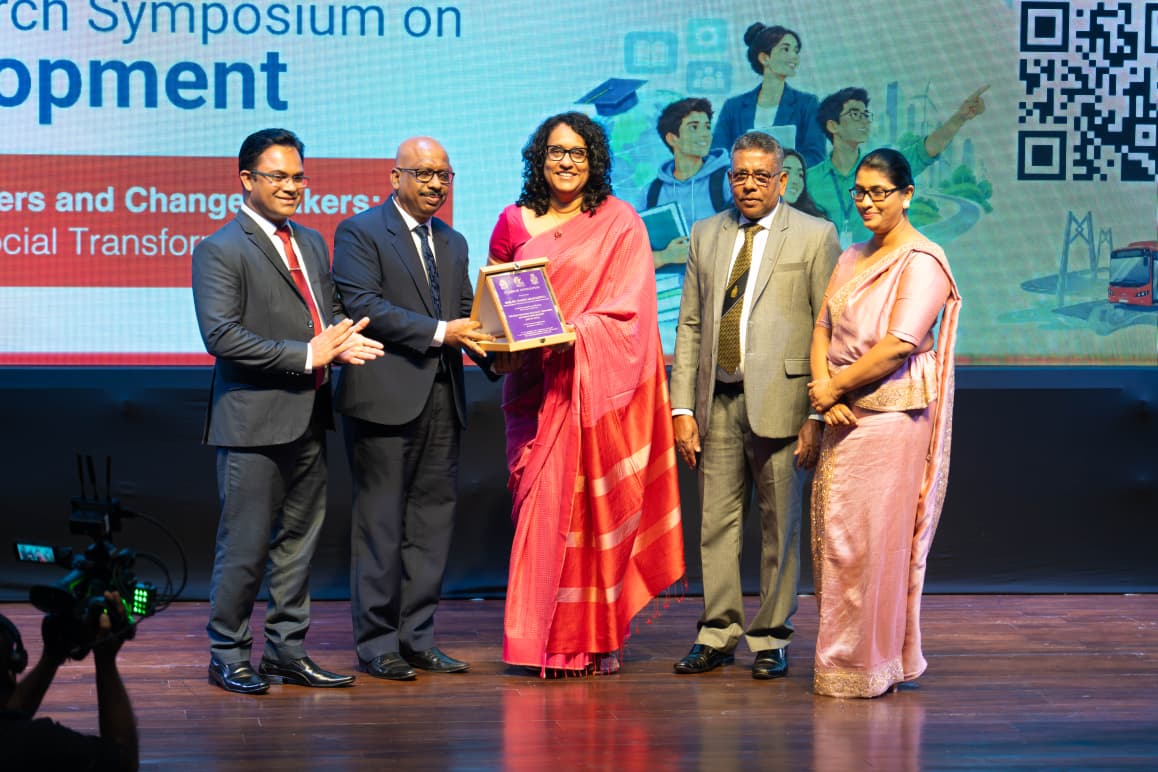
Prime Minister Dr. Harini Amarasuriya stated that the new National Youth Policy, being formulated to address the current challenges faced by Sri Lanka’s youth and fulfill their aspirations for the future, is scheduled to be finalised and implemented by the first quarter of 2027.
The Prime Minister made these remarks on Wednesday [September 16], while addressing the 1st National Research Symposium on Youth Development – NRSYD 2026, jointly organised by the Open University of Sri Lanka (OUSL) and the Ministry of Youth Affairs and Sports, held at the Water Supply and Drainage Board Auditorium in Ratmalana.
The symposium was held under the theme, “Young People as Right Holders and Change-Makers: Asset-based Pathways for Social Transformation.” Research papers are being presented under nine key thematic areas.
These areas include youth empowerment and leadership; education, vocational training and skills development; health, mental well-being and nutrition; youth entrepreneurship and economic participation; technology, digitalisation and innovation; climate change and sustainable development; minorities, social integration and the rule of law; youth migration and international relations; and arts, culture and creative expression.
The official publication of the symposium was presented to Prime Minister Dr. Harini Amarasuriya and other distinguished guests by Deputy Minister of Youth Affairs and Sports Dinindu Saman Hennayake and Secretary to the Ministry A.M.H.U. Aruna Bandara.
Speaking at the event, Prime Minister Dr. Harini Amarasuriya sated:
“Although a draft National Youth Policy was prepared in 2014, it was not implemented. Therefore, a new policy is currently being formulated with the participation of all stakeholders, taking into consideration the current changes in technology, the economy and the employment market.
Under the Government’s Public Investment Programme, Rs. 145 million has been allocated for research and development activities in the youth and sports sectors. Rs. 5 million has been allocated for this symposium. This allocation is a good beginning. It clearly demonstrates the seriousness with which we view evidence-based policymaking.
In the face of technological advancement and digitalisation, providing young people with academic knowledge alone is not sufficient. It is essential to equip them with practical, technical and vocational skills alongside knowledge. For this purpose, curricula within the existing education system must be updated in line with new technologies and global demand.
As for the Government, youth development is a cross-cutting issue that concerns all sectors. Our intention is to establish a unified policy framework that can provide guidelines and recommendations to address the challenges faced by young people in a scientific and sustainable manner.
Formulating a policy is only the beginning. The success of the National Youth Policy will depend on its implementation, monitoring and evaluation. Our objective should be to develop young people who are resilient and capable of facing changes, while also enabling them to become a generation that leads positive changes taking place in the world”.
The Prime Minister further stated that there is a proposal to hold the research symposium as an international conference next year, which would provide Sri Lankan researchers with significant opportunities to establish connections at regional and international levels.
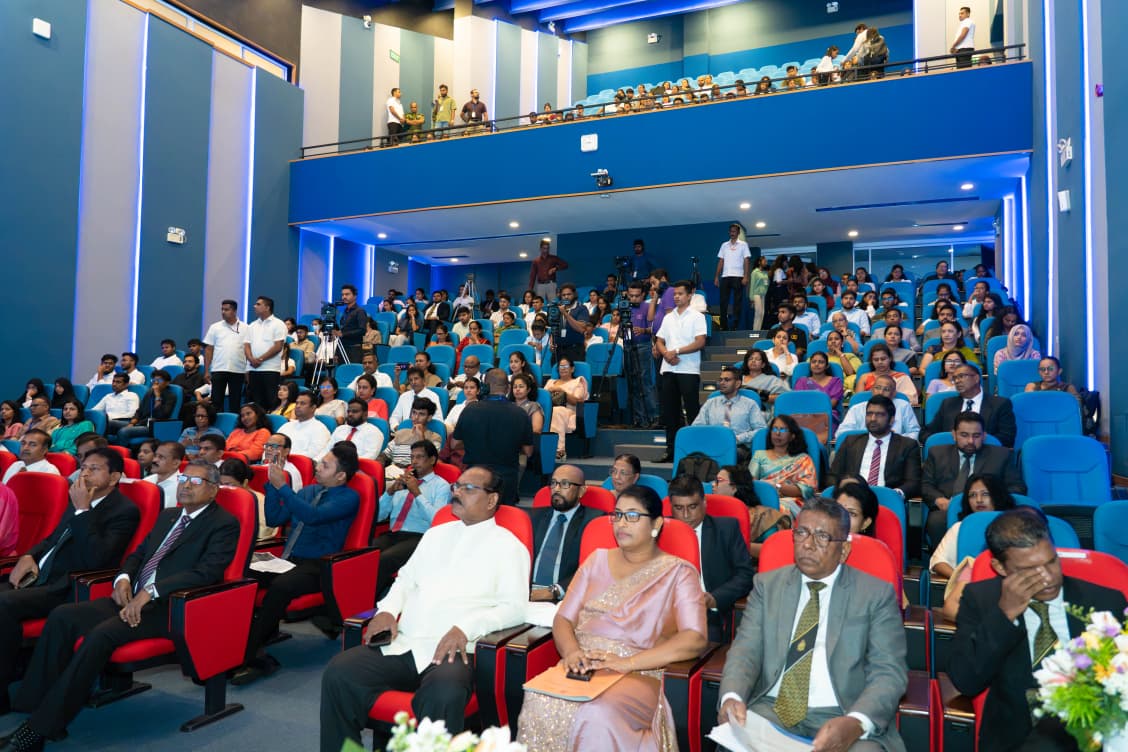
The occasion was attended by the Minister of Youth Affairs and Sports Sunil Kumara Gamage, Vice Chancellor of the Open University of Sri Lanka Senior Professor P.M.C. Thilakarathne, along with a large number of researchers, academics and young people.
[Prime Minister’s Media Division]
… America-Pakistan developed required ‘intel’ for operation
By Shamindra Ferdinando
The US Embassy in Colombo declined to comment on a special police probe into the recent narcotics detection, jointly made at the China-managed Colombo International Container Terminal (CICT) by the US Drug Enforcement Administration’s (DEA) New Delhi Country Office and Sri Lanka Police..
US Embassy spokesperson said that the mission wouldn’t add to their press release, issued on 2 Sept., in the immediate aftermath of the raid.
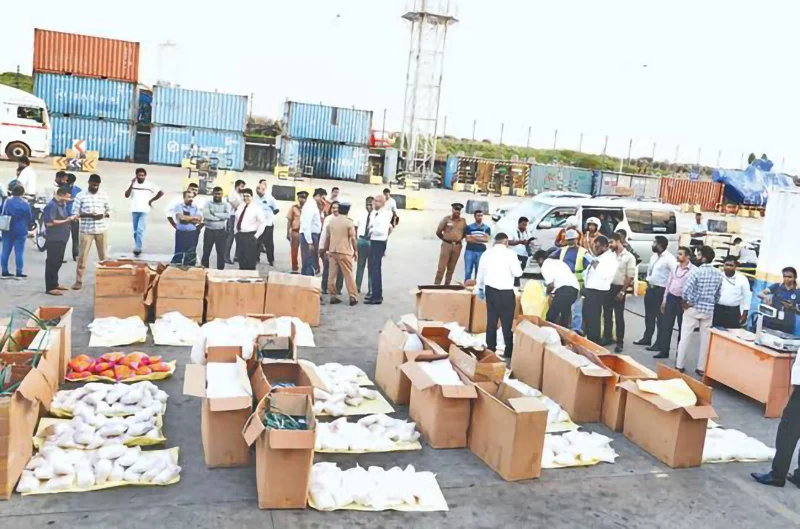
Police Headquarters, on 11 Sept., declared that the Central Crime Investigation Bureau (CCIB) was conducting investigations into the recovery of 473 kg of Crystal Methamphetamine (‘Ice’). Police never acknowledged the role played by the US in the operation.
According to Police Headquarters, on a directive given by IGP Priyantha Weerasooriya, the Special Investigation Unit has launched an internal probe into, what it called, shortcomings and irregularities in the Colombo Port raid.
The Island:
Have you (relevant US authorities) received an update of Sri Lanka’s investigations from the Police?
US Embassy:
U.S. and Sri Lankan law enforcement authorities maintain close and ongoing cooperation on counternarcotics matters, including the exchange of information that helps both countries combat transnational drug trafficking. We don’t have anything further to share on communications with Sri Lankan authorities beyond what we’ve already said publicly about the successful operation.
The Island:
Did the Police seek clarification regarding DEA, New Delhi Country Office role in the successful raid?
US Embassy:
As the Embassy noted publicly following the seizure, cooperation with the U.S. Drug Enforcement Administration contributed to the Sri Lanka Police Narcotics Bureau’s successful seizure of approximately 463 kilograms of methamphetamine at the Port of Colombo.
The seizure demonstrates the value of close U.S.-Sri Lankan cooperation in disrupting transnational narcotics trafficking.
The Island:
Before we raised this issue were you aware of the internal investigation into the drug bust which was also raised in Parliament last week?
The US Embassy:
We don’t have anything further to share beyond what we’ve already said publicly about the successful operation.
Our focus remains on the strong U.S.-Sri Lanka law enforcement partnership and the concrete results our cooperation can deliver—disrupting transnational criminal organisations, cutting off the profits that fuel illicit drug trafficking, and protecting our citizens from the dangers of narcotrafficking.
The US Embassy attributed the success of the counternarcotics operation to the US-Sri Lanka partnership
The US Embassy statement, dated 2 Sept: The U.S. Drug Enforcement Administration’s (DEA) New Delhi Country Office and Sri Lanka’s Police Narcotics Bureau (PNB) conducted a successful joint operation disrupting a Pakistan-based narcotrafficking network attempting to smuggle crystal methamphetamine through Sri Lanka to international markets.
Acting on intelligence developed by DEA’s Foreign Counterparts Unit Pakistan Anti-Narcotics Force Special Investigations Cell between August 14–29 on suspicious maritime containers moving from Pakistan to Colombo, PNB seized approximately 463 kg of crystal methamphetamine with a street value of $21 million, concealed in bath towels, and arrested several suspects, including Pakistani nationals. This operation underscores the strength of the U.S.-Sri Lanka partnership in dismantling transnational criminal organisations that fund terrorism and threaten communities in both our countries. This cooperation builds on long-standing training and technical assistance provided through the U.S. Department of State’s Bureau of International Narcotics and Law Enforcement Affairs (INL) to the Sri Lanka Police and Customs. The United States remains committed to working with Sri Lanka and regional partners to aggressively pursue transnational criminal organizations, deny them the revenue from illicit drug trafficking, and protect our citizens from the dangers of narcotrafficking.”
SLPP National Organiser Namal Rajapaksa, in Parliament, raised questions about the internal investigation into the raid. However, Rajapaksa, too, hasn’t mentioned the US role in the operation. The Special Investigation Unit has recorded a statement from Senior DIG Ranmal Kodituwakku regarding the Colombo Port raid.
MP Rajapaksa questioned the rationale behind questioning the officer who led the raid against the backdrop of controversial releasing of 323 containers from the Colombo Port in January 2025. The failure to question those responsible for the releasing of 323 containers indicated who was behind that operation, MP Rajapaksa told Parliament.
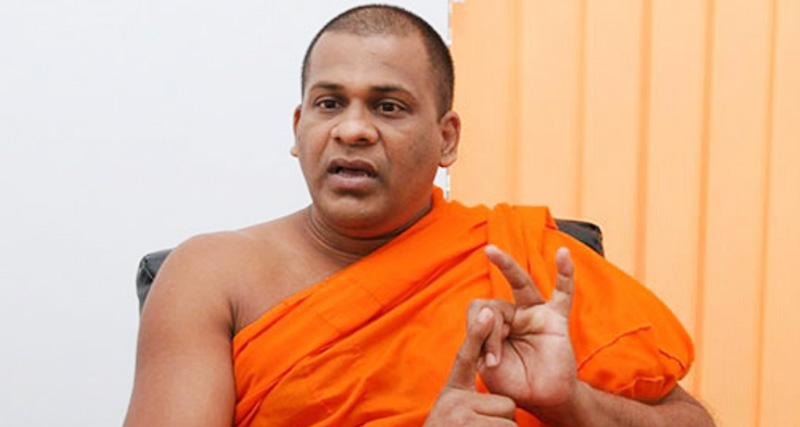
Bodu Bala Sena (BBS) General Secretary Ven. Galagodaaththe Gnanasara Thera appeared before the Colombo High Court yesterday in a case filed by the Attorney General over statements allegedly insulting Islam.
The case was taken up before Colombo High Court Judge Buddhika C. Ragala, who ordered that it be called again on September 30.
His appearance came six days after the Supreme Court invalidated the presidential pardon granted to Gnanasara Thera by former President Maithripala Sirisena in 2019.
Speaking to journalists outside the court, Gnanasara Thera said he was prepared to face the legal process and would abide by the law, rejecting reports that he had gone into hiding following the Supreme Court judgment.
“It is the weak who disappear and flee. We worked for the country and are facing the consequences for that. We are not afraid and will not flee,” he said, noting that he would surrender to the court and face whatever legal consequences following the Supreme Court decision.
The Supreme Court, on September 10, ruled that the presidential pardon granted to Gnanasara Thera by Sirisena was invalid. The judgment followed fundamental rights petitions challenging the legality of the pardon. A three-judge bench, comprising Justices Janak de Silva, Sobhitha Rajakaruna and Sampath Abeykoon, delivered the ruling.
Gnanasara Thera was convicted by the Court of Appeal in 2018 for contempt of court and sentenced to a total of 19 years’ imprisonment to run concurrently as six years. The conviction related to his conduct during proceedings at the Homagama Magistrate’s Court concerning the disappearance of Prageeth Eknaligoda.
He was released from Welikada Prison on May 23, 2019, after then President Maithripala Sirisena had granted him a presidential pardon.
The Supreme Court found the pardon to be arbitrary and invalid in law, following its consideration of the petitions challenging the exercise of the presidential power of clemency.
Meanwhile, police have said they are awaiting the Supreme Court judgment before determining what further action should be taken following the invalidation of the pardon.
The proceedings before the Colombo High Court yesterday are separate from the contempt of court case that resulted in the six-year sentence. They concern alleged statements made by Gnanasara Thera regarding Islam.
In June this year, the Colombo High Court rejected an appeal by Gnanasara Thera against a nine-month prison sentence imposed by the Colombo Magistrate’s Court in connection with statements made at a 2016 media briefing that were found to have disrupted religious coexistence.
The latest High Court proceedings, therefore, form part of separate legal action concerning his alleged remarks about Islam, while the Supreme Court ruling relates specifically to the legality of the 2019 presidential pardon granted in connection with his contempt of court conviction.
The case before the Colombo High Court will be called again on September 30.

Sonal Dinusha named the ICC Men’s Player of the Month for August 2026.

USA midfielder sues doctors after on-pitch cardiac arrest

River home to 500 crocodiles chosen as Olympic rowing venue

Steps will be taken to implement a new National Youth Policy in Sri Lanka in the first quarter of 2027 – PM

Pakistan survive Thailand scare to make Asian Games semi-finals

Bangladesh through to semi-final after washout against China

‘Dates have the highest sugar content to fight Coronavirus’

Sunday Island 27 December – Headlines

#SundayIsland 17th December – Headlines

Sunday Island – 28th March

Sunday Island Headlines – 21 March

Sunday Island – 21st February – Headlines
-

 Sports7 days ago
DDS set to lose Test captaincy
-

 News7 days ago
Sri Lanka faces new grid challenge as rooftop solar surges: former CEB GM
-

 Latest News6 days ago
Shafali, Deepti power India into sixth T20 Asia Cup final
-

 Latest News6 days ago
Sri Lanka thwart Fatima Sana challenge to secure Asia Cup final spot
-

 News5 days ago
Gnanasara Thero absconding after SC ruling
-

 News6 days ago
Ammunition cache found in old Kandy bungalow
-

 Editorial7 days ago
A flight of fancy
-

 News5 days ago
Green Climate Fund (GCF) Regional Dialogue for East and South Asia will be held from 14 to 17 September 2026 at Cinnamon Life at City of Dreams Hotel, Colombo