
News
Power cuts to be increased to ten hours daily


By Ifham Nizam
The Ceylon Electricity Board (CEB) would extend the power cuts to ten hours daily from today (30), the Ministry of Power yesterday said
Currently, the water levels in the reservoirs, used to generate electricity, were rapidly receding due to the severe dry weather conditions affecting the country, the ministry said.
The water level of Castlereagh Reservoir has dropped to 15.34 metres from the overflow level. The units of power that can be generated from the remaining volume of water are 07.3 Gigawatt hours, which is 07.7% of the total capacity of the Reservoir.
The Maussakelle Reservoir water level has dropped to 13.69 m from the overflow level, and it can generate 77.7 gigawatt hours of electricity, which is 27.4% of its total capacity.
The water level of Samanala Wewa Reservoir has dropped to 25.20 m from the overflow level. Accordingly, the remaining water volume of the Samanala Wewa reservoir can generate 15.2 gigawatt units of electricity which is 11.4% of its total capacity.
The water levels in the main reservoirs of the Mahaweli complex to generate electricity are as follows: Kotmale Reservoir has dropped to 24.97 m from the overflow level. Accordingly, the water volume of the Kotmale Reservoir can generate 29.0 gigawatt hours of electricity and it is 20.3% of its total capacity.
Victoria Reservoir water level has dropped to 27.49 metres from the overflow level. Accordingly, the water volume of Victoria Reservoir can generate 133.3 gigawatt hours of electricity which is 30.1% of its total capacity.
The Power Ministry said water from these Mahaweli reservoirs to generate hydro power would have to be restricted as the country’s drinking water requirement and agricultural activities should be given priority as well.

News
Karu argues against scrapping MPs’ pension as many less fortunate members entered Parliament after ’56

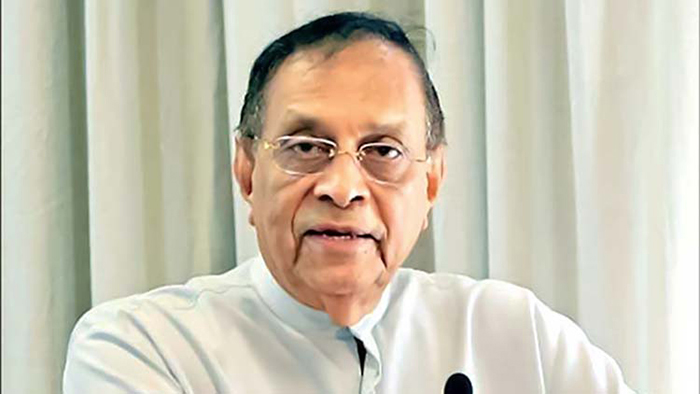
Former Speaker of Parliament Karu Jayasuriya has written to President Anura Kumara Dissanayake expressing concerns over the proposed abolition of MPs’ pensions.The letter was sent in his capacity as Patron of the Former Parliamentarians’ Caucus.
In his letter, Jayasuriya noted that at the time of Sri Lanka’s independence, political participation was largely limited to an educated, affluent land-owning elite. However, he said a significant social transformation took place after 1956, enabling ordinary citizens to enter politics.
He warned that under current conditions, removing parliamentary pensions would effectively confine politics to the wealthy, business interests, individuals engaged in illicit income-generating activities, and well-funded political parties. Such a move, he said, would discourage honest social workers and individuals of modest means from entering public life.
Jayasuriya also pointed out that while a small number of former MPs, including himself, use their pensions for social and charitable purposes, the majority rely on the pension as a primary source of income.
He urged the President to give due consideration to the matter and take appropriate action, particularly as the government prepares to draft a new constitution.The Bill seeking to abolish pensions for Members of Parliament was presented to Parliament on 07 January by Minister of Justice and National Integration Dr. Harshana Nanayakkara.
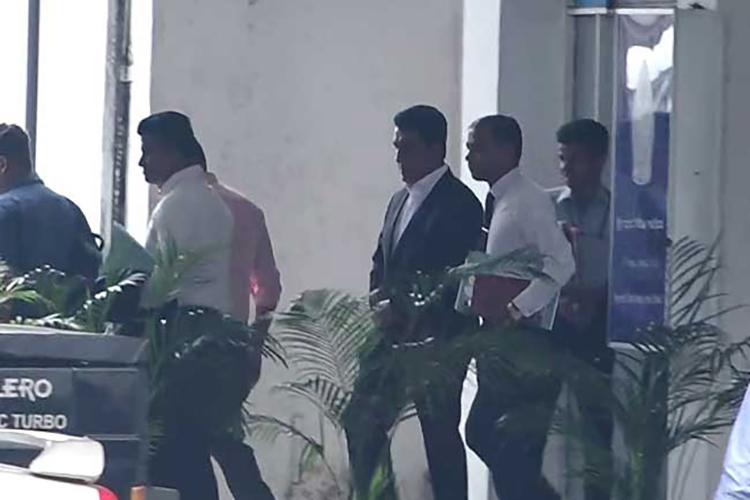
Five suspects, including former Minister Johnston Fernando and his two sons, who were arrested by the Financial Crimes Investigation Division (FCID), were further remanded until 30 January by the Wattala Magistrate’s Court yesterday.
The former Minister’s , sons Johan Fernando and Jerome Kenneth Fernando, and two others, were arrested in connection with the alleged misuse of a Sathosa vehicle during Fernando’s tenure as Minister.
Investigations are currently underway into the alleged misuse of state property, including a lorry belonging to Lanka Sathosa, which reportedly caused a significant financial loss to the state.
In connection with the same incident, Indika Ratnamalala, who served as the Transport Manager of Sathosa during
Fernando’s tenure as Minister of Co-operatives and Internal Trade, was arrested on 04 January.
After being produced before the Wattala Magistrate’s Court, he was ordered to be remanded in custody until 09 January.The former Sathosa Transport Manager was remanded on charges of falsifying documents.
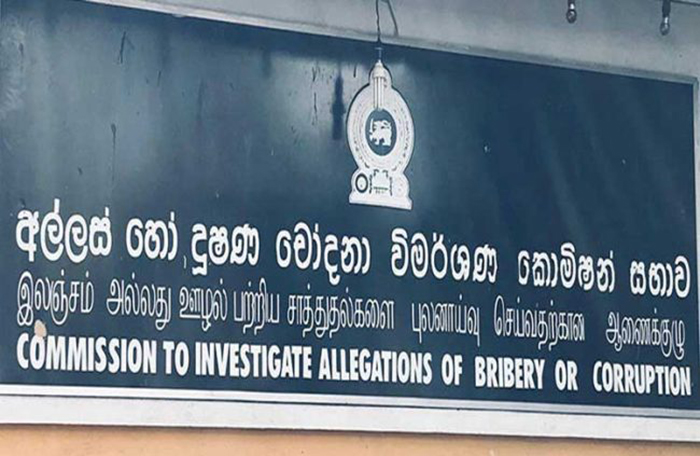
The Commission to Investigate Allegations of Bribery or Corruption (CIABOC) yesterday informed the Colombo Magistrate’s Court that indictments had been filed in the Colombo High Court against former Minister and NDF Badulla District MP Chamara Sampath Dassanayake over a corruption allegation.
The Bribery Commission notified the court when the case, in this regard, was taken up yesterday before Colombo Chief Magistrate Asanga S. Bodaragama.
At the hearing, the CIABOC notified the court that indictments had been presented before the Colombo High Court against the accused.
Accordingly, concluding the proceedings before the Magistrate’s Court, the Magistrate ordered MP Dassanayake to appear before the High Court once a notice was issued.

Tanzid Hasan’s ton, Binura Fernando’s four-for power Rajshahi Warriors to BPL title

U – 19 World Cup: Bangladesh ease past USA

U – 19 World Cup: Australia top Group A after bowling SL out for 58

Alleged drug kingpin and ex-Olympian Ryan Wedding arrested after years on the run

Showers above 50 mm are likely at some places in the Northern, North-central, and North-western provinces and in Trincomalee district

Karu argues against scrapping MPs’ pension as many less fortunate members entered Parliament after ’56

‘Dates have the highest sugar content to fight Coronavirus’

Sunday Island 27 December – Headlines

#SundayIsland 17th December – Headlines

Sunday Island – 28th March

Sunday Island Headlines – 21 March

Sunday Island – 21st February – Headlines
-

 Editorial6 days ago
Illusory rule of law
-
 Features6 days ago
Daydreams on a winter’s day
-
 Features6 days ago
Surprise move of both the Minister and myself from Agriculture to Education
-

 Features5 days ago
Extended mind thesis:A Buddhist perspective
-
 Features6 days ago
The Story of Furniture in Sri Lanka
-

 Opinion4 days ago
American rulers’ hatred for Venezuela and its leaders
-
 Features6 days ago
Writing a Sunday Column for the Island in the Sun
-
 Business2 days ago
CORALL Conservation Trust Fund – a historic first for SL