
Business
Seylan Bank recognized at ACCA Sri Lanka Sustainability Reporting Awards


Seylan Bank, the Bank with a Heart, was recognized at the recently concluded Sustainability Reporting Awards 2021, conducted by the Association of Chartered Certified Accountants Sri Lanka (ACCA).
Seylan Bank’s Annual Report, ‘Connecting the Possibilities’, focuses on showcasing the Bank’s efforts and commitment towards all its stakeholders in driving sustainable growth and wealth creation by integrating core attributes of transparency and accountability. As a responsible corporate citizen, Seylan Bank emphasises on transforming the livelihoods of its stakeholders while reducing the impact on the environment and enhancing the effect of its social initiatives. This led to the Bank being recognized as runner-up in the Banking category.
ACCA Sustainability Reporting Awards felicitates companies who have shown immense commitment and dedication to the fundamental principles of accountability and transparency. Sustainability reporting is seen as an enabler of the Sustainable Development Goals (SDGs), which become more relevant than ever at present. The ACCA Sustainability Reporting Award criteria are globally benchmarked to reward transparency in the reporting process and are in line with the Global Reporting Initiative (GRI) guidelines for sustainability reporting.



By Sanath Nanayakkare
The unfolding developments surrounding the massive internal financial irregularity at the National Development Bank PLC (NDB), valued at approximately LKR 13.2 billion, continue to demand rigorous public scrutiny.
As months have passed since the initial disclosure of the fraud in early 2026, questions regarding institutional accountability, regulatory oversight, and corporate governance remain central to discussions concerning the stability and transparency of Sri Lanka’s financial sector.
First coming to light through corporate disclosures and subsequent regulatory reviews, the LKR 13.2 billion incident represents one of the largest internal fraud cases recorded within a major commercial institution in recent times. Because NDB is a systemically important institution – with major state-backed shareholding through entities such as the Employees’ Provident Fund (EPF), the Employees’ Trust Fund (ETF), Sri Lanka Insurance Corporation (SLIC), and the Bank of Ceylon (BOC) – the implications extend far beyond normal corporate missteps.
Public interest advocates and financial analysts have repeatedly emphasised that any major lapse in a bank of this magnitude warrants total transparency to maintain public confidence. Although the Central Bank of Sri Lanka (CBSL) and bank management have publicly assured stakeholders that customer deposits remain secure and day-to-day operations unaffected, the broader governance questions regarding how such significant vulnerabilities went undetected remain a subject of intense public debate.
A focal point of concern among financial analysts and governance watchdogs is the framework surrounding the independent forensic audit commissioned to investigate the transactions.
Entrusted to international expertise via Deloitte Touche Tohmatsu India LLP, the audit’s mandate includes examining the circumstances of the fraudulent operations as well as evaluating historical lapses in internal controls, oversight, and compliance.
However, critics, including public interest figures, have raised questions regarding the timeline for the finalisation and release of these findings.
Parliamentary oversight bodies, such as the Committee on Public Finance (CoPF), have previously engaged with regulatory authorities to review the matter.
Observers point out that timely public access to comprehensive audit findings – without compromising ongoing criminal investigations by entities like the Criminal Investigation Department (CID) – is vital to ensuring that systemic gaps are permanently closed.
The NDB case has also cast a sharp spotlight on broader corporate governance norms in Sri Lanka, bringing elements such as board oversight, the role of external auditors, and potential conflict-of-interest perceptions into sharper focus.
Critics argue that maintaining public trust requires strict adherence to ethical standards at every level of corporate leadership, from commercial bank directors to regulatory supervisors.
“As the country seeks to attract sustainable foreign direct investment, establishing an uncompromised standard of accountability is paramount. For the memory of this financial fraud to serve a constructive purpose, institutional watchdogs, lawmakers, and regulators must ensure that investigations are brought to a transparent, logical, and publicly accountable conclusion, ensuring that public resources and systemic financial integrity are robustly safeguarded,” keen observers of this massive brank fraud say.
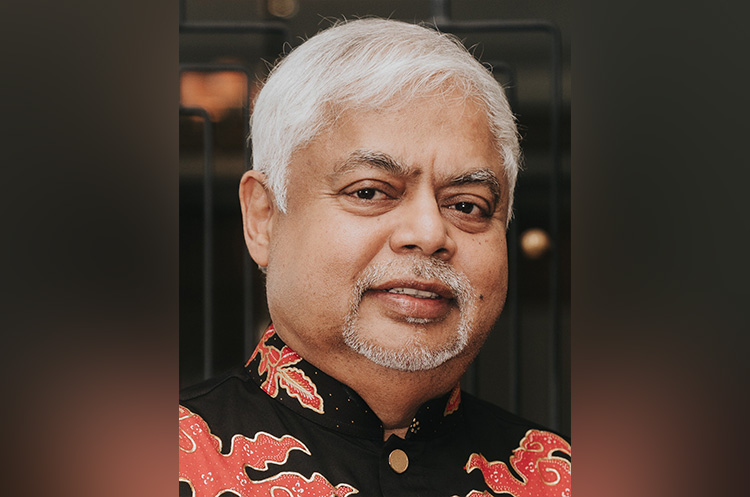
Trust and regulatory clarity are fast becoming ASEAN’s next major competitive advantages, according to Dato’ Sri Vijay Eswaran, Executive Chairman of the QI Group of Companies.
Writing in The Business Times Insights: ASEAN Intelligence 2026, Eswaran noted that while cost competitiveness remains central to the region’s economic appeal, geopolitical uncertainty, shifting supply chains, and rapid technological advancements mean cost is no longer the sole deciding factor for investors. Global companies are increasingly prioritizing stability, predictable policies, and reliable institutions.
Eswaran emphasized that sustainable growth depends on pairing the region’s traditional strengths—such as strategic manufacturing, a growing talent pool, and regional connectivity—with strong institutional governance. Pointing to the OECD’s Asia Capital Markets Report 2026, he highlighted that transparency and institutional maturity are key drivers of investor confidence.
Addressing the rapid integration of artificial intelligence, Eswaran argued that clear guardrails are essential to prevent business hesitation. He commended regional initiatives balancing innovation with oversight, including Malaysia’s AI infrastructure developments, Singapore’s AI Verify framework, Indonesia’s formalization of its National Artificial Intelligence Strategy, the Philippines’ National AI Strategy Roadmap 2.0, and Vietnam’s new risk-based legal framework.

Design Consortium International (Pvt) Ltd, under Chairman Architect, Migara Alwis, has successfully delivered a landmark industrial manufacturing facility for Shield Restraint Systems (Pvt) Ltd at the Wathupitiwala Export Processing Zone. The project, executed by the project arm of Hayleys Fentons Limited, was completed on schedule in just 14 months – from the laying of the foundation stone on 7 January 2025 to full completion.
Serving as Principal Design Consultant, Design Consortium provided comprehensive architectural and structural design services for the over Rs. 1 billion facility. The plant meets rigorous international automotive industry standards, incorporating advanced safety features, specialised design elements, and a pre-engineered building (PEB) structural system that enabled fast-track construction while optimising costs. Energy efficiency and sustainability were also central to the design, with a strong emphasis on long-term operational reliability.
Sujith De Alwis, Deputy Managing Director – Projects of Hayleys Fentons, stated that the timely delivery of such a complex facility proves Sri Lankan construction expertise can compete at the highest global level.
Roshani Dharmaratne, Executive Director of Hayleys Mobility, highlighted the project’s demanding requirements for meticulous planning, rigorous quality management, and seamless multidisciplinary coordination.
This on-time delivery reinforces Design Consortium International’s reputation as a trusted partner for complex industrial developments, showcasing its multidisciplinary capabilities and its commitment to delivering architectural and engineering solutions at the highest professional standards.

Arrests as theatre

Nourishing the roots: Tackling malnutrition in Sri Lanka’s tea country

Systemic questions linger over NDB fraud inquiry

After the parade: What a traffic OIC’s walk-out tells us

Labour Ministry clarifies Lanka’s 120th minimum wage ranking

‘ASEAN must leverage trust and governance alongside cost competitiveness’

‘Dates have the highest sugar content to fight Coronavirus’

Sunday Island 27 December – Headlines

#SundayIsland 17th December – Headlines

Sunday Island – 28th March

Sunday Island Headlines – 21 March

Sunday Island – 21st February – Headlines
-

 News7 days ago
BASL takes exception to Justice Ganepola being denied a place in SC
-

 News4 days ago
Denied of promotion to SC despite vacancies, justice Gurusinghe retires
-

 Latest News5 days ago
Grade 5 scholarship exam results released
-

 News4 days ago
22A: SC urged to suspend hearing, appoint full bench
-

 Midweek Review5 days ago
The local and global dynamics of Sri Lanka’s 22nd Amendment
-

 News4 days ago
Govt. seeks NATO assistance
-

 News5 days ago
40 professional organisations and TU oppose proposed 22A
-

 News5 days ago
Ai-CHA expands Lankan footprint with new Negombo outlet