
Editorial
Legalised plunder

Thursday 10th March, 2022
Ukraine is not the only country Russia has had to fight; Moscow’s war is now against the entire Western bloc. The western media industry has also opened a separate front against Russia; it would have the world believe that Russians are losing the war in Ukraine and carrying out massacres, pillage and plunder. Not that Russian President Vladimir Putin does not deserve some of the flak he is receiving, but he alone cannot be blamed for the war. The West is carrying out a not-so-secret plan it prepared for years to weaken Russia through the expansion of NATO. It persistently harassed and provoked Putin, who played into its hands.
Western nations are apparently making the most of the war in Ukraine; they are going hell for leather to seize property from the Russian oligarchs purportedly in retaliation for the invasion of Ukraine. There may be laws that enable them to do so, but the question is how fair it is to seize assets in this manner. Doesn’t what the West has resorted to amount to what may be called legalised plunder? These laws seem more draconian than Sri Lanka’s PTA (Prevention of Terrorism Act), which the West wants scrapped on the grounds that it permits arbitrary state action against suspects.
Russian oligarchs are no doubt a despicable lot. It is popularly believed that they have amassed wealth fraudulently at the expense of the public. But could this be cited in support of the arbitrary seizure of their assets? Isn’t the onus on the accusers to prove their allegations? Doesn’t the West’s line of reasoning in respect of punitive measures against Russian oligarchs on the basis of mere allegations justify hostile action those who are opposed to America’s military campaigns take against US interests? When the US and the UK fought an illegal war against Iraq, killing hundreds of thousands of civilians including more than half a million children, nobody seized British or American assets either in Europe or elsewhere. Obviously, they are too big to be dealt with in that manner. Might is right. If so, what moral right do the US and its western allies have to condemn Russia for its invasion of Ukraine?
President Joe Biden, in his State of the Union address, recently, warned Russians: “We’re coming for your ill-gotten gains.” How does he know the wealth he is referring to has been illegally amassed? Has this charge been proved in any court of law? Are we to take Biden’s word for it? If so, what is the use of having courts and tribunals, international or otherwise?
French Finance Minister Bruno Le Maire has also warned that not only the Russian oligarchs but also their partners, children, property holding companies will be affected by the ongoing asset seizures, and they won’t be able to hide behind financial constructs. If only France acted similarly in respect of various terrorist groups operating on its soil. Is it that in the opinion of the ‘fair-minded’ French, terrorists are ‘more equal than’ Putin?
It has been reported that hundreds of people including lawmakers, high-ranking military officers, prominent journalists, tycoons and finance chiefs are among the Russians targeted by the West for asset seizures. Such action serves as an indictment of the US and other western nations that pontificate to the rest of the world on virtues of justice and fair play, transparency, equality before the law, etc. Why did they choose not to seize the Russian oligarchs’ assets before the invasion of Ukraine? They say they knew those assets were ill-gotten. But they did not do anything about them and would not have seized them if Putin had not invaded Ukraine. Curiously, even Switzerland has joined the anti-Russian asset-hunt, as it were! What about others’ colossal amounts of ill-gotten gains lying in the Swiss banks, which hide billions of blood-stained dollars belonging to many criminals who plunder diamonds, gold, etc., in Africa, or sell illegal arms and drugs?
One of the main reasons for abject poverty in the developing countries is the theft by their leaders of people’s wealth. Sri Lankans are also victims, and if their leaders, on either side of the political divide, return a fraction of what they have stolen and stashed away in offshore accounts and/or invested through various fronts, this country’s economic woes will vanish in next to no time.
Stolen public wealth must be recovered and preferably redistributed among the victims concerned, but asset seizures must not be a tool for the rich and powerful nations to further their interests on the pretext of protecting democracy.



Saturday 2nd May, 2026
The government and some Opposition parties held big rallies purportedly to mark May Day yesterday. The JVP/NPP staged as many as 21 such events across the country, and the SJB rally took place in Colombo. Not to be outdone, the SLFP also held its May Day rally in Colombo. Those spectacles must have cost a fortune each. Where did the funds come from?
Both the government and the Opposition never miss an opportunity to declare their commitment to upholding transparency and other good governance principles. So, they should be able to disclose the costs of the aforementioned mega events, attended by thousands of their supporters, and how they raised funds. They must do so because anti-social elements use colossal amounts of black money to bankroll election campaigns and political events in return for favours from politicians. There is said to be no such thing as a free lunch in politics.
Following the assassination of upright High Court Judge Sarath Ambeypitiya in 2004, this newspaper reported that Kudu Nauffer, a notorious drug dealer, who ordered the killing, had sponsored food and beverages served at a judicial officers’ function. This shows how widespread the tentacles of the underworld are. Besides criminals, other moneybags also lavish funds on political parties and their leaders and leverage the quid pro quo to cut corrupt deals.
There have been instances where some political parties resorted to illegal operations to raise funds for elections, the 2015 Treasury bond scams being a case in point. The UNP could not pay its water and telephone bills at Sirikotha while it was out of power, but after the ouster of the Rajapaksa government in January 2015, its war chest overflowed, and the UNP candidates went on a spending spree during the 2015 general election campaign. A group of businessmen who financed the SLPP’s campaign events gained from the sugar tax scam in 2020. They made a killing at the expense of the state coffers. It is alleged that some financiers of the JVP/NPP benefited from the green-channelling of 323 red-flagged freight containers in the Colombo Port in January 2025. Another allegation is that the current government is beholden to the wealthy rice millers, known to shower funds on politicians, especially during elections.
Hence, the need for pressure to be ramped up on the government and the Opposition to reveal the costs of their political dog and pony shows on May Day and how funds were raised for them.
A large number of government politicians including President Anura Kumara Dissanayake attended the JVP/NPP’s main May Day rally in Nuwara Eliya yesterday. In doing so, they gave the lie to their claim that they had decided against holding a May Day rally in Colombo in view of the fuel crisis. Their supporters were bussed to Nuwara Eliya as well as other venues. VIP travel and security cost the public an arm and a leg. Will the government reveal the costs of transport, accommodation and security for the JVP/NPP leaders?
The government insists that it was wrong for Ranil Wickremesinghe to use state funds for a visit to a university in the UK, while he was the President. If so, it must be equally wrong for President Dissanayake to spend state funds on domestic travel to attend political events, from which no benefits accrue to the public.
Friday 1st May, 2026
Two full moon Poya days fall in May 2026, and there are two schools of thought about when Vesak should be observed. One insists that Vesak should be celebrated today, and the other is of the view that Vesak falls on 30 May. This difference of opinion has given rise to some confusion in the minds of the public and even protests in some quarters. The government has said its decision to observe Vesak on 30 May was taken on the recommendation of the Maha Sangha. This issue has come about and drawn so much attention because the International Workers’ Day, known for grand political events in this country, also falls today.
The overlap of Poya and May Day this year has been a blessing for some political parties that are not strong enough to stage shows of strength today. They have declared that they do not want to engage in political activities on a day of religious significance and therefore will not hold May Day rallies. Even if Poya had not fallen today, they would not have been able to hold successful May Day rallies.
Among the political parties that have decided against holding rallies today are the SLPP and the UNP, which has also used Poya as an excuse for turning down the SJB’s invitation to hold a joint May Day event. The UNP has written to the SJB that it will perform religious observances today in keeping with the late President Ranasinghe Premadasa’s policy that the UNP should not hold May Day rallies if the International Workers’ Day coincides with Poya. The subtext of its letter is that Sajith Premadasa, who leads the SJB, does not follow his late father’s policy.
The convergence of Poya and May Day has deprived the JVP/NPP of an opportunity to make a display of its political strength while it is reeling from several scandals and the Opposition is on the offensive. It has opted to hold May Day rallies at the district level. But they will not be as effective as a mammoth May Day rally in Colombo in boosting the morale of the rank and file of the JVP/NPP and sending a message to the Opposition that the government is far from weak.
JVP General Secretary Tilvin Silva has said the JVP/NPP decided not to bring its members to Colombo for a May Day rally in view of the current fuel crisis. This is not an implausible excuse in that the government would have drawn heavy criticism if it had held a political rally in Colombo while urging the public to use fuel sparingly. It would also have been criticised if it had held a grand May Day event in Colombo on a Poya Day.
No political issue would have arisen today if the workers’ day had not been politicised. Those which pass for labour day celebrations are shameful displays of workers’ servility to political leaders who have a viselike grip on the labour movement. Of course, there have been progressive, visionary politicians as well as independent labour leaders who championed the workers’ cause wholeheartedly and made a tremendous contribution towards the protection of labour rights. Those leaders must be remembered today, but unfortunately trade unions have become appendages of political parties, serving the interests of politicians rather than those of workers. These political trade unions are the bane of the labour movement. Political agendas of the parties controlling trade unions will continue to take precedence over workers’ interests unless the labour movement is liberated from the clutches of politicians. Trade unions have a pivotal role to play in helping the country achieve progress, but their political affiliations have prevented them doing so.
What workers, trade unionists and the politicians who claim to champion labour rights should do today, when a day of religious significance to Buddhists falls, is to remind themselves of the Buddha’s teaching on work, based on three main principles––doing no harm through one’s livelihood, earning honestly and using wealth responsibly and ethically.

Thursday 30th April, 2026
US President Donald Trump has lashed out at German Chancellor Friedrich Merz for being critical of the US-Israeli military campaign against Iran. Instead of countering the German leader’s compelling arguments, Trump has alleged that Germany is not opposed to Iran’s nuclear programme. He has written in a social media post that Merz thinks it is all right for Iran to have a nuclear weapon and does not know what he is talking about. If Iran had a nuclear weapon, the whole world would be held hostage, Trump has claimed. Merz has said nothing to suggest that Germany is soft on Iran’s nuclear ambitions. Instead, he has very convincingly pointed out that the US-Israeli military strategy is ill-conceived and flawed.
Trump is known for using circular reasoning and false dichotomy when he tries to defend the indefensible. His claim that Iran has to be prevented from acquiring nuclear capability is self-defeating, for US Intelligence Chief Tulsi Gabbard herself has testified before the Congress that Tehran is not building nuclear weapons. Washington has manufactured a casus belli again, the way it did in 2003 to justify the invasion of Iraq; it claimed that Saddam Hussein had stockpiles of chemical weapons.
Ironically, President Trump, who has been eyeing the Nobel Peace Prize, is not at peace with the rest of the world, including the NATO member states. Having bombed Iran, destroying assets worth billions of US dollars and killing thousands of civilians, he has opted for negotiations with Tehran. International media reports and defence analysts have indicated that the US has exhausted a substantial portion of some of its missile stockpiles, and now it has to rebuild the inventories, a task that will take a considerable time; this could affect Washington’s preparedness for future conflicts, they have pointed out. Trump is believed to have made a virtue of necessity by declaring a ceasefire.
Merz’s criticism of the US-Israeli war on Iran has struck a responsive chord with all peace-loving people around the world. His assessment of the West Asian conflict is spot on. He has rightly pointed out that Washington is being humiliated by Tehran’s negotiating tactics. Iran has openly stated that it did not ask for a ceasefire.
It is obvious that Trump plunged headfirst into war, without having an exit strategy. He and Israeli Prime Minister Benjamin Netanyahu may have expected to make short work of Iran, engineer a regime change and install a puppet regime in Tehran. Iran’s resilience and strategic moves made the US-Israeli military plans go awry.
Merz has cogently argued that the problem with conflicts like the current one in West Asia is that “always you don’t just have to get in – you have to get out again, as was seen in Afghanistan for 20 years and in Iraq”. In Afghanistan, after two decades of fighting, which caused thousands of civilian deaths and cost the western taxpayers about a trillion dollars, the US and its allies replaced the Taliban with the Taliban, as it were.
In an asymmetric engagement, there is hardly anything that the weaker side, fighting for survival, does not weaponise. Iran effectively shifted the war to the economic front while attacking Israel, the US bases in the region and the critical assets of the American allies within its missile range. The closure of the Hormuz Strait, which Iran is using as a strategic lever, has disrupted global oil and fertiliser supplies passing through that chokepoint. Massive oil price hikes could not have come at a worse time for Europe, which is still struggling to deal with the fallout from the Ukraine war and the Covid-19 pandemic. The soaring oil prices have become a double whammy for the European nations as well as others. It is only natural that Europe does not want the West Asian conflict to drag on. US farmers are also complaining of staggering increases in production costs due to soaring fertiliser prices. The US naval blockade has not helped Washington solve the problem—the closure of the Hormuz Strait for international navigation. Oil prices are rising and economies are screaming the world over. Trump has had to clean up the mess he and Netanyahu created in West Asia.

Chamari Athapaththu’s all-round heroics carries Sri Lanka to 3-0 sweep of Bangladesh

US said to be withdrawing 5,000 troops from Germany over Iran war spat

Bangladesh eye rare double-series win over New Zealand in rainy Dhaka

Rahul, Nissanka fifties lead 226 chase as Delhi Capitals return to winning ways

Pakistan High Commissioner pays courtsey call on PM

Ambassador of Nepal to Sri Lanka pays farewll call on PM

‘Dates have the highest sugar content to fight Coronavirus’

Sunday Island 27 December – Headlines

#SundayIsland 17th December – Headlines

Sunday Island – 28th March

Sunday Island Headlines – 21 March

Sunday Island – 21st February – Headlines
-
 News4 days ago
Treasury chief’s citizenship details sought from Australia
-

 News6 days ago
BIA drug bust: 25 monks including three masterminds arrested
-
 Business7 days ago
Nestlé Lanka Announces Change in Leadership
-
 News7 days ago
Hackers steal $3.2 Mn from Finance Ministry
-

 News6 days ago
Banks alert customers to phishing attacks
-
 News3 days ago
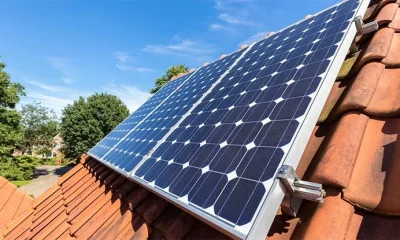
Rooftop Solar at Crossroads as Sri Lanka Shifts to Distributed Energy Future
-
 News5 days ago
Govt. assures UN of readiness to introduce ‘vetting process’ for troops on overseas missions
-
 Business5 days ago
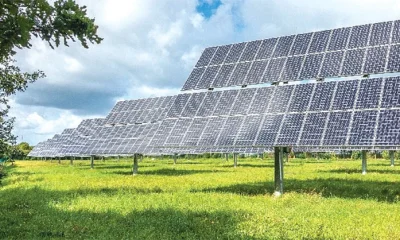
ADB-backed grid upgrade tender signals next phase of Sri Lanka’s energy transition