
News
Life imprisonment for LTTE intelligence wing cadre amidst bid to abolish PTA


… also indicted for attempt to assassinate MR after war
By Shamindra Ferdinando
Over 13 years after the successful conclusion of the war, the Colombo High Court has sentenced an ex-LTTE intelligence wing member, Thangavelu Nimalan, to life imprisonment.
The Colombo HC gave the ruling on 28 Feb., amidst ongoing efforts to abolish the Prevention of Terrorism Act (PTA).
Nimalan, taken into custody, in Kilinochchi, under the PTA, was indicted in the Colombo HC in 2011. At the time of his arrest, Nimalan had two kilos of RDX explosives in his possession.
According to police headquarters, the convict was also charged with alleged involvement in attempts to assassinate the then President Mahinda Rajapaksa during the war and afterwards.
Investigations revealed an abortive plot by the LTTE to trigger explosions at the Maligapitiya ground, Kurunegala, on 02 Feb, 2009 and at a Badulla rally on 05 August, 2009 held in support of UPFA Local Government candidates contesting the Uva Provincial Council polls.
Nimalan was also indicted on carrying out a claymore mine attack on a truck carrying a group of police commandos on 28 May, 2007 and organising a suicide attack on a gathering near Godapitiya Jumma Mosque, Akuressa, on 13 March 2009. The blast killed 14 persons and left 35 others seriously injured. Among those present at the event were lawmakers A. H. M. Fowzie, Mahinda Wijesekara, Mahinda
Yapa Abeywardena, Pandu Bandaranaike, the late Chandrasiri Gajadeera and Ali Ameer.
Police headquarters said that Nimalan had been with a group of operatives, under the command of the then LTTE intelligence wing leader, identified as Muththappan.
The arrest of Nimalan, along with several others assigned to the Muththappan’s group, led to the recovery of explosives, suicide kits and a range of equipment.
The TNA has been demanding the abolition of the PTA, and its campaign has received the backing of Western powers, the United Nations Human Rights Council, and the Human Rights Commission of Sri Lanka (HRCSL), which has said the offence of terrorism should be included in the Penal Code with a new definition for terrorism. The HRCSL has advocated that terrorism should be investigated under the General Law of the country with necessary amendments.

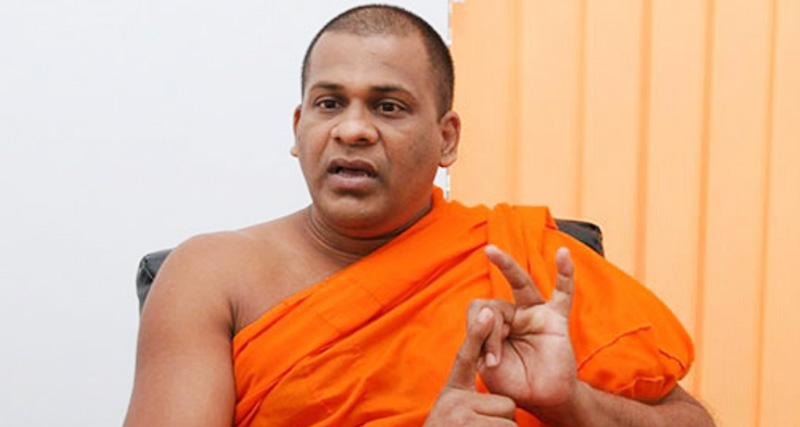
Bodu Bala Sena (BBS) General Secretary Ven. Galagodaaththe Gnanasara Thera appeared before the Colombo High Court yesterday in a case filed by the Attorney General over statements allegedly insulting Islam.
The case was taken up before Colombo High Court Judge Buddhika C. Ragala, who ordered that it be called again on September 30.
His appearance came six days after the Supreme Court invalidated the presidential pardon granted to Gnanasara Thera by former President Maithripala Sirisena in 2019.
Speaking to journalists outside the court, Gnanasara Thera said he was prepared to face the legal process and would abide by the law, rejecting reports that he had gone into hiding following the Supreme Court judgment.
“It is the weak who disappear and flee. We worked for the country and are facing the consequences for that. We are not afraid and will not flee,” he said, noting that he would surrender to the court and face whatever legal consequences following the Supreme Court decision.
The Supreme Court, on September 10, ruled that the presidential pardon granted to Gnanasara Thera by Sirisena was invalid. The judgment followed fundamental rights petitions challenging the legality of the pardon. A three-judge bench, comprising Justices Janak de Silva, Sobhitha Rajakaruna and Sampath Abeykoon, delivered the ruling.
Gnanasara Thera was convicted by the Court of Appeal in 2018 for contempt of court and sentenced to a total of 19 years’ imprisonment to run concurrently as six years. The conviction related to his conduct during proceedings at the Homagama Magistrate’s Court concerning the disappearance of Prageeth Eknaligoda.
He was released from Welikada Prison on May 23, 2019, after then President Maithripala Sirisena had granted him a presidential pardon.
The Supreme Court found the pardon to be arbitrary and invalid in law, following its consideration of the petitions challenging the exercise of the presidential power of clemency.
Meanwhile, police have said they are awaiting the Supreme Court judgment before determining what further action should be taken following the invalidation of the pardon.
The proceedings before the Colombo High Court yesterday are separate from the contempt of court case that resulted in the six-year sentence. They concern alleged statements made by Gnanasara Thera regarding Islam.
In June this year, the Colombo High Court rejected an appeal by Gnanasara Thera against a nine-month prison sentence imposed by the Colombo Magistrate’s Court in connection with statements made at a 2016 media briefing that were found to have disrupted religious coexistence.
The latest High Court proceedings, therefore, form part of separate legal action concerning his alleged remarks about Islam, while the Supreme Court ruling relates specifically to the legality of the 2019 presidential pardon granted in connection with his contempt of court conviction.
The case before the Colombo High Court will be called again on September 30.
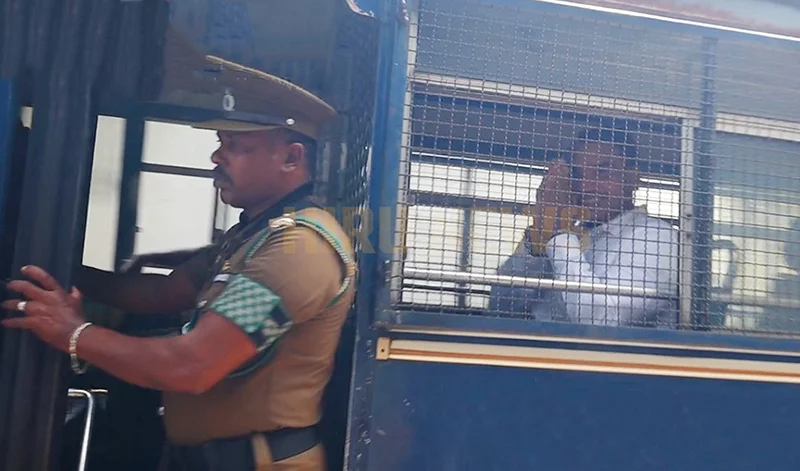
Colombo Fort Magistrate Pasan Amarasena yesterday (16) ordered SLPP National Organiser Namal Rajapaksa, MP, to be further remanded, until September 23. The Magistrate issued the order when Rajapaksa was produced before the court as a suspect in an investigation into an alleged USD 2 million bribe case connected to the acquisition of aircraft for SriLankan Airlines.
The Magistrate issued the order following the submissions made by Deputy Solicitor General Janaka Bandara, appearing on behalf of the Criminal Investigation Department (CID).
President’s Counsel Anil Silva, along with other attorneys representing Rajapaksa, also made submissions before the court.
The Magistrate also announced that a decision on Rajapaksa’s bail application would be announced on 23 September.
LAWASIA, the Law Association for Asia and the Pacific, has stated that in court proceedings of exceptional constitutional significance, the basis upon which a Bench is constituted should be transparent and discernible and capable of maintaining public confidence in the institutional impartiality of the Court.
The following is the text of the statement issued by LAWASIA regarding the proceedings on the proposed 22nd Amendment to the Constitution: “LAWASIA, the Law Association for Asia and the Pacific, reiterates its longstanding commitment to the rule of law, judicial independence and the proper administration of justice.
LAWASIA refers to its Statement Regarding the Extension of the Retirement Age of Judges in Sri Lanka dated 30th June 2026, in which it expressed concern regarding the proposal to amend the Constitution of Sri Lanka to extend the retirement ages of Judges of the Supreme Court and the Court of Appeal. LAWASIA emphasised, in particular, the implications of such ad hoc reform for judicial independence and the need for transparency, consultation and stakeholder engagement.
The proposal has since proceeded as the Twenty-Second Amendment to the Constitution Bill, and its constitutionality has been challenged before the Supreme Court of Sri Lanka. Concerns regarding the proposed amendment and judicial independence have also been expressed by the Commonwealth Lawyers Association, the International Association of Judges and the United Nations Special Rapporteur on the Independence of Judges and Lawyers.
LAWASIA has taken note of the Report of the Commonwealth Lawyers Association dated 7 September 2026, following the visit of its President to Sri Lanka to observe the proceedings before the Supreme Court.
LAWASIA emphasises that the concerns expressed in this Statement relate to the procedure followed in those proceedings. LAWASIA does not express any view on the merits of the constitutional challenges or the substantive arguments advanced by the parties.
LAWASIA notes with serious concern that applications for the recusal of the Chief Justice and for the petitions to be heard by a Full Court comprising all sitting Judges of the Supreme Court were declined.
The CLA report records that no reasons were given for the dismissal of those applications other than that the Court had jurisdiction to hear the matter. The recusal application had been made in circumstances where the Petitioners contended that the Chief Justice would be the first Supreme Court Judge who could benefit from the proposed amendment.
LAWASIA also notes the concerns raised regarding the composition of the five-member Bench.
With the exception of the Chief Justice, the four Judges immediately senior to Justice Achala Wengappuli; Justice Yasantha Kodagoda, Justice A. H. M.D. Nawaz, Justice Shiran Gooneratne and Justice Janak de Silva were not included in the Bench.
LAWASIA recognises that seniority is not, of itself, determinative of the constitution of a Bench and does not question the competence of the Judges who heard the petitions. Nevertheless, in proceedings of such exceptional constitutional significance, the basis upon which a Bench is constituted should be transparent and discernible and capable of maintaining public confidence in the institutional impartiality of the Court.
LAWASIA expresses further serious concern that, following the oral submissions of the Interveners and the State, the Petitioners were not afforded an opportunity to make oral submissions in reply, although they were permitted to tender written replies by 3.00 p.m. the following day. The opportunity to respond meaningfully to material submissions made against a party’s case is an important aspect of procedural fairness.
LAWASIA emphasises that judicial independence is not confined to the substantive outcome of judicial proceedings; it extends to the integrity of the process by which judicial decisions are reached. This is especially important where proceedings concern a constitutional amendment directly affecting the tenure of serving Judges.
Scrutiny of judicial procedure should not be regarded as an attack upon judicial independence. On the contrary, judicial independence must be safeguarded both in fact and in public perception, and procedural fairness, impartiality and transparency are essential to maintaining public confidence in the Judiciary.
LAWASIA therefore reiterates its Statement of 30th June 2026 and calls upon all institutions concerned to uphold the highest standards of judicial independence, natural justice, procedural fairness and transparency.
The rule of law requires not only an independent judiciary, but a judicial process which commands public confidence as fair, impartial and transparent.”

Gnanasara Thera declares outside High Court that he wouldn’t flee

Namal further remanded

22A: LAWASIA questions compostion of five-judge bench

Sri Lanka’s lifestyle coffee culture boom and the two faces of its economy

England thrash Sri Lanka after Harry Brook blasts brilliant century

Patriots, terrorists and succour for terror

‘Dates have the highest sugar content to fight Coronavirus’

Sunday Island 27 December – Headlines

#SundayIsland 17th December – Headlines

Sunday Island – 28th March

Sunday Island Headlines – 21 March

Sunday Island – 21st February – Headlines
-

 Sports6 days ago
DDS set to lose Test captaincy
-

 News6 days ago
Sri Lanka faces new grid challenge as rooftop solar surges: former CEB GM
-
 Latest News6 days ago
Shafali, Deepti power India into sixth T20 Asia Cup final
-

 News4 days ago
Gnanasara Thero absconding after SC ruling
-
 Latest News5 days ago
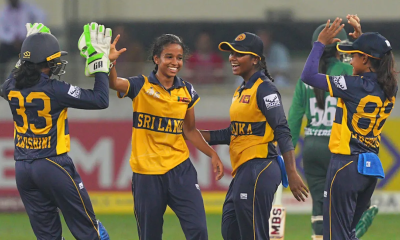
Sri Lanka thwart Fatima Sana challenge to secure Asia Cup final spot
-

 News5 days ago
Ammunition cache found in old Kandy bungalow
-

 Editorial6 days ago
A flight of fancy
-

 News5 days ago
Green Climate Fund (GCF) Regional Dialogue for East and South Asia will be held from 14 to 17 September 2026 at Cinnamon Life at City of Dreams Hotel, Colombo