
News
Karu tells the country to follow Ukraine’s example!

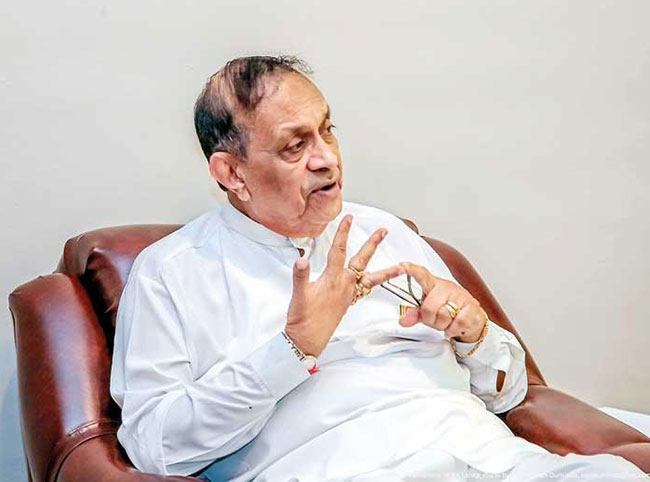
Chairman of the National Movement for Social Justice (NMSJ) and former Speaker, Karu Jayasuriya yesterday urged Sri Lankans to follow the example set by Ukraine and to join hands to formulate a common minimum programme to respond to the country’s current crisis.
Issuing a press release Jayasuriya said that the fuel and electricity crises had disrupted the everyday lives of the people. The economic activities are grinding to a standstill, he said.
“There appears to be a lack of consensus within the government on possible solutions, thereby further delaying the resolution of these many issues. Instead, various parties to the government are presenting their own opinions on the matter adding to the existing chaos and confusion. The only obvious solution to face a catastrophe of this scale is to at least temporarily form a united national front. However, it can only be built if the government extends the hand of friendship to all other relevant parties,” he said.
Jayasuriya added that the National Movement for Social Justice had come up with a proposal, prepared with the assistance of local and foreign academics and scholars under the leadership of Prof. Rohan Samarajiva.
“A majority of the leading political leaders who participated in the discussion agreed that these proposals were suitable to be taken up for initial discussion. There was also a positive response from religious and civil society leaders. It is noteworthy that several members of the ruling party have also shown interest. The next few days of the week will be devoted to a public discussion entitled “A Minimal Common Programme to Respond to Sri Lanka’s Current Crisis.” We then intend to present a national resolution to the country after including proposals from various quarters,” he said.
Given below are the excerpts of the press release: “In spite of these facts, the government should take immediate action to alleviate the sufferings of the people. Immediate solutions must be provided for the issues in transportation and electricity. The CEB can easily restore the power supply. If the railways and bus services collapse, the whole country will come to a standstill.
“It must be noted that the state apparatus is continuously failing to take decisions based on one point of view and is instead issuing statements expressing varying opinions and decisions leading to further chaos. For example, the President, the Minister of Finance, the Governor of the Central Bank, the Public Utilities Commission of Sri Lanka (PUCSL) and the Ceylon Electricity Board are all expressing different views on fuel supply these days. It would be a relief to the people and allow them to plan their work around the power disruptions
“If they can stick to a proper time table for power disruptions in a specific area instead of announcing a lengthy time period during which they may experience many power outages, it would be a relief to the people and would allow them to plan their work accordingly.
“During this harvesting season, the suffering of the farmers due to the lack of diesel is evident through media reports. Their grievances are heartbreaking. There is also a severe shortage of medicinal drugs in the country. This is a dangerous situation.
“Our people are beset not only by shortages of essential items, but also by escalating prices. In the month of January alone, food inflation has risen by 24%. The main reason for this is the excessive printing of currency.
“Ihe government must be flexible and take the lead in the effort to save the country with the support of all. We believe the leaders of the opposition will cooperate and act in a responsible manner. However their support can be obtained not by summoning political dissidents to the BMICH and by retaliating through presidential commissions, but by initiating mutual cooperation.
“It is the duty of the government to earn their trust. Engaging in political revenge but telling people that they abide by the ‘One Country, One Law’ policy only to blatantly violate it will not invoke their trust. It should be understood that the people do not approve of that process of the government.
“Governments that come to power with a large majority must bear in mind that they are the custodians of a country and not its owners who in reality are the people of the country. Therefore, one should not regard the mandate given to him by the people as an arbitrary power. It should also be noted that the people, who are the real owners of the government, will not allow such any arbitrary acts.
“In the last presidential election, Gotabaya Rajapaksa received 6,900,0000 votes while at least 6,200,000 votes were against him. Therefore, the government should have realised that introducing any constitutional amendment or drafting the constitution that would suit its political agenda and not the country such as the 20th Amendment would only lead to the deterioration of itself and the country.
“The position of the National Movement for Social Justice is that under the 20th Amendment, Sri Lanka will no longer be a free country. It will take Sri Lanka to a new feudal system and plunge this country into a severe political and economic recession.”

News
Showers will occur at times in the Western, Sabaragamuwa, Central, North-western and Northern provinces and in Anuradhapura, Galle and Matara districts


WEATHER FORECAST FOR 16 MAY 2026
Issued at 05.30 a.m. on 16 May 2026 by the Department of Meteorology
According to the today’s latest weather analysis, the low-pressure area located northeast of Sri Lanka, still persists. The Department of Meteorology is continuously monitoring the behavior, development and path of the system.
Due to the influence of the above system, Showers or thundershowers will occur at times and cloudy skies are expected in the Western, Sabaragamuwa, Central, North-western and Northern provinces and in Anuradhapura, Galle and Matara districts. Fairly heavy showers about 75 mm are likely at some places in these areas. Showers or thundershowers may occur at a few places in the Uva and Eastern provinces after 1.00 pm.
The general public is kindly requested to take adequate precautions to minimize damage caused by temporary localized strong winds and lightning during thundershowers.
News
Lanka’s eligibility to draw next IMF tranche of USD 700 mn hinges on ‘restoration of cost-recovery pricing for electricity and fuel’

The International Monetary Fund (IMF) said on Thursday that the completion of Sri Lanka’s combined Fifth and Sixth Reviews, under the Extended Fund Facility (EFF), remains subject to approval by its Executive Board, which is expected to meet in the coming weeks.
Addressing a media briefing, IMF Communications Department Director, Julie Kozack, said IMF staff and Sri Lankan authorities had reached a staff-level agreement on 09 April.
She noted that several prior actions must be completed before the programme can be submitted to the Executive Board, including the restoration of cost-recovery pricing for electricity and fuel, measures to protect vulnerable groups, and the completion of financing assurances.
Upon Board approval, Sri Lanka would gain access to approximately US$700 million in financing, Kozack said.
Responding to a question on whether the government’s fuel subsidy scheme — including the Rs. 100 per litre diesel subsidy — was consistent with the IMF’s pricing framework, Kozack declined to comment directly on the measure. However, she reiterated that the programme requires both cost-recovery pricing reforms and safeguards for vulnerable communities.
Kozack also observed that Sri Lanka had recently faced “two very large shocks”, referring to Cyclone Ditwah and the wider external impact of the Middle East conflict, which, she said, had affected both the economy and the public.
Despite these challenges, she said Sri Lanka’s reform programme was yielding positive results, citing strong fiscal performance in 2025, progress in debt restructuring, 5 percent economic growth, and inflation returning to positive territory following a period of deflation.
She reaffirmed the IMF’s commitment to supporting Sri Lanka’s reform agenda, stressing that the institution continues to work closely with the authorities to sustain economic stability and recovery.
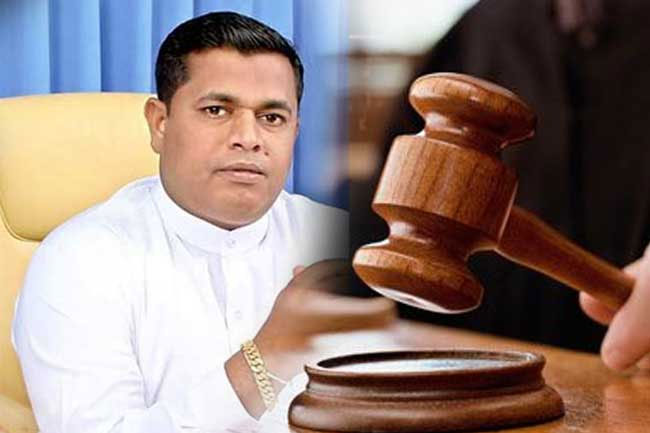
Former Arachchikattuwa Pradeshiya Sabha Chairman, Jagath Samantha, was yesterday sentenced to five-and-a-half years’ rigorous imprisonment by the Chilaw High Court after being found guilty of assaulting the Arachchikattuwa Divisional Secretary.
The court also ordered Samantha to pay Rs. 1 million as compensation to the victim, failing which he will serve an additional 24 months in prison.
The case had originally been filed against former State Minister Sanath Nishantha and his brother Jagath Samantha over the assault incident.
However, following the death of Sanath Nishantha, in a road accident on the Katunayake Expressway, on 25 January, 2024, only Samantha appeared before court for the proceedings.
The verdict was delivered after the High Court considered the evidence and submissions presented during the trial.

Fatima Sana smashes fastest fifty in women’s T20Is

On the hunt for China’s most famous green tea

Marsh onslaught, Akash three-for dent Chennai Super King’s playoffs chances

ICC suspends funding to Cricket Canada over governance-related issues

Showers will occur at times in the Western, Sabaragamuwa, Central, North-western and Northern provinces and in Anuradhapura, Galle and Matara districts

Lanka’s eligibility to draw next IMF tranche of USD 700 mn hinges on ‘restoration of cost-recovery pricing for electricity and fuel’

‘Dates have the highest sugar content to fight Coronavirus’

Sunday Island 27 December – Headlines

#SundayIsland 17th December – Headlines

Sunday Island – 28th March

Sunday Island Headlines – 21 March

Sunday Island – 21st February – Headlines
-

 News6 days ago
Lanka Port City officials to meet investors in Dubai
-
 News3 days ago
Ex-SriLankan CEO’s death: Controversy surrounds execution of bail bond
-
 Features4 days ago
When University systems fail:Supreme Court’s landmark intervention in sexual harassment case
-
Features4 days ago
High Stakes in Pursuing corruption cases
-
 Midweek Review3 days ago
A victory that can never be forgotten
-
 Features6 days ago
Serving as MR’s Deputy Finance Minister and the travel the job entailed
-
 Features6 days ago
Bengal Turns BJP, Didi Falls
-
 News5 days ago
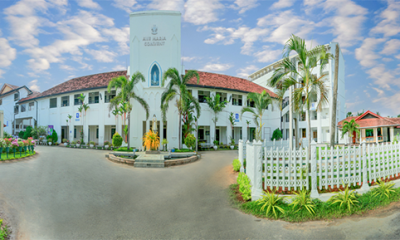
150th anniversary celebrations of Ave Maria Convent, Negombo