
News
Platform for greater citizen engagement and effective action on illegal environmental activities to be introduced

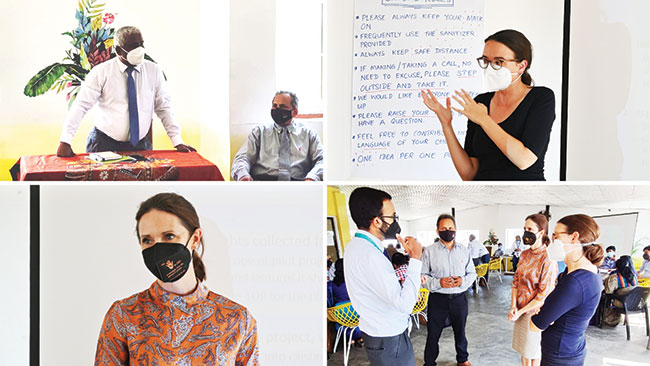
In the face of illicit deforestation, degradation of wetlands, and illegal wildlife poaching and trade, Sri Lanka has seen increased community involvement and engagement despite the ongoing pandemic. While current official mechanisms for citizens to lodge complaints have room for improvements in transparency to the public, there is also an absence of an integrated government-mandated platform that could expand civic space to allow for meaningful community engagement and vigilance around such issues, United Nations Development Programme (UNDP) in Sri Lanka has said.
“To this end, the ‘Digital Citizen Engagement for the Prevention of Illicit Environmental Activities’ initiative has been launched by the UNDP in Sri Lanka, in collaboration with the Ministry of Wildlife and Forest Conservation, the Citra Social Innovation Lab, and the Centre for Environmental Justice (CEJ). The initiative is supported through UNDP’s Global Project – Anti-Corruption for Peaceful and Inclusive Societies (ACPIS) funded by Norad, the Norwegian Agency for Development Cooperation.
“The first co-design workshop for the digital citizen engagement initiative took place recently with the presence of representatives from 16 Government institutions, including the Ministry of Environment, Ministry of Agriculture, Department of Forest Conservation, the Department of Wildlife Conservation, Sri Lanka Customs, and the Environmental Protection division of the Police, among others. The workshop recognized that, apart from improvements in the mechanisms through which citizens can lodge complaints, a core issue lies in a lack of an integrated system that would allow relevant government institutions to coordinate and communicate, in order to tackle illegal activities.
Speaking at the co-design workshop facilitated by the Citra Social Innovation Lab, Secretary, Ministry of Wildlife and Forest Conservation Somaratne Vidanapathirana said that “it is timely that UNDP initiated this conversation, in order to take this first step towards reducing corruption and illegal activities within the environmental sector.”
“Initial plans around the design of this citizen engagement platform focused on facilitating three key outcomes; firstly, citizens can take the initiative and report against harmful environmental practices, contributing towards crowdsourcing data while allowing status updates of their complaint. Secondly, officials can obtain the information required to address such concerns and also record and inform other officials from other relevant institutions of complaints that come to their attention, in order to ensure that the complaint is duly addressed with all relevant officials and institutions coming in when required. Lastly, citizens can easily obtain information on existing environmental legislation and Standard Operating Procedures (SOPs).
“Commenting on UNDP’s role and Citra’s expertise, UNDP Deputy Resident Representative, in Sri Lanka Malin Herwig stated that “it was encouraging to see officials from a variety of institutions coming forward to work collectively to find solutions to protect the wildlife and forests of Sri Lanka that people would actually use.”
“Speaking on behalf of Norway’s role as donors and collaborators for this initiative, through Norad, Deputy Head of Mission at the Norwegian Embassy of Sri Lanka Hilde Berg-Hansen thanked UNDP Sri Lanka and the Citra Social Innovation Lab for their role in this initiative, and highlighted that “the most important aspect will be making sure that the platform in its final form is accessible to communities”.
“It is also envisaged that this new solution will contribute towards crowd sourced data around environment-related issues, allowing researchers to access data that may contribute to evidence-based environmental policymaking, as well as contribute towards the collection and compilation of data related to the Sustainable Development Goals, specifically SDG 15.

Quarantine and Prevention of Diseases Ordinance No. 3 of 1897 is the principle law that regulates the prevention of the spread of communicable diseases and the implementation of quarantine measures.
However, at present, it has been observed that the risk of spreading communicable diseases across borders have significantly increased due to considerable increase in the
international and domestic movement of persons, goods, and services and frequent international travel and trade have led communicable diseases spread rapidly between countries.
Accordingly, although cabinet approval was granted in the 2016 to amend the Quarantine and Prevention of Diseases Ordinance No. 3 of 1897, the relevant amendment bills have not been presented to Parliament.
Therefore, as per the proposal made by the Minister of Health and Mass Media, the Cabinet of Ministers has approved the appointment of a Review Committee to study the amendment bill that has been prepared and propose suitable amendments to meet the current health challenges as well as challenges that may arise in the future, taking into consideration the experience obtained during the epidemic situations that have occurred in the past.
The Cabinet of Ministers granted approval to the proposal submitted by the President to make a donation of United States Dollars One million as humanitarian and economic relief to the government of Nepal
Latest News
Sun directly overhead Kalpitiya, Talawa, Sinharagama, Galkadawala, Nachchaduwa, Padikaramaduwa, Gomarankalla and Verugal about 12.10 noon today (01)


The sun is going to be directly over the latitudes of Sri Lanka from 28th of August to 07th of September due to its apparent southward relative motion.
The nearest places of Sri Lanka over which the sun is overhead today (01) are Kalpitiya, Talawa, Sinharagama, Galkadawala,
Nachchaduwa, Padikaramaduwa, Gomarankalla and Verugal about 12.10 noon.

Amendment of the Quarantine and Prevention of Diseases Ordinance No. 3 of 1897
Cabinet approves donation of USD One Million to the Government of Nepal

Nahida, Marufa help Bangladesh brush aside Indonesia

Showers will occur in the Western, Sabaragamuwa, Southern and Uva provinces and in Kandy and Nuwara-Eliya districts

Sun directly overhead Kalpitiya, Talawa, Sinharagama, Galkadawala, Nachchaduwa, Padikaramaduwa, Gomarankalla and Verugal about 12.10 noon today (01)

SJB asks what Speaker intended to do about allegations against CJ

‘Dates have the highest sugar content to fight Coronavirus’

Sunday Island 27 December – Headlines

#SundayIsland 17th December – Headlines

Sunday Island – 28th March

Sunday Island Headlines – 21 March

Sunday Island – 21st February – Headlines
-

 News5 days ago
Eight politicians in drug kingpin probe
-

 Features3 days ago
“Wrap Me Up in My Blazer”— A Gentlemanly Bradby Reminiscence
-

 Business5 days ago
Sri Lanka opens up: A new season of direct connectivity
-

 Features5 days ago
Redefining ageing in Sri Lanka
-
 Features7 days ago
Insights from Chieftains of Uva: Genealogy of two Kandyan Families – Part II
-
 Latest News5 days ago
Nepal-Tibet floods: What happened, what caused them and who is missing?
-

 Editorial7 days ago
Warning of power cuts: El Niño and corruption
-

 Features7 days ago
Export diversification: Missing the wood for the trees – Part I