
Sports
Badminton loses a courageous queen

By a Special Sports Correspondent
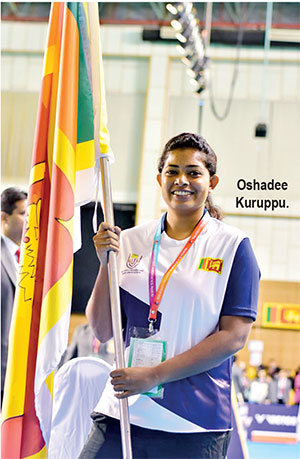
The passing away of national badminton player Oshadee Kuruppu was a big loss for the game even if it didn’t come as a shock for her family members.
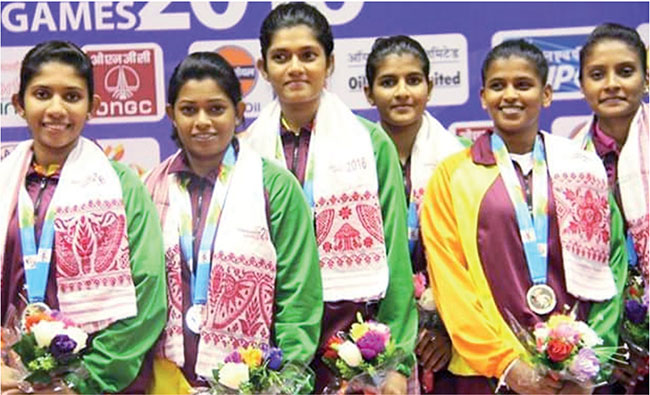
Oshadee was suffering from leukemia and was diagnosed with the illness in 2020 July. Till then her life was pretty good; having achieved most of her life’s goals. She had played badminton at the highest level and was the proud recipient of a silver medal at the 2009 Asian Junior Under 16 Badminton Championships; contesting the girls’ doubles event. Completing her school education at Visaka College she was selected to pursue a degree in Sports Science at the Sabaragamuwa University. Her interests in badminton continued at university and she was able to represent her academic institute at the World University Games. She was even employed at MAS in the Human Resources Division and also got positive responses for job applications when she sought state sector employment. Her illness curtailed the time she spent on employment.
She was a determined girl and sports had driven into her that fighting spirit. No challenge in life was too big for her. That’s how her brother Virajith described his late sister.
But two years ago after returning home from training she had complained of being under the weather. “She said that she had felt unusually tired. At one time had seen two shuttlecocks while playing badminton; suggesting a certain adverse body condition had given impaired vision. Oshadee suggested we see a doctor and a blood test done a few hours after her training session revealed that her hemoglobin count in the blood had dropped drastically. She was asked to admit herself immediately because medical experts wanted to inject blood into her body,” recalled Viranjith.
Her world started collapsing slowly after that. But the good news for her was that all her loved ones, friends and most importantly her boyfriend Akila Dahanayake were right behind her. She was in and out of hospitals and when her condition was deteriorating her family sent her to India for extensive treatment. Though she was receiving treatment at Apeksha Hospital she was given a new lease of life when receiving treatment in India under the guidance of Dr. Mallikar Arjun. She made amazing progress there within 45 days and returned to a somewhat stable condition before coming back to Sri Lanka.
 Her treatment in India was made possible due to the generous contribution made by well-wishers (Mostly Old Visakians). This social media group was able to raise around Rs 10 million. According to Viranjith there were other donors contributing and the total efforts produced a fund worth Rs 15 million which was sufficient to send her to India for treatment.
However despite making it to India, the plans to perform a donor transplant didn’t materialize. The donor chosen for this mission was Oshadee’s mother. But according to Viranjith his mom had become unsuitable to continue being the donor because of altering antibodies within her (mother) body. Oshadee was given a strong dose of chemotherapy as the alternative and sent back to Sri Lanka.
Her family is grateful to all who made contributions to enable Oshadee receive the best of treatment in India. Special mention must be made of Sri Lanka Badminton President Rohan De Silva for his contributions made personally to lift the spirits of Oshadee’s family when the chips were really down and funds were needed for treatment. The family is also grateful to Dr. Buddhika Somawardene who treated Oshadee at Apeksha Hospital.
The first few days of February had started off promisingly for Oshadee. She wanted to visit many people, eat the food that she loved and spend time with her boyfriend Akila. But suddenly her condition had started to deteriorate and she was rushed to the hospital once again. She was pronounced dead on February 8 and the cause of death, according to the hospital, was cardiac arrest. She was 27 years old at the time of death.
When contacted her boyfriend Akila said that they were to get married in 2020 August, but Oshadee was diagnosed with the disease and she had started showing symptoms in July that year. Akila had been a great strength to Oshadee and stood by her during this ordeal. Even at the funeral it had been Akila who had attended to most of the matters concerning the final rites.
“She was a courageous person and faced her condition without fear. She used to seek information on google and knew what the doctors were doing at each stage of her illness. But there came a time when she said that she was tired and had had enough. But her condition improved again and she was facing life. Then death came and took her away,” said Akila.
Chintaka Fernando, who coached her in badminton during the 2009 Asian Youth Championships, said that he was amazed by the courage shown by Oshadee during her battle with the illness. “She wanted to live and never gave up. She was a committed badminton players and played at the highest level. Apart from all that she was a very friendly person; hence everybody loved her,” said Fernando.
The last rites for the late Oshadee Kuruppu were performed at the Godigamuwa Public Cemetery on February 10. The badminton fraternity will have fond memories of Oshadee’s fighting skills in the badminton court here and abroad, but those who knew her outside the sport will remember a charming lady who won everybody’s hearts with her charming smile and gracious manners.


by Rex Clementine
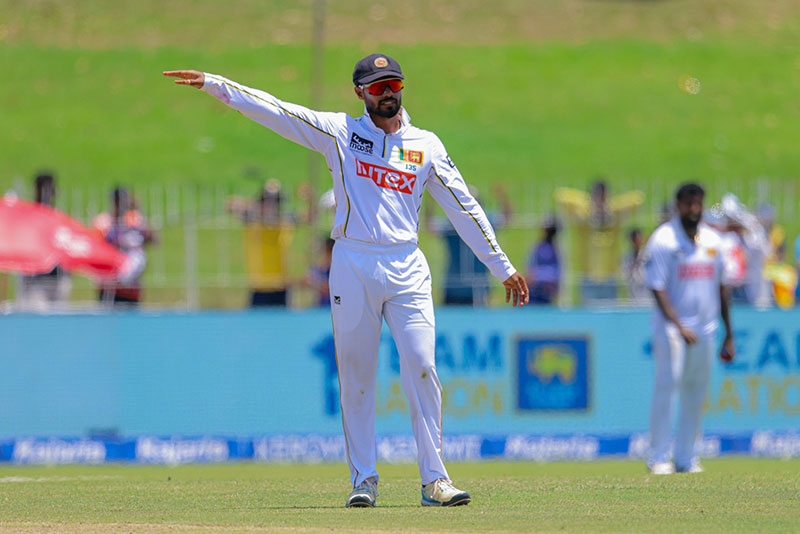
Sri Lanka’s Test captain Dhananjaya de Silva has done an Ian Botham. No, not by pulling off a miraculous victory against Australia at Headingley, but by resigning a minute before he was sacked.
The writing had been on the wall for DDS after he got his sums horribly wrong during the recent home Test series against India. His defensive approach from day one left Sri Lanka chasing the game rather than dictating terms and the hosts eventually surrendered the series.
There had also been growing criticism of DDS’s inability to lift the side when the chips were down. His laid back attitude, particularly the sight of him cracking jokes with team mates in the SSC dressing room balcony while Sri Lanka were following on, did not go down well with the cricket establishment.
Not that DDS was doing anything out of character. By nature, he is a relaxed, easy going individual who loves his video games and rarely seems to have a worry in the world. The mistake was made by those who handed such a character the Test captaincy and then expected him to turn into a fire breathing leader overnight.
DDS was so chilled out that even SLC’s photographers had reason to complain during the India Test series when the official team photograph was being taken.
Sri Lanka have been guilty of failing to groom leaders and in recent years the captaincy has too often fallen into someone’s lap by default rather than through careful planning. The result has been a revolving door of captains, with little thought given to succession.
DDS’s successor, Kusal Mendis, is no Mike Brearley or Ian Chappell when it comes to tactical nous, but to his credit, he has worked hard in recent years to shed his bad boy image and become a more responsible cricketer.
More than anything, Mendis has discovered consistency with the bat. Equally impressive in the eyes of the authorities has been his willingness to shoulder responsibility. He has never been one to duck a challenge, even when the workload has threatened to become overwhelming.
Currently, Mendis keeps wicket in both white ball formats while batting at the top of the order. With the additional burden of becoming Sri Lanka’s all format captain, he is set to be relieved of wicketkeeping duties in Test cricket.
The selectors are now on the lookout for a replacement ahead of the Pakistan assignment, although they are unlikely to turn to Niroshan Dickwella again. That particular chapter, it seems, has been closed.
Meanwhile, Chairman of Selectors Kapila Wijegunawardene has broken his silence over Wanindu Hasaranga’s omission, confirming that the star leg-spinner had indeed been dropped rather than sidelined through injury.
Wijegunawardene made little attempt to sugar coat the selectors’ disappointment with a player whose immense talent has not always translated into performances befitting his reputation.
“Hasaranga has not lived up to expectations, to be frank,” Wijegunawardene said.
“The player understands that too. We had expected a lot of him. His knowledge of the game is immense and he has much more to offer, and we are confident he will stage a comeback,” Wijegunawardene added.

by Reemus Fernando
St. Benedict’s College Kotahena completed their group stage matches with a crushing ten wickets win over St. Sebastian’s College Katuneriya while St. Joseph Vaz College Wennappuwa bounced back from their initial defeat with back to back victories to stay alive in the Under 19 Division I Tier ‘B’ tournament.
For Bens it was their fourth victory in the tournament on Wednesday. Their only blemish this season was against Dharmaraja. The Bens recorded victories against De Mazenod Kandana (by 140 runs), St. Aloysius’ Galle (by three wickets) and Taxila Horana (by 162 runs ) before cruising to a ten wicket win aganst St. Sebastian’s Katuneriya. Manikya Deshapriya with a four wicket haul (4 for 8 in six overs) and Vihanga Rathnayaka taking three wickets rattled their opponents for 64 runs in their final group ‘A’ match.
Group ‘C’ became wide open on Wednesday when St. Joseph Vaz beat Ananda College by 89 runs at Ananda Mawatha.
Batting first, St Joseph Vaz College posted 225 for eight wickets in their alloted 50 overs, with Damesh Mathisan leading the way with a valuable 124-ball knock of 88, his most notable batting performance this season. His patient innings included eight fours and a six. Amal Denuwan added 31 off 69 balls, while Savio Fernando contributed 24.
In reply, Ananda were bowled out for just 136 run with Danindu Sellaperuma’s 41 being the highest contribution.
Amal Denuwan took four wickets for 20 runs in an outstanding spell of 8.3 overs, including two maidens. Damesh Mathisan completed an impressive all-round display taking two wickets for 28 runs.
Thathnula Liyanage took one, while Oshen Binara claimed two for 19.
In their season opening encounter St. Joseph Vaz conceeded a 66 run defeat at the hands of Maliyadeva College Kurunegala. They were bowled out for 107 runs at Kadirana.
In their second encounter they bounced back as their bowlers dominated reducing Devapathiraja to 79 runs. Oshen Binara (4.5-1-14-4), Mayon Fernando (4-0-16-3) and Lowthuru Dilpahan (6-0-23-2) returned notable bowling figures. Isuru Induwara (31n.o.) and Savio Fernando (23n.o.) then guided them to victory putting up an unbroken third wicket stand of 48 runs.
Back to back victories now has helped the school keep alive their hopes of reaching the knockout stage. They will meet Lyceum International Wattala and Sri Dharmaloka College Kelaniya in their next two matches.
The victory has wide opened group ‘C’ with three teams registering two wins each. Ananda and Devapathiraja College Ratgama are the other teams to have recorded two wins.
ATF 16 & Under Tennis
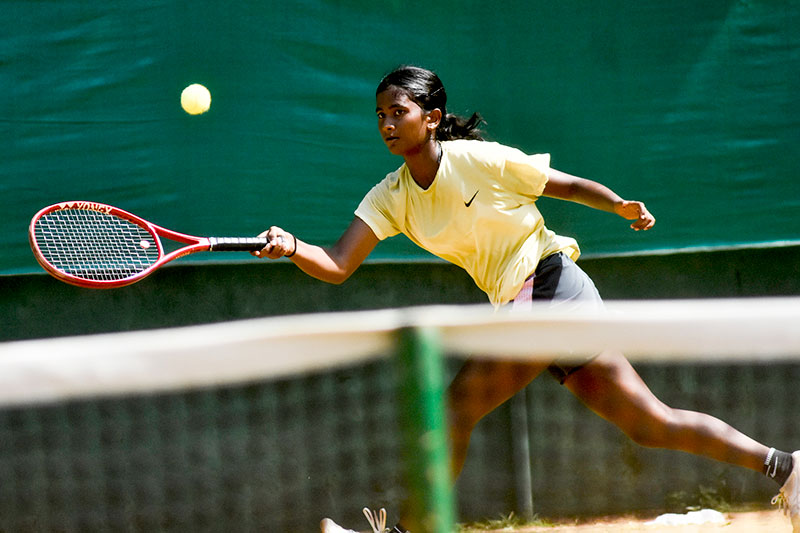
Kiyara Jayamanne is set to meet Risindi Hewawasam in the girls’ singles final after they won their semi finals of the ATF 16 & Under Colombo 2026 Week 1 tournament continued at the Sri Lanka Tennis Association courts.
Kiyara Jayamanne defeated fellow Sri Lankan Disini Samaraweera 6-3, 6-3 to book her place in the final. Risindi Hewawasam also secured a straight-set victory, overcoming Methuli Naotunna 6-2, 6-3.
The boys’ semi-finals saw Anthony Castigador of the Philippines dominate Sri Lanka’s Damsath Peiris, winning 6-0, 6-0. India’s Gurshaan Chahal completed the finalists’ line-up with a 6-2, 6-1 victory over Sri Lankan Yonal Dankubura.
-
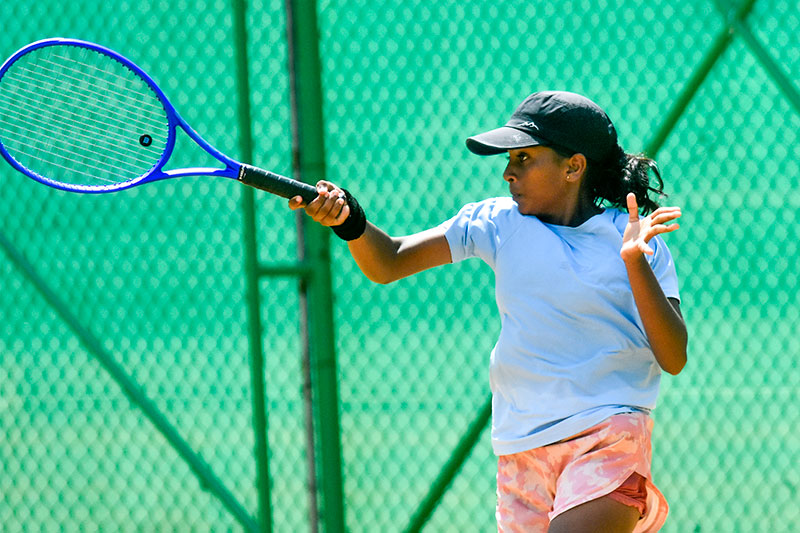
- Risindi Hewawasam
-
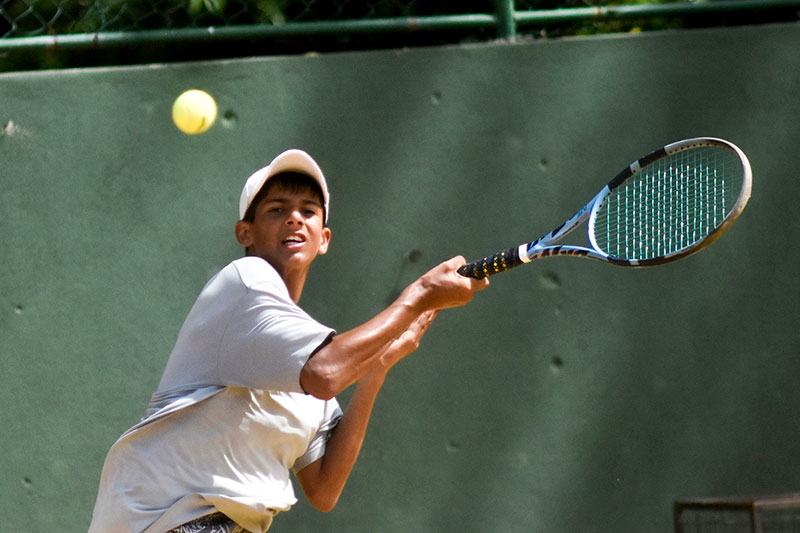
- Gurshaan Chahal
-
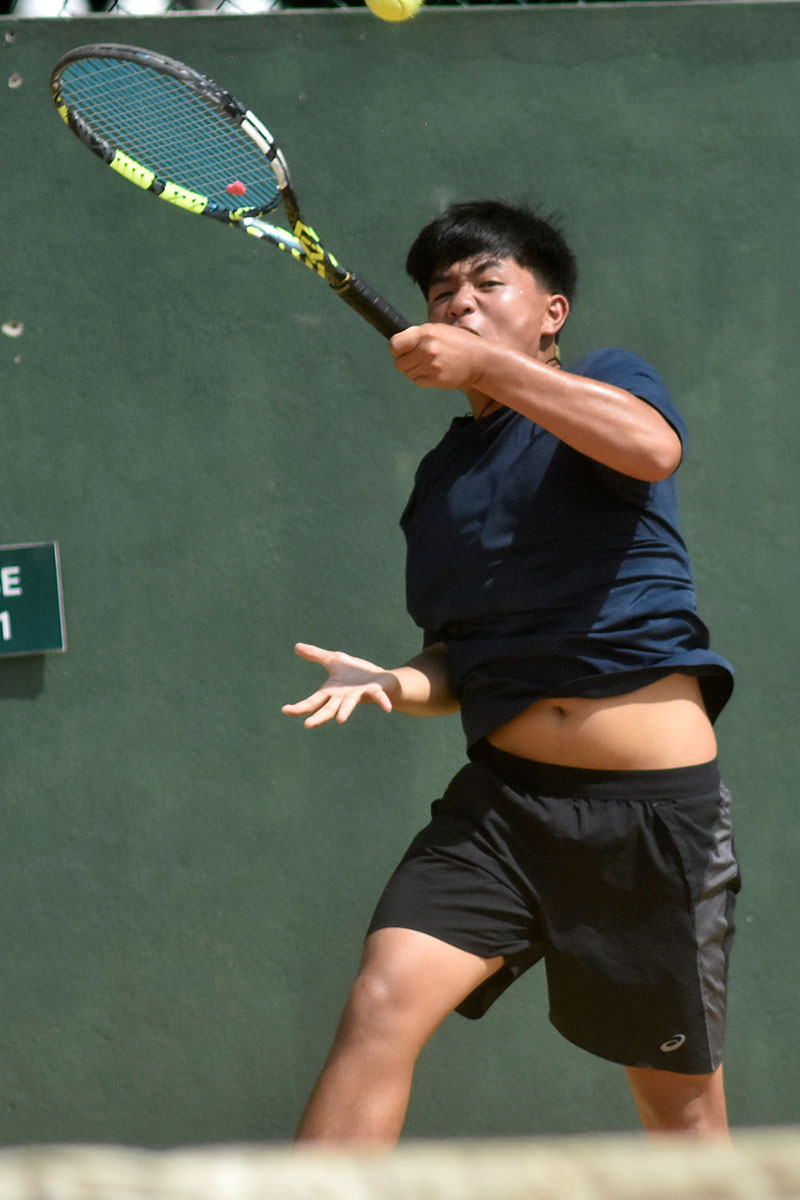
- Anthony Castigador (Pix by Kamal Wanniarachchi)

Showers or thundershowers will occur in most part of the island after 1.00 p.m.

Removing monk’s robes matter for Sangha to decide: Mahanayake Theras

NDB fraud Rs 60mn more than reported

President orders review of laws on treatment of imprisoned monks

BHC, Colombo: “LTTE remains a proscribed org. in the UK”

Sri Lanka runs out of essential anti-TB medicines, India comes to rescue

‘Dates have the highest sugar content to fight Coronavirus’

Sunday Island 27 December – Headlines

#SundayIsland 17th December – Headlines

Sunday Island – 28th March

Sunday Island Headlines – 21 March

Sunday Island – 21st February – Headlines
-

 Features5 days ago
The first woman in the foreign service or Ceylon Overseas Service it was then called
-

 Editorial6 days ago
Fuelling discontent and protest
-

 News4 days ago
Geneva takes up Sallay’s case and govt. ignores opportunity to answer accusations
-
 Foreign News6 days ago
Ten injured after car crashes into rugby supporters in Australia
-

 Latest News6 days ago
Tharindu Rathnayake, bowlers secure Asian Games Bronze for Sri Lanka
-

 News5 days ago
Nearly 20 Iranian tankers stranded off Lanka amid US sanctions
-

 Features4 days ago
Sri Lanka Cricket Bill: Governance reform is not yet a cricket strategy
-

 News5 days ago
Lanka enters new phase of prosecutions as hurdles clear