
News
Operation Flycatcher: disrupting Lanka’s terror networks


Boosting the ability of frontline border officers to detect travelers as potential terrorists was the focus of a counter- terrorism (CT) and border management operation led by INTERPOL across Sri Lanka, the INTERPOL said.
It said: Codenamed Operation Flycatcher II, the five-day (8 – 12 November) operation saw the arrest of six suspects linked to terrorism, with further arrests and prosecutions foreseen globally as investigations continue to unfold.
The operation saw Sri Lanka’s police, border and immigration agencies undertake specialized INTERPOL training on forensic identification techniques, CT investigative skills and INTERPOL’s data sharing mechanisms before carrying out tactical operations in the field.
“Access to information in our databases is at the heart of INTERPOL’S counter-terrorism operations, especially those that can prevent travel,” said INTERPOL’s Director of Counter-Terrorism, Gregory Hinds.
“Operation Flycatcher demonstrates the importance for countries to use INTERPOL’s wide range of criminal databases in strategic places like border crossings,” added Hinds.
With biometric data playing a growing role in tackling crime and terrorism, officers worked together using INTERPOL’s biometric identification capabilities to identify potential terrorism suspects.
The operation saw more than 800 hits and new uploads to INTERPOL’s wide range of criminal databases, particularly its stolen travel documents database with more than 100 million documents reported stolen from all over the world.
Stolen passports are a key asset for terrorist mobility, particularly for foreign terrorist fighters returning from conflict zones.
INTERPOL’s databases contain details on around 135,000 foreign terrorist fighters, with data collected from hotspots such as borders, battlefields and prisons.
Highlighting how terrorist activity is often linked to other crime areas, more than 200,000 checks on INTERPOL’s wanted persons database led not only to the identification of potential terrorists but also men and women wanted for forging travel documents, fraud and financial crime, weapons smuggling and human trafficking.
The financing of terrorism is a core component of INTERPOL’s strategy in the fight against terrorism.
Traveler’s names were checked against INTERPOL’s databases of suspicious financial transaction in the framework of INTERPOL’s Financial-to-Law Enforcement exercise (FINLEX).
Seven suspects and five suspicious monetary transactions were detected, prompting investigations in associated countries.
“Boosting the way we work nationally to detect terror suspects travelling in Sri Lanka means making sure all our police agencies have the necessary capabilities, skillsets and mechanisms in place to prevent and investigate the crime area holistically,” said Chief Inspector Lakshman Rajakaruna who heads operations at the INTERPOL National Central Bureau in Colombo.
‘This is why such a wide range of Sri Lankan agencies took part in this important operation, coming together with the common goal of tackling terrorism from all angles, together with INTERPOL,’’ added Rajakaruna.
INTERPOL coordinated the cooperative action of nine national law enforcement agencies working together across Sri Lanka and at Bandaranayaka International Airport using INTERPOL capabilities to detect potential terrorists: INTERPOL National Central Bureau for Sri Lanka in Colombo, Counter Terrorism and Investigation Division, Criminal Investigation Department (CID), Criminal Records Department (CRD), Financial Investigation Unit of CID, Financial Intelligence Unit Central Bank of Sri Lanka, Immigration and Emigration Department, Special Task Force and State Intelligence Service (SIS).
Ahead of operations, Sri Lankan agencies received and analysed INTERPOL-sourced intelligence on transnational terrorist networks to better understand their methods, motives and financing and – ultimately – to identify and arrest suspects.
Operations in the field enabled investigators to link a number of suspects to terrorist organizations active in Sri Lanka, including the LTTE, the Islamic State (IS), and the National Thowheeth Jama’ath which was the terrorist group responsible for the 2019 Easter Bombings attack in Sri Lanka.
In April 2019, nine suicide bombers simultaneously detonated their devices in seven locations around Sri Lanka killing 269 people and leaving 500 injured.
Whereas domestic terrorism – principally from LTTE – represented Sri Lanka’s main terrorist threat for decades, the attack illustrated escalating IS-inspired religious extremism.
Cooperation between the Sri Lankan authorities and INTERPOL resulted in a number of strong leads and arrests. One of the alleged ringleaders behind the bomb attacks, Ahamed Milhan Hayathu Mohamed, was arrested in the Middle East following the publication of an INTERPOL Red Notice. He was later extradited back to Sri Lanka, along with four other suspects, following their arrest in the Middle East.
Flycatcher is a CT operation carried out in the framework of INTERPOL’s CT programme for Sri Lanka and Maldives (CT-SLaM) funded by the European Union and jointly implemented with the United Nations Office on Drugs and Crime.
The first Flycatcher operation was conducted with the Maldives in July 2021 and involved officers from several national law enforcement agencies. Results included some 1,000 hits against INTERPOL’s databases, one arrest for a firearms-related crime, and intelligence gathering to feed associated investigations worldwide.


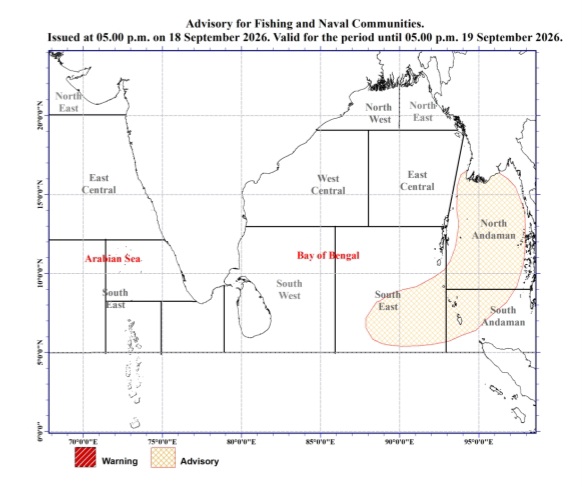
Advisory for strong winds and rough seas for Multi-day boats in the Bay of Bengal deep sea areas
Issued by the Natural Hazards Early Warning Centre
Issued at 05.00 p.m. 18 September 2026, valid for the next 24 hours.
PLEASE BE AWARE!
The atmospheric disturbance to the North of the Andaman Islands in the Bay of Bengal, is likely to develop into a low pressure area within the next 24 hours.
Due to its influence, wind speed over the Bay of Bengal sea areas will increase during the next few days starting from
tomorrow (19th).
The wind speed in the sea areas marked under the “Advisory” category on the map below will increase to 55-65 kmph at times and those sea areas will be rough or very rough at times.
Navel and fishing communities engaging the activities over this sea area are advised to be vigilant and be attentive to the future forecasts and bulletins issued by the department of Meteorology in this regards.


Text and Pic by Priyan de Silva
Director General of the Commission to Investigate Allegations of Bribery and Corruption (CIABOC) Ranga Dissanayake has questioned whether some promises contained in the National People’s Power (NPP) manifesto, A Thriving Nation – A Beautiful Life, could be fulfilled even if the government wanted to implement them.
Dissanayake raised the issue during a discussion following the release of the third biannual report on manifesto monitoring by the March 12 Movement, at the BMICH, on Wednesday.
He questioned whether the report had taken into account legal and institutional constraints affecting the implementation of certain pledges.
Citing the proposal to establish Anti-Corruption Investigation Offices in each district, Dissanayake said such offices could be established only with the agreement of CIABOC and that amendments to the Anti-Corruption Act would be necessary.
He also referred to the pledge to abolish the Executive Presidency, noting that successive governments had made similar commitments since 1994. He questioned whether there had been adequate consideration of where the powers vested in the Executive President would be transferred if the system were abolished.
On the proposal to establish a Public Prosecutor, Dissanayake questioned whether the Government intended to maintain the office alongside the Attorney General, who currently performs prosecution-related functions.
Executive Director of the Institute for Democratic Reforms and Electoral Studies (IRES) Manjula Gajanayake said Dissanayake’s remarks should be regarded as his personal views and not as Government policy.
Monitoring and Evaluation Consultants M. Thilakarajah and D.D. Mataharaarachchi presented the third-phase findings, covering January to June 2026.
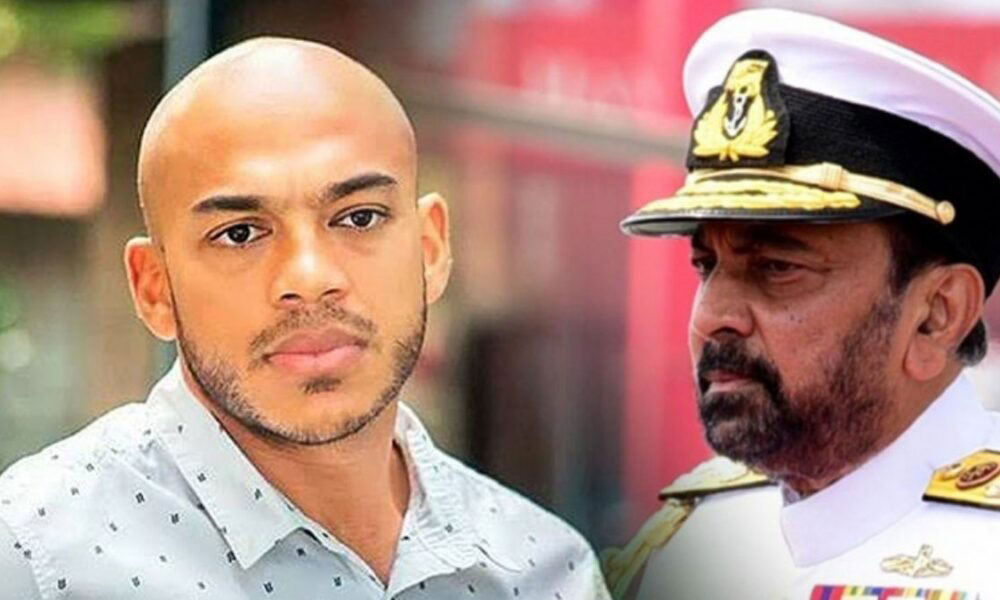
The corruption case filed by the Commission to Investigate Allegations of Bribery or Corruption (CIABOC) against former Navy Commander, Admiral of the Fleet Wasantha Karannagoda, and Yoshitha Rajapaksa was set for a pre-trial conference by the Colombo High Court.
The case was taken up before the Colombo High Court on Thursday (17), when the accused, who are currently out on bail, appeared before the court. After considering the submissions made, the court ordered that the case be called for a pre-trial conference.
The CIABOC had filed the case against the accused, alleging that a corruption offence was committed by sending Yoshitha Rajapaksa, son of former President Mahinda Rajapaksa, for training at the Royal Naval College in the United Kingdom despite him not having the required qualifications.

Advisory for strong winds and rough seas for Multi-day boats in the Bay of Bengal

Showers in the Western, Sabaragamuwa and North-western provinces and in Galle, Matara, Kandy and Nuwara-Eliya Districts

Some NPP manifesto promises may be difficult to fulfil – CIABOC DG

Yoshitha and ex-Navy chief Karannagoda’s case fixed for PTC

Court orders probe into Wimal’s rally speech

Court to rule on Dilith’s writ petition on September 30

‘Dates have the highest sugar content to fight Coronavirus’

Sunday Island 27 December – Headlines

#SundayIsland 17th December – Headlines

Sunday Island – 28th March

Sunday Island Headlines – 21 March

Sunday Island – 21st February – Headlines
-

 News6 days ago
Gnanasara Thero absconding after SC ruling
-

 Opinion5 days ago
From Galkissa (Mount Lavinia) to Tambuttegama
-

 Business6 days ago
HNB Finance strengthens Board with four independent directors
-

 Latest News7 days ago
ITS Giuseppe Garibaldi’ departs Colombo
-

 News2 days ago
US embassy won’t comment on IGP’s probe into joint drug raid
-

 Sports6 days ago
Culture within cricket team worrying authorities
-

 Features5 days ago
Sri Lanka’s university crisis: Brain drain and union action demand urgent reform
-

 Features4 days ago
The emptying university: why are academics leaving?