
News
FSP picks holes in Trinco Tank Farm deal

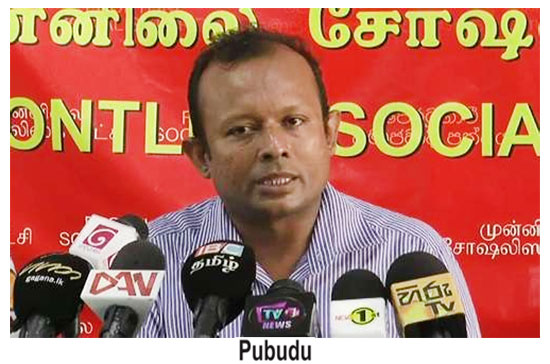
By Rathindra Kuruwita
An agreements signed on Thursday night to develop the Trincomalee Oil Tank Farm as a joint venture between Ceylon Petroleum Corporation (CPC) and Lanka IOC was illegal and Sri Lankans should not accept them, Education Secretary of the Frontline Socialist Party (FSP), Pubudu Jayagoda said yesterday.
Jayagoda said that usually such agreements had three parts, – lease agreement, a modalities agreement and an agreement on the joint venture company, i.e. Trinco Petroleum Terminal Ltd. However, only the modalities agreement had been presented to the Cabinet in late December and it was that agreement the Cabinet approved on 03 January 2022, he said
“Did the government sign the lease agreement too? From what we hear, a lease agreement was signed on Thursday night. However, the Governor of the Eastern Province needs to sign the agreement for this lease agreement to be valid and legitimate. Since the Governor had not signed the agreement, the lease agreement is not legitimate and the entire agreement is null and void without a lease agreement. So we would like to tell Sri Lankans that there is no reason for us to accept or respect this agreement,” he said.
On Thursday night the lease agreement was signed and the signatories were Treasury Secretary, Land Commissioner General, Ceylon Petroleum Corporation (CPC), LIOC and Trinco Petroleum Terminal Ltd., the Minister of Energy Udaya Gammanpila said in a Tweet.
The Education Secretary of the Frontline Socialist Party said that the government had started to sign important agreements in the middle of the night. Earlier an agreement was signed, in the middle of the night, with US based, New Fortress Energy to transfer 40% of Yugadanavi shares and to handover the monopoly over the supply of LNG, he said.
“These strategically important agreements that have significant impact on our lives are not even presented to the Cabinet, let alone the people. These agreements are against our constitution and the law,” he said.
Jayagoda said given that the people had no access to the full agreement, they had to depend on the statements made by Minister Gammanpila. However, most of the statements the Minister made were false, he said.
“The Minister claims that agreements in 1987, 2003 and 2017 had already granted India the access to the old tanks in Trincomalee. These claims are contradictory. If the 1987 agreement had given the tanks to India, why sign another one in 2003 or 2017. Despite the Minister’s claims, there was no formal agreement to hand over 14 tanks to India in 2003, he said. A MoU was signed, but a formal agreement was never executed. The 2017 agreement between India’s Sushma Swaraj and then Minister Malik Samarawickrama too was only a MoU. So, IOC was holding these tanks illegally. However, when this agreement is signed it will formally have these tanks. The Minister also claims that the 1987 Indo-Sri Lanka accord earmarked these tanks for Indian use. However, the agreement only states that if we develop these tanks with a foreign partner that partner will have to be India. So Gammanpila is bending facts,” he said.
Jayagoda pointed out that it was now widely acknowledged that Sri Lanka didn’t sign the Indo-Lanka agreement voluntarily. India twisted the arm of then President J.R. Jayewardene to make him agree. The agreement did not even have clauses on what steps to take if one party violated the agreement, he said.
“The agreement had been violated so many times and it is a joke to say that we are adhering to a non-existent clause of this agreement. There really is no reason why we should accept the accord at all,” he said.
The current agreement signed on Thursday allows LIOC to make changes to the structures in the tank farm, Jayagoda said. The 2003 agreement only allowed IOC the use of the tanks.
“This is why this is a more dangerous agreement than anything signed in 1987, 2003 or 2017. Moreover, the agreement states that Sri Lanka can’t enter into agreements with other companies to operate in the tank farm for another decade. The worst part is that under the 2003, any issue that arises between the two parties could be solved by Sri Lankan law but the 2022 agreement says that we have to go before arbitration courts in Singapore to settle any dispute. Our previous performances before arbitration courts have been less than stellar,” he said.

Latest News
SAARC Training Workshop on Financial Modeling for Renewable Energy Projects from 5th to 7th October in Colombo

The Energy Centre of the South Asian Association for Regional Cooperation (SAARC) has planned to conduct a training workshop under the theme ‘Financial Modelling for Renewable Energy Projects’ in Colombo from 2026-10-05 to 2026-10-07.
It is expected that two persons from each member country,
including Sri Lanka, will participate in this workshop. The Energy Centre of the South Asian Association for Regional Cooperation (SAARC) will provide all local hospitality facilities and transport, excluding airfare.
Taking into consideration the resolution furnished by the Minister of Energy regarding this workshop, which is vitally important for the capacity building of public officers and other related parties regarding project evaluation and financial modeling in the renewable energy sector, the Cabinet of
Ministers has decided to grant its consent to hold this workshop and extend Sri Lanka’s hospitality for this event.
Sri Lanka commemorates Children’s Day on 1st October every year with the objective of further strengthening social attention towards protecting the rights of children, education, health, and well-being.
It has been observed that the challenges encountered by present-day children, such as risk, psychological and social stress, negligence, and various social and economic vulnerability conditions related to the internet and digital technology, have broadened rather than traditional child protection issues.
Furthermore, it has been recognized that there is a need to develop awareness regarding the rights of children and the
protection of not only children but also all parties involved, including parents, teachers, public officials, service providers, and the general public who are consistently associated with children.
Consequently, it has been proposed to establish “A National Children’s Week” in line with the national commemoration
of Children’s Day with the objective of raising public awareness of the rights of children, fostering social sensitivity towards children, and encouraging community involvement in the protection of children.
Accordingly, the Cabinet of Ministers has approved the resolution furnished by the Minister of Women and Children Affairs to implement special programs declaring “A National Children’s Week – 2026” from 25-09-2026 to 01-10-2026.
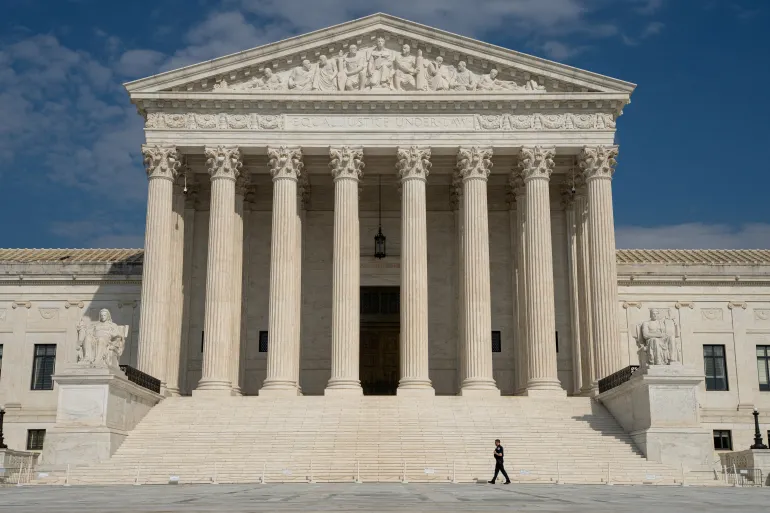
The US Supreme Court has rejected President Donald Trump’s bid to allow the US Postal Service to enforce a rule targeting mail-in ballots.
On Monday, the conservative-majority court refused to lift an order by US District Judge Indira Talwani that blocked the measure, dealing a blow to Trump’s efforts to restrict voting by mail before the November midterm elections.
The postal agency adopted the rule after Trump signed an executive order in March seeking to tighten rules around mail-in voting. Under this measure, states were required to send the Postal Service a list of recipients and use ballot mail envelopes previously approved by the agency.
The Postal Service was allowed to deny ballots if they failed to comply with the new standards or were not associated with registered voters on the lists.
Talwani imposed an injunction blocking the rule, saying that it likely violated the US Constitution and would be impossible to apply given the nearing midterms.
Shortly after, the Trump administration issued an emergency request to the Supreme Court urging it to allow an “important federal policy to protect the mails from being used to commit voter fraud”.
In late August, the Supreme Court had temporarily allowed Trump to move ahead with his executive order on procedural grounds, but did not rule on the legality of the plan.
In the latest decision, the court said in an unsigned order that the administration was “unlikely to succeed on the merits” of its challenge. Justice Samuel Alito and Justice Clarence Thomas dissented, with Alito writing that some plaintiffs lacked standing while the rest were pursuing a claim the court had recently called a “Hail Mary pass”.
[Aljaeera]

SAARC Training Workshop on Financial Modeling for Renewable Energy Projects from 5th to 7th October in Colombo

National Children’s Week from 25th September to 01st October

Nairobi and Munich to host 2029 and 2031 World Athletics Championships

Pakistan fined, docked 11 points in Edgbaston Test for slow over rate

England look to continue domineering T20 form

US Supreme Court rejects Trump mail ballot restrictions ahead of midterms

‘Dates have the highest sugar content to fight Coronavirus’

Sunday Island 27 December – Headlines

#SundayIsland 17th December – Headlines

Sunday Island – 28th March

Sunday Island Headlines – 21 March

Sunday Island – 21st February – Headlines
-

 Sports5 days ago
DDS set to lose Test captaincy
-

 News5 days ago
Sri Lanka faces new grid challenge as rooftop solar surges: former CEB GM
-

 Latest News5 days ago
Shafali, Deepti power India into sixth T20 Asia Cup final
-

 Opinion7 days ago
Navigating Sri Lanka’s Israeli Dilemma
-

 Latest News4 days ago
Sri Lanka thwart Fatima Sana challenge to secure Asia Cup final spot
-
 Features6 days ago
Lost for 90 years: Rare Goby resurfaces in Jaffna
-

 News3 days ago
Gnanasara Thero absconding after SC ruling
-

 News4 days ago
Ammunition cache found in old Kandy bungalow