
Editorial
Govt. tilting at windmills


Saturday 8th January, 2022
A government in trouble becomes so paranoid that it sees more devils than vast hell can hold. This may explain why the current dispensation and its backers are concocting various conspiracy theories almost on a daily basis to cover up their failings, which are legion.
Chief Government Whip and Minister of Highways, Johnston Fernando, has declared at a recent school function that there is more to gas explosions than meets the eye; he would have the public believe that there is a conspiracy behind these incidents. A probe has got underway, at the behest of President Gotabaya Rajapaksa himself into the gas-related accidents, Fernando has said.
Curiously, going by Minister Fernando’s contention, one wonders whether the members of the special presidential committee, which probed the gas explosions, etc., are also party to the grand conspiracy, for they have concluded that the mishaps at issue are due to a change in the gas composition, etc.
Litro Gas Chairman Theshara Jayasinghe has gone on record as saying there has been a tenfold increase in the number of the valves of cylinders his company has to replace daily because of the new safety regulations stipulated by the Sri Lanka Standards Institution and the Consumer Affairs Authority. Daily valve replacements number 3,000 at present, according to him. This may be considered proof that cylinders with defective valves were released to the market previously, exposing consumers to danger owing to lax safety regulations. Both Litro and Laugfs have admitted that their production processes have slowed down as they are required to adopt new safety measures. Reading between the lines, they did not conduct strict safety checks before being ordered to do so.
Thus, it is clear that a change in the composition of gas, defective valves, etc., are the main reasons for gas explosions, and the conspiracy Minister Fernando is talking about is only a figment of his imagination.
In a bid to bolster his argument, Minister Fernando has claimed that there have been no gas explosions in Colombo 07, Kurunegala, Kandy and the Northern province. Has he forgotten that a 51-year-old woman died in a gas explosion in Kandy, and a major gas blast occurred at a restaurant in Colombo 07?
To claim that there is a conspiracy behind gas explosions simply because they have not been reported from some parts of the country is tantamount to maintaining that not all smokers die of cancers and other such non-communicable diseases (NCDs), and, therefore, the medical opinion that smoking causes NCDs is wrong, and there is a conspiracy against the tobacco industry!
Minister Fernando’s conspiracy theory is self-defeating; it serves as an indictment of the government. National security is the current leaders’ long suit, or at least they say so. Their rise to power received a turbo boost from the Easter Sunday blasts in 2019. Claiming that terrorist bombings would not have happened if they had been in power, they undertook to strengthen the state intelligence agencies. They have vowed to ensure that there will be no threats to national security and public safety. Shouldn’t they be ashamed that they have not been able to find out those involved in the conspiracy which, Fernando says, is behind the gas explosions?
What made the President order a secret probe into gas explosions? It should have been conducted in a transparent manner for its findings to be credible. One needs not be surprised if its findings will help endorse the government’s position that the gas explosions are not due to a change in the LPG composition! If the investigation happens to confirm the conclusions of the special presidential committee, by any chance, its report will never see the light of day. Swallowing reports, as it were, is one of the few things Sri Lankan Presidents are adept at doing.



Friday 27th March, 2026
Vegetable prices have plummeted at the special economic centres, which serve as collection hubs in predominantly agricultural areas, such as Dambulla, because most trucks cannot operate for want of diesel. Farmers are unable to dispose of their produce due to transport problems. Usually, it is in February, March and early April that farmers save some money for the traditional New Year. However, vegetable prices have increased elsewhere due to high transport costs and supply disruptions caused by a diesel scarcity, but farmers gain nothing from these price hikes, which benefit only traders. The prices of imported food items are also soaring due to increasing shipping costs caused by the Middle East war. Importers who have built stocks in view of the Avurudu season will laugh all the way to the bank.
Unsold vegetable stocks are discarded as there are no storage facilities. It is a crime to let food items go to waste. Successive governments have ignored the need to help farmers store their produce properly and reduce post-harvest waste. In April 2025, President Anura Kumara Dissanayake and Indian Prime Minister Narendra Modi opened the Dambulla Agricultural Storage Complex with a capacity of 5,000 metric tons. It is reportedly equipped with temperature and humidity control mechanisms to reduce post-harvest losses by approximately 40%, stabilise fluctuations in agricultural product prices, ensure the supply of high-quality food to consumers and enhance agricultural sustainability. This storage facility, which would have been a boon to farmers in the area, is still not operational, some Opposition politicians who visited it have told the media.
The transport problems faced by the farming community are not due to high fuel prices alone. Transporters and farmers cannot obtain diesel because the government is supplying huge amounts of diesel to the oil-fired power plants, which are working overtime to make up for a shortfall in coal-fired electricity generation due to the procurement of substandard coal for the Norochcholai power plant. Paddy farmers have been left without diesel for harvesting and therefore the cost of harvesting has increased, and this increase is bound to reflect in the prices of rice.
Former Director of Agriculture K. B. Herath told the media yesterday that the prices of parboiled rice and samba may increase to Rs. 300 and Rs. 400, respectively in June/July due to a sharp drop in the paddy yield, and the situation would take a turn for the worse owing to a fertiliser shortage.
The government has been compelled to restrict the distribution of fertiliser for paddy cultivation. Commissioner General of the Department of Agrarian Development said yesterday fertiliser would be issued only through the Agrarian Service Centres to prevent hoarding. Such measures become unavoidable during crises. However, the irony of the proposed method of restricting fertiliser distribution may not have been lost on the discerning public. The JVP, which leads the incumbent government, has become reliant on the Agrarian Service Centres, 240 of which it destroyed in the late 1980s. If only it had realised the value of these institutions at that time and spared them!
Meanwhile, the closure of the Hormuz Strait has adversely impacted the global fertiliser supply. The Persian Gulf is also a major hub of global fertiliser production and exports. Iran, Qatar, Saudi Arabia, and Oman are among the world’s leading exporters of nitrogen fertilisers, including urea and ammonia, accounting for roughly 30–35 percent of global urea exports and around 20–30 percent of ammonia exports, according to the Food and Agriculture Organization (FAO) of the UN. Overall, up to 30 percent of global fertiliser exports are channelled through the Strait of Hormuz, the closure of which has severely affected international fertiliser supply chains. Production cuts and shipping constraints have stalled an estimated 3–4 million tonnes of fertiliser trade per month, and global fertiliser prices could average 15–20 percent higher during the first half of 2026 if the crisis continues, FAO says. This is a frightening proposition, as we said in a previous editorial comment. There is no gainsaying that Sri Lanka has to manage the available fertiliser stocks carefully in view of the global supply disruptions, but a drop in the fertiliser application will surely cause a countrywide yield decline.
If the current fertiliser scarcity persists, the farming community will have to combine the application of available chemical fertiliser with organic amendments, which the incumbent government leaders berated the previous administration for promoting.

Thursday 26th March, 2026
Coal is not an agricultural output, as is public knowledge, and therefore how on earth it can bring tears to farmers’ eyes, one may ask. But in Sri Lanka dirty coal has not only worsened air pollution in areas surrounding the Norochcholai power plant but also caused untold hardships to farmers across the country, especially in rice-growing areas, besides causing huge losses to the state coffers.
The government has managed to break the back of the fuel-queue problem for all intents and purposes, with the help of the QR-regulated quota system coupled with odd-even rationing. Long queues are seen only in the areas where filling stations have run out of stocks. However, paddy farmers have been left high and dry, without diesel for harvesting; they complain that filling stations in their areas have not received diesel supplies for several days, and they have to pay as much as Rs. 20,000 for harvesting an acre of paddy because diesel is available only on the black market. This situation has come about mainly because huge amounts of diesel are being diverted to the oil-fired power plants to meet a shortfall in electricity generation at the coal-fired Norochcholai power plant due to the use of substandard coal.
The Opposition has claimed that about 800,000 barrels of diesel are supplied to oil-fired power plants to meet the Norochcholai generation shortfall caused by substandard coal daily. This abnormal increase in thermal power generation, due to corruption in the government ranks, has resulted in tremendous pressure on the country’s diesel supplies that could otherwise have been used for transport and agricultural purposes. If the government had cancelled the current coal tender immediately after the first shipment of coal was found to be substandard, and the engineers of the Norochcholai power plant began to complain of a sharp drop in power generation due to the low-quality of coal, it would have been able to save about Rs 8 billion straightaway and prevented further losses due to an increase in the amount of diesel used for power generation. Instead, it chose to retain the current coal supplier under a cloud at the expense of the public, the state coffers and the country’s diesel reserves.
Now, the paddy farmers are unable to gather their harvest and prepare their fields for the next cultivation season, and the Ceylon Electricity Board is seeking a massive power tariff hike to recover losses due to burning diesel to cover the Norochcholai supply gap. The Opposition has repeatedly pointed out in Parliament that the electricity supply shortfall due to dirty coal imports often increases up to 176 MW. Power and energy experts have warned of possible power cuts due to a diesel shortage.
The government has jacked up fuel prices in such a way that one wonders whether it is trying to cover the losses caused by its coal racket and increases in electricity generation costs due to its overreliance on diesel power plants. Cabinet Spokesman Dr. Nalinda Jayatissa claimed at Tuesday’s media briefing that the fuel pricing formula had not been used to work out the current petroleum price increases. He went so far as to claim that the world oil prices had not increased according to any formula. However, Ceylon Petroleum Corporation Managing Director Dr. Mayura Nettikumarage told the media later in the day that fuel pricing formula had been used to determine the fuel price hikes. The pricing formula was introduced to ensure that fuel prices would be cost reflective. So, going by Minister Jayatissa’s claim, the question is why the government has not used the pricing formula to calculate fuel prices. Has it resorted to price gouging?
The JVP-NPP government has sought to use the global energy crisis as an excuse to cover up its coal racket, which has caused a power crisis, but the resentful public will not buy into its false claims and keep quiet. True, the Middle East conflict has caused a global energy crisis, and taken its toll on Sri Lanka’s petroleum reserves and fuel prices. However, we would have faced the current power crisis even if Trump and Netanyahu had behaved, without attacking Iran and plunging the world into chaos.
The previous government blundered by cutting corrupt deals, enabling its leaders and cronies to enrich themselves, mismanaging the economy, causing scarcities, and testing the people’s patience. Its leaders had to outrun angry mobs baying for their blood. When the wolf is at the door, popular support for governments drops to the floor, and people take to the streets. Unless the JVP-NPP government makes an immediate course correction, without defending the corrupt and aggravating the woes of the public, the day may not be far off when its leaders, too, have to showcase their athleticism, if any, and show their pursuers a clean pair of heels each—perish the thought! One may recall that it was irate paddy farmers who fired the first volley at the previous government. They are again on the warpath, demanding diesel and fertiliser.
Wednesday 25th March, 2026
The JVP-NPP government is slow on the draw whenever it responds to emergencies. Its long response time stood in the way of disaster mitigation in the immediate aftermath of the landfall of Cyclone Ditwah, which triggered a series of adverse weather events, claiming 638 lives and destroying more than 6,100 houses. Its delayed response also prevented the country from adopting emergency measures to manage its meagre fuel reserves immediately after the eruption of the latest Middle East conflict. Instead of reintroducing the QR-based fuel quota system at the first sign of trouble to prevent panic buying and stockpiling, it kept on issuing fuel to the market while hoarders were having a field day. Worse, it has taken three long weeks to issue energy saving guidelines to the state sector, which is bursting at the seams, with one public official for every 15 citizens. Curtailing waste in the state sector is half the battle in reducing national power and energy consumption substantially.
The Commissioner General of Essential Services has directed all state institutions to adopt the following measures to save energy: reducing fuel used for official travel, limiting physical meetings and using online platforms for that purpose, minimising paper and physical document transfers, reducing the use of air-conditioning, limiting elevator use, expanding online services, keeping offices closed outside working hours and monitoring energy saving. Essential as these measures may be, they cannot be considered a silver bullet. Much more needs to be done.
It has been estimated that if every vehicle in the state owned fleet saves one litre of fuel per day, Sri Lanka could reduce fuel use by about 92,000 litres daily. However, it is doubtful whether state employees will cooperate to reduce fuel consumption. The only way to ensure that they will use less fuel, in our view, is to reduce fuel allocation for the public sector. Many developing countries, such as Pakistan, have taken action to curtail energy demand. They have opted for nationwide austerity measures while Sri Lanka has focused more on conservation guidelines to the public sector and reducing commuting fuel use.
There is a pressing need for Sri Lanka to adopt drastic austerity measures to survive the worsening energy crisis. It ought to emulate Pakistan, which has halved fuel allocations for the state sector for two months, taken 60 percent of government vehicles off the road, suspended fuel allowances for ministers, reduced fuel allocations for state officials by 50 percent, and limited official protocol convoys to only one security vehicle.
The JVP/NPP politicians came to power, promising to use public transport. They ought to fulfil that pledge and set an example to others at this hour of crisis. Why can’t they travel in buses and trains at least until the current energy crisis is over? After all, the people’s representatives in some developed countries, such as the Netherlands, Denmark, Sweden, the United Kingdom, Germany and Finland, travel in buses and trains or cycle to work. Why can’t the self-proclaimed Marxist leaders in a country like Sri Lanka lead simple lifestyles like their capitalist counterparts in the Global North?
Most of all, while seeking public cooperation to save electricity and energy, the government must ensure that those who caused a sharp decrease in electricity generation at the Norochcholai power plant complex by procuring low-grade coal are brought to justice. The Opposition alleges a daily generation shortfall up to 170 MW due to the use of substandard coal at Norochcholai. This reduced efficiency has forced other power plants to burn diesel to cover the gap. Huge amounts of diesel are used by oil-fired power plants daily to meet the shortfall in electricity generation at Norochcholai, increasing pressure on the diesel supplies that could otherwise be used by the transport sector.
Unfortunately, the government politicians, including President Anura Kumara Dissanayake, have circled the wagons around Energy Minister Kumara Jayakody and his officials responsible for substandard coal imports, making one wonder whether the entire JVP has benefited from the coal racket.

Neutrality in the context of geopolitical rivalries

ADB announces financial support package to help Asia and Pacific

Farmers’ woes signal food shortages

Lest we forget

When elephants fight, it is the grass that suffers

Rukunayake steadies Trinity after early collapse

‘Dates have the highest sugar content to fight Coronavirus’

Sunday Island 27 December – Headlines

#SundayIsland 17th December – Headlines

Sunday Island – 28th March

Sunday Island Headlines – 21 March

Sunday Island – 21st February – Headlines
-

 News2 days ago
Senior citizens above 70 years to receive March allowances on Thursday (26)
-

 Features4 days ago
Trincomalee oil tank farm: An engineering marvel
-

 News7 days ago
CIABOC tells court Kapila gave Rs 60 mn to MR and Rs. 20 mn to Priyankara
-

 Features4 days ago
The scientist who was finally heard
-

 Business24 hours ago
Dialog Unveils Dialog Play Mini with Netflix and Apple TV
-
 News2 days ago
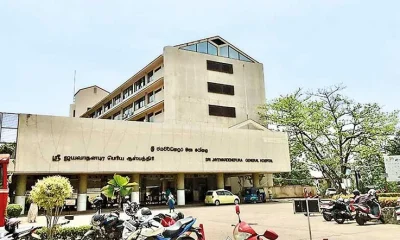
Japanese boost to Sri J’pura Hospital, an outright gift from Tokyo during JRJ rule
-

 News2 days ago
CEB Engineers warn public to be prepared for power cuts after New Year
-

 News24 hours ago
US dodges question on AKD’s claim SL denied permission for military aircraft to land