
News
Series of events organisd to mark Malay contribution to enrichment of Lanka for centuries


Centennial and sesquicentennial anniversaries of SLMA and CMCC
By Saman Indrajith
A series of cultural, sports, literary, commemorative and aesthetic events have been organised by the Sri Lanka Malay Association and the Colombo Malay Cricket Club to mark their centennial and sesquicentennial anniversaries respectively,throughout this year.
“The series of SLMA centenary commemoration is scheduled to be inaugurated on 22 Jan. with the issuance of a first day cover and thereafter it will be marked with several sports tournaments, a symposium, commemorative cricket charity dinner, Malay walk, launch of a coffee table book and commemorative jubilee book. The events are organised to be held throughout the year,” Rilwan Lantra, President SLMA told a press conference held at Padang Complex in Colombo on Tuesday.
He said: “A ‘Pasara Malam,’ a hawker-street styled Malay food festival, along with a Malay cultural show, an event to showcase Lankan Malay lifestyle is scheduled for July. A symposium is scheduled for September where research papers would be presented on contributions made to the nation by Lankan Malays and how they have imbibed well with the national fabric. In October a ‘Malay Rally’, a gathering of the community to promote peace and brotherhood with sports, cultural and various other events will be held. There will be a ‘Heroes Day’ in November as a mark of respect to the fallen Malay heroes and all who sacrificed their lives in the protection of sovereignty and territorial integrity of mother Lanka,” Lantra said.
Colombo Malay Cricket Club (CMMC) past President Ibnusha Ally said that interaction and advent of the Malays could be traced as far as back as the Sixth and Seventh Centuries. “They have amalgamated well with the mainstream community, sharing their unique culture and traditions. Today these facets could be seen countrywide, enriching the lifestyles of the populace. Same can be said of its brothers contributing much to the development of the country in academia, corporate business, the tri-forces and police, aesthetics, social services and many other fields. It is a legacy enacted in the pages of history,” Ally said.
CMCC Vice President Hussain Jayah, its General Secretary, Roshan Allang, CMCC President Rizwan Badoordeen, CMCC Captain Rinaldin Rahaman and General Secretary of SLMA Rilwan Careem also addressed the media.

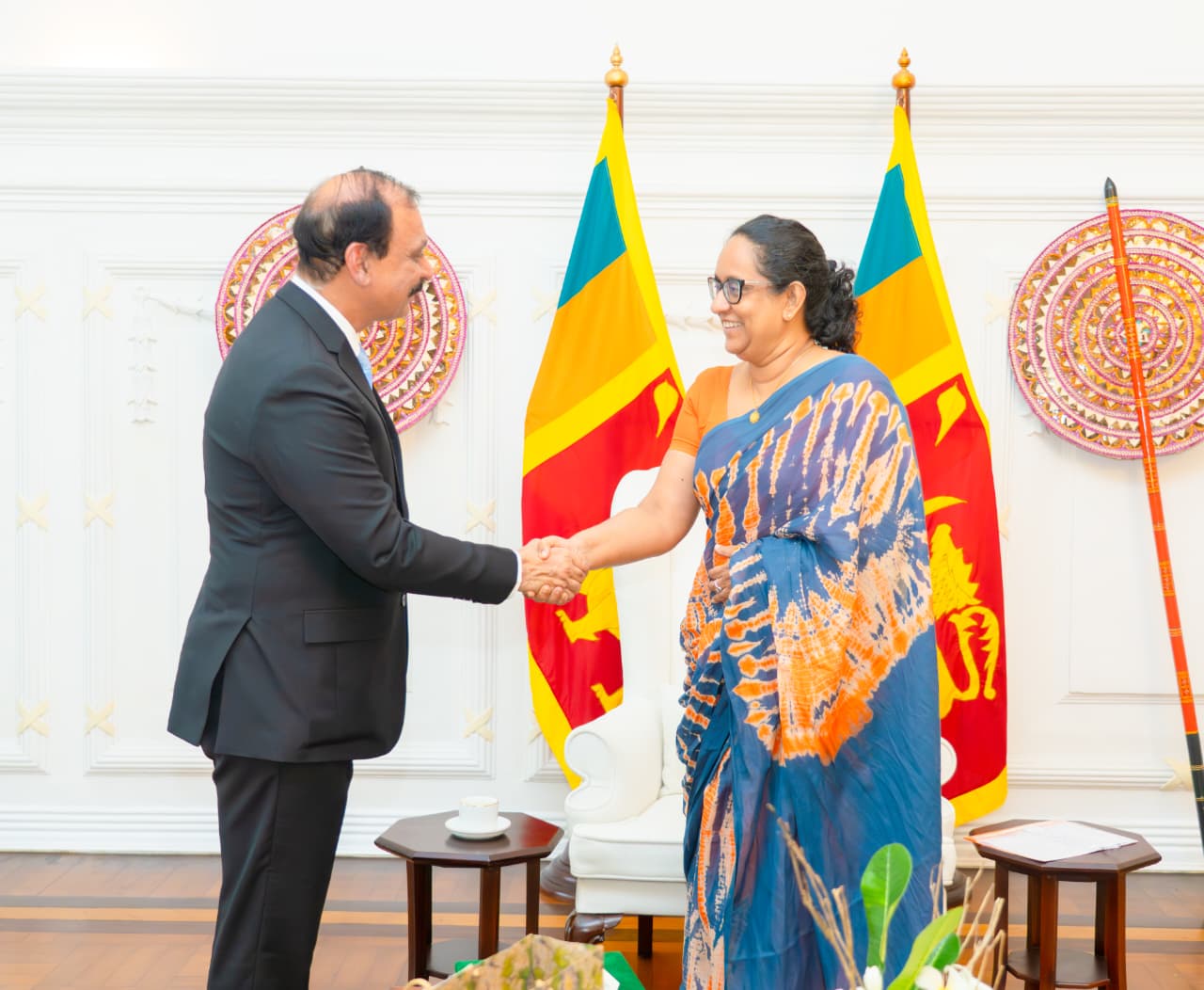
High Commissioner of the Islamic Republic of Pakistan to Sri Lanka Major General (Retd) Nayyar Naseer met with the Prime Minister Dr. Harini Amarasuriya at Temple Trees on 30th April
Welcoming the High Commissioner of the Islamic Republic of Pakistan to Sri Lanka, the Prime Minister expressed sincere appreciation for the continued support and cooperation extended by the Government of Pakistan to Sri Lanka, particularly the assistance provided following the Ditwah Cyclone.
Both sides reaffirmed the longstanding and cordial relations between Sri Lanka and Pakistan, which are founded on mutual respect, friendship, and shared interests.
The meeting also focused on the importance of further strengthening collaboration in key sectors such as education, tourism, and sports, with a view to enhancing people-to-people ties and creating new opportunities for cooperation reiterating Sri Lanka’s commitment to deepening bilateral engagement.
The meeting was attended by the Deputy High Commissioner of Pakistan to Sri Lanka Ms. Zunaira Latif, Secretary to the Prime Minister, Pradeep Saputhanthri, Additional Secretary Ms. Sagarika Bogahawatta, and officials from the Ministry of Foreign Affairs, Foreign Employment and Tourism.
(Prime Minister’s Media Division)
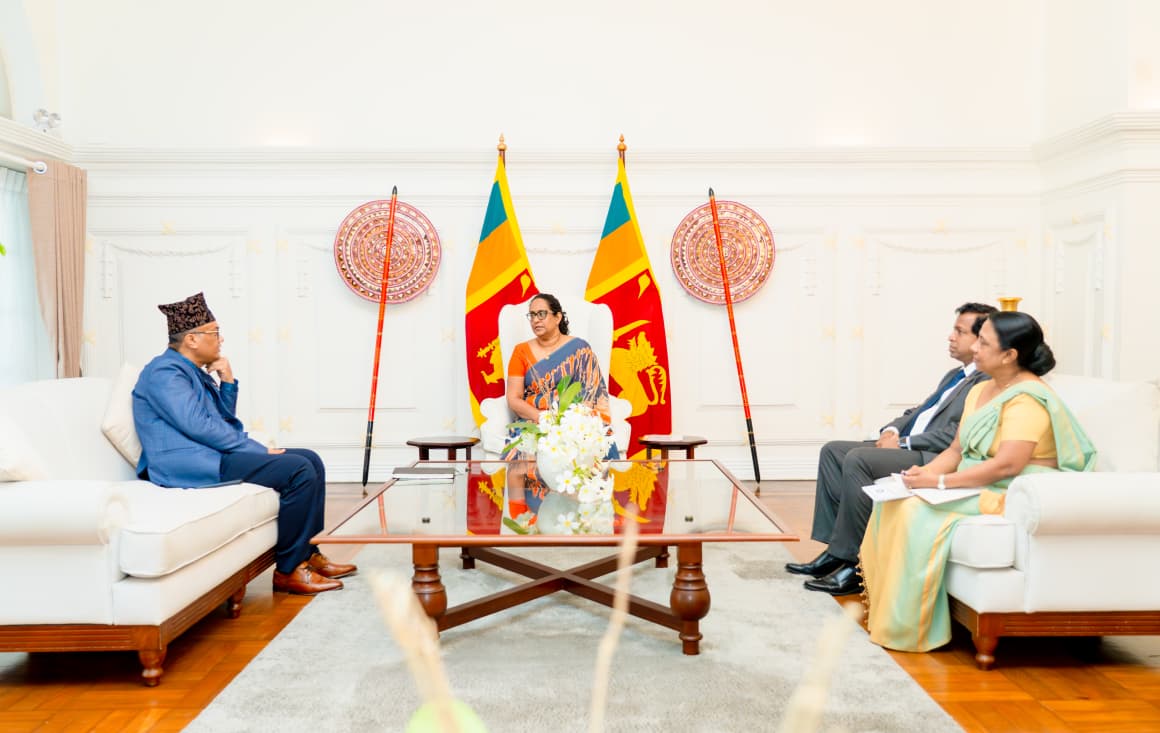
The Ambassador of Nepal to SriLanka, Dr. Purna Bahadurn Nepali paid a farewell courtesy call on Prime Minister Dr. Harini Amarasuriya on Thursday (30th of April) at Temple Trees.
During the meeting, the Prime Minister conveyed sincere appreciation for the dedicated service and valuable contributions towards strengthening the longstanding bilateral relations between Sri Lanka and Nepal during the tenure of Dr. Purna Bahadurn Nepali.
Both parties reaffirmed the longstanding bilateral relations between the two countries, which are based on shared cultural, religious, and historical linkages. The Prime Minister also reaffirmed Sri Lanka’s commitment to further deepening bilateral relations with Nepal and enhancing cooperation for the mutual benefit of both nations.
The meeting was attended by the Secretary to the Prime Minister, Pradeep Saputhanthri, Additional Secretary Ms. Sagarika Bogahawatta, and officials from the Ministry of Foreign Affairs, Foreign Employment and Tourism.
(Prime Minister’s Media Division)
Latest News
Heat Index at Caution Level in the Northern, North-central, Eastern, Sabaragamuwa, North-western provinces and in Monaragala district during the day time

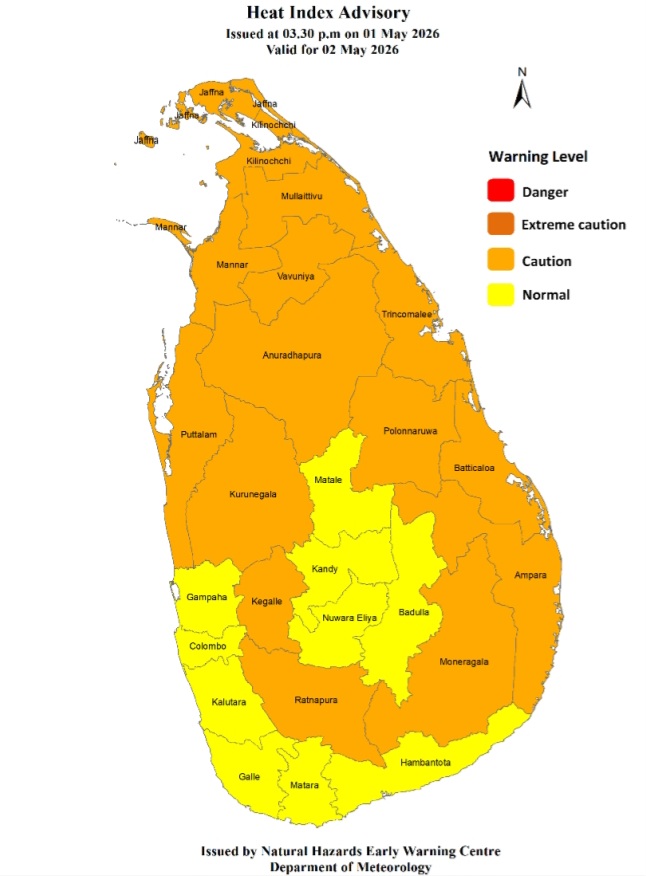
Warm Weather Advisory
Issued by the Natural Hazards Early Warning Centre
Issued at 3.30 p.m. on 01 May 2026, valid for 02 May 2026.
The Heat index, the temperature felt on human body is likely to increase up to ‘Caution level’ at some places in the Northern, North-central, Eastern, Sabaragamuwa, North-western provinces and in Monaragala district during the day time.
The Heat Index Forecast is calculated by using relative humidity and maximum temperature and this is the condition that is felt on your body. This is not the forecast of maximum temperature. It is generated by the Department of Meteorology for the next day period and prepared by using global numerical weather prediction model data.

Effect of the heat index on the human body is mentioned in the above table and it is prepared on the advice of the Ministry of Health and Indigenous Medical Services.
ACTION REQUIRED
Job sites: Stay hydrated and takes breaks in the shade as often as possible.
Indoors: Check up on the elderly and the sick.
Vehicles: Never leave children unattended.
Outdoors: Limit strenuous outdoor activities, find shade and stay hydrated.
Dress: Wear lightweight and white or light-colored clothing.
Note:
In addition, please refer to advisories issued by the Disaster Preparedness & Response Division, Ministry of Health in this regard as well. For further clarifications please contact 011-7446491.

US said to be withdrawing 5,000 troops from Germany over Iran war spat

Bangladesh eye rare double-series win over New Zealand in rainy Dhaka

Rahul, Nissanka fifties lead 226 chase as Delhi Capitals return to winning ways

Pakistan High Commissioner pays courtsey call on PM

Ambassador of Nepal to Sri Lanka pays farewll call on PM

Heat Index at Caution Level in the Northern, North-central, Eastern, Sabaragamuwa, North-western provinces and in Monaragala district during the day time

‘Dates have the highest sugar content to fight Coronavirus’

Sunday Island 27 December – Headlines

#SundayIsland 17th December – Headlines

Sunday Island – 28th March

Sunday Island Headlines – 21 March

Sunday Island – 21st February – Headlines
-

 News3 days ago
Treasury chief’s citizenship details sought from Australia
-

 News5 days ago
BIA drug bust: 25 monks including three masterminds arrested
-

 Business6 days ago
Nestlé Lanka Announces Change in Leadership
-
 News6 days ago
Hackers steal $3.2 Mn from Finance Ministry
-

 News5 days ago
Banks alert customers to phishing attacks
-

 News2 days ago
Rooftop Solar at Crossroads as Sri Lanka Shifts to Distributed Energy Future
-
 News4 days ago
Govt. assures UN of readiness to introduce ‘vetting process’ for troops on overseas missions
-

 Business4 days ago
ADB-backed grid upgrade tender signals next phase of Sri Lanka’s energy transition