
Features
Eminent Indians in Galle

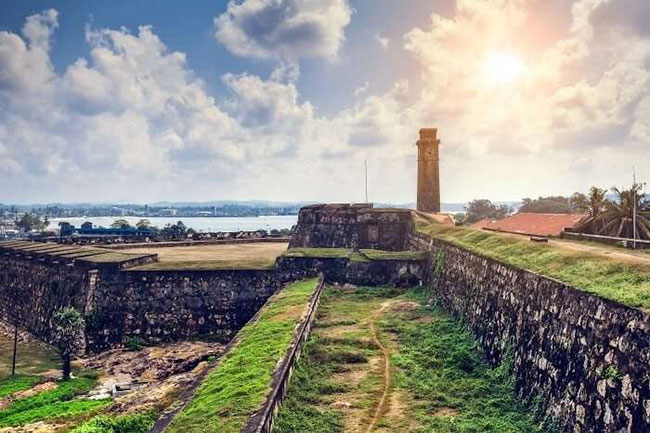
In November 1927, Mahatma Gandhi and Kasturbai Gandhi arrived in Galle. They were the chief guests at the prize-giving of Mahinda College, on the 24th. The Olcott Memorial Assembly Hall of the College was filled to capacity. Never was there such a large gathering of Buddhists, Hindus and Christians. The speech given by Gandhi is excerpted from the Mahinda College Magazine of 2002:
“It has given me the greatest pleasure to be able to be present at this very pleasant function. You have paid me, indeed, a very great compliment and conferred on me a great honour by allowing me to witness your proceedings and making the acquaintance of so many boys.
I hope that this institution will progressively expand as, I have no doubt, it deserves. I have come to know enough of this beautiful Island and its people to understand that there are Buddhists enough in this country, not merely to support one such institution, but many such institutions. I hope, therefore, that this institution will never have to pine for want of material support, but having known something of the educational institutions both in South Africa and India, let me tell you that scholastic education is not merely brick or mortar. It is true boys and true girls who build such institutions from day to day. I know some huge architecturally perfect buildings going under the name of scholastic institutions, but they are nothing but whited sepulchres. Conversely, I know also some institutions which have to struggle from day to day for their material existence, but which, because of this very want, are spiritually making advance from day to day. One of the greatest teachers that mankind has ever seen and one whom you have enthroned as the only Royal Monarch in your hearts, delivered his living message not from a man-made building, but under the shadow of a magnificent tree. May I also venture to suggest that the aim of a great institution like this should be to impart such instruction and in such ways that it may be open to any boy or girl in Ceylon.
 “I notice already that, as in India, so in this country, you are making education daily more and more expensive so as to be beyond the reach of the poorest children. Let us all beware of making that serious blunder and incurring the deserved reproach of posterity. To that end let me put the greatest stress upon the desirability of giving these boys instruction from A to Z through the Sinhalese language. I am certain that the children of the nation that receive instruction in a tongue other than their own commit suicide. It robs them of their birth right. A foreign medium means an undue strain upon the youngsters; it robs them of all originality. It stunts their growth and isolates them from their home. I regard therefore such a thing as a national tragedy of first importance, and I would like also to suggest that since I have known Sanskrit in India as the mother language, and since you have received all religious instruction from the teachings of one who was himself an Indian amongst Indians and who had derived his inspiration from Sanskrit writings that it would be but right on your part to introduce Sanskrit as one of the languages that should be diligently studied. I should expect an institution of this kind to supply the whole of the Buddhist community in Ceylon with text books written in Sinhalese and giving all the best from the treasures of old. I hope that you will not consider that I have placed before you an unattainable ideal. Instances occur to me from history where teachers have made Herculean efforts in order to restore the dignity of the mother-tongue and to restore the dignity of the old treasures which were about to be forgotten.
“I am glad indeed that you are giving due attention to athletics and I congratulate you upon acquitting yourselves with distinction in games. I do not know whether you had any indigenous games or not. I should, however, be exceedingly surprised and even painfully surprised, if I were told that before cricket and football descended upon your sacred soil, your boys were devoid of all games. If you have national games, I would urge upon you that yours is an institution that should lead in reviving old games. I know that we have in India noble indigenous games just as interesting and exciting as cricket or football, also as much attended with risks as football is, but with the added advantage that they are inexpensive, because the cost is practically next to nothing.
“I am no indiscriminate superstitious worshipper of all that goes under the name of ‘ancient’. I never hesitated to endeavour to demolish all that is evil or immoral, no matter how ancient it may be, but with this reservation. I must confess to you that I am an adorer of ancient institutions and it hurts me to think that a people in their rush for everything modern despise all their ancient traditions and ignore them in their lives.
“We of the East very often hastily consider that all that our ancestors laid down for us was nothing but a bundle of superstitions, but my own experience, extending now over a fairly long period of the inestimable treasures of the East has led me to the conclusion that, whilst there may be much that was superstitious, there is infinitely more which is not only not superstitious, but if we understand it correctly and reduce it to practice, gives life and ennobles one. Let us not therefore be blinded by the hypnotic dazzle of the West.
“Again, I wish to utter a word of caution against your believing that I am an indiscriminate despiser of everything that comes from the West. There are many things which I have myself assimilated from the West. There is a very great and effective Sanskrit word for that particular faculty which enables a man always to distinguish between what is desirable and what is undesirable, what is right and what is wrong, that word is known as ‘Viveka’. Translated into English, the nearest approach is discrimination. I do hope that you will incorporate this word into Pali and Sinhalese
“There is one thing more which I would like to say in connection with your syllabus. I had hoped that I should see some mention made of handicrafts, and if you are not seriously teaching the boys under your care some handicrafts, I would urge you if it is not too late, to introduce the necessary handicrafts known to this Island. Surely, all the boys who go out from this institution will not expect or will not desire to be clerks or employees of the Government. If they would add to the national strength, they must learn with great skill all the indigenous crafts, and as cultural training and as the symbol of identification with the poorest among the poor, I know nothing so ennobling as hand spinning. Simple as it is, it is easily learnt. When you combine with hand spinning the idea that you are learning it not for your own individual self, but for the poorest among the nation, it becomes an ennobling sacrament. There must be added to this sacrament some occupation, some handicraft which a boy may consider will enable him to earn his living in later life.
You have rightly found place for religious instruction. I have experimented with quite a number of boys in order to understand how best to impart religious instruction and whilst I found that book instruction was somewhat of an aid, by itself it was useless. Religious instruction, I discovered, was imparted by teachers living the religion themselves. I have found that boys imbibe more from the teachers’ own lives than they do from the books that they read to them, or the lectures that they deliver to them with their lips. I have discovered to my great joy that boys and girls have unconsciously a faculty of penetration whereby they read the thoughts of their teachers. Woe to the teacher who teaches one thing with his lips, and carries another in his breast.
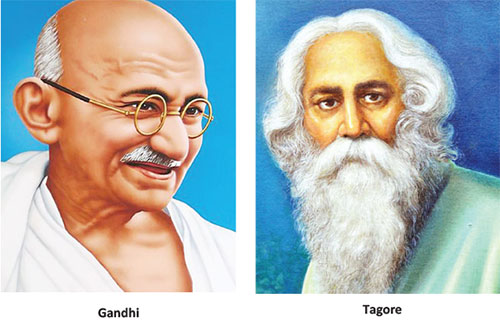
“Now, just one or two sentences to boys only and I have done. As father of, you might say, many boys and girls, you might almost say of thousands of boys and girls, I want to tell you, boys, that after all you hold your destiny in your own hands. I do not care what you learn or what you do not learn in your school, if you will observe two conditions. One condition is that you must be fearlessly truthful against the heaviest odds under every circumstance imaginable. A truthful boy, a brave boy will never think of hurting even a fly. He will defend all the weak boys in his own school and help, whether inside school or outside the school, all those who need his help. A boy who does not observe personal purity of mind and body and action, is a boy who should be driven out of any school. A chivalrous boy would always keep his mind pure, his eyes straight and his hands unpolluted. You do not need to go to any school to learn these fundamental maxims of life, and if you will have this triple character with you, you will build on a solid foundation.
“May then true ahimsa and purity be your shield forever in your life. May God help you to realize all your noble ambitions, I thank you once more for inviting me to take part in this function!”
The following day Gandhi was to entrain at the Galle Railway Station, when he was informed that large crowds had gathered along the route to see him. Then he asked, “What am I to do?” “People will be delighted, if you could walk to the Railway Station.” “All right,” said Gandhi. “I will then walk the distance.” It was an uphill task for the police to manage the crowds.
In 1922, Dr. Rabindranath Tagore of Shantiniketan fame also visited Mahinda College. Here is an excerpt from the Mahinda College magazine. ‘The poet arrived at Mahinda College by car, about 2 pm on October 17th, 1922 accompanied by Mr. C. F. Andrews and Dr. W. A. de Silva. The boys had been eagerly looking forward to his visit, for it had been arranged many months before, when it had been first known that he was to come to Ceylon.
After about an hour’s rest, the poet came into the big Olcott Hall, where all the boys were assembled to greet him. He was then garlanded by the oldest member of the staff, Pandit G. Sagaris de Silva, and, in order to avoid his having to speak loudly, all the younger boys came up close to the dais and sat on the floor around his feet.’
The speech delivered by him on the occasion is given below.
“My young friends, I do not like to stand on a high platform and speak to you as a distinguished guest. I want to move freely amongst you and be your companion. I wish I could stay a week in this lovely place and sing to you, and play with you in these beautiful grounds; then I am sure you would not be in the least afraid of this old man with a long beard.
“I have heard much about your College from my friend, Mr. Kalidas Nag, one of your former Principals, whom I met recently in Paris. He told me of the pleasant days he spent with you here.
“You are just like my boys at Shantiniketan, features, behaviour, everything. When I look into your faces, I think of them. They are not afraid of me. They drag me to their dormitories and make me take part in their plays, sing songs to them, and play parlour games with them in the long evenings.
“They can act plays beautifully, those marvellous boys, they sometimes write their own plays and act them, or act the plays written by their elders. Recently they acted a play in Calcutta, and some of my friends told me that they had not seen such acting anywhere, so perfectly natural.
“I do not want to inflict good advice on you. Why should I? You have not done any wrongs to me! I know that when I was a boy, we also used to have visits from many distinguished visitors, who gave us good advice, and told us to be good, and obedient, and to learn our lessons well. You know all that sort of thing. I do not want to repeat that. I am not a teacher really, though I have sometimes taken classes in my school, and it is not in my nature to give you good advice. I want to play with you and be your friend and companion.
“Let me describe to you what we do at Shantiniketan. We have plenty of open ground and fresh air and freedom. There are no restraints of any kind put upon the boys.
“They grow in perfect freedom and imbibe the beauties of the landscape, the sky and the seasons. Sometimes they go to swim in the tanks, and play their games when they like. They teach what they learn to their less fortunate brethren in the villages around. It is true we have no hills like yours, and we miss the great sea, but we are happy in our freedom and peace. In the long evenings we go out for walks or sit under the trees and sing songs, and we act plays in the dormitories on winter nights. Our classes are mostly held out-of doors under trees, though of course there are classrooms to be used in bad weather. The boys learn to love what is beautiful, good and true, for they imbibe these things from great Nature, who is their teacher.
“Again, I tell you that your Motherland is India, and that you have my invitation to come there whenever you like.”
According to the school magazine, Principal, F.G. Pearce then briefly thanked Dr. Tagore. He said that the great regret, especially of those who had had the experience of being for some time in the company of Dr. Tagore, among students, was that instead of staying the hoped-for week at Mahinda College, he was only able to remain for one night. However, as they knew what was the object of the poet’s visit to Ceylon, they would not grudge the shortness of his stay but be deeply grateful for his presence among them. He thought the best way to make up for it was to try to arrange, as he intended to do, for one or two of the older students to finish their education at Shantiniketan and Vishwa Bharati, and return to Mahinda College as teachers.
“You must not think that you belong exclusively to this small island; do not forget that you have unbreakable ties of language, culture and religion, with India, that ancient land! The great Mother, India, wants to clasp you to her bosom again, and I come as her messenger to claim you once more. I invite you to my Ashram at Shantiniketan. You will be welcome at any time. You will not be asked to do anything, you will be allowed to do just what you like, we shall not ask you to give our boys good advice! We shall extend our hospitality to you and make you at home among us. You may not be able to come there just now perhaps, that does not matter, but remember that if you want to come to Shantiniketan at any time, you have my invitation.”
In 1929, Jawaharlal Nehru, his wife Kamala Devi, daughter Indira and his sister Vijaya Lakshmi Pandit visited Galle. One their way to Galle, a reception was held in their honour at the Rathgama Devapathiraja College, by Sir Ernest de Silva who founded the college. At this reception, Nehru said, “Ernest is a friend of mine who was with me at Cambridge University. I am happy to see him engaged in serving the people.” At Galle, they visited Mahinda College where another reception was held in their honour.
Some of the other distinguished visitors to Galle, from India were: Dr. Annie Besant, the President of the Theosophical Society, in 1922; Sarojini Naidu, the Indian poetess, in 1922 and Harindranath Chattopadhyay, the musician and poet, in 1931.






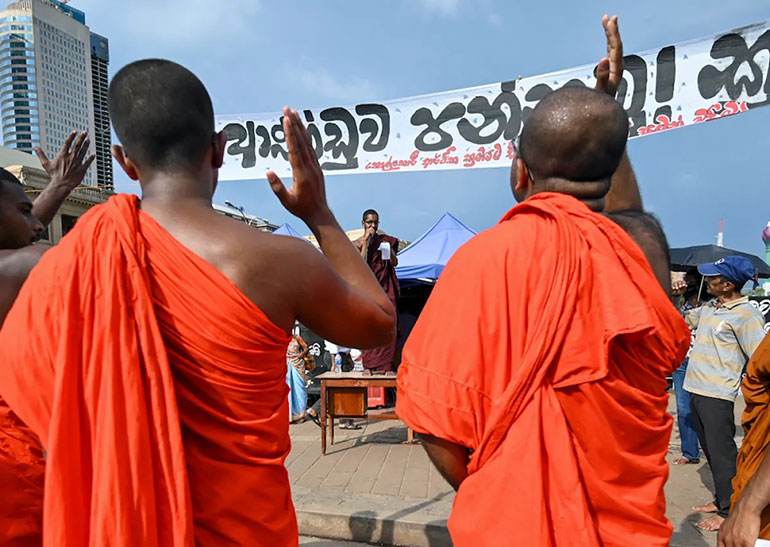
For more than a century, Sri Lankan society has lived with a quiet contradiction at the heart of its religious life. On the one hand, the Buddhist monk is revered as the embodiment of moral discipline, selfrestraint, and renunciation. On the other, the modern monk has become a public figure, political actor, administrator, media personality, and in some cases power broker whose influence extends far beyond the temple. This contradiction has been tolerated, even celebrated, for decades. But recent events, most notably a widely publicised case involving a senior monk accused of grave moral misconduct, have forced the country to confront a painful truth: the institutional conditions that make such scandals possible are not new. They are the predictable outcome of a long historical process that H. L. Seneviratne described with remarkable clarity in The Work of Kings. The moral deterioration visible today is not an aberration. It is the culmination of a centurylong transformation in the identity, function, and authority of the Sangha.
To understand how we arrived at this moment, it is necessary to revisit the argument Seneviratne made nearly three decades ago. His thesis was simple but profound: the modern Sri Lankan monkhood has taken on the ‘work of kings.’ By this he meant that monks, instead of confining themselves to the renunciant life prescribed by the Vinaya, have assumed the secular responsibilities once associated with precolonial kingship, such as protecting the religion, organising society, guiding the nation, and enforcing moral order. This shift, he argued, was not a natural evolution of Buddhist tradition but a modern invention shaped by colonialism, nationalism, and the anxieties of a society struggling to redefine itself in the face of foreign domination. The monk became a symbol of national identity, a guardian of cultural authenticity, and a leader in the struggle for political autonomy. In the process, the boundaries that once separated the monastic from the worldly began to dissolve.
Transformation
The consequences of this transformation were not immediately visible. For decades, the activist monk was celebrated as a patriot, a reformer, and a moral guide. His involvement in education, social welfare, and nationalist mobilisation was seen as a necessary response to colonial pressures and missionary competition. But beneath the surface, the foundations of monastic discipline were slowly eroding. The Vinaya, which had served for centuries as a rigorous framework for regulating monastic life, was increasingly overshadowed by the demands of public engagement. The communal structures that once ensured accountability, senior supervision, collective confession, and the daily rhythms of monastic routine, were weakened by the pressures of modernity. Monks who travelled constantly, managed institutions, or lived independently in urban temples found themselves outside the traditional systems of oversight that had long protected the integrity of the Sangha.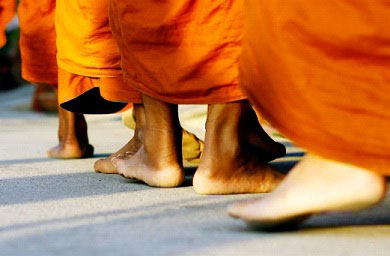
Scandal
It is within this historical context that the recent scandal must be understood. The case shocked the nation not only because of the severity of the allegations but because it shattered the public’s assumption that the monkhood remains a bastion of moral purity. Yet the shock itself reveals a collective denial. For years, Sri Lankan society has been aware, sometimes quietly, sometimes openly—of the growing gap between the ideal of the monk and the realities of modern monastic life. Stories of misconduct, financial irregularities, political manipulation, and abuse of authority have circulated with increasing frequency. But each incident has been treated as an isolated failure, a personal weakness, or an unfortunate exception. What has been missing is recognition that these incidents are symptoms of a deeper structural problem.
Seneviratne’s analysis helps illuminate this problem. When monks take on the work of kings, they inevitably enter domains of power that expose them to temptations the Vinaya was designed to avoid. Handling money, managing institutions, cultivating political patrons, and exercising authority over laypeople create opportunities for ego, ambition, and moral compromise. The monk who becomes a public figure is no longer shielded by the anonymity and humility of the renunciant life. Instead, he becomes a celebrity, a leader, and in some cases an object of uncritical devotion. This elevation brings with it a dangerous form of immunity. Laypeople who revere a monk for his public achievements may hesitate to question his behaviour. Politicians who rely on monastic support may protect him from scrutiny. The media, which often treats monks as moral authorities, may be reluctant to investigate allegations that challenge the sanctity of the robe.
The recent scandal illustrates how these dynamics can converge. The monk at the centre of the case was not an obscure figure. He was a respected preacher, charismatic leader, and head of a prominent institution. His public image was built on years of service, teaching, and community engagement. Yet it was precisely this public stature that allowed him to operate without meaningful oversight. The institutional structures around him, administrators, lay supporters, and junior monks, were either unwilling or unable to challenge his authority. The very qualities that made him a respected figure in the eyes of the public also made him untouchable within his own institution. When allegations finally emerged, they revealed not only personal wrongdoing but a systemic failure of accountability.
Failure that is not unique
This failure is not unique to one temple or one monk. It reflects a broader pattern within the modern Sangha. As monastic institutions have grown in size, wealth, and influence, their internal governance has struggled to keep pace. Many temples operate as semiautonomous entities controlled by a single monk or a small group of monks. Financial transparency is limited, administrative oversight is weak, and the mechanisms for addressing misconduct are often informal or ineffective. The traditional structures of monastic discipline, such as the Sangharama procedures for adjudicating offences, are rarely used in modern contexts, partly because they require collective participation and partly because they are illsuited to the complexities of contemporary institutional life. In practice, this means that monks who wield significant authority can act with little fear of internal sanction.
The politicisation of the Sangha has further complicated matters. Since the midtwentieth century, monks have played an increasingly prominent role in electoral politics, nationalist movements, and public policy debates. This involvement has given them access to political networks that can be mobilised to protect their interests. It has also created a culture in which monks are valued not for their adherence to the Vinaya but for their ability to influence public opinion, mobilise voters, or lend moral legitimacy to political causes. In such an environment, the monk who is politically useful may be shielded from criticism, while the monk who adheres strictly to the renunciant ideal may find himself marginalised or ignored.
The result is a profound distortion of monastic identity. The monk who once sought liberation from worldly attachments is now encouraged to cultivate influence, authority, and public recognition. The monk who once lived under the strict supervision of senior elders now operates in a world where independence is celebrated and oversight is minimal. The monk who once relied on laypeople for basic sustenance now controls vast resources, manages institutions, and commands the loyalty of thousands of followers. This inversion of traditional roles has created a fertile ground for moral deterioration.
Yet it would be a mistake to interpret this deterioration as evidence that the Sangha as a whole is corrupt. Many monks continue to live lives of remarkable discipline, humility, and spiritual dedication. In remote forest monasteries, small village temples, and meditation centres across the country, monks quietly uphold the ancient ideals of the renunciant life. They are not the ones who appear on television, lead political rallies, or manage large institutions. Their work is invisible, their influence subtle, and their commitment unwavering. The crisis facing the Sangha today is not a crisis of individual morality but a crisis of institutional identity. It is the product of a centurylong transformation that has blurred the boundaries between the monastic and the secular, the spiritual and the political, the renunciant and the worldly.
If Sri Lanka is to address this crisis, it must begin by acknowledging the structural nature of the problem. The temptation to treat each scandal as an isolated incident must be resisted. Instead, the country must confront the uncomfortable reality that the modern configuration of monastic life is fundamentally at odds with the principles of the Vinaya. The Sangha cannot simultaneously function as a political force, a social service provider, a media institution, and a spiritual community without compromising its integrity. The more monks are drawn into the world, the more vulnerable they become to the moral dangers that the Buddha warned against.
Reform, therefore, must focus not only on punishing individual offenders but on rethinking the institutional structures that enable misconduct. This includes strengthening internal governance, enhancing financial transparency, restoring the authority of senior elders, and reestablishing the communal practices that once ensured accountability. It also requires a broader cultural shift in how laypeople relate to monks. Blind devotion must give way to informed respect. Reverence must be balanced with responsibility. The robe must be honoured, but it must not be used as a shield against scrutiny.
Seneviratne’s work offers a valuable starting point for this rethinking. His analysis reminds us that the crisis facing the Sangha is not the result of moral decline alone but of historical forces that reshaped the identity of the monkhood. By tracing the evolution of the activist monk, he shows how the Sangha became entangled in the political and social structures of the modern nationstate. This entanglement has brought both benefits and dangers. It has allowed monks to play important roles in education, social welfare, and national development. But it has also exposed them to the corrupting influences of power, wealth, and public acclaim.
The challenge now is to disentangle the Sangha from these influences without undermining its ability to serve society. This will not be easy. The activist monk has become deeply embedded in the cultural and political fabric of the country. Many laypeople expect monks to be leaders, reformers, and guardians of national identity. Politicians rely on monastic support to legitimise their agendas. Media institutions depend on monks for content, commentary, and moral authority. Reversing this trend will require a collective effort from monks, laypeople, and political leaders alike.
Ultimately, the future of the Sangha depends on its ability to reclaim the renunciant ideal that lies at the heart of Buddhist monasticism. This does not mean withdrawing from society entirely, but it does mean reestablishing the boundaries that protect the monk from the dangers of worldly involvement. It means recognising that the true strength of the Sangha lies not in its political influence or institutional power but in its moral authority, its spiritual discipline, and its commitment to the path of liberation. The recent scandal, painful as it is, may serve as a catalyst for this reevaluation. It has exposed the vulnerabilities of the modern monastic system and forced the country to confront the consequences of a centurylong transformation.
To understand how the Vihara Devalegam Act relates to the perceived moral deformation of the clergy, it is necessary to examine how property management, state law, and monastic discipline intersect in the modern era. Historically stemming from the Buddhist Temporalities Ordinance No. 19 of 1931, this act serves as the primary legal framework governing the ‘temporalities’—meaning the secular wealth, extensive landholdings, and material donations belonging to Buddhist temples and shrines. While ancient kings granted these vast tracts of land to support the monkhood’s spiritual pursuits, the modern codification of this law has inadvertently fostered a system where property rights frequently supersede spiritual accountability.
The core of the crisis lies in the commercialisation of the monastic order that this legal framework enables. By treating temple lands as economic assets and vesting absolute administrative power in individual chief monks or lay trustees, the act has contributed to the rise of what critics term a monastic middle class. Access to vast, unregulated financial resources, rent from lands, and corporate donations has fundamentally shifted the focus of certain segments of the clergy away from the traditional path of worldly renunciation and spiritual guidance. Instead, it has driven a preoccupation with business investments, the accumulation of private capital, and luxury lifestyles, which deeply alienates a public looking to the Sangha for moral leadership.
The institutional flaws embedded in the Vihara Devalegam Act find a stark, real-world manifestation in the recent criminal case involving Venerable Pallegama Hemarathana Thero. As the chief priest of Anuradhapura and the custodian of the Atamasthana—the eight highly venerated Buddhist shrines, including the sacred Jaya Sri Maha Bodhi—Hemarathana Thero occupied one of the most powerful and wealthy positions within the Sri Lankan Sangha. His arrest on charges of sexual abuse of a minor girl perfectly illustrates how the structural defects of the Act facilitate not only moral decay but also the systemic obstruction of justice.
The core of this intersection lies in the vast, unaccountable wealth generated by the temporalities of the Anuradhapura shrines. Under the Vihara Devalegam Act, the chief custodian exercises immense, virtually unchecked control over temple revenues, state-backed land management, and millions of rupees in daily donations from millions of global pilgrims. It is precisely this immense financial liquidity that enabled the alleged deployment of vast sums of money to the victim’s family.
Furthermore, the situation underscores the profound policy failures cited regarding the helplessness of the monastic hierarchy and state enforcement. When child protection authorities initially attempted to act, the National Child Protection Authority noted severe delays and institutional resistance, stating they practically had to force the police to execute the arrest. The monk’s immediate retreat to a private hospital in Colombo upon the advancement of the criminal probe, followed by his release on bail, mirrors the exact loop described where wealthy monastics deploy high-priced legal defence teams funded directly or indirectly by their institutional positions. Because the Vihara Devalegam Act does not provide a mechanism for the immediate, unconditional forfeiture of temporal administrative rights upon a criminal indictment, the accused retains his structural power throughout the legal process. The Pallegama Thero scandal stands as definitive proof that without a fundamental overhaul of how temple wealth is legally governed and disciplined, the material benefits guaranteed by ancient temporalities will continue to shield the worst elements of moral deformation from the rule of law.
If Sri Lanka can learn from this moment and if it can recognise the structural roots of the crisis and commit to meaningful reform, then the Sangha may yet emerge stronger, more disciplined, and more faithful to its ancient ideals. But if the country continues to treat each scandal as an isolated failure and if it continues to ignore the deeper institutional problems that Seneviratne identified, then the moral deterioration we see today will only deepen. The work of kings, when performed by monks, carries a heavy price. It is time to decide whether that price is worth paying.
by Professor Amarasiri de Silva
Features
Kondachchi wind farm and battery storage project to boost energy security, says Power Ministry Secretary


The Power and Energy Ministry’s drive towards energy security and renewable energy expansion received a major boost yesterday with the signing of a tripartite cooperation agreement for the development of the 150 MW Kondachchi Wind Power Project and an integrated Battery Energy Storage System (BESS) in Mannar.
The agreement was signed at the Ministry of Power auditorium under the patronage of Power Minister Anura Karunatilaka and Deputy Power Minister Arkam Ilyas.
Speaking at the event, Ministry Secretary G. M. R. D. Aponsu described the project as a transformative investment that would strengthen the country’s electricity network while supporting Sri Lanka’s transition towards cleaner energy sources.
“The Kondachchi Wind Power Project represents a significant milestone in Sri Lanka’s renewable energy journey. By combining large-scale wind generation with advanced battery energy storage technology, we are creating a more resilient and reliable power system capable of meeting future energy demands while reducing dependence on imported fossil fuels,” Aponsu said.
The project will be developed at Silavathurai in the Kondachchi area of Mannar on lands owned by the Sri Lanka Cashew Corporation. It is expected to utilise some 31 modern wind turbines with a total installed capacity of at least 150 MW.
Aponsu said the inclusion of an integrated battery storage facility would help address the variability associated with wind power generation and ensure stable electricity supply to the national grid.
“The battery energy storage component is a key feature of this project. It will enable the efficient integration of renewable energy into the grid and enhance overall system stability, which is essential as Sri Lanka increases the share of renewables in its energy mix,” he said.
According to the Ministry, the wind farm is expected to generate nearly 525 gigawatt-hours of electricity annually, significantly reducing the country’s expenditure on imported fuel and strengthening national energy security.
The project is also expected to contribute to Sri Lanka’s climate commitments by reducing carbon dioxide emissions by an estimated 372,750 tonnes annually.
“This investment delivers both economic and environmental benefits. It will reduce greenhouse gas emissions, support sustainable development objectives and help Sri Lanka move closer to achieving its renewable energy and climate targets,” Aponsu noted.
The project will be implemented under a Public-Private Partnership (PPP) arrangement using the Build, Own and Operate (BOO) model. The Asian Development Bank is providing technical and financial advisory support through its Transaction Advisory Services programme.
The signing ceremony was attended by Pradeep Perera, Chairman of the National System Operator (Pvt) Ltd., and Takeyo Koike, Head of Market Development and Public-Private Partnership Division of the ADB, among other distinguished guests.
The Ministry said comprehensive Environmental Impact Assessments and avifaunal studies have been undertaken to ensure minimal impacts on bird populations, nearby communities and agricultural lands. A dedicated 220-kilovolt transmission system will also be constructed to connect the project to the national grid.
“The Kondachchi Wind Farm is a strategic national project that will help secure Sri Lanka’s energy future while accelerating the country’s transition towards sustainable and affordable electricity generation,” Aponsu said.
Energy sector experts view the project as one of the most important renewable energy initiatives currently being pursued in Sri Lanka, combining utility-scale wind generation with modern energy storage technology to enhance grid reliability and long-term energy sustainability.
By Ifham Nizam
Features
Saudi Arabia sets new benchmark in Hajj management as 1.7 million pilgrims complete sacred journey
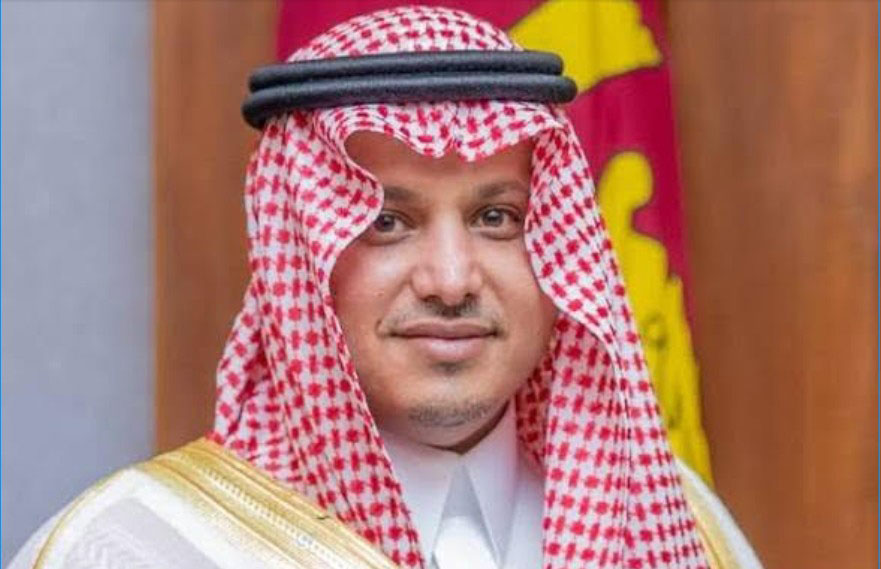
Interview with Khalid Hamoud Al-Kahtani, Ambassador of the Kingdom of Saudi Arabia to Sri Lanka
Saudi Arabia has once again demonstrated its unparalleled capacity to manage one of the world’s largest annual religious gatherings, with this year’s Hajj pilgrimage concluding successfully despite extreme temperatures and the immense logistical challenge of accommodating more than 1.7 million pilgrims from around the world.
In an exclusive interview with The Island, Khalid Hamoud Al-Kahtani, Ambassador of the Kingdom of Saudi Arabia to Sri Lanka, described the 2026 Hajj season as a resounding success, crediting the achievement to the visionary leadership of the Custodian of the Two Holy Mosques, His Royal Highness the Crown Prince and Prime Minister, and the coordinated efforts of multiple government agencies working around the clock to serve pilgrims.
The Ambassador noted that nearly 3,500 Sri Lankan pilgrims participated in this year’s Hajj under the quota allocated to Sri Lanka, benefiting from enhanced healthcare services, sophisticated crowd-management systems, expanded shaded areas and cutting-edge digital solutions introduced by the Kingdom.
With Saudi Arabia continuing to invest heavily in infrastructure, technology and pilgrim services under Vision 2030, Ambassador Al-Kahtani said the Kingdom remains committed to ensuring that pilgrims from around the world perform their religious duties in safety, comfort and tranquility.
The Saudi envoy also highlighted the growing partnership between Saudi Arabia and Sri Lanka, emphasising expanding cooperation not only in Hajj affairs but also in trade, investment, education, culture and institutional exchanges.
Following are excerpts of the interview:
Q: How do you assess this year’s Hajj season?
Ambassador Al-Kahtani: This year’s Hajj season was a resounding success, thanks to the Almighty Allah and the integrated efforts of the government of the Kingdom of Saudi Arabia, led by the Custodian of the Two Holy Mosques and His Royal Highness the Crown Prince and Prime Minister. This success was reflected in the efficiency of crowd management, the quality of services provided to the Hajj pilgrims and the effective coordination among the various relevant authorities, which enabled pilgrims to perform their rituals in an atmosphere of security, tranquility and ease.
Q: How many Sri Lankan pilgrims performed Hajj this year?
Ambassador Al-Kahtani: The number of Hajj pilgrims from the Democratic Socialist Republic of Sri Lanka reached approximately 3,500, within the quota allocated to Sri Lanka for this season.
Q: Are there any discussions regarding increasing Sri Lanka’s quota in the future?
Ambassador Al-Kahtani:Hajj quotas are determined according to approved regulatory mechanisms that take into account a range of considerations. The relevant authorities in the Kingdom continue to study various aspects related to developing Hajj services and accommodating the allocated numbers for all countries, in coordination with the concerned parties.
Q: What were the most prominent special arrangements implemented this year?
Ambassador Al-Kahtani: The operational plans for this season focused on enhancing the safety and comfort of the Hajj pilgrims, especially given the climatic conditions and high temperatures. Measures included expanding shaded areas, increasing water distribution points and enhancing health and ambulance services, in addition to developing the transportation system and traffic management within the holy sites.
Q: What are the most prominent digital systems and smart services that were provided?
Ambassador Al-Kahtani:The Kingdom continues to implement its digital transformation objectives for the Hajj and Umrah system. The scope of electronic services offered through the Nusuk platform and application has been expanded, along with the development of digital systems for issuing permits, managing crowds, guidance and health services. This contributes to increasing the efficiency of services and improving the pilgrim’s experience at all stages of their journey.
Q: How were the challenges of overcrowding and heat addressed?
Ambassador Al-Kahtani: The relevant authorities adopted an integrated crowd-management system based on modern technologies and real-time data analysis. This was coupled with intensified health-awareness campaigns, expanded organised movement routes and increased deployment of field, medical and emergency teams. These measures support the safety of the Hajj pilgrims and reduce the risks associated with crowd density and climatic conditions.
Q: Were there special services for the elderly and sick?
Ambassador Al-Kahtani: Yes. The Kingdom paid special attention to the elderly and people with special health needs by providing specialized medical services, assistive transportation and facilities equipped to meet their needs, in addition to field teams working to provide humanitarian support and necessary healthcare throughout the Hajj period.
Q: How successful was the Kingdom in combating irregular Hajj permits?
Ambassador Al-Kahtani: The relevant authorities in the Kingdom continued to rigorously implement the regulations and instructions governing Hajj, utilising modern technologies and advanced monitoring procedures to reduce violations related to irregular Hajj. These efforts contributed to enhancing the safety of pilgrims, improving crowd-management efficiency and maintaining the smooth flow of movement within the holy sites.
Q: How would you describe Saudi-Sri Lankan cooperation in organising Hajj?
Ambassador Al-Kahtani: Cooperation between the Kingdom of Saudi Arabia and the Republic of Sri Lanka is characterised by continuous and constructive coordination in all matters related to Hajj. The relevant authorities in both countries work jointly to ensure the provision of the best services for Sri Lankan pilgrims and enable them to perform their rituals with ease and peace of mind.
Q: How many Hajj pilgrims were there globally, and what were the main challenges?
Ambassador Al-Kahtani: According to official statistics, the number of Hajj pilgrims this year reached 1,707,301 from various countries around the world. The main challenges included managing large crowds, ensuring public safety and providing health, transportation and accommodation services within a specific geographical and temporal scope. These challenges were addressed through advanced and integrated operational plans, which contributed to the smooth and successful completion of the Hajj season.
Q: Are there any future expansion projects?
Ambassador Al-Kahtani: The Kingdom continues to implement strategic development projects within the framework of Vision 2030, including developing the infrastructure in Makkah and the Holy Sites, and enhancing transportation networks and smart services. This contributes to raising the quality of services provided to pilgrims and Umrah performers and improving their long-term experience.
Q: How are Saudi-Sri Lankan relations strengthened outside the context of Hajj?
Ambassador Al-Kahtani: Relations between the Kingdom of Saudi Arabia and the Republic of Sri Lanka are witnessing continuous development in many areas, including political, economic, trade, cultural and educational cooperation, in addition to developing exchanges between institutions and the private sector. This reflects the two countries’ keenness to strengthen the bilateral partnership and achieve common interests.
Q: What message would you like to convey to Sri Lankan Muslims?
Ambassador Al-Kahtani: We extend our sincere congratulations to the Hajj pilgrims who have completed their Hajj rituals, and we ask Almighty Allah to accept their pilgrimage. We also assure Muslims in Sri Lanka that the Kingdom of Saudi Arabia places serving the Two Holy Mosques and the guests of Almighty Allah at the forefront of its priorities and continues to develop the Hajj and Umrah system to achieve the highest standards of quality and safety.
By Ifham Nizam

Qualifier Chwalinska sets up final against Andreeva

Zelensky proposes face-to-face talks in open letter to Putin

President Commissions Offshore Patrol Vessel ‘Samudra Vijaya’ into Sri Lanka Navy

Shreyas Iyer to replace Suryakumar Yadav as India’s T20I captain

Pakistan hold their nerve to take series in low-scoring scrap

Robinson routs New Zealand top-order as England hit back on 16-wicket day

‘Dates have the highest sugar content to fight Coronavirus’

Sunday Island 27 December – Headlines

#SundayIsland 17th December – Headlines

Sunday Island – 28th March

Sunday Island Headlines – 21 March

Sunday Island – 21st February – Headlines
-

 News3 days ago
Lankan duo emerge winners in Latin dance championship held in Blackpool, UK
-

 News6 days ago
IMF urges Lanka not to meddle with exchange rate
-

 Business4 days ago
IMF’s unstated rate:Sri Lanka’s $695m loan costs about 5.33% per annum
-
 News6 days ago
State of emergency extended
-
 Features5 days ago
Are threats to Buddha Sasana external or from within?
-

 Business4 days ago
Sri Lankan scientist-innovator Milinda Edirisinghe introduces AI-integrated gem testing system to gemological world
-

 Latest News1 day ago
Kusal Mendis, Pathum Nissanka, bowlers put Sri Lanka 1-0 up
-
 News4 days ago
UNP challenges NPP move to amend Vihara – Devalagam Act