
News
`People swept away by economic tsunami’ -Eran

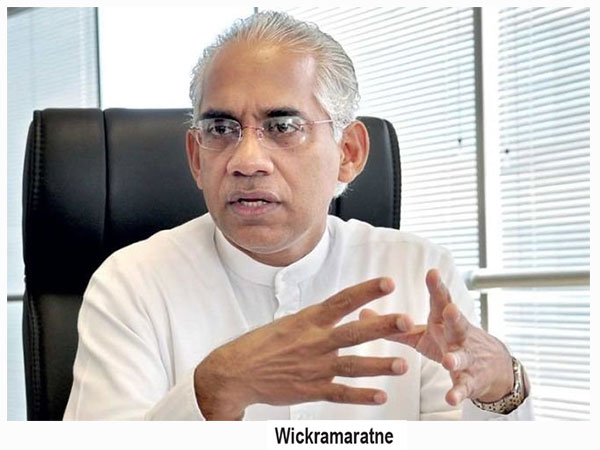
The main opposition SJB says that Sri Lanka is the only country in the world that has faced unprecedented price increases of essential commodities such as gas and fuel.
Addressing the media at the SJB office in Kirulapone, SJB MP Eran Wickramaratne on Sunday said that during the same period Sri Lanka degenerated into a dangerous situation with regard to its foreign exchange reserves.
Wickramaratne said even the countries in the Asian region had recorded a positive GDP growth, FDI and foreign reserves.
Before the start of the press conference, Wickramaratne observed a two-minute silence in remembrance of the tsunami victims, where over 35,000 Sri Lankans were killed 17 years ago on Boxing Day 2004.
Wickramaratne said that Sri Lankans were looking for solutions brought forward by an individual, a President, which had been greatly disappointing. As a result, the country had plunged into an Economic disaster through autocratic policies and family rule.
“In a society problems are complex and there are no easy solutions. There is a need for a wise leader who should have the support of a team who are honest and have proven expertise and experience in governance and economic management. People’s belief in an individual’s ability to steer the nation has ended in disarray ushering autocratic family rule. Higher officials take no responsibility for decision-making as their views and opinions are often disregarded.”
“Because of this family rule, the higher officials say they were not part of the decision-making process even though they were present at such discussions. Even the Cabinet of Ministers claims that they were not aware of Cabinet decisions, even though the Cabinet secretary has publicised those decisions. It proves the decisions are taken by a closed coterie, and the ministers have become just on-lookers. Recently, the Agricultural Ministry Secretary, who is an agricultural scientist, was removed from his position as he warned of the possibility of starvation due to the decision not to import chemical fertiliser. The Secretary had pointed out that it was due to ill advice and a dead rope given to the President by people who did not know the subject,” the former banker turned politician said.
Elaborating further, the MP explained that the promotion of myths and lies made people believe in an individual or family being able to rescue the nation. Speaking on corruption that had engulfed the country, he pointed out that millions of dollars had been paid for unseen aircraft and unseen fertiliser.
He said that Sri Lanka was an exception where revenue from exports, foreign direct investment had gone down due to economic mismanagement rather than the Covid pandemic. Almost all countries were affected by the pandemic, but not a single country was as badly affected as Sri Lanka, because of better economic management in those countries.
“The people of this country are being swept away by the economic tsunami just as they were swept away by the tsunami in 2004,” he said.
The MP referred to the irrational management of the exchange rate and forcing Sri Lankan workers overseas to convert their Dollar remittances at banks at Rs 200 per Dollar while the gray market was over Rs 250 per Dollar. The overvalued Sri Lankan Rupee logically encourages exporters to under invoice their exports in Dollars. Poor exchange rate management has caused foreign reserves to plunge to dangerously low levels.
Over 1.5 trillion Rupees of money printing by the Central Bank has been the main contributory factor pushing inflation into double digits within a short period. The average inflation rate of 2014-2019 of 3.5% has shot up to an average inflation rate of over 10% in 2019-2021. The inflation rate in November has exceeded 11%, Wickramaratne said.

The National Business Facilitation Centre (NBFC), which is being established under the Presidential Secretariat with the aim of removing administrative and regulatory barriers that exist among government institutions in relation to investment and industry and expediting these processes, will be opened tomorrow (22).
The centre is being established on the President’s initiative with the aim of bringing about a positive transformation in the industrial sector. The centre will provide solutions to issues that arise in dealing with the government machinery when starting and operating a business, while also coordinating with the relevant government institutions to provide the necessary facilities.
The “ViYASA” National Business Facilitation Centre (NBFC) has been established at Building C-80, Hector Kobbekaduwa Mawatha, Colombo 07, and is headed by Senior Additional( Secretary to the President, Seevali Arukgoda.
The centre will be opened under the patronage of Minister of Labour and Deputy Minister of Finance and Planning Dr Anil Jayantha Fernando and Minister of Industry and Entrepreneurship Development Sunil Handunnetti, with the participation of Secretary to the President Dr Nandika Sanath Kumanayake.
The website https://nbfc.presidentsoffice.gov.lk is also scheduled to be officially launched on the occasion.
President’s Media Division)
Latest News
Court of Appeal Judge M. Sri Mevan Anthony Edirimannasuriya Corea appointed as Acting President of the Court of Appeal

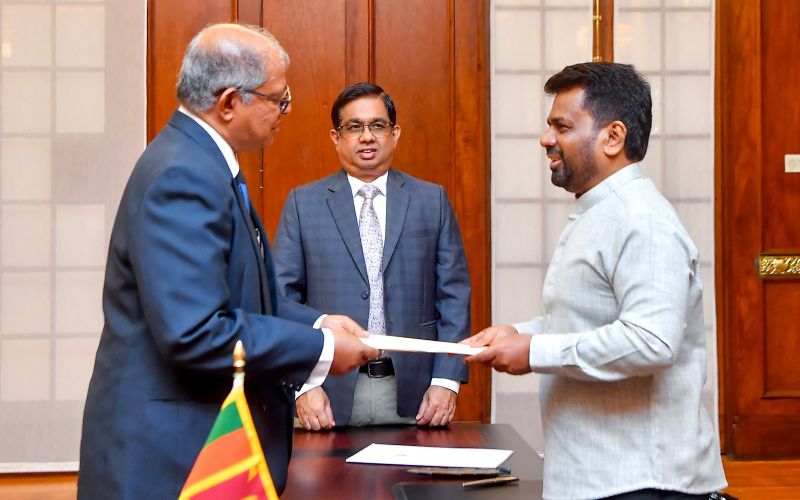
President Anura Kumara Dissanayake has appointed Court of Appeal Judge Mayadunna Sri Mevan Anthony Edirimannasuriya Corea as the Acting President of the Court of Appeal.
The appointment has been made as President’s Counsel Nalin Rohantha Abeysuriya, who currently serves as President of the Court of Appeal, will be overseas until the 24th.
Accordingly Judge Mayadunna Corea was sworn in as Acting President of the Court of Appeal before President Anura Kumara Dissanayake at the Presidential secretariat this morning (21).
Secretary to the President Dr Nandika Sanath Kumanayake was also present at the occasion.
(President’s Media Division)
Latest News
President instructs expediting further measures concerning Sivarasa Anojan, sentenced to death in Saudi Arabia
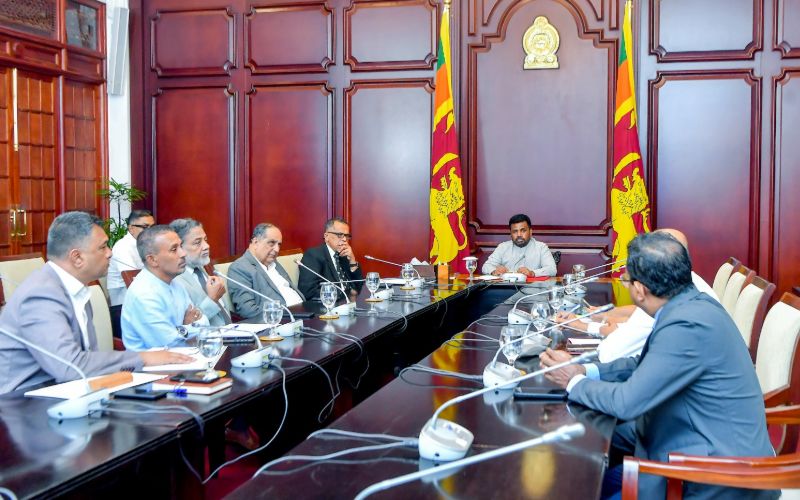
A discussion to review the further measures that could be taken regarding Sivarasa Anojan, a young Sri Lankan national who has been sentenced to death in Saudi Arabia, was held at the Presidential Secretariat this afternoon (21), under the patronage of President Anura Kumara Dissanayake.
The discussion focused on the measures taken to date concerning Sivaraasa Anojan and the further diplomatic and legal steps that could be pursued. Attention was also given to expediting the necessary further measures that could be taken to secure his release.
President Anura Kumara Dissanayake instructed officials to continue the necessary diplomatic engagement with the relevant authorities in Saudi Arabia and to maintain close and continuous involvement in all further measures concerning the case.
Reaffirming the Government’s continued attention to the safety and welfare of Sri Lankans living and working overseas, the President also stressed the need for the relevant ministries and institutions to work in close coordination and pursue all possible measures that could be taken in connection with the case.
Deputy Speaker Rizvie Salih, Deputy Minister of Religious and Cultural Affairs Muneer Mulaffer, Governor of the Western Province Hanif Yusoof, Secretary – Ministry of Foreign Affairs, Foreign Employment and Tourism Aruni Ranaraja, Secretary to the Ministry of Defence Air Vice Marshal Sampath Thuyacontha (Retd), Attorney General Parinda Ranasinghe and officials of the Ministry of Foreign Affairs, Foreign Employment and Tourism were also present at the discussion.
(President’s Media Division)

“ViYASA” National Business Facilitation Centre (NBFC) to be opened tomorrow (22)

Court of Appeal Judge M. Sri Mevan Anthony Edirimannasuriya Corea appointed as Acting President of the Court of Appeal

President instructs expediting further measures concerning Sivarasa Anojan, sentenced to death in Saudi Arabia

It’s Shafali vs Athapaththu as Sri Lanka seek to stop India juggernaut

Trophy row unlikely to repeat in Japan

Powerful explosions at Syrian army site near Aleppo injure at least four

‘Dates have the highest sugar content to fight Coronavirus’

Sunday Island 27 December – Headlines

#SundayIsland 17th December – Headlines

Sunday Island – 28th March

Sunday Island Headlines – 21 March

Sunday Island – 21st February – Headlines
-

 News5 days ago
US embassy won’t comment on IGP’s probe into joint drug raid
-

 News4 days ago
Bid for Basil’s extradition nears final stage: Police
-

 News3 days ago
Shanakiyan urges urgent action over reported death sentence for Lankan in Saudi Arabia
-

 Features7 days ago
The emptying university: why are academics leaving?
-

 Business5 days ago
All-new Bolero MaXX unveiled in Sri Lanka
-
 Opinion7 days ago
Who committed genocide and created mass graves in Sri Lanka?
-

 News2 days ago
Namal Rajapaksa Buddhist gambit fails, bail denied
-
 Opinion5 days ago
A journalist who wrote across the divide