
Business
Fitch Rating downgrade was due to govt failure to implement correct financial policies, says UNP

The UNP says that the Fitch Rating agency’s downgrading Sri Lanka to a rank of CC indicated an increased probability of a default event in coming months in light of the country’s worsening external liquidity position and drop in foreign-exchange reserves.
Addressing a press conference held at the party headquarters Sirikotha, UNP Chairman and former minister Wajira Abeywardena said that it could not accept the excuse given by the government that the downgrading was a consequence of the COVID-19 pandemic.
“During the same period, except for a few countries such as Sri Lanka, all other countries around the world have strengthened their dollar reserves. Therefore, it is not an excuse that could be accepted as the real cause for this problem. It is nothing but a failure to implement correct financial policies,” he said.
The UNP Chairman said that Fitch has downgraded Sri Lanka to ‘CC’ from ‘CCC’. They did so, stating that there was an increased probability of default as liquidity injections made to sterilize interventions and enforce a 6.0 percent policy rate continue to drain reserves and create forex shortages. This downgrade signals a probability of a default event in coming months in light of Sri Lanka’s worsening external liquidity position underscored by a drop in foreign-exchange reserves set against high external debt payments and limited financing inflows. “We are confronted with the danger of the collapse of the economy. We see the signs of economic collapse. These signs prevent investors coming to this country,” Abeywardena said.
He said that Fitch maintains issuer default ratings from AAA to D. The AAA ratings denote the lowest expectation of default risk. They are assigned only in cases of exceptionally strong capacity for payment of financial commitments. This capacity is highly unlikely to be adversely affected by foreseeable events. Ratings AA stands for very high credit quality denoting expectations of very low default risk. They indicate a very strong capacity for payment of financial commitments. This capacity is not significantly vulnerable to foreseeable events. The ‘A’ ratings denote expectations of low default risk. The capacity for payment of financial commitments is considered strong. This capacity may, nevertheless, be more vulnerable to adverse business or economic conditions than is the case for higher ratings. The BBB ratings indicate that expectations of default risk are currently low. The capacity for payment of financial commitments is considered adequate, but adverse business or economic conditions are more likely to impair this capacity. The ‘BB’ ratings indicate an elevated vulnerability to default risk, particularly in the event of adverse changes in business or economic conditions over time; however, business or financial flexibility exists that supports the servicing of financial commitments. The ‘B’ ratings indicate that material default risk is present, but a limited margin of safety remains. Financial commitments are currently being met; however, capacity for continued payment is vulnerable to deterioration in the business and economic environment. The ratings of CCC where Sri Lanka had been until last week denote substantial credit risk with very low margin for safety. Default is a real possibility at that stage. The CC is the current rating status of Sri Lanka with very high levels of credit risk and default of some kind appears probable. Hereafter we have three more ratings. The next worst could be ‘C’ ratings showing a near default. It is the stage where a default or default-like process has begun, or the issuer is in standstill, or for a closed funding vehicle, payment capacity is irrevocably impaired. Then comes RD ratings which indicate an issuer that in Fitch’s opinion has experienced an uncured payment default or distressed debt exchange on a bond, loan or other material financial obligation, but has not entered into bankruptcy filings, administration, receivership, liquidation, or other formal winding-up procedure, and has not otherwise ceased operating. At the bottom there is D ratings indicating an issuer that in Fitch’s opinion has entered into bankruptcy filings, administration, receivership, liquidation or other formal winding-up procedure or that has otherwise ceased business.









The Ceylon Motor Traders’ Association (CMTA), established in 1919 is the most senior automotive association in Sri Lanka affiliated with the Ceylon Chamber of Commerce, is calling for greater consistency, transparency and fairness in the policies governing the country’s automotive sector, stressing that a sustainable vehicle import framework must ensure a level playing field across the entire industry.
The Association’s concerns come at a time when the automotive sector continues to operate under significant fiscal and regulatory pressures, with recent policy measures, including the introduction of a 50% surcharge on vehicles, adding further complexity to an already challenging market. While the CMTA recognises the Government’s need to manage foreign exchange, generate revenue and regulate vehicle imports responsibly, it believes that such measures must be structured in a manner that does not disproportionately disadvantage legitimate businesses or distort competition between different segments of the market.
At the centre of the Association’s concerns is the continued application of a blanket 15% depreciation on the Cost, Insurance and Freight (CIF) value of used vehicle imports for duty calculation purposes. The CMTA maintains that this mechanism creates an unintended advantage for certain used vehicle imports, particularly when vehicles entering Sri Lanka as used units can be virtually identical to brand-new vehicles in terms of model, specification and, in most cases, mileage.
The Association estimates that the existing depreciation mechanism resulted in approximately Rs. 40 billion in lost to government revenue in 2025 alone. Without corrective action, a similar level of revenue leakage could occur in 2026, representing a significant loss at a time when government revenue remains critical to strengthening public finances and supporting national development.
The issue, the CMTA emphasises, is not about restricting consumer choice or opposing the used vehicle market rather, it is about ensuring that vehicles entering the country are assessed fairly and consistently, based on their actual value and circumstances. When two substantially identical vehicles can attract different levels of taxation simply because one has been registered overseas before being imported, the Association believes the resulting disparity warrants policy reconsideration.
The CMTA argues that the same principle of fairness should also apply when considering the impact of newer fiscal measures, including the recent 50% surcharge. Such a substantial additional cost can have implications across the automotive value chain, affecting vehicle prices, consumer affordability, business viability and the broader ecosystem supporting vehicle sales and after-sales services.

Sampath Bank PLC announced the appointment of Dilip de S Wijeyeratne as Deputy Chairman, effective 10th September 2026, further strengthening the Bank’s leadership as it advances its strategic priorities and continues to evolve as a purpose-led, technology-enabled financial institution.
Wijeyeratne brings extensive experience across banking, finance, risk management and compliance, investment banking and treasury, complemented by a strong understanding of corporate governance, strategic planning and financial markets. His breadth of experience and forward-looking perspective will support Sampath Bank’s focus on translating purpose and strategy into sustainable growth, while advancing data-driven decision-making and the intelligent application of artificial intelligence across the organisation.
Wijeyeratne’s association with Sampath Bank spans nearly eight years. He joined the Bank as a Non-Independent, Non-Executive Director in November 2018 and was appointed an Independent Director in August 2019. He subsequently served as Senior Independent Director from May 2022 and continued as an Independent, Non-Executive Director from June 2026. He currently serves as Chairman of the Board Audit Committee and contributes to the Bank’s Sustainability, Human Resources and Remuneration, Treasury, Strategic Planning, Nominations and Governance, and Related Party Transactions Review committees.
A senior finance and banking professional and principal consultant,Wijeyeratne provides advisory services to organisations across the Middle East, Sri Lanka and Australia. His professional career includes senior roles with HSBC Group in Bahrain, where he held responsibility for finance and operations, global markets and treasury, corporate treasury sales and asset and liability management. He subsequently moved into entrepreneurship and advisory services, providing financial and strategic consultancy to private and public sector organisations.
In addition to his responsibilities at Sampath Bank, Wijeyeratne serves as Senior Independent Director of Singer (Sri Lanka) PLC and Hayleys Fibre PLC, and as an Independent, Non-Executive Director of Janashakthi Insurance PLC. His extensive governance experience across these institutions has provided him with broad exposure to financial oversight, risk, strategy and corporate governance.
Wijeyeratne is a Fellow Member of the Institute of Chartered Accountants of Sri Lanka, a Fellow Member of the Chartered Institute of Management Accountants, UK, and a Graduate Member of the Australian Institute of Company Directors. His combination of financial expertise, governance experience and strategic insight positions him to make a significant contribution to Sampath Bank’s continued growth and transformation.
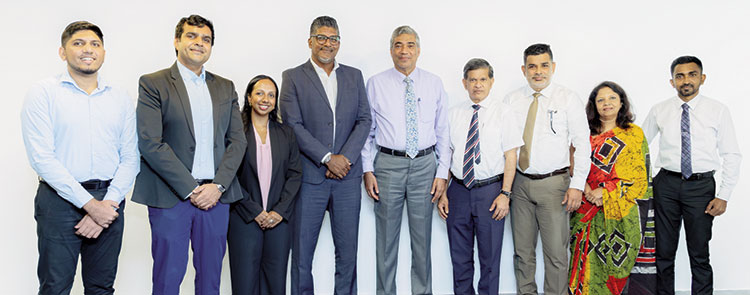
KOKO, Sri Lanka’s leading Buy Now, Pay Later (BNPL) platform, has partnered with Ceylinco General Insurance to introduce Sri Lanka’s first customised medical insurance offering designed exclusively around the needs of KOKO customers.
The partnership marks a first for Sri Lanka’s fintech and insurance sectors, bringing together Ceylinco General Insurance’s decades of expertise in health insurance with KOKO’s understanding of its customer community to create a medical protection solution built specifically for the digital lifestyle and financial needs of KOKO users.
Unlike a standard health insurance product adapted for a partner platform, this offering has been developed as a customised value package for KOKO customers, focusing on accessibility, affordability and ease of activation within the digital journey they already use. The policy provides medical insurance cover of up to USD 40,000, offering meaningful protection against hospitalisation, treatment costs and major medical expenses.

ITS Giuseppe Garibaldi’ departs Colombo

Green Climate Fund (GCF) Regional Dialogue for East and South Asia will be held from 14 to 17 September 2026 at Cinnamon Life at City of Dreams Hotel, Colombo

Showers will occur in the Western, North-western and Sabaragamuwa provinces and in Kandy, Nuwara-Eliya, Galle and Matara districts

Prof. Pieris says Buddha Dhamma recognised as source of law under Constitution

GR leaves FCID after making statement over MiG deal

Dengue cases top 97,000 in 2026

‘Dates have the highest sugar content to fight Coronavirus’

Sunday Island 27 December – Headlines

#SundayIsland 17th December – Headlines

Sunday Island – 28th March

Sunday Island Headlines – 21 March

Sunday Island – 21st February – Headlines
-

 Sports2 days ago
DDS set to lose Test captaincy
-

 Latest News7 days ago
Tharanga creates history with Diamond League crown in Brussels
-

 Features6 days ago
After the parade: What a traffic OIC’s walk-out tells us
-

 News7 days ago
Dispute which triggered listed company director being detained at BIA resolved
-

 Editorial6 days ago
Arrests as theatre
-

 Latest News6 days ago
Harshitha’s composed knock seals Sri Lanka’s semi-final berth
-

 News5 days ago
Thailand shuts door on undesirables from Sri Lanka
-

 News6 days ago
‘Choka Malli’ slips out of country before travel ban