
News
HRW urges US to ratchet up pressure on SL


Sri Lanka’s current economic crisis, and presumably growing anxieties about China’s dominance over its affairs are opportunities for Japan, the European Union, and United Kingdom to offer Sri Lanka renewed support and communicate if human rights improvements occur, Asia Advocacy Director at Human Rights Watch John Sifton told the Hearing of United States House of Representatives Tom Lantos Commission on Human Rights
Sifton said that in recent months, amid a worsening economic situation, the Rajapaksa government had begun reacting to international pressure over human rights by offering vague promises of reform to foreign diplomats, especially from the European Union, which is conducting a periodic review of rights-linked trading preferences enjoyed by Sri Lanka, known as GSP plus.
“This rhetoric is belied by the government’s actions. In particular, the Rajapaksa administration has issued vague promises to reform the Prevention of Terrorism Act, which it continues to use to target Tamils and Muslims, perceived opponents of the government, and members of civil society groups, with prolonged arbitrary detention,” he said.
Given below are his recommendations for the US government on Sri Lanka: “First, US government officials, including members of Congress, should continue pressing the Sri Lankan government on the importance of repealing or substantially amending the Prevention of Terrorism Act and ending the harassment and intimidation of human rights defenders and other critics of the government. US government officials should be urging the government of Sri Lanka to scrap recommendations from the commission on “political victimization.” And the United States should maintain its renewed engagement on Sri Lanka resolutions at the UN Human Rights Council.
“The United States should engage with allies to implement a coordinated and concerted strategy to protect human rights and civil society space in Sri Lanka. The Rajapaksa government has turned to China for various reasons, including providing diplomatic cover for its abusive laws and policies, but Sri Lanka’s most important economic relationships are with the United States, European Union, and India.
“Congress should also communicate clearly – to both the Biden administration and the government of Sri Lanka – that failure to address Sri Lanka’s human rights situation will imperil current and future military-to-military engagements and better economic relations. The US should also be harnessing other allies – in particular the European Union – to keep pressure on the Rajapaksa government.
“The country’s current economic crisis, and presumably growing anxieties about China’s dominance over its affairs, are opportunities for concerned democratic countries – Japan, the European Union, and United Kingdom – to offer Sri Lanka renewed support and communicate that more can be provided if human rights improvements occur.
“At the same time, the US should make clear that it cannot engage with security officials credibly implicated in gross human rights abuses. The US government has no choice but to engage with President Rajapaksa himself, the country’s head of government, with whom the US must engage as a matter of necessity and diplomatic protocol. But State Department and Pentagon officials and officers should continue to make clear that engagement is impossible with persons and units credibly implicated in human rights, and that Sri Lanka must take steps to hold such persons and units responsible for abuses. In the absence of accountability, the US has no choice but to consider imposing targeted sanctions on those persons and units, under the US Global Magnitsky Act.
“The United States has already imposed a travel ban on chief of defense staff Gen. Silva, for his alleged responsibility for war crimes. The US should also impose targeted sanctions on others in the government credibly linked to serious human rights abuses; and the US government should communicate that these sanctions will remain in place until human rights improvements are seen.
“The United States should ensure that members of the Sri Lankan security forces deployed on UN peacekeeping missions are subjected to independent vetting. Vetting has until now been conducted by the Human Rights Commission of Sri Lanka, which lacks independence following the adoption of the 20th amendment to the constitution.
“Lastly, given the inconclusive results so far of Sri Lankan investigations into the 2019 Easter Bombings, the United States should push for a prompt, impartial, and credible conclusion. The United States and other governments should also examine evidence of transnational corruption and money laundering in cases where the presidential commission on “political victimization” has sought to block domestic investigations.”

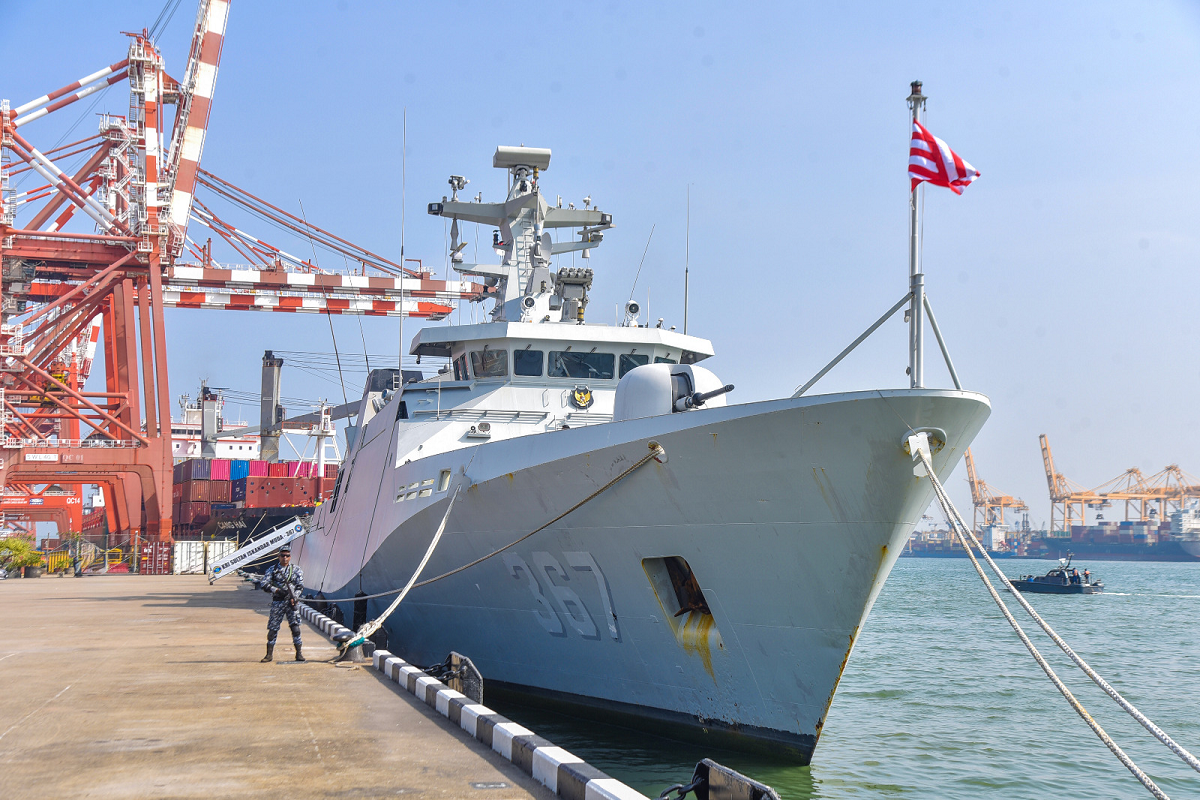
The Indonesian Naval Ship, ‘KRI SULTAN ISKANDAR MUDA – 367’, arrived at the port of Colombo today (22 Jan 26) on a scheduled port call for logistics replenishment and a goodwill mission.
In keeping with time-honored naval tradition the ship was accorded a ceremonial welcome upon arrival.
The 90.71m – long Sigma Corvette FS is commanded by Commander Annugerah Anurullah.
During the stay in Colombo, the crew members of the ship are expected to visit some tourist attractions in the city limits.
Further, this visit provides an avenue to enhance professional interaction and courtesy engagements among two navies.
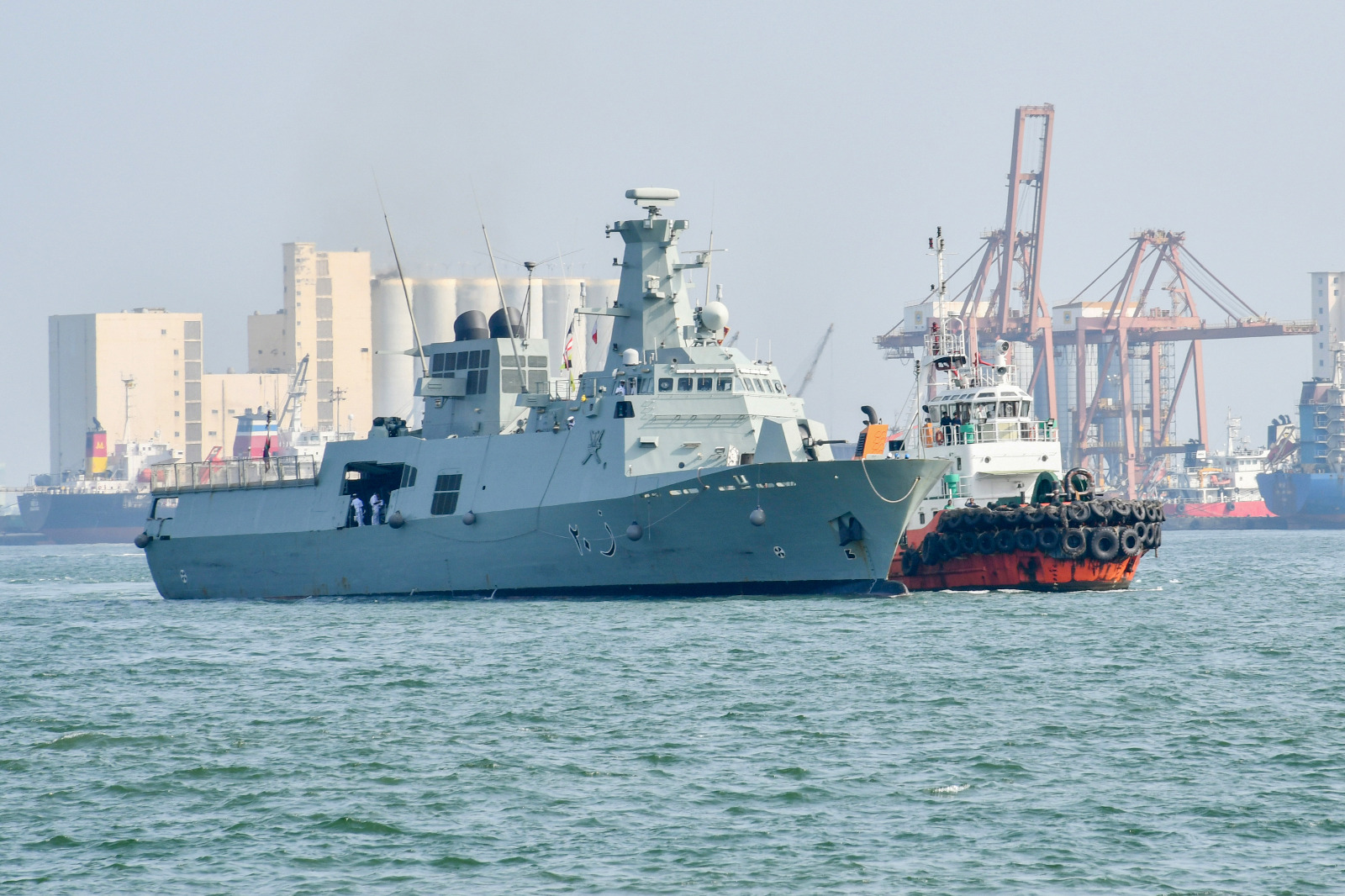
The Royal Navy of Oman Ship ‘AL SEEB’ arrived at the Port of Colombo on a logistics replenishment visit today (22 Jan 26).
The Sri Lanka Navy welcomed the visiting ship in compliance with naval traditions.
The 75m – long ship is commanded by Lieutenant Commander Hamad Bin Mohammed Aldarmaki. The port call will facilitate professional interaction and goodwill exchanges between the two navies.
During her stay in Colombo, crew members of the ship are expected to visit some tourist attractions in the city of Colombo.
News
Mechanism to be established involving university academics and experts for Education Reforms – President

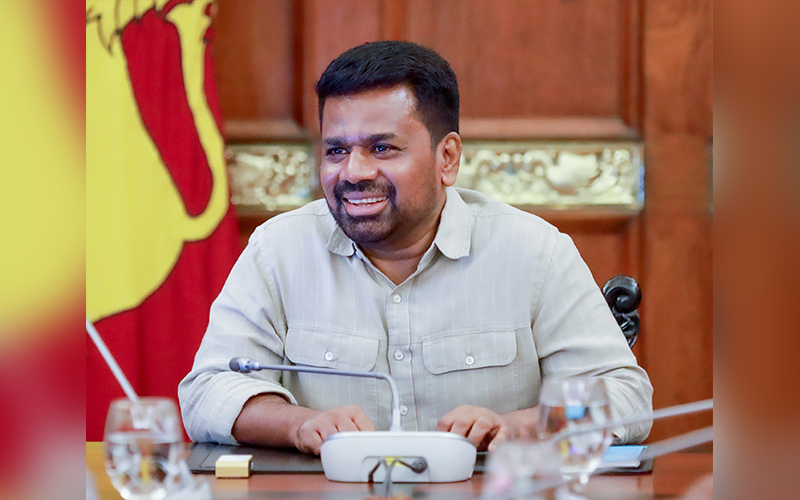
President Anura Kumara Dissanayake stated that the Government is taking steps to establish a comprehensive mechanism, supported by an appropriate legal framework, to bring together university academics, experts and all relevant parties in order to resolve issues arising during the implementation of education reforms.
The President made these remarks during a discussion with the Federation of University Teachers’ Associations (FUTA) held on Wednesday (21) morning at the Presidential Secretariat.
During the discussion, FUTA members emphasized the challenges encountered while trying to implement educational reforms through a framework established by the National Institute of Education, in line with the current laws and regulations.
They further emphasized that while their association acknowledges the need for new education reforms, the urgency of such reforms is greater for students in rural schools than for those in urban schools.
The Federation of University Teachers’ Associations further stated that they appreciate the decision taken by the Government, under the leadership of the President, to address the issues arising from education reforms and affirmed their readiness to contribute to this process.
As a continuation of the previous discussion, proposals addressing the challenges faced by academics within the university system, along with possible solutions, were presented to the President. In response, the President emphasized that the Government would take all possible measures to safeguard the university system and strengthen education.
The discussion also covered proposed amendments to the Universities Act.
President Anura Kumara Dissanayake noted that, in the aftermath of the recent disaster, the Government has been effectively implementing a nationwide rebuilding programme, addressing economic stability, development and all critical sectors. The President also called upon university academics to actively support these reconstruction efforts.
The meeting was attended by Minister of Ports and Civil Aviation, Anura Karunathilaka, as well as representatives of the Federation of University Teachers’ Associations, including its President, Prof. P. R. Weerathunga, Vice President M. A. M. Sameem and Secretary Charudaththe Ilangasinghe.

Mendis’ 93 not out lifts Sri Lanka to 271 for 6, despite Rashid three-for

We didn’t get justice from ICC: Bangladesh sports advisor

Indonesian Naval Ship ‘KRI SULTAN ISKANDAR MUDA – 367’ arrives in Colombo

Royal Navy of Oman Ship ‘AL SEEB’ calls at Port of Colombo

Jacks out with illness as Sri Lanka bat against England

Mechanism to be established involving university academics and experts for Education Reforms – President

‘Dates have the highest sugar content to fight Coronavirus’

Sunday Island 27 December – Headlines

#SundayIsland 17th December – Headlines

Sunday Island – 28th March

Sunday Island Headlines – 21 March

Sunday Island – 21st February – Headlines
-

 Editorial5 days ago
Illusory rule of law
-
 News6 days ago
UNDP’s assessment confirms widespread economic fallout from Cyclone Ditwah
-
 Editorial6 days ago
Crime and cops
-
 Features5 days ago
Daydreams on a winter’s day
-

 Editorial7 days ago
The Chakka Clash
-
 Features5 days ago
Surprise move of both the Minister and myself from Agriculture to Education
-

 Features4 days ago
Extended mind thesis:A Buddhist perspective
-
 Features5 days ago
The Story of Furniture in Sri Lanka