
News
President stresses need for concerted effort to revive economy

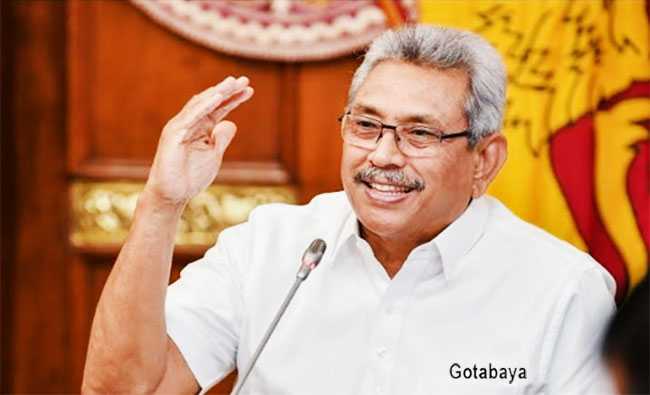
President Gotabaya Rajapaksa has said that everyone in the region should work together to revive the economy after the COVID-19 pandemic situation.
The President made these remarks delivering the Inaugural Address at the Indian Ocean Conference (IOC) held in Abu Dhabi, United Arab Emirates (UAE), on Saturday (04).
President Rajapaksa said the measures adopted worldwide to combat the pandemic, although they proved invaluable in saving countless lives, came at a steep cost. “The rapid decline in economic activity these measures caused have had serious long-term consequences on global travel, trade, and economic growth.” The President pointed out that developing countries in particular have been very badly impacted by this and that this can only be achieved through the support provided by richer nations to developing countries.
The President said the COVID-19 pandemic will not end until everyone, everywhere is inoculated against the virus and requested the nations with capabilities to provide assistance to underprivileged nations to make their vaccination drives productive.
In contrast to the leadership provided by the World Health Organisation (WHO) for the global pandemic response, no world institution has stepped forward to help countries navigate their economic recovery. Although the pandemic has affected rich and poor countries alike, a disproportionate impact is borne by poorer countries.
The President pointed out that the economies that are already burdened with external debt obligations are facing hardships and therefore, it would be greatly appreciated if more action could be taken by wealthy nations as well as multilateral organisations to forgive, restructure, or grant moratoria for the debt repayments of poorer countries struggling in the wake of the pandemic.
As the pandemic has shown, adverse situations in one country can quickly have ramifications on the wider region and eventually on the globe itself. That is why the countries across the region and the world at large must work together to solve problems that affect nations, whether in terms of epidemics, economy, or ecology. The President said the ongoing climate crisis is perhaps the most difficult challenge that humanity needs to overcome.
“The X-Press Pearl disaster was not an isolated incident. The fire on board the MT New Diamond was successfully doused through concerted efforts.” The President pointed out that both these incidents point towards the urgent need for stricter controls surrounding the oceanic transport of hazardous and environmentally sensitive materials.
Extra-territorial fishing by well-equipped trawlers is another significant problem in the region that affects the livelihoods of poor communities that rely on local fishing for their sustenance. The President said coordinated action to mitigate such issues will be critical in sustaining the overall ecology and the viability of local economies in the Indian Ocean region in the future and proposed the establishment of a regional mechanism to coordinate such issues relating to sustainability.
While stating that it must be admitted that the Indian Ocean region is also the location of considerable criminal activity, including human smuggling, drugs smuggling, and terrorism, President Rajapaksa said narcotics trafficking remains a significant problem for countries in this region and that this can only effectively be dismantled through coordinated efforts between the intelligence services, Coast Guards and Navies of regional countries.
The President pointed out similar coordination and cooperation will be required to contain human trafficking and said such coordination will also be required to counter the threat posed by religious extremism and terrorism in countries in the region. The President said extremist and terrorist ideology can spread with ease from nation to nation unless carefully monitored and suppressed.
The first Indian Ocean Conference commenced in 2016 with the objective of discussing issues of common interest and concerns to countries in the Indian Ocean region and other countries using the Indian Ocean. The Fourth Summit was held in the Maldives in 2019 and the theme was “Securing the Indian Ocean Region: Traditional and Non-Traditional Challenges”.

Latest News
Sun directly overhead Moratuwa, Kesbewa, Handapangoda, Idalgashinna, Yudhaganawa, Kotiyagala and Panama about 12.08 noon today (05)


The sun is going to be directly over the latitudes of Sri Lanka from 28th of August to 07th of September due to its apparent southward relative motion.
The nearest places of Sri Lanka over which the sun is
overhead today (05) are Moratuwa, Kesbewa, Handapangoda, Idalgashinna, Yudhaganawa, Kotiyagala and Panama about 12.08 noon

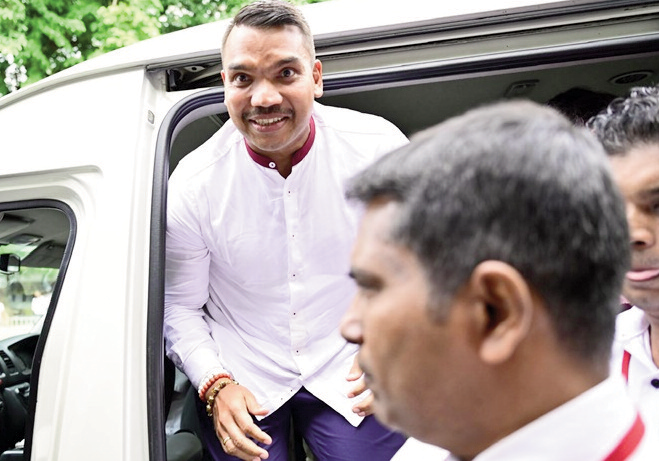
Sri Lanka Podujana Peramuna (SLPP) National Organiser and Parliamentarian Namal Rajapaksa was yesterday remanded until September 18 by the Colombo Chief Magistrate’s Court following his arrest by the Commission to Investigate Allegations of Bribery or Corruption (CIABOC) in connection with an investigation into the controversial SriLankan Airlines Airbus aircraft transaction.
Rajapaksa appeared before the CIABOC at around 9.15 am yesterday to record a statement after being summoned over the transaction. He was taken into custody following several hours of questioning and subsequently produced before the Colombo Chief Magistrate.
The investigation centres on allegations surrounding the acquisition of six Airbus A330 and eight A350 aircraft by SriLankan Airlines in 2013, in connection with an alleged USD 2 million bribe.
Former SriLankan Airlines Chief Executive Officer Kapila Chandrasena and his wife, Priyanka Niyomali Wijenayake, had previously been named in connection with the alleged bribery.
Chandrasena was arrested on March 12 as part of an investigation launched by the CIABOC under the Anti-Corruption Act and was subsequently released on bail. He was later found dead on May 8 while on bail, with police suspecting that his death was a suicide.
Open warrants have been issued for the arrest of Wijenayake, who is named as the second suspect, and Shamindra Rajapaksa, named as the third suspect, in the case pending before the Fort Magistrate’s Court in connection with the Airbus transaction.
The investigation has also received assistance from Airbus, with a delegation from the company’s parent group in France visiting Sri Lanka during the first week of August. The delegation provided statements and other assistance to the CIABOC as part of the ongoing inquiry.
Rajapaksa’s arrest and remand yesterday mark a further development in the widening investigation into the controversial aircraft deal.
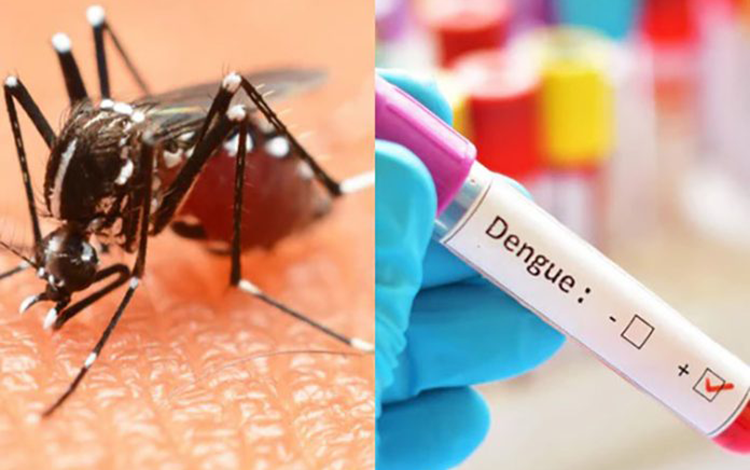
The number of dengue cases reported in Sri Lanka this year has risen to 96,040, with 72 deaths recorded so far, according to the National Dengue Control Unit.
The Unit said 10,155 cases were reported in August alone, highlighting the continuing spread of the disease across several parts of the country.
The Western Province has recorded the highest number of cases at 50,760, followed by the Southern Province with 13,931, the Central Province with 8,788 and the Sabaragamuwa Province with 7,910.
At district level, Gampaha has reported the highest number of cases at 20,444, followed by Colombo with 19,008.
Kandy has recorded 7,043 cases, while Kalutara and Matara have reported 6,181 and 6,154 cases,a respectively.
The National Dengue Control Unit said 50 Medical Officer of Health (MOH) areas across the country have been identified as high-risk areas for dengue.
Health authorities have continued to urge the public to take measures to prevent mosquito breeding, particularly in areas where a high incidence of dengue has been reported.

Sun directly overhead Moratuwa, Kesbewa, Handapangoda, Idalgashinna, Yudhaganawa, Kotiyagala and Panama about 12.08 noon today (05)

Showers above 75 mm are likely at some places in the Uva, Central and Eastern provinces and in Polonnaruwa and Mullaittivu districts after 2.00 p.m

Namal remanded until Sept. 18 over Airbus deal investigation

Dengue cases surpass 96,000 this year

PM Harini, Bhutan King explore closer ties

Johnston granted bail following CIABOC arrest

‘Dates have the highest sugar content to fight Coronavirus’

Sunday Island 27 December – Headlines

#SundayIsland 17th December – Headlines

Sunday Island – 28th March

Sunday Island Headlines – 21 March

Sunday Island – 21st February – Headlines
-

 Features6 days ago
“Wrap Me Up in My Blazer”— A Gentlemanly Bradby Reminiscence
-

 Features5 days ago
When Sri Lankan stories find their own voice
-
 Features6 days ago
JVP/NPP government as seen from outside by Lionel Bopage now domiciled in Australia
-
 News5 days ago
BASL takes exception to Justice Ganepola being denied a place in SC
-
 Features6 days ago
Prof. Savitri Goonesekere: What has she done?
-

 News2 days ago
Denied of promotion to SC despite vacancies, justice Gurusinghe retires
-

 Latest News3 days ago
Grade 5 scholarship exam results released
-

 Features6 days ago
World Trade Politics: Canada rebuffs Trump’s tariff blackmail