
Business
LOLC Advanced Technologies launches RT-LAMP Test Kit for COVID-19 Detection for the first time in Sri Lanka

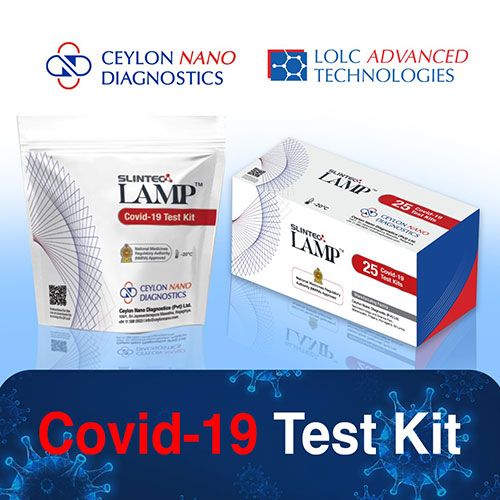
COVID-19, the novel coronavirus infection, which began in Hubei Province, China in December 2019 transformed to an unprecedented worldwide crisis in great speed. The pandemic caused snap lockdowns, social distancing and an alarming number of loss of human lives across the world – all this, resulted in grave humanitarian and economic loss, globally. In Sri Lanka, the pandemic has claimed over 14,000 lives already. Ever since the first case was detected in early 2020, Sri Lanka experienced several lockdowns and travel restrictions which caused most economic activities in the country to come to a standstill.
Across the world, the outbreak of COVID-19 also spurred widespread scientific research from prevention, cure to detection. LOLC Advanced Technologies collaborated with the Sri Lanka Institute of Nanotechnology (SLINTEC) through Ceylon Nano Diagnostics Pvt Ltd. (CNDL) to introduce the loop-mediated isothermal amplification (LAMP) method for the first time in Sri Lanka to curb the limitations of the standard coronavirus detection method approved by the World Health Organization which is RT-qPCR method. This novel process is similar to the conventional PCR tests, with the exception that the nucleic acid amplification occurs at one temperature. As a result, certain mandatory equipment for PCR such as a thermal cycler is not required. This method of detection being quicker, easier to use, and more cost effective than RT-qPCR tests in terms of diagnosis, has many advantages such as wide pH and temperature ranges that are acceptable, the ability of the assay to accept non-processed samples, and the flexibility of the readout methods, all the while maintaining specificity and sensitivity that is about equal to that of the PCR tests.
Ceylon Nano Diagnostics Pvt Ltd. is a Joint Venture (JV) company established to produce RT-LAMP kits and other research and development initiatives related to the molecular diagnostics field. LOLC Advanced Technologies is the management entity for CNDL on behalf of Browns Pharma Limited’s shareholding of 50% while SLINTEC bears the balance 50% shareholding.
SLINTEC has successfully demonstrated the use of RT-LAMP as a robust method for SARS-CoV-2 detection in clinical specimens in Sri Lanka. Even though, several detection methods are available in the LAMP assay, SLINTEC has developed the RT-LAMP kit with the fluorescence detection which is the most sensitive method that can be performed using RT-PCR machine which is currently used for detection of COVID-19. After demonstrating the proof of concept, the SLINTEC RT-LAMP assay was validated against the existing RT-qPCR test at Sri Jayewardenepura University (SJP), by analyzing RNA extracted from more than 200 patient specimens supplied by SJP. This was followed by analyzing virus samples isolated from positive patients supplied by National Institute of Infectious Diseases (IDH) using RT-qPCR available at SJP. Subsequently, the SLINTEC RT-LAMP kit was validated independently by the National Medicines Regulatory Authority (NMRA) at three different laboratories (Infectious Diseases Hospital, Karapitiya Teaching Hospital and Medical Research Institute) for its performance. Having carried out a GMP compliance audit, the NMRA has also given the green light to manufacture the product at the CNDL production facility. In addition, the Ministry of Health has given their consent to use the LAMP technique in Sri Lanka. After a stringent compliance audit, the manufacturing facility was awarded the GMP Certificate to commence manufacturing and finally the product obtained the NMRA approval for commercial use in the Sri Lankan molecular diagnostics market. Although RT-LAMP is new to Sri Lanka, it is currently being used in several other countries including USA and UK.
Commenting about the collaboration, LOLC Group, Deputy Chairman Ishara Nanayakkara said, “At LOLC, our increasing investments in science, research and technology derives from our passion and thirst for knowledge and scientific innovation which is centered on local value addition. I am pleased to note that this collaboration has done just that and especially at a crucial stage of an evolving pandemic. As a Group, we are committed to continue to work and invest in such value additions whilst providing local scientists and researchers the opportunity and platform to explore and make use of their skills and knowledge”.
LOLC Advanced Technologies (Pvt) Ltd. is the research arm of the LOLC Group. The company provides advanced technological consultation support to companies under the LOLC umbrella in the fields of precision agriculture, process improvements for cinnamon agronomy and value addition, new product development in plant nutrition and agro-chemistry. LOLC Advanced Technologies was set up to explore sustainable business opportunities in the market with augmentation of Science and Technology. It is a wholly-owned subsidiary of LOLC Holdings PLC.
To capitalize on the marketing, distribution, technical and application services in the market, CNDL entered into an agreement with Avon Pharmo Chem (Pvt) Ltd., a long-standing leader in the molecular diagnostics market in Sri Lanka.
Dilip K. Fernando, CEO of Avon Pharmo Chem Pvt Ltd said, “Avon possesses the country’s best application, technical team and marketing processes in serving the biotechnology and molecular diagnostics laboratories. We are confident that the COVID 19 test kit produced in Sri Lanka can be instrumental in resolving the challenges faced by the country right now. As we have already received a better response from the private sector COVID-19 testing laboratories, we are fully engaged in training laboratory staff for adopting the technology faster so that all the laboratories can use the kit soon.”
Commenting, Dr. Naresh Handagama, CEO of SLINTEC said, “The COVID 19 test kit developed by the scientists at SLINTEC according to industry best practices, compliance and protocols, has been commercially launched for the Sri Lankan molecular diagnostics market. This is the first of its kind in our history that a test kit of this kind has been able to successfully pass the hurdles of very stringent GMP and NMRA standards certificates together with a series of other validations and trials in many laboratories. When COVID hit our country, many industry leaders engaged in various activities to support the government’s battle in combating the COVID 19 challenge. But, LOLC looked for sustainable ways of facing this issue by investing in science and technology expertise and infrastructure. When SLINTEC announced their engagement in test kit development, LOLC leveraged the idea that could support for future developments as well. This initiative is of great national importance as we are now able to produce this test kit locally and save the outflow of foreign currency from our country whilst better serving the nation with improved performance”.


The ancient Silk Road city of Samarkand has once again become a crossroads of global dialogue, this time hosting the 2026 Annual Meetings of the Asian Development Bank (ADB). Against a backdrop of shifting geopolitical dynamics and economic uncertainty, the gathering has underscored a central theme: the growing interdependence of nations in addressing shared challenges.
Delegates from a wide spectrum of countries—including Canada, the United States, Italy, Hong Kong, Australia, China, Indonesia, the United Kingdom, Tuvalu, France, Finland, Germany, India, Thailand and Pakistan – have converged in Uzbekistan to deliberate on pressing issues shaping the Asia-Pacific region.
Their presence reflects not only the geographic diversity of ADB’s membership but also the urgency of collective action in an increasingly interconnected world.
At the heart of discussions are the vulnerabilities and opportunities within global supply chains, energy markets, and emerging technologies.
With ongoing geopolitical tensions disrupting traditional trade routes and economic alignments, governors repeatedly stressed the need for resilience, adaptability, and cooperation. The consensus emerging from Samarkand is clear: no country can navigate these challenges in isolation.
A significant portion of the dialogue has focused on climate resilience, an area where the ADB has received strong endorsement. Governors welcomed the bank’s expanded efforts to help member nations adapt to climate risks, particularly through investments in sustainable infrastructure and disaster preparedness. In a region highly susceptible to climate shocks from – rising sea levels in the Pacific to extreme weather events in South Asia – the urgency of such initiatives cannot be overstated.
Digital connectivity has also emerged as a key pillar of development strategy. Delegates highlighted the transformative potential of technology in bridging economic gaps, enhancing productivity, and fostering innovation.
The ADB’s role in upgrading digital infrastructure across developing member countries was widely praised, with many calling for accelerated implementation to ensure that no nation is left behind in the digital economy.
Equally important is the push for resource mobilization and the unlocking of private capital. Governors emphasized that public funding alone would be insufficient to meet the region’s vast development needs, particularly in critical sectors such as energy security, water management, and mineral resource optimization. The ADB’s initiatives to crowd in private investment were therefore seen as essential to scaling up impact and delivering sustainable outcomes.
Energy security, in particular, remains a focal point amid volatile global markets. Delegates called for diversified energy sources and increased investment in renewables, aligning economic growth with environmental sustainability.
Water security, another pressing concern, was discussed in the context of both scarcity and equitable access—issues that are increasingly intertwined with regional stability.
Beyond economic and environmental priorities, the meetings also highlighted the ADB’s commitment to gender equality and social inclusion.
Governors commended the bank’s progressive policies in these areas, noting that inclusive growth is fundamental to long-term development. However, they also urged the ADB to translate its vision into tangible, measurable outcomes on the ground.
By Sanath Nanayakkare
in Samarkand, Uzbekistan
Business
Compassion over capital: Janashakthi partners President’s Fund to transform child healthcare access
By Ifham Nizam
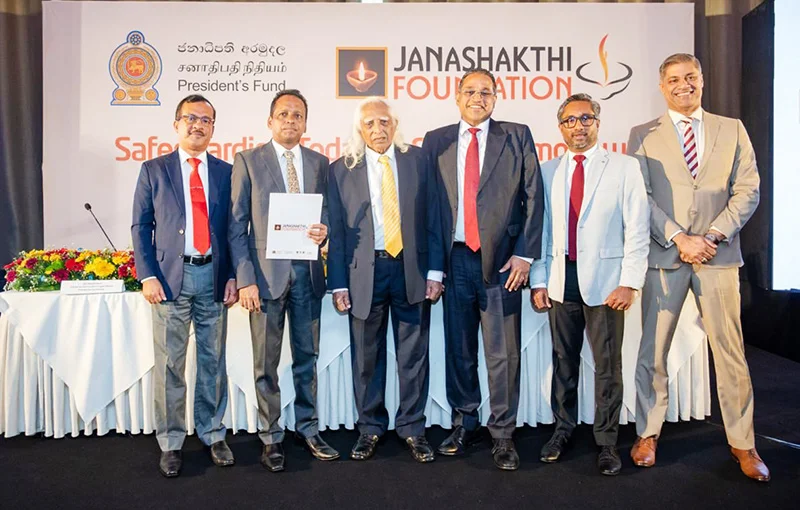
In a landmark move that signals a shift in corporate philanthropy in Sri Lanka, Janashakthi Group (JXG) has entered into a pioneering partnership with the President’s Fund to provide financial support for children requiring urgent medical care—irrespective of ethnicity, religion, region, or social standing.
Addressing journalists at the Hilton, Colombo, Managing Director/Group CEO Ramesh Schaffter said the initiative was not born out of obligation, but conviction.
“Nobody asked us, because nobody had to. From our very inception, Janashakthi has stepped up where we have seen a need,” Schaffter said.
He added: “Today, we are stepping up again—not alone, but in partnership with the highest charitable institution in the country, the President’s Fund.”
This collaboration marks the first time a corporate entity has formally aligned itself with the President’s Fund in such a comprehensive and structured manner. While individuals and organisations have contributed financially in the past,
Janashakthi’s approach goes further—committing to match funding for medical cases approved by the Fund, effectively doubling the resources available for life-saving treatments.
At the heart of the initiative lies a simple yet powerful principle: every Sri Lankan child deserves equal access to healthcare.
“Which child? Any child. Which province? Any province. Which race? Any race. Which religion? Any religion,” Schaffter emphasised. “They are all children of Sri Lanka—the next generation that must take their place in this nation.”
The mechanism is deliberately streamlined. The President’s Fund, with its established network of medical experts and evaluative processes, will continue to vet applications and determine eligibility. Once approved, Janashakthi will mirror the financial support extended.
Responding to Ths Island Financial Review, he added:
“We are not here to reinvent the wheel,” Schaffter noted. “If the President’s Fund supports a case—whether treatment is in Sri Lanka or overseas—we will match it. If they give one, we give one. If they give two, we give two.”
This alignment ensures efficiency, credibility, and speed—critical factors in medical emergencies where delays can cost lives.
Beyond the operational framework, the initiative reflects a broader rethinking of corporate responsibility. Moving beyond conventional labels such as Corporate Social Responsibility (CSR) or Environmental, Social and Governance (ESG), Janashakthi is reframing its philosophy in more human terms.
“We just want to call it compassion—profit with a compassionate face,” Schaffter said. “Every corporate body has a responsibility not just to make profits, but to give back meaningfully to society.”
Importantly, the Group has made it clear that the initiative will not be used as a platform for publicity.
“We are not doing this for advertising mileage,” he stressed. “You will not see us parading children or showcasing beneficiaries. The purpose of this press conference is awareness—not recognition.”
This ethos is consistent with Janashakthi’s past interventions. During the COVID-19 pandemic, the Group quietly supported 14 hospitals with over Rs. 40 million worth of critical equipment, including ventilators, oxygen systems, and even the refurbishment of entire wards—without public fanfare.
“If this effort can save even one child, it will be worth it,” Schaffter said.
Senior Additional Secretary to the President and Secretary to the President’s Fund, G.G.S.C. Roshan, welcomed the partnership, noting that it would significantly enhance the Fund’s capacity to respond to urgent medical needs, including cases requiring treatment overseas.
“The President’s Fund already supports such cases, sometimes even facilitating treatment in countries like India or Singapore when necessary,” he explained. “With Janashakthi coming alongside us, that support can now be strengthened.”
The initiative is funded through contributions from Janashakthi’s operating businesses, effectively channelling a portion of corporate profits directly into life-saving interventions.
Group Chief Marketing Officer of JXG, Ghamike De Silva, stressed that this was not a one-off gesture but part of a sustained commitment to social responsibility.
“This is a significant financial commitment drawn from our business operations,” he said. “It reflects our belief that success must be shared—especially with those who need it most.”
Respoding to The Island Financial Review JXG Founder & Chairman Emeritus C T A Schaffter issued a broader call to action for Sri Lanka’s corporate sector, urging others to follow suit.
“This is a journey of recovery and progress that cannot be achieved by the government alone,” he said. “Corporate citizens and individuals alike must carry part of the responsibility. There is much more that can—and must—be done.”
His remarks were also deeply personal. Reflecting on his own childhood marked by loss and hardship, Schaffter spoke of growing up dependent on the generosity of others.
An emotional Schaffter added:
“When you have lived without, when you have relied on charity, you understand what it means to need help,” he said. “That understanding shapes how you choose to give.”
As Sri Lanka navigates its path toward economic recovery, initiatives like this highlight a growing recognition that financial performance and social impact are not mutually exclusive—but mutually reinforcing.
By embedding compassion into its business model, Janashakthi is not merely funding healthcare—it is redefining the role of corporate Sri Lanka in nation-building.
And in doing so, it may well set a precedent for others to follow.

Dialog Enterprise, the corporate solutions arm of Dialog Axiata PLC and Sri Lanka’s number one ICT solutions provider, has announced a strategic partnership with Seceon Inc to strengthen its managed security services portfolio with advanced AI-driven cybersecurity capabilities.
Through this collaboration, Dialog Enterprise will deploy Seceon’s aiSIEM platform to deliver next-generation Managed Detection and Response (MDR) services, enabling enterprises to gain full visibility across networks, endpoints, cloud environments, applications, and identities while detecting and responding to threats in real time using machine learning and behavioural analytics. The unified platform integrates SIEM, UEBA, SOAR, threat intelligence, and data lake capabilities into a single solution, allowing for faster threat detection, reduced investigation time, and automated incident response.
“Partnering with Dialogue Enterprise allows us to bring our AI-powered security platform to a broader enterprise landscape in Sri Lanka. Our aiSIEM platform is designed to simplify security operations while delivering advanced threat detection, automated response, and comprehensive visibility across complex environments. Together with Dialog Enterprise’s strong market presence and service capabilities, we are well-positioned to help organisations proactively defend against evolving cyber threats,” said Chandra, CEO & Founder of Seceon Inc.

Comprehensive reforms to be introduced in the higher education sector in line with primary and secondary education reforms – PM

Hantavirus-hit cruise ship on way to Canary Islands after three evacuated

Joint programme between President’s Fund and Janashakthi Foundation to expand healthcare facilities for children

Maldivian President concludes state visit to Sri Lanka

India to host Zimbabwe for maiden women’s bilateral series

Showers above 75 mm are likely at some places in the Sabaragamuwa, Central, Uva, Southern and North-central provinces

‘Dates have the highest sugar content to fight Coronavirus’

Sunday Island 27 December – Headlines

#SundayIsland 17th December – Headlines

Sunday Island – 28th March

Sunday Island Headlines – 21 March

Sunday Island – 21st February – Headlines
-

 News3 days ago
CJ urged to inquire into AKD’s remarks on May 25 court verdict
-
 News7 days ago
“Three-in-one blood pressure pill can significantly reduce risk of recurrent strokes”
-

 News4 days ago
USD 3.7 bn H’tota refinery: China won’t launch project without bigger local market share
-

 News21 hours ago
MIT expert warns of catastrophic consequences of USD 2.5 mn Treasury heist
-

 News7 days ago
Alarm raised over plan to share Lanka’s biometric data with blacklisted Indian firm
-

 News5 days ago
Easter Sunday Case: Ex-SIS Chief concealed intel, former Defence Secy tells court
-

 News6 days ago
Ten corruption cases set for court in May, verdict ordered in one case – President
-

 News7 days ago
USD 2.5 mn fraud probe: Interdicted MoF official found dead at home