
Opinion
Don’t deride Sri Lankan scientists

I have been watching with interest the exchange of views among several parties that commenced with the Article written by Prof. Chandre Dharmawardana to which Mr. Chris Dharmakeerti responded. My name and some of my research publications have been quoted in these exchanges. I myself responded to Prof. Dharmawardena stating that I don’t belong to the ‘Natha Deviyo Group’ and he has kindly said that he never did so. I’m sorry for my mistake. Yes, Prof. Dharmawardhana, Dr. Waidyanatha and myself have known each other for over 50 years. Both of them were a couple years senior to me and were serving as junior temporary staff members at the University of Ceylon, Colombo (at that time) when I was a final year undergrad student following a special degree. Immediately after my graduation I was appointed to the academic staff of the University of Ceylon
Peradeniya (later University of Peradeniya) and continued to serve the University for 40 years until my retirement in 2006. During this period, I was the Head of the Dept of Botany (five times), Dean, Graduate Studies, Dean Faculty of Science and acting Vice Chancellor during the most difficult period of 1989/90. While attached to the UoP, I made use of sabbatical and vacation leave to work at the International Rice Research Institute Philippines, the International Atomic Energy Agency, Vienna, the Weizmann Institute of Science, Israel, and at the Washington State University and the San Jose State University in the USA. I’m not trying to brag, but writing all this to educate people like Bodhi Dhanapala who write derogatory, baseless insinuations in his emails as if we are petty thieves.
I share the patent on Prof Gamini Seneviratne’s innovation Biofilm Biofertiliser (BFBF) on invitation because I was the supervisor for his PhD research studies during which he learnt a lot on soil microbiology and also gave him useful advice at the time he was venturing to study rhizosphere microorganisms and develop multi-microbial inoculants. I have not participated in the large-scale field trials he conducted with BFBFs. I think he has effectively replied to his critics, subsequently supported by Prof. Ben Basnayake.
Now I will focus on my own work which also has come under scrutiny. Prof. Dhamawardana quotes some of my publications of 2012 and 2016 where he claims that I have written only of ‘a potential or encouraging results’ but not for large scale application by farmers. I fully agree. Those are publications on cyanobacteria (blue-green algae) and Azolla. Even today my position is they only have a potential which has yet to be realised and not yet ready to be recommended for the farmers. What I wrote about applying N2-fixing biofertilisers refer to Rhizobial inoculants which form symbiotic root nodules with leguminous crops. Please read my write up carefully and you will find a statement that ‘out of all N2-fixing organisms and systems application of rhizobial inoculants was the most successful. This technology is nothing new. In fact, it is more than 125 years old! The first rhizobial inoculant with the commercial name Nitragin was patented in the USA in 1896 by Nobbe and Hiltner. Afterwards, this technology was adopted worldwide. Howeison and Herridge (2005) reported that Australia is annually saving 3 billion dollars by the judicious use of rhizobial inoculants. Sri Lanka imports 40% of our mung bean requirements from Australia.
We adopted the technology of using rhizobia native to Sri Lanka and embedding them in a local carrier material (modified coir dust) which enabled us to field test and eventually recommend it for large scale application. In adopting this technology for Sri Lanka, we have gone through several years of study. Commencing with basic studies of isolation, purification, characterisation and identification of rhizobia from local legumes (crop and wild) we have built up a germplasm of rhizobial isolates.
These have been authenticated and screened under greenhouse conditions to select the best strains for different crops, field tested in small plots in collaboration with the Department of Agriculture at HORDI and other research stations. In the final stages of transfer of technology, the most promising strains were used in large-scale field trials, some of which were conducted with the participation of farmers under our strict supervision and those of the field officers of the Plenty Foods company. It is after more than 20 years of painstaking research studies that we were able to get a breakthrough and transfer rhizobial inoculant technology to Sri Lankan farmers.
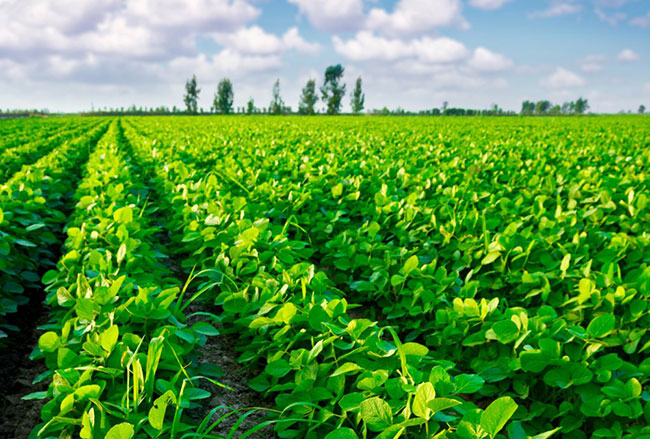
The Department of Agriculture got confidence in our products in 2017. That year they used our inoculants for extensive field cultivation of soybean. Their trials were successful and we were presented with a CD containing 100 photos of their cultivations with our inoculants. Two such photos are reproduced with this article.
Today, the best customers for our inoculants are the Central and Provincial Departments of Agriculture. Our team at the NIFS, which produces and market these inoculants (with the approval of the NIFS Board of Management) was felicitated a few months back by the Governor of the Central Province for the services rendered to the bean farmers from Hanguranketha to Welimada for low cost, eco-friendly bean cultivation. It is not easy to get a new technology accepted by farmers. By August this year we have supplied inoculants for more than 15,000 acres and more orders are coming. All these results of our work with rhizobial inoculants were presented at the Post-`Covid international symposium of the NSF and eventually published in its Proceedings. This is the Kulasooriya et al (2021) publication I have quoted in my write up.
I believe I have provided enough evidence to show that our efforts are to provide as much as possible some technologies based upon local resources for low cost, eco-friendly crop production and not a scam as some expatriates seem to think. They must not make baseless insinuations against genuine local scientists.
Prof. S. A. Kulasooriya


World Gratitude Day
by Lalith de Silva
Senior Advisor for Governance and Transformation
As we commemorate World Gratitude Day on 21 September, perhaps it is an appropriate time for all of us to pause and ask ourselves a few simple but profound questions:
What have I received? Who contributed to what I have become? What is my responsibility in return? And what can I give back?
We live in a world where we are constantly encouraged to seek “more”—more income, a better career, a higher standard of living, greater recognition, greater comfort and greater success.
There is nothing wrong with aspiration. Individuals need aspirations, and nations need progress.
However, while constantly pursuing what we do not yet have, we can easily overlook something equally important: recognising and appreciating what we already have and what we have already received.
That is where gratitude begins.
Gratitude is much more than simply saying “thank you”. It is recognising the good we have received, appreciating the people, institutions, society and natural environment that have contributed to our lives, and allowing that appreciation to influence our behaviour, responsibilities and actions.
An Ancient and Universal Human Virtue
Gratitude does not belong to any one religion, nation or culture. The world’s major religious and philosophical traditions have recognised its importance for thousands of years.
For Sri Lanka, a particularly meaningful illustration comes from the Buddhist tradition.
Following his Enlightenment, before beginning his great teaching mission, the Buddha is traditionally described as spending the second week gazing at the Bodhi tree in appreciation and gratitude for the shelter it had provided him.
There is a profound message in this simple act.
Even after attaining Enlightenment, the Buddha did not take for granted the benefit received from a tree. Buddhist teachings also associate gratitude and thankfulness with the qualities of a good and virtuous person.
Christianity, Islam, Hinduism and other religious traditions similarly emphasise thanksgiving, appreciation, duty, compassion and service in different forms.
The underlying human message is universal:
Do not take the goodness we receive in life for granted. Recognise it. Appreciate it. And respond to it through positive action.
None of us succeeds alone
If we look honestly at our lives, none of us can truly claim to be entirely “self-made”.
Before we could walk, someone carried us. Before we could read, someone taught us. Before we could earn, someone fed, protected and supported us.
Parents and caregivers made sacrifices. Teachers gave us knowledge. Friends encouraged us. Organisations gave us opportunities. Doctors, nurses and other healthcare professionals cared for us. Farmers produced our food. Thousands of workers and service providers make our everyday lives possible.
Our lives also depend upon air, water, sunlight, soil, trees and complex natural ecosystems.
Our country provides education, infrastructure, institutions, security, cultural heritage and opportunities through which we build our lives.
Gratitude begins when we stop treating all these contributions as things to which we are automatically entitled.
It reminds us of a fundamental truth: we are interconnected and interdependent.
Gratitude and Happiness
Modern research in psychology and wellbeing has examined the relationship between gratitude and subjective wellbeing, life satisfaction, positive emotions, stronger relationships and behaviours that benefit others.
This is particularly relevant because many of us unconsciously postpone happiness.
“I will be happy when I earn more.”
“I will be happy when I receive that promotion.”
“I will be happy when this problem is over.”
Yet when one goal is achieved, another often appears.
Gratitude does not tell us to abandon ambition. Instead, it teaches us to build tomorrow without becoming blind to the goodness that exists today.
Gratitude may not change what we have, but it can change how we see what we have.
This does not mean that gratitude is a cure for illness, psychological distress, poverty or injustice. Such problems require appropriate professional, social, economic and institutional responses.
Gratitude does not ask us to deny suffering. Rather, it can help us recognise that even during difficult periods there may still be people, relationships, opportunities and sources of support worth appreciating.
From gratitude to compassion and responsibility
The wider social value of gratitude emerges when we move beyond the feeling of “I am grateful” and ask:
“If I am grateful, what is my responsibility?”
If I appreciate the sacrifices my parents made for me, what is my responsibility towards them?
If teachers and educational institutions contributed to my development, what can I contribute to the next generation?
If an organisation gave me opportunities, am I serving that organisation honestly and responsibly?
If my country provided education, infrastructure, opportunities and rights, what am I giving back to my country?
This changes our thinking from:
“What more can I get?”
to:
“What have I received, and what can I contribute?”
Recognising the contributions of others can encourage humility. Understanding their sacrifices can deepen empathy and compassion. Recognising how much we have received can encourage generosity, service and a greater sense of responsibility.
Gratitude therefore has the potential to move beyond personal wellbeing and become a foundation for responsible citizenship.
What Does This Mean for Our National Challenges?
Sri Lanka, like many countries, must address serious social and national challenges, including corruption, fraud, crime, substance and alcohol misuse, violence, misuse of public property and waste of public resources.
Gratitude is not a single solution to these complex problems.
We need strong laws, effective and independent institutions, transparency, accountability, education, appropriate treatment and rehabilitation, economic opportunities and good governance.
But alongside all of these, there is another important dimension:
Human character.
Laws are essential, but laws alone cannot create an ethical society.
Law seeks to control wrongdoing from outside. Good character can help prevent wrongdoing from within.
Consider a public official who genuinely thinks:
“This authority has been entrusted to me by the people.”
That mindset can influence how authority is exercised.
Consider a leader who thinks:
“This position is not merely a privilege; it is a responsibility.”
That can influence leadership behaviour.
Consider a citizen who understands:
“Public resources do not belong to somebody else. They belong collectively to all of us.”
That can influence how public property is treated.
Gratitude can therefore help encourage a movement from entitlement to responsibility, from selfishness to compassion, from exploitation to stewardship, and from merely receiving to giving back.
It cannot replace law, governance or accountability. But it can contribute to the character and values upon which good institutions ultimately depend.
Begin with Our Children
If we want to influence the future culture of our nation, we should begin with our children.
Teaching a child to say “thank you” is a good beginning. But we can go further.
“I am grateful to my parents.”
Then what is my responsibility towards them?
“I am grateful to my teachers and school.”
What is my responsibility as a student?
“I am grateful for my country.”
What kind of citizen should I become?
At this point gratitude becomes more than good manners.
It becomes character education.
Schools can help children connect gratitude with respect, responsibility, care for public property, kindness, service and good citizenship.
What Can We Do on 21 September?
World Gratitude Day should not become simply another commemorative day on the calendar. It can become a starting point for practical action.
Individuals can contact someone who has made a difference in their lives and sincerely thank them. A telephone call, letter or simple message of appreciation can be deeply meaningful. We can go further by doing something useful for another person or for our community.
Families can spend a few minutes together identifying what they appreciate about one another. We often assume that the people closest to us know how much we value them. Expressing it can strengthen relationships.
Schools, universities and Pirivenas can organise short discussions, essays, art, debates, gratitude letters and community-service activities around gratitude, responsibility and good citizenship.
Public and private organisations can recognise the contributions of employees, customers and communities and ask an important organisational question: What have we received from society, and what can we give back?
Religious and community organisations can highlight gratitude, compassion, service and responsibility through their own traditions while recognising gratitude as a universal human value.
A Simple National Initiative
The Government can also facilitate national awareness of World Gratitude Day on 21 September.
This need not require a large budget or elaborate celebrations.
A national awareness message could encourage citizens to reflect on gratitude. Schools and public institutions could be encouraged to undertake simple voluntary activities. Community service could be promoted. Public institutions could recognise people whose often-unnoticed work contributes to society.
Most importantly, World Gratitude Day could encourage a national conversation about gratitude, responsibility, service, integrity and good citizenship.
Such an initiative should be inclusive and non-sectarian, recognising gratitude as a universal human virtue shared across Sri Lanka’s religious, ethnic and cultural communities.
In future years, Sri Lanka might also consider developing the period around 21 September into a National Gratitude Week, allowing schools, government institutions, businesses, religious organisations, civil society and communities to develop activities appropriate to them.
The purpose should not be ceremony for ceremony’s sake. The objective should be to encourage reflection followed by action.
From One Day to a Way of Life
One day cannot transform Sri Lanka.
But one day can begin a practice.
Practice → Habit → Character → Culture → National Transformation
Repeated practice can become habit. Habits influence character. Character influences behaviour. When enough people practise similar values, they begin to influence the culture of families, organisations, communities and eventually society.
On 21 September, therefore, let us begin with four simple principles:
Pause. Recognise. Appreciate. Give Back.
Pause and look at our lives.
Recognise the people, opportunities, institutions, society and natural environment that have supported us.
Appreciate what we have received.
Then ask:
“If I am grateful, what is my responsibility—and what can I give back?”
Sri Lanka needs economic transformation. We need institutional and governance reform. We need technological progress and greater opportunities for our people.
But alongside all of these, we also need human transformation—a transformation that strengthens gratitude, compassion, responsibility, integrity and commitment to the common good.
The journey can be expressed simply:
Gratitude → Happiness → Compassion → Responsibility → Integrity → Good Character → Stronger Communities → A Better Nation
Let World Gratitude Day on 21 September become an opportunity to begin that journey.
Let us make gratitude not merely a feeling, but a practice; not merely a practice, but a habit; and ultimately a way of life.
Let us ignite a Gratitude Revolution—from the individual to the family, from the family to the community, and from the community to the nation.
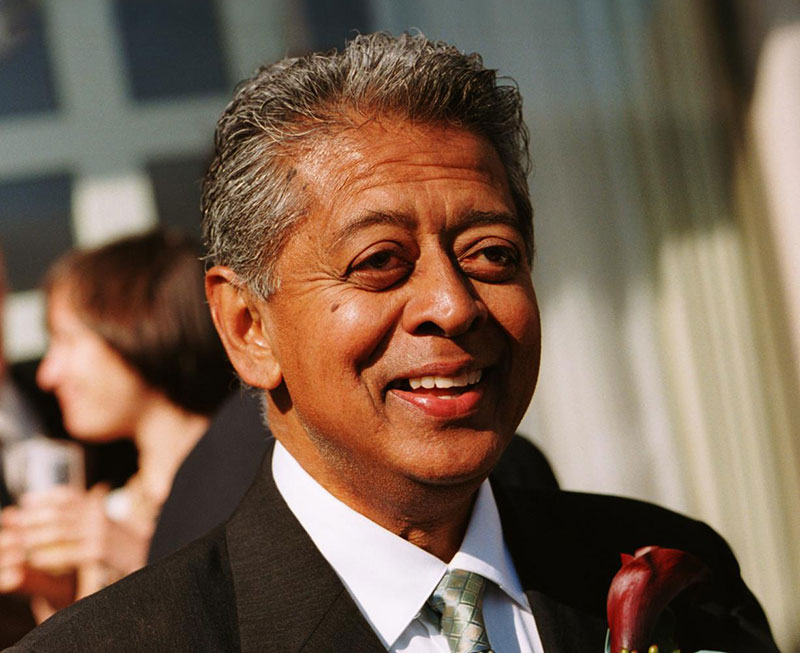
Vijaya Chandrasoma, a frequent and valued contributor to this newspaper I edit passed away at 85+ in Colombo a few days ago, far from his family domiciled in the United States; but his children with whom he was in close touch were able to make it for the funeral on Sunday. Vijaya or Vicky as he was best known to friends and family had a visceral hatred of President Donald Trump, no doubt shared by a majority of mankind. This he was not slow in expounding in the widely read columns he wrote for us.
In the covering letters accompanying his articles, he always included a cryptic note: “Yours to do as you please” demonstrating the generosity of his nature leaving open the exercise of any editorial judgment with no hard feelings whatever. That was the quintessential Vicky who sometimes wondered whether he was indulging in an overkill of Trump whom he detested as much as he loved Obama.
He loved Obama as much as he loved the USA which he felt had given him and his family a second chance which his family seized but he, as he freely admitted, allowed to slip by. He had the honesty to publish a self-deprecating book titled All Show And No Substance sub-headed A Cautionary Tale he meant mainly for his grandchildren “in the hope that they may learn something of the life and times of their grandfather and the world in which he lived.”
Vijaya Chandrasoma was second of the four sons of M. (Tissa) and Gertie Chandrasoma, his father being a member of the prestigious Ceylon Civil Service (CCS) reputed for his efficiency. While Vicky had classified his family as “upper middle class” a better description might have been “well to do.” As schoolboys we used to walk home for lunch together from Royal College along Fifth Lane, him to turn off at the barrel drain behind Ladies College now called 27th Lane and I onward to Charles Way further down the lane.
Vicky being a couple of years senior, my memories of him in school are dim but I do remember his telling me how his father, a reputed university athlete, cheered him with a “come on Vicky” at an inter-house athletics meet and how he and a partner defeated a champion combination in a game of tennis doubles. We had a distant kinship too through my mother’s paternal roots in Galle and he was very close to my cousin, best known by his nickname Koiman, who teamed up with him as fellow students in London.
The Chandrasomas went off to London after Tissa, a favourite of then Prime Minister, Sir. John Kotelawela, resigned after a disagreement with SWRD Bandaranaike, Sir John’s successor. He got a plum private sector job, number two at the foreign-managed Shell Company which dominated the petroleum import and distribution market in then Ceylon. Vicky makes no secret of what he called his “dissolute” life in London as a teenager concentrating on booze, horses and greyhounds.
Nevertheless he was accepted by St. Andrew’s University in Scotland, Cambridge and Oxford he eventually joined only to be “rusticated” after a year. His life in Colombo on his return from the UK was predictably fast with a stint in an accountancy firm his father got him into as an articled clerk, managing a hotel in the Maldives whose tourism industry was just taking off, running a tourism business in Colombo, an attempt at immigrating to Australia and finally ending up in Los Angeles.
He eventually relocated, alone to Colombo with his family remaining in LA. To his immense pride his children did very well in Ivy League Universities and thereafter “no thanks to me.” I bumped into him at the HSBC branch then at Dharmapala Mawatha and was able to introduce him to the bank to open an account. We reconnected and hence his many columns to these pages all written free gratis and for nothing.
He, like his father before him wrote very well and his copy was not all Trump bashing. There were so many readable pieces of his time at Oxford, his days with his friend Gamini Disssnayake to whom he was a trusted aide and speechwriter, and a memorable interview he did in Canada with Singapore Prime Minister Lee Kwan Yew. “This was sprung on me and I was absolutely unprepared. My heart was in the pit of my stomach. But PM Lee helped me through.”
A colourful life has ended, one where he blamed nobody but himself for anything that went wrong. Rest in peace my friend. Pity our long-promised meeting never happened.
Manik de Silva
by Sena Thoradeniya
I Refer to the article published under the above title in The Island of 14 Sept. It was written by Dr. Uswatte-aratchi, whose insights into art, literature, and culture have long resonated with mine. In those domains, we have shared similar views; yet in matters of political theory, political leadership, and governance, our perspectives have not converged.
I do not intend to discuss the entire article by Dr. Uswatte, for he is entitled to his views on our politicians, even to the point of publicly attacking them when opportunity arises. I am neither an apologist nor an agent of any among those he has named. My concern here is solely to highlight Uswatte’s curious attribution of his knowledge of mathematics and physics to a person who, in his public addresses, has revealed no trace of intellectual capacity.
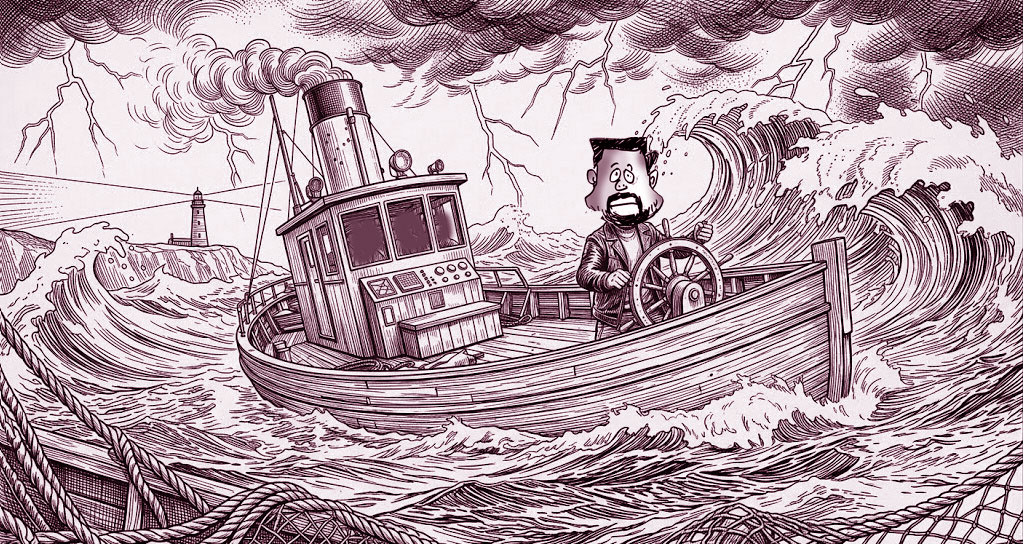
Dr. Uswatte says: “Unlike the earlier rulers Dissanayake (referring to the President) attended government schools in Tambuttegama and Kelaniya University. He studied science and mathematics. He can differentiate an equation for you and speak intelligently about Paul Dirac and Higgs Boson with the same felicity as accusations against former politicians”.
We are waiting for a theoretical or scientific publication by the current President that might justify such a claim. To ascribe scholarly depth to one whose record is not noticeable is absurd. It is a gesture that compliments without foundation and confers laurels where none have been earned.
This is what Dr. Uswatte says about the Prime Minister: “There is a Prime Minister who can talk to you impromptu about Auguste Comte and Claude LéviStrauss”.
A person who is said to have studied sociology should be knowledgeable about Comte, regarded as the father of sociology and the founder of positivism, and Claude Lévi-Strauss, a leading figure in structural anthropology; yet we remain uncertain whether she speaks of them with genuine familiarity and scholarly understanding, or is merely name-dropping them in an impromptu fashion. What on earth is she saying about these men on public platforms?
Since I possess no knowledge of either physics or mathematics, it was sheer curiosity that led me to consult AI only to discover what a marvelous President we have!
Paul Dirac was a pioneering English physicist, who helped establish quantum mechanics, co-founder of quantum electrodynamics and contributed to quantum field theory. In 1933, he shared the Nobel Prize in Physics. The Higgs boson is a fundamental particle discovered in 2012 that explains how particles acquire mass, solving a central mystery in physics. Peter Higgs, a British theoretical physicist won the Nobel prize for physics in 2013, decades after Anura Kumara obtained his degree.
Trying to rediscover theoretical physicists among ordinary science graduates who left university decades ago is indeed a futile exercise, like looking for a needle in a haystack. Theoretical physics thrives on continuity, requiring sustained engagement with evolving mathematics, new theories and experimental findings, and is a discipline that demands lifelong intellectual engagement.
Dr. Uswatte should listen to speeches made by his new found friends at public meetings and see the reaction of social media activists. As Chairman Mao observed, theory divorced from reality is useless. “No investigation, no right to speak (“Preface and Postscript to Rural Surveys” -1941).
For the time being, I refrain from commenting on some of the President’s promises, such as ‘producing graphite from graphene’ (which ought, of course, to be the reverse), producing sulphuric acid using seawater, fortifying the stem of the banana through advanced research, devising lifesaving remedies for cancer, or unveiling the world’s first app for locating shoals of fish. The list is too long to reproduce here. An exaggerated parade of claims and the sheer implausibility of such boasts are not the stuff of theoretical physics.

Kenya’s Ngetich breaks women-only half-marathon world record by a second

Showers about 100 mm are likely at times in the Western, Sabaragamuwa and North-western provinces and in Galle, Matara, Kandy and Nuwara-Eliya Districts

New Constitution to decide fate of executive presidency, PCs: NPP

NBRI issues landslide warning for three districts

Mahaweli rises as heavy rain triggers flood, landslide fears

SC determination on 22A to be conveyed to Speaker shortly

‘Dates have the highest sugar content to fight Coronavirus’

Sunday Island 27 December – Headlines

#SundayIsland 17th December – Headlines

Sunday Island – 28th March

Sunday Island Headlines – 21 March

Sunday Island – 21st February – Headlines
-

 News4 days ago
US embassy won’t comment on IGP’s probe into joint drug raid
-

 News3 days ago
Bid for Basil’s extradition nears final stage: Police
-
 Features6 days ago
The emptying university: why are academics leaving?
-

 Business4 days ago
All-new Bolero MaXX unveiled in Sri Lanka
-

 News2 days ago
Shanakiyan urges urgent action over reported death sentence for Lankan in Saudi Arabia
-
 Opinion6 days ago
Who committed genocide and created mass graves in Sri Lanka?
-
 Opinion4 days ago
A journalist who wrote across the divide
-

 Weather6 days ago
Showers above 100 mm expected at times in the Western, Sabaragamuwa, Central, Uva and Southern provinces, and in Ampara and Batticaloa districts