
News
Should Sri Lanka engage a LNG floating regassification vessel for electric power?


by Nalin Gunasekera
(Continued from last week)
Part 2: Understanding the Procurement of LNG, Further technical and commercial aspects, LNG suppliers, regional policy changers, future challengers to LNG supplies.
Articles to follow will cover Health, Safety, Security, and Environment (HSSE), Insurance, Governing Overlapping Jurisdictions and dispute resolution, risks to the SL tax payer and including ‘end of life burden’ likely exceeding USD 100 mil elsewhere and their mitigation.
The writer, Nalin Gunasekera, has worked for Royal Dutch/Shell, Mistui and Mitsubishi, global leaders in the LNG industry and in trading, leasing and operating vessels; they are custodians of LNG technology. The writer has spent 40 years in the offshore oil and gas industry across the globe and has advised oil companies, governments, contractors, banks and numerous interested parties on leasing vessels. In response to Part 1, the article appearing last Sunday, He has been asked specific questions on how these various aspects apply to a FSRU installation in Sri Lanka. This article is intended to allay some of these fears, and inform stakeholders of the norms in this industry that have evolved over the past 100 years. The writer has experience across Australia, New Zealand, South East Asia, PRC, Middle East, West Africa and South America.
The writer trained as an engineer at the University of Ceylon and was a government postgraduate scholar at University College London. He was the recipient of the Anniversary Technical Excellence Award from Shell for a project which was a ‘market trend setter’ in offshore projects.
The photo above shows the FSRU in Lumpung, Indonesia which commenced operations in 2014 on a 20-year lease. The vessel is in 23m of water depth with a tower yoke mooring supplied by the writer’s company Sofec, owned by Mitsui. A vessel lease payment of about USD 200,000 per day was paid for by the Indonesian Government for approximately six months as liquidated damages to the vessel owner with no LNG regasification due to contractual missteps. These missteps are not reported in the public domain and yet the costs are borne by the taxpayer. In the case of Sri Lanka, CEB’s tender conditions require the vessel and the pipelines to be tendered separately giving rise to such risks which will have to be borne by the tax payer. Such was the case also in Thailand where pipelines were delayed due to environmental protests, which is also possible in SL.
New Fortress Energy (NFE)’s proposal is for a single point responsibility for the entire project eliminating such risks to the Sri Lankan tax payer, where any delays are NFE’s responsibility.
A further cost to the taxpayer would be the ‘end of life burden’ of a FSRU which could be between USD 50 million and USD 200 million for its removal. Australia’s Northern Endeavour vessel removal cost in 2021 has already exceeded AUD 200 million. See ).The insurance cover required for such eventuality is explained in Part 3, the article to follow. CEB’s tenders have no provision for insurance, where such risk exposure is real.
How is LNG procured for FSRU applications?
Procurement of LNG is very different from buying petrol from a petrol shed.
Natural gas is difficult to transport and natural gas prices tend to be set locally or regionally, not globally as for oil. For the majority of traded natural gas that is transported by pipeline (around 55% of total trade), prices can be set by negotiation, regulation, or open-market mechanisms similar to those used in oil markets. The remaining portion of the natural gas trade is ship-borne and the majority of these cargoes are sold on long-term contractual basis at prices either indexed to the cost of feed gas, floating price in the destination market, or indexed to oil or other commodities.
Natural gas projects are typically financed by long-term contracts containing ‘take-or-pay’ provisions. The reason for this is the very high investment funds required for designing, constructing, operating, maintaining, insuring, and paying interest on the financing of such projects. Such a contract between a supplier and a customer ensures a guarantee to investors on predefined terms. This is a risk sharing mechanism between (a) the FSRU supplier – often funded by banks, or self-funded and seeking assurance for a guaranteed revenue stream – and (b) the customer who seeks security of supply and some flexibility on prices, thus insulating themselves against extreme prices in a volatile market. These LNG prices are then indexed, for example to the Henry Hub or Japan Korean Marker which are accepted benchmarks for trading or other formulae linked to oil. These take-or-pay contracts operate as an implied guarantee in the financing of a project by a bank or a party taking equity, the liability under take-or-pay being the primary collateral.
The take-or-pay provisions mitigate other market risks for the LNG buyers, which is to Sri Lanka’s advantage. Today we have a good example of the LNG buyer’s risk being exposed when on October 6, 2021 the Japan-Korean Marker, North Asia’s benchmark for spot LNG shipments, reached $US56.32 per million British Thermal Units (mBTU). It was nearly 30 times the LNG price recorded in June 2020. That was equivalent to $US320 per barrel of oil or four times the current crude price. Had GOSL been exposed to the procurement of LNG based on spot prices, the FSRU project would either have been abandoned or would have had to produce electricity at prohibitive prices.
A take-or-pay (TOP) contract typically obligates the buyer to take LNG or gas, or else pay an agreed price on a heat-content or volumetric basis for any LNG or gas not taken. These obligations are typically pegged to a daily, monthly, quarterly or annual timeframe, but is also sometimes based on a cargo-by-cargo.

Take-or-pay terms are not absolute and may include flexibility allowing the buyer to adjust the volume or quantity to a limited extent. This flexibility may obligate the buyer to only 70% to 90% of the contract quantity and offers no obligation under force majeure conditions. Often a buyer has the right to nominate zero deliveries in a year and would not be in breach or default. This is if the contract is in on an annual time frame basis.
Properly crafted terms provide (a) significant comfort to sellers and LNG buyers that there will be adequate revenue flows over the life of the contract and (b) that there is a security of supply in a volatile market. However, care must be taken to understand the potential disagreements in a worst-case scenario, such as implications of the buyer’s flexibility rights and the seller’s payment security needs. If key issues have been missed or simply glossed over in the rush to conclude a deal, the consequences may be felt for many years to come.
A long-term contract could well be to the advantage of the gas buyer in a volatile market such as today. The spot market is about 35% to 40% of the global market, the majority of LNG purchases are take-or-pay contracts. Buyers in Asia, who relied very much on spot supply last year when LNG spot prices plummeted to $2 per mBTU, are today looking to lock into more long-term gas supply contracts as spot prices hit a record of over $50/mBTU for some cargoes traded in October 2021. Due to increased energy demand regionally, especially in China, more buyers are prompted to seek long-term contracts. Wood Mackenzie estimates cited by Reuters, show that the volume of long-term contracts this year has increased from a decade-low in 2020 and is similar to the levels seen in 2018 and 2019 or higher. They are expected to increase further. India has more than 40% of the country’s LNG imports exposed to spot prices, is now turning to long-term like Japan and South Korea, where more than 80% of LNG is contracted long-term.
SL’s attempt at oil price hedging has been catastrophic. After 50 years of procuring oil for the Sapugaskanda Oil Refinery, Ceypetco’s attempt at hedging resulted in a massive loss, despite advice from ‘expert’ consultants. In 2012, Ceypetco lost an appeal in a London court, which ordered it to pay US$162 million plus interest to the Standard Chartered Bank.
The risks in GOSL procuring LNG independently without knowing the basics of this industry, one of the most specialised in the world, could damage SL’s economy further. The penalties payable on LNG procurement breaches are higher. India’s Petronet was charged USD one billion by Rasgas, Qatar for having procured only 68% of the contracted volume, but was renegotiated and finally settled.
NFE, being a market leader, on July 30, 2021 reported that they have procured 80% of the LNG needs of their large global portfolio, so as not to be subject to market volatility. This will allay any fears of GOSL facing overpriced LNG in the widely volatile spot market, with NFE being able to offer long term supply to their clients based on an indexed hub price. This offers a degree of comfort to GOSL from spot market volatility, over which GOSL has no control and no basic understanding.
What are the technical and commercial aspects of the lease of FSRUs?
Given below are the main components of the Mokeshwali FSRU
Component parts of the FSRU in Bangladesh
[This FSRU image was inadvertently omitted from Part 1, last week’s article, which makes several references to it.]
The FSRU scope of supply terminates at the end of the riser. The PLEM (Pipeline end manifold) is the scope of the pipeline contractor. It has a disconnectable mooring as explained in Part 1, the previous article. The vessel is in 40m depth of water, with a capacity of 138,000 cubic metres (cbm) with a 24-inch export line and a disconnectable mooring. The FSRU would have berthing and mooring facilities for LNG tankers with a capacity of 138,000 cbm. It would have the capacity to supply around 500,000 million cubic ft (mcf) per day of natural gas to national gas grid of Bangladesh. The capacity could be increased to around 700,000 mcf per day. The internal turret loading buoy will process up to 3.5 mtpa.
Excelerate leased the vessel under a Build-Own-Operate and Transfer (BOOT) basis and charge US$0.49 per mcf (1,000,000 cubic feet) against its service. Petrobangla count an additional $0.10 per mcf to cover other related costs, which include the costs for fuel, tug boat operation, port facility usage etc. The fixed component (capex) to be paid to Excelerate was $159,000 per day and the operating and maintenance component $46,000 per day. The capex day-rate is payable for the fixed term of the lease, 15 years. Usually, a significant portion of the operating day rate is payable, which is a fixed portion, however a minor amount is deductable based on the amount of regasification. An early termination usually results in a costly penalty to the client based on the remaining period of the lease. Even in the case of ‘force majeure’ under most conditions, the day rate is payable. The regassified LNG is sold on a take-or-pay basis to Petrobangla, which would have back-to-back gas sales agreements with power plant owners and other consumers. The LNG is procured separately.
Petrobangla had a 10-year deal in 2018 to buy 1 mt/year of LNG from Oman Trading International, and a second long-term contract in September 2017 to buy 2.5 mt/year of LNG from RasGas over 15 years. The purchase price for LNG from Oman Trading was set at around 11.9% of the three-month average of Brent crude prices plus 40 cents/mBTU, with RasGas. Petrobangla buys LNG at 12.65% of the three-month average of Brent crude plus an additional 50 cents/mBTU. The above are based on the agreed S curve concept of procurement.
In India S&P Global Platts JKM for November 2021 was assessed at $37.706/mBTU Oct. 14 and the Platts West-India Marker (WIM) for November was assessed at $35.800/mBTU. WIM was trading at around $5.30/mBTU a year ago. India currently has LNG regasification capacity of around 42.5 million mt/year, according to the oil and gas ministry, and it plans to reach 70 million mt/year import capacity by 2030 and 100 million mt/year by 2040. India will continue to rely on long-term suppliers than the spot buying route, according to Petronet.
Usually these procurement details remain confidential, are often not in the public domain and are cloaked in secrecy being the industry norm.
Since NFE is not leasing the vessel to GOSL under similar terms as above, their investment has to be covered via other means such as a share in the existing power generation installation and the supply of LNG on a long term take or pay contract. Cabinet of Ministers had accepted the proposal to award the 40% share of 310 MW Kerawalapitiya power plant owned by West Coast Power Ltd for a sum of $ 350 million, along with the LNG supply to NFE. This is expected to cover a part of NFE’s investment of about USD 400 to 500 million for the vessel. The operational and maintenance day rates by NFE are expected to be covered by the LNG supply and the income from profits from the equity held by NFE in the power plant.
As the writer understands, GOSL is given the option by NFE to select any method of LNG procurement, of which there are many such as linked to a hub (such as JKM or Henry Hub ) or could be based on the price of crude as noted above, or others methods. See
Thus GOSL is at liberty to procure LNG per NFE’s proposal on very similar terms as in India or in Bangladesh as explained above or any other mode of supply to be selected by the buyer, GOSL. Thus SL could be exposed to the same level of risk as India or Bangladesh, which is the industry norm. India is one of the largest buyers of LNG in the world with much experience. GOSL attempting to procure LNG on its own could spell a greater disaster than SL’s previous oil hedging miscalculation.
272 Who are the LNG suppliers?
The main LNG suppliers in the world are Qatar and Australia each supplying about 75mtpa out of a global supply of about 350mtpa. US has also become a major supplier recently, looking for markets in Asia; Europe is supplied by Russia’s natural gas. Qatar is a low cost, global market leader; it plans to expand its long-term supply to about 125 mtpa in the next few years. Russia’s LNG exports come from Northern Russia. With climate change, and the Arctic floating ice in the polar north melting, Northern Russia’s LNG will be able to reach the lucrative JKT (Japan, Korea, Taiwan) markets. The closest major LNG exporters to SL are in Indonesia, Malaysia and Singapore which is turning out to be a global hub with long-term major suppliers Shell, BP, Qatar and Chevron, with Singapore monitoring the suppliers’ carbon mitigation efforts, seeking transparency.
South Asia is becoming the centre for these FSRU terminals with its existing and proposed FSRUs. Given economies of scale, this would offer competitive large volume LNG procurement terms via an alliance of regional LNG buyers, close to SL. This alliance concept of procurement has been under discussion with the rise in regional buyers, China and India being the leaders. This would be beneficial to SL so as not to be a single source buyer and pay a premium for relatively small cargoes.
Many countries are now LNG re-exporters, including India. India has been planning to export LNG to SL for some time. India’s H Energy FSRU will be exporting natural gas from their FSRU to Bangladesh, whilst bunkering LNG to ships as well.
What are the regional policy changes?
Regional policy changes are relevant. Oil and gas journal, Natural Gas World, recently reported:
“India is trying to boost the use of gas in the economy to fight air pollution. It wants to raise its share in the energy mix to 15% by 2030 from the current 7%.
For India to meet its 2015 Paris COP 21 commitments, it has to adopt ever cleaner and more cost-efficient fuels, depending on the sector of industry they are to be used in. “LNG has emerged as one such fuel. Thus, a need has arisen for an integrated policy for the procurement, storage, transportation and use including sale and marketing of LNG,” the draft LNG policy paper stated.
IEA International Energy Agency said that the main sector where gas is clearly competitive is transport: CNG Compressed Natural Gas prices are around 40‐50% lower than petrol and diesel prices, which also have a high tax component. Natural gas is also well placed to compete in smaller‐scale industries that require consistent levels of adjustable process heat but now have to switch to coal, biomass or furnace oil owing to supply problems.
Gas is well suited to the needs of lighter industrial sectors such as textiles, manufacturing, and food and beverages. These tend to be in or near large population centres, where air quality becomes an issue of growing concern. “Policy incentives for such clusters of small and medium enterprises (SME) to switch to gas‐burning equipment are therefore key to unlocking further growth,” it said.
According to the draft policy, every 1mn m3/day of natural gas demand that replaces liquid fuels can reduce around 270,000 metric tons (mt)/yr of CO2. LNG as an import substitute of liquid fuel can also save foreign exchange in the tune of $200/mt/yr.’
The Government of Bangladesh had decided to scrap its approval of ten coal-based power plants in the country as the construction progress on those plants were not satisfactory. The total generation capacity of the scrapped plants is 8.5 GW, it added.
In the Philippines, a report stated that “We feel gas is the best friend of renewable energy, which is intermittent in nature. Sun is shining in the Philippines but not always. The wind is blowing but not always. You need grid stability and that is when gas comes in.”
Future challenges to LNG
However, LNG too must face challenges. LNG production and use emit greenhouse gases in its value chain. Carbon Capture and Storage (CCS) technology that is required to meet emission targets has yet to become economically feasible – LNG produced without CCS in most parts of the world violate COP21, the Paris 2015 NZE targets.
This may have an impact on a country’s energy policy on LNG production and use. With the threat of climate change, these are factors currently being debated globally. These concerns have arisen during the COP 26 meeting in Glasgow who are in the process of drafting their final statement.
In the COP 26 context, European Union is currently putting the final touches on the climate portion of its sustainable financing classification (Sustainable Finance Disclosure Regulation) meant to drive private capital toward clean energy alternatives. The EU understands that categorising natural gas as a clean alternative would violate EUs own targets (which may be relaxed), including its own greenhouse gas emission goals. While natural gas is viewed as a bridge to a cleaner future because its carbon emissions are lower than coal and oil, it is still a polluting fossil fuel.
Countries and economies need to transition sustainably. Some primary energy sources such as LNG that are not completely ‘green’ will be needed to assist an economy to transit to net zero carbon emissions. Investing in a reduced carbon emissions energy source such as LNG can be an important part of this, even if the immediate outcome is not zero emissions. It will of course be necessary in time to progress from LNG to renewable energy sources.
End of Part 2

Latest News
Construction of Accident and Emergency unit at Mannar District General Hospital begins under President’s patronage

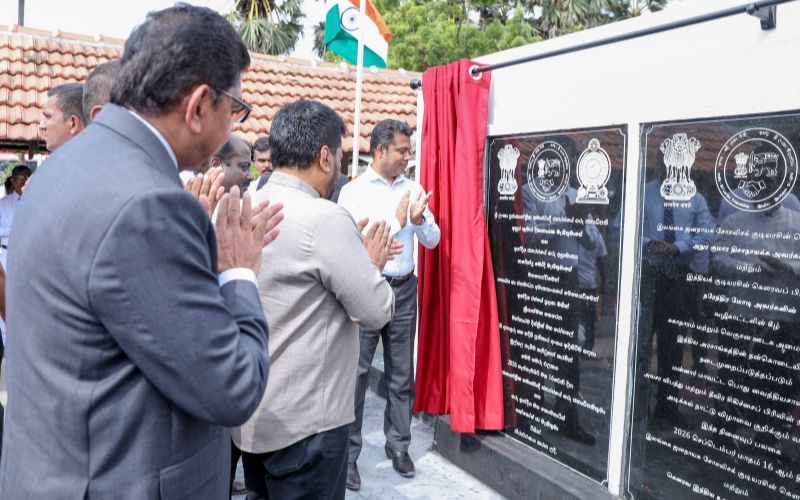
Construction work on the Accident and Emergency Unit at the Mannar District General Hospital commenced this morning (16) under the patronage of President Anura Kumara Dissanayake.
The Accident and Emergency Unit, which is being constructed at a cost of Rs. 600 million with a grant from the Government of India, will be equipped with all modern facilities and will further expand healthcare services for the people of Mannar. Construction is scheduled to be completed in the first quarter of 2028.
Upon completion of the project, the people of Mannar will be able to receive emergency trauma care and other specialised healthcare services without having to travel to Colombo or other major cities. At the same time, the Government has taken steps to provide the Mannar District General Hospital with the medical equipment and staff required to support these services.
President Anura Kumara Dissanayake, who attended the commencement of construction work on the Accident and Emergency Unit, also engaged in a cordial conversation with members of the hospital staff.
Addressing the ceremony held thereafter, Minister of Health and Mass Media Dr. Nalinda Jayatissa said that as the Mannar area, which is expected to make an important contribution to the national economy, develops, this project will help ensure quality healthcare services for its people. The Minister further emphasised that, in creating a “A Thriving Nation – A Beautiful Life”, the Government is committed to ensuring healthy and disease-free lives for all 21.7 million citizens of the country.
Further remarks by Minister of Health and Mass Media Dr. Nalinda Jayatissa
“The Mannar District is an area that is expected to make an important contribution to our national economy. A large number of local and foreign tourists will visit this area both now and in the future.
With the development of transport facilities, Mannar will experience further economic growth. In such a context, upgrading the services of the Mannar hospital will be important in ensuring quality healthcare services for the people of this area as well as those who visit the region.
Accordingly, construction of this Accident and Emergency Unit will be completed and the facility will be made available to the public in the first quarter of 2028. In addition, staff quarters for doctors at the Mannar District General Hospital are being constructed in a four-storey building at a cost of Rs. 243 million. These construction activities are also expected to be completed within one and a half years. Construction of the new Paediatric Unit, being built at a cost of Rs. 230 million, is also expected to commence within this year.
Similarly, the CT scanner that you have been continuously requesting will be provided to you by around February next year. It is worth approximately Rs. 250 million. While these building facilities are being developed, we will also provide the staff required by the hospital. You have also received intern medical officers for the first time in the history of this hospital. Several more intern medical officers will be assigned to you this October. At the same time, steps are currently being taken to address the shortage of specialist medical officers.
On 31 October, we will recruit 2,600 new nurses, and a portion of them will be assigned to this hospital. Personnel required for the allied health professions are also currently undergoing training. Once their training is completed, the services of several of them will be made available to this hospital. In addition, we will recruit 1,100 Public Health Midwives, a portion of whom will also be assigned to this area.
This Government is taking numerous measures to provide people with healthy lives. Through these initiatives, we hope to improve the health and quality of life of the people in this area.
More than Rs. 600 billion has been allocated to the Ministry of Health over the past two years, and the President continuously monitors all its projects. Going beyond that, I am deeply grateful to the President for joining us today.
We have received the support of the Government of India for this project. I extend my special appreciation to the Government of India, including the Prime Minister, and its people, as well as to the High Commissioner of India and his staff, who have been committed to coordinating these activities and ensuring the success of this project.
Among district hospitals, the Mannar hospital is one with very limited facilities. Despite these shortcomings, I appreciate the dedication of all members of the staff, including the doctors, who remain committed to providing the best possible service to the people. I also consider the President’s visit to be a recognition of your service.
Two years ago, on 21 September 2024, the people of this country gave a clear mandate to create a “A Thriving Nation – A Beautiful Life”. That mandate was further strengthened in November 2024. Under the mandate to create a “A Thriving Nation – A Beautiful Life”, we have been entrusted with the responsibility of ensuring healthy and disease-free lives for all citizens of this country.
Your area of residence, profession, wealth or ethnicity is of no relevance to us in this regard. The Government’s objective is to create a beautiful life through healthy and disease-free living for all 21.7 million citizens of Sri Lanka.”
High Commissioner of India Santosh Jha:
“The agreements for the emergency unit in Mannar and the medical ward complex in Mullaitivu were signed under President Dissanayake’s leadership. I am happy to see these commitments transitioning smoothly into swift implementation.
His Excellency the Prime Minister of India, Shri Narendra Modi, has said that the development assistance extended by India to Sri Lanka comes with a deep sense of responsibility, a duty that one naturally feels for one’s family member.
We remain firmly committed to working closely with the Government of Sri Lanka and the people of Sri Lanka for the well-being and prosperity of all communities across the island. As neighboring countries and close partners, we will continue to walk together this shared path toward lasting progress and development of our peoples.”
Secretary to the Ministry of Health and Mass Media Dr. Anil Jasinghe
“For several decades, injuries and accidents have been the leading cause of hospital admissions in Sri Lanka. As Mannar is geographically somewhat isolated, it is extremely important for the district to have access to quality, free healthcare services without delay.
The assignment of intern medical officers to this hospital commenced this year. Arrangements are also currently underway to purchase a CT scanner for the Mannar District General Hospital. The hospital is expected to receive improved radiology facilities by the end of this year or the beginning of next year.
I must say that, during my 36 years in public service, last year was the only period during which I did not face any financial difficulties in carrying out my duties. The prudent macroeconomic management of the current Government, including President Anura Kumara Dissanayake, has created the fiscal space required to develop the country’s health services.”
Mannar District Bishop Rt. Rev. Gnanapragasam Anthonipillai, Northern Province Governor Nagalingam Vethanayahan, Members of Parliament representing the Mannar District, Secretary to the Ministry of Defence, Air Vice Marshal Sampath Thuyacontha (Retd), Chiefs of the Defence Services, officials of the Ministry of Health, officials of the High Commission of India in Sri Lanka, Consul General of India in Jaffna Sai Murali S. and officials of the Indian Consulate in Jaffna, among others, attended the occasion.
[President’s Media Division]
News
Special Cabinet Subcommittee and Officials’ Committee appointed to address El Niño Climate Impact meet

The Special Cabinet Subcommittee and Officials’ Committee appointed to take necessary measures to address the impact of the El Niño climate phenomenon met for the fifth time at the Presidential Secretariat on Monday (14) afternoon , under the chairmanship of Minister of Environment Dr Dhammika Patabendi.
As the El Niño climate impact is expected to transition from the current dry conditions to wetter weather over the next two months, the committees held an extensive discussion on measures to address the anticipated change in weather conditions.
The committees decided to raise public awareness on potential disasters, including floods and landslides that could occur due to increased rainfall. Attention was also given to conducting disaster preparedness drills to familiarise the public with the appropriate measures to be taken in the event of such emergencies.
It was instructed that initial preparedness drills be conducted in the districts of Kandy, Badulla, Matale and Nuwara Eliya, which are considered vulnerable to landslides and that the necessary measures be taken without delay.
The meeting also decided to implement a public awareness programme through electronic and print media. Discussions were also held on the importance of preparing the public in advance by establishing operational centres at Divisional Secretariat level.
In addition, the committees reviewed the progress of relief measures already being implemented for people affected by the prevailing El Niño conditions, as well as the progress of the planned measures ahead.
Minister of Housing, Construction and Water Supply Dr Susil Ranasinghe, Minister of Plantation and Community Infrastructure Samantha Vidyaratne, Secretary/Convener of the Special Cabinet Subcommittee, Chairman of the Officials’ Committee and Chief of Staff to the President Prabath Chandrakeerthi, Secretary to the Ministry of Agriculture, Livestock, Land and Irrigation D. P. Wickramasinghe, Director General of the Department of Meteorology A. L. K. Wijemanne, Director General of the Disaster Management Centre, Major General Sampath Kotuwegoda (retired), Director General of the National Building Research Organisation Dr Gamini Jayatissa, General Manager of the National Water Supply and Drainage Board Engineer T. Bharatheedasan and officials from the relevant institutions were also present at the meeting.
[President’s Media Division]
by Norman Palihawadane
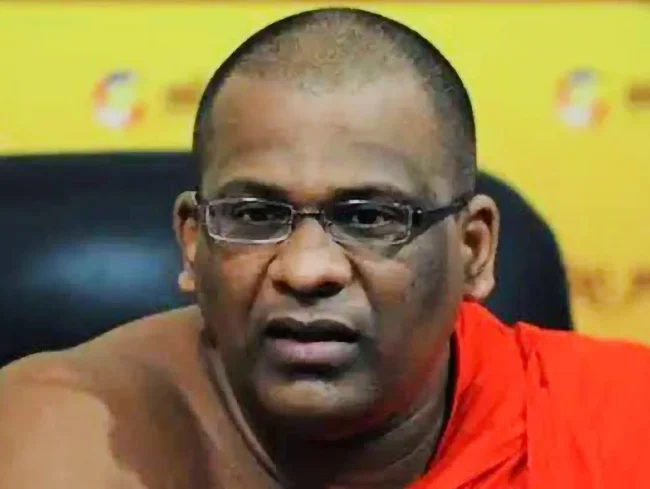
Bodu Bala Sena (BBS) General Secretary Ven. Galagoda Aththe Gnanasara Thera’s whereabouts have remained unknown since the Supreme Court, on Monday, annulled a presidential pardon granted to him in 2019.
Prison officers visited the Thera’s temple in Nawala, Rajagiriya, to take steps to return him to prison to serve the unexpired portion of his six-year sentence. However, monks at the temple had reportedly informed the officials that they were unaware of his whereabouts.
Police spokesman ASP F.U. Wootler said a separate court order was required for the police to trace the Thera, or assist in taking him into prison custody. No such order had been issued so far, he claimed.
Meanwhile, sources close to Gnanasara Thera said he was expected to attend a book launch in Colombo tomorrow (17),
The development follows the Supreme Court declaring the 2019 presidential pardon granted to Gnanasara Thera, by then President Maithripala Sirisena, null and void.
A three-member Supreme Court bench held that the pardon had been granted arbitrarily and violated public trust and principles of natural justice.
Gnanasara Thera had been serving a six-year prison sentence for contempt of court when the then President Sirisena granted him the pardon, in May, 2019. He had served only about nine months of the sentence at the time.
With the pardon annulled, the original sentence remains in force and the Thera is now required to serve the balance of his six-year term.
The Supreme Court ruling has raised questions over the procedure to be followed to return him to prison, with police and prison authorities yet to take custody of him.

Construction of Accident and Emergency unit at Mannar District General Hospital begins under President’s patronage

Special Cabinet Subcommittee and Officials’ Committee appointed to address El Niño Climate Impact meet

Showers about 75 mm are likely at some places in the Western, Sabaragamuwa, Central and Southern provinces

Brook, Buttler, Baker star as Sri Lanka slump to 119-run rout

Where is Gnanasara Thera?Police pass buck to court

Russian citizens in Lanka to vote in State Duma elections

‘Dates have the highest sugar content to fight Coronavirus’

Sunday Island 27 December – Headlines

#SundayIsland 17th December – Headlines

Sunday Island – 28th March

Sunday Island Headlines – 21 March

Sunday Island – 21st February – Headlines
-

 Sports6 days ago
DDS set to lose Test captaincy
-

 News6 days ago
Sri Lanka faces new grid challenge as rooftop solar surges: former CEB GM
-
 Latest News5 days ago
Shafali, Deepti power India into sixth T20 Asia Cup final
-

 Latest News5 days ago
Sri Lanka thwart Fatima Sana challenge to secure Asia Cup final spot
-

 News4 days ago
Gnanasara Thero absconding after SC ruling
-
 Features7 days ago
Lost for 90 years: Rare Goby resurfaces in Jaffna
-

 News5 days ago
Ammunition cache found in old Kandy bungalow
-
 Latest News7 days ago
Italian Naval Vessel ‘ITS Giuseppe Garibaldi’ arrives in Colombo