
Features
More on diving off the Pearl Banks


by Rex. I. De Silva
(Continued from last week)
Sharks
In the nineteenth century the Government employed a “shark charmer” to protect divers during the pearl fisheries. He did this by means of incantations and other “magical” rituals. There apparently were no fatalities from shark attacks while he was on duty. This is hardly surprising as during the old pearl fisheries, divers and boats arrived from as far away as Arabia, (what is now) Pakistan, and India. Hundreds of divers and boats, and the resulting noise and turmoil, would have kept even the boldest sharks away. The chank divers and we did very well without the assistance of such a virtuoso.
Nevertheless, sharks (mora) were not rare – far from it. One or two harmless white-tip reef sharks often stayed around while we were spearfishing, possibly in the expectation of stealing our catch. In fact, we speared fish every day in order to feed the chank divers, boat crew and ourselves. Nurse sharks, which are primarily nocturnal, stayed in their caves during the day where we sometimes encountered them apparently in deep sleep. A variety of requiem sharks, including the blacktail, reef blacktip, graceful shark, pig-eye shark, a dangerous looking brute, and blacktip were seen from time to time.
One morning while I was spearfishing a largish shark swam towards me. The vertical dark stripes helped to identify it as a tiger shark (koti mora), a reputedly dangerous species. It was probably attracted to the fish I had speared which were on a stringer loosely fastened to my waist. I quickly undid the stringer, deciding to let the shark have the fish if it became aggressive. I also released the safety catch of my speargun and kept a finger on the trigger, although the weapon would probably have been poor protection at best.
The shark approached slowly to within about five metres, made a wide half-circle around me and then, seemingly alarmed, swam away. I had mixed feelings at the time; anxiety, combined with admiration at the beauty and grace of the creature. In retrospect, however, this encounter was to me the highlight of our expedition. This was the only live tiger shark I saw in Sri Lanka. Later I came across others in the Maldives, but that is another story. The chank divers told us that they often saw hammerhead sharks, but disappointingly we did not see any.
I speared a jack (parawa) on one of the deeper reefs, and as I was surfacing for air a largish grey shark seized the fish, tore off the posterior half and swam away, leaving only the head and part of the thorax on my spear. I am often asked if sharks are a danger and I invariably reply that they are usually a potential rather than actual danger, in Sri Lankan waters at least.
Most of the sharks we saw were accompanied by suckerfish. These are slim fish with a sucker apparatus on their heads by which they attach themselves to sharks, and other creatures, such as turtles and rays. The suckerfish feeds off scraps from its host’s meals and also gets transportation and possibly a degree of protection from its larger companion.
Large schools of yellowfin barracuda (jeela, silava) were common. These fish have a Jekyll and Hyde reputation. They school during the day when they are usually quite harmless but disperse at dusk to hunt individually. They can then become dangerous and several divers have been attacked at night.
Rays
We encountered many large eagle rays (vavul maduwa). They are gentle giants, which appear to fly underwater like enormous birds. Eagle rays relish chanks and other shellfish and we often came upon remains of their feasts on the seabed.
I saw my first guitar fish, a strange creature which looks like a cross between a shark and ray. It is however a true ray as the gill-slits are on the ventral surface. We also encountered a few electric rays. These are sluggish bottom-dwellers which have the ability to produce a powerful electric shock that is used to stun prey and also for self-defence. I might mention that as a schoolboy I hand-speared one of these rays and received a shock which made me lose hold of my spear and also deprived me of speech for a minute or two.
Turtles
The herbivorous green turtle (gal kasbava, mas kasbava) was common on the seagrass and seaweed beds. We also occasionally met with its relatives the hawksbill (pothu kasbava, pang kasbava) and olive ridley (mada kasbava, eramudu kasbava). One morning we saw a very large loggerhead turtle (Caretta caretta), so-named because of its large head. This is the second largest turtle species in our waters. We were probably the first humans it had seen as it swam around us in apparent curiosity.
Most interesting though was the giant leatherback turtle (dhara kasbava, vavul kasbava ) in which a thick leathery covering replaces the bony carapace of the other turtles. Leatherbacks grow to almost three metres in length and although not rare on the deeper banks, are wary and difficult to approach underwater. From the boat I watched one dive. It flipped backwards, almost somersaulting to submerge.
Some giant fish
Giant groupers (kossa, gal bola, gal kossa) were rather scarce, possibly due to a relative sparseness of large caves. Nevertheless we saw a few estuary groupers, at least one of which we estimated at around 100 kg in weight.
A single, large, one and a half metre long potato cod – actually a grouper despite its name – turned up when I shot a large golden snapper, which a white-tip reef shark tried to steal off my spear. The grouper also wanted the snapper and rammed the shark, making it retreat a short distance. The grouper then made for my fish and I had to kick at it and swim for the boat. The shark lost interest, but the grouper trailed me until I threw the snapper into the vessel.
While diving in deep water Rodney pointed out two large fish which resembled the common reef sweetlips (boraluwa), except that each probably weighed around 50 kg. These were the first giant sweetlips I had seen. The species was always rare and sightings few.
Two great jacks emerged from a crevice in a sandstone reef where I was diving. One bore the normal silvery-grey coloration of the species whereas, to my great astonishment, the other was black. As I had never before observed a black jack (no pun intended) I asked Rodney if he could account for this aberration. He replied that he too had on a few occasions come across this phenomenon, but had no ready explanation. It was many years later that a research paper on Caribbean marine fishes clarified the mystery. The black coloration is apparently the courtship (or mating) livery of male jacks of several species. The fish presumably revert to their normal coloration after sometime.
Leisure in camp
On some days we would finish diving early. Rodney and I would then explore the jungles around our camp, while Trevor who did not like jungles stayed back. We would encounter grey langurs, black-naped hare, and other denizens of the forest. After a shower of rain we often saw star tortoises grazing out in the open. One purpose of these jungle outings was to shoot a few grey partridge for the pot in order to vary our otherwise monotonous fish diet. Nights in the camp were peaceful and quiet. The silence was occasionally broken by the strains of “Oh Danny Boy”, Rodney’s favourite song played on his piano accordion, or sometimes by the rather mournful chants of the divers.
The dark unpolluted skies were an astronomer’s delight, with stars shining as they never do in the city. It was here that I saw my first fireball or bolide, a very bright, slow-moving meteor or shooting-star. This one left a glowing train, which remained visible for several minutes.
Reef off Silavatturai
One morning Rodney persuaded the captain to take us to Silavatturai reef, which he (Rodney) had visited earlier. The reef is shallow and is made up of magnificent corals interspersed with sandy patches. In most of these sandy areas we would find one or two large coralheads, around and under which were a variety of fish, including schools of silver sweetlips (boraluwa) and numbers of lobsters, including the large ornate spiny lobster (pokurissa).. That day we speared our quota of fish in less than fifteen minutes, and at night dined on lobster.
Several species of gastropod molluscs, including the large tiger cowrie (kavadiya) were common on the reef. The sandy areas harboured a variety of cone shells, including the colourful but highly venomous textile cone. This mollusc has a poisonous sting capable of killing a human. Colourful angelfish (manamalaya), butterflyfish, and moorish idols were almost everywhere, giving the reef a festive atmosphere. There were no large fish, the exception being a single great barracuda ( jeela, silava, ulava). This species, unlike its congener the yellowfin, can be dangerous by day as well as at night, although attacks are rare. If harpooned it will sometimes turn on its attacker and, being large and having a fearsome set of dagger-like teeth, is well able to cause severe injury or perhaps even death.
It was on Silavaturai reef that we encountered parrotfish in some numbers. These are often brightly coloured fish in which the teeth are fused into a parrot-like “beak”, giving the group its name. Parrotfish feed primarily on algae and corals; hence their relative abundance on this reef. The males of most species occur in two phases, viz. the initial phase (sexually mature) young males which resemble the females, and the older terminal phase males (“supermales”) which are usually larger and differ considerably from the younger males.
In the past this sometimes led to confusion, with females and young males being classified as one species and “supermales” as another. Despite the fair size of many individuals, they were spared from our spears as the flesh of most parrotfish, while edible, lacks flavour. Another interesting fact about this family is that many species of parrotfish secrete a mucous cocoon around themselves before settling down to sleep at night, which they do in a crevice or cave in the reef. The exact function of the cocoon is not known, but is suspected to be protective.
It was on Silavatturai reef that I first encountered the courtship of a pair of octopuses (buvalla) in four metres of water. They stayed at arms length and the (presumed) male gently stroked the female with one of its arms. I found this behaviour touching and almost human in its gentleness. Frank Lane in his classic work “The kingdom of the octopus” states that courtship can go on for hours or even days. The female octopus however makes the ultimate sacrifice. After laying her eggs in an underwater cave she stops feeding to guard and care for them. She uses the suckers on her arms to clean them and jets water from her siphon to keep them aerated. One of her duties is to protect the eggs from predators, including other octopuses. The mother often dies soon after her babies hatch out.
It was in deeper water on the seaward side of the reef that we were spectators to a mysterious act. Two large cuttlefish (poku dhalla) had joined together head-to-head with arms entwined. In this species a blue line runs around the body at the junction of mantle and fin. In the two individuals we watched, these lines glowed and pulsated like neon lights. They remained motionless, except for the rippling movements of their fins. Whether this was courtship, mating, or aggressive behaviour between two males I did not know. Rodney and Trevor were equally mystified. None of us had seen anything like it before. I learned subsequently that this was mating behaviour.
All too soon our ten-day expedition came to an end and we regrettably had to return to “civilization”. As we packed the vehicle and said good-bye to our new friends, I promised myself that I would return to the Pearl Banks someday. I never did.
Rodney passed away in November 1989. He is sorely missed by his many friends. Trevor now lives in retirement in Melbourne. We meet occasionally but strangely never talk about the underwater adventures we once shared.
(Concluded)
(Excerpted from ‘Jungle Journeys in Sri Lanka: experiences and encounters’ compiled by CG Uragoda)

 Looking back over the years since the 9/11 catastrophe, it could be said that barring former Iranian President Mohammad Khatami no world political leader of note has made an earnest effort to change the nature of global political discourse for the better. Khatami won world acclaim for his pronouncement that the time is right to launch and sustain a ‘Dialogue among Civilizations’.
This was in marked contrast to US political scientist Samuel P. Huntingdon’s epochal theses, formulated in the wake of 9/11 and other global political tumults that the Post Cold War era is essentially one of conflicts among civilizations. That is, people’s identity markers, such as culture and religion, are the prime shaping forces of international conflicts.
From a Political Realism standpoint, Huntingdon’s theory may seem to have gained in credibility over the years but it is Khatami’s pronouncement that has evoked an empathetic response in the hearts and minds of publics world wide. So much so, 2001 was proclaimed by the UN General Assembly as the ‘Year of Dialogue among Civilizations’.
It could be said that the latter proclamation was an endeavour to give back to humans their essential identity of peace-makers. It was an eschewing of the position that war and conflict are central to the human condition and amounted to upholding constructive dialogue among peoples and civilizations as a path to peace.
That things have not worked out in the world in keeping with the expectations of peace makers does not in any way invalidate the thesis that peace is the essential propensity of humans.
If peace-making is seemingly ineffective it is primarily because the path to peace is narrow, tortuous and time-consuming. On the other hand, violence usually misleadingly recommends itself to the human as the more expedient, cost-effective way out of a conflictual situation. However, the ultimate cost of the latter approach is prohibitive because it brutalizes the human beyond recognition.
Some of the evidence is before our eyes. The Trump administration, for example, has, minus much forethought, unleashed what may be described as a ‘quick-fix’ war against Iran but is now finding that it is in a veritable military quagmire in West Asia. The priority for the administration now seems to be a face-saving escape strategy. Such are the costs of the war option.
However, there is no denying that much remains to be done by the world community to bring peoples and cultures together with a view to enabling them to work as one for the cause of a less dangerous world.
Meanwhile, the broad divisions in international politics continue and past political polarities are lingering to the detriment of enhanced international understanding. The East and the West and the South and the North, for instance, are continuing to work in separate collectives, more or less, and no notable efforts are being made by the international community to bring these sides together for the purpose of united constructive action that could usher greater international well being.
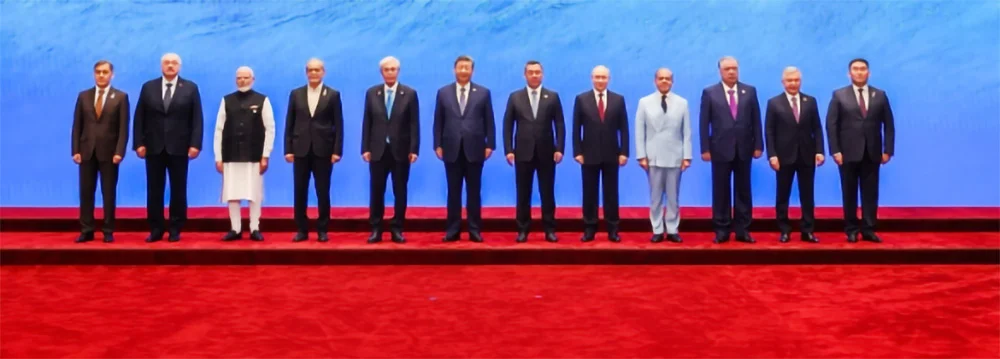
The recent Shanghai Cooperation Organization Summit, 2026, held in Kyrgyztan was a replication of the above broad trends but there were some statements at the forum by Indian Prime Minister Narendra Modi that deserve special scrutiny and comment.
Modi was quoted saying among other things: ‘The land of Gandhi and the land of Buddha share a single message: the path to peace!..We must move away from endless war towards an end to the war. This is essentially for the well being of humanity. A peaceful resolution to all issues at the earliest is the call of humanity, and this is India’s message.’
The above is the language of international peace and unity. It is such language that will help in building bridges among civilizations and advance the cause of world peace. Besides, it will help bring a measure of understanding between North and South.
In this regard, the Trump administration could take a leaf or more from the Modi government. Unless it makes a ‘U turn’, as it were, in the direction of peace and reconciliation it is very unlikely that the US and the world would experience any stability worth speaking of.
Right now the US is savaging the sovereignty of Venezuela. It is a question of the ‘Empire striking back’ but Venezuela is a far cry from Iran. Iran has outsmarted the US on the battle field and is in a position to influence broad trends in the world economy since it still has control over the Hormuz Straits. That is, Iran could exercise a determining influence over world oil, gas and energy prices. In short, the US consumer’s future peace of mind is very much in the hands of Iran.
Given the above backdrop it should have dawned on the US political leadership that working towards cordial relations with Iran is the most advisable option. The US, simply, has too much to lose otherwise.
Likewise, Russia too needs to take a leaf from India. It is plain to see that its invasion of Ukraine is proving totally ineffective. It has not brought any measure of peace for the Russian people. Russia is right now experiencing a rerun of its military misadventure in Afghanistan. On the other hand, sections of the peoples concerned have been victimized and even brutalized.
Accordingly, there needs to be a coming together of democratic opinion worldwide for a fresh consideration of the options facing humanity. There is a dire need for value-based politics to take the place of Realpolitik. Besides, the language of peace and humanity needs to replace current divisive discourse with its stress on polarities and antagonisms.
International organizations of the stature of the UN need to take the lead in spearheading the above initiatives. Right now the UN gives the impression of being a spent force. This columnist hopes that he would be proved wrong on this score because the UN remains the only hope of the poor and victimized. It will be in the interests of all peoples for the UN to rejuvenate itself and dedicate itself increasingly enthusiastically to the cause of international peace.
Whether it be the South or North, dynamic, visionary political leadership and direction emerges as essential. The need is for voices that would espouse peace and accord across boundaries and divisions. For South Asia, India and Pakistan have the potential to fill this lacuna.
by Shelton Dharmaratne
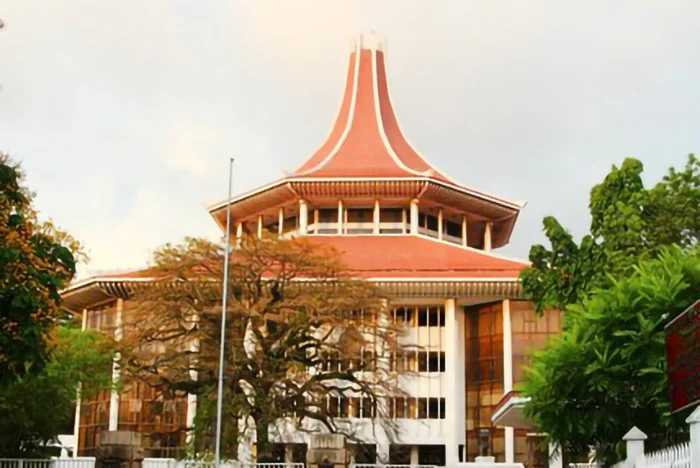
Sri Lanka has reached an important constitutional moment.
The proposed 22nd Amendment has moved beyond political debate and into the constitutional process through which its validity will be examined. That development should change the character of the national discussion.
That is understandable in a politically contested environment. But Sri Lanka should now resist reducing a question of constitutional design to a contest over political positions.
The deeper issue concerns the relationship between constitutional reform, judicial independence and public confidence in the institutions of the State.
The Supreme Court will determine the constitutional questions before it. Public commentators should therefore exercise restraint in predicting, interpreting or seeking to influence that determination. But restraint does not require silence. It requires a more rigorous discussion of the institutional principles at stake.
A narrower constitutional question than the political debate suggests
The proposed amendment principally concerns the retirement ages of judges of the Supreme Court and Court of Appeal, together with an increase in the maximum number of judges permitted on the Court of Appeal.
Under the proposal, the retirement age of Supreme Court judges would rise from 65 to 67 and that of Court of Appeal judges from 63 to 65. The maximum number of Court of Appeal judges would also increase from 19 to 24.
Other proposed changes concerning the retirement ages of judges in the lower courts arise under separate legislation. This distinction matters because the public debate has sometimes treated the wider package of judicial reform as though it formed a single constitutional proposal.
Nor should the central issue be reduced to whether retaining experienced judges is inherently good or inherently dangerous. Both propositions are too simplistic.
Sri Lanka faces a substantial burden of pending litigation, and delays in the administration of justice impose significant costs on citizens, businesses and the State. Experienced judges represent an institutional resource. Continuity, accumulated knowledge and familiarity with complex areas of law cannot always be replaced immediately.
Those are legitimate policy considerations.
But the opposing concern is equally important: judicial tenure is not merely an employment condition. It is a structural component of judicial independence.
The real question is institutional
The critical question is not whether an individual judge is capable of acting impartially. It is whether the constitutional structure provides adequate protection against circumstances in which judicial tenure could become connected, directly or indirectly, with political authority.
That is an institutional question, not an accusation against individual judges.
A judge may be entirely conscientious and independent while the institutional arrangements surrounding the judiciary nevertheless create public doubts about independence. Constitutional democracies therefore cannot depend solely on the personal integrity of office-holders. They must construct institutions capable of preserving independence even when governments, individuals and political circumstances change.
This is particularly relevant when constitutional reform concerns the tenure of serving members of the superior judiciary.
The institutional sensitivity of such a proposal should neither be exaggerated into an allegation of improper motive nor dismissed as irrelevant. The appropriate response is transparency, procedural fairness and confidence in constitutional safeguards.
Legitimate objectives do not settle constitutional questions
The government has stated that its objectives include strengthening the administration of justice, addressing delays, retaining judicial experience and increasing institutional capacity.
Those objectives deserve serious consideration. Sri Lanka needs judicial reform. Citizens waiting years for their cases to be concluded experience the justice system very differently from those discussing it in Parliament, courtrooms or universities.
A government is therefore entitled to propose reforms designed to improve judicial efficiency.
But legitimate objectives do not automatically resolve constitutional objections. The relevant question is whether the means chosen are compatible with the constitutional structure and whether sufficient safeguards exist against unintended institutional consequences.
That is precisely why constitutional scrutiny matters.
The concerns of the Bar Association of Sri Lanka (BASL) should likewise be examined without political labelling. Opposition to the proposed changes should not automatically be characterised as opposition to judicial reform or an attempt to obstruct the government. At the same time, invoking judicial independence does not place any argument beyond scrutiny.
The appropriate questions are straightforward:
Does extending judicial tenure strengthen the administration of justice?
What risks, if any, could it create for judicial independence?
Are adequate institutional safeguards in place?
Does the proposal operate prospectively, or does it affect judges already serving?
Could the same objectives be achieved by filling vacancies, increasing judicial capacity, improving court administration and strengthening case management?
These questions can be examined rationally without attributing improper motives to either side.
Judicial vacancies and institutional confidence
Recent concerns raised by the BASL regarding judicial vacancies add another dimension to the debate. The BASL has argued that vacancies in the Supreme Court contributed to the retirement of a senior Court of Appeal judge without promotion to the Supreme Court, despite vacancies having existed. It has also raised concerns regarding forthcoming judicial retirements and the need for timely consideration of appointments.
Such matters should not be treated as evidence of the motives behind the proposed amendment. They do, however, illustrate a broader principle.
Judicial independence is shaped not only by the retirement age written into the Constitution. It is also influenced by how vacancies are filled, how promotions are determined, how seniority and merit are assessed, and whether judicial officers and the public believe that institutional decisions are made according to transparent and defensible criteria.
The government has an opportunity to address these concerns constructively.
Prompt appointments based on publicly defensible principles would strengthen confidence in the judiciary irrespective of the eventual outcome of the constitutional debate.
Seniority, merit and transparent criteria
The controversy also exposes a longstanding question concerning judicial appointments.
Seniority has traditionally carried considerable weight in judicial advancement. Yet seniority alone need not be the sole measure of merit. Conversely, replacing established practices with undefined assessments of “merit” could create another institutional problem.
If governments or appointing authorities can determine which judges are sufficiently meritorious without clear and objective criteria, uncertainty itself may become a source of institutional anxiety.
Sri Lanka would therefore benefit from clearer, objective and defensible standards governing judicial appointments and promotions.
Such standards would protect judges as well as appointing authorities. They would reduce opportunities for favouritism, strengthen institutional confidence and make it harder for political actors to portray every appointment as politically motivated.
Institutional rules are stronger safeguards than assurances of good intentions.
The State is larger than any government
One principle deserves particular emphasis: a government is not the State.
Governments are temporary. The constitutional State is continuing. Political parties change, parliamentary majorities change and political priorities change. The judiciary, however, must continue to function independently of whoever occupies the government benches.
The judiciary is neither a government institution in the political sense nor an Opposition institution. It is an institution of the State whose legitimacy depends upon its independence from both.
For that reason, governments should exercise particular caution when proposing constitutional changes affecting the judiciary, even where the policy objectives are legitimate.
The stronger a government is politically, the greater its responsibility to demonstrate institutional restraint.
That is not political weakness. It is constitutional maturity.
Public confidence is a constitutional asset
The most consequential issue may ultimately be neither retirement age nor judicial capacity, but public confidence.
Courts do not possess political power in the conventional sense. Their authority rests substantially on the acceptance of their decisions as legitimate.
Citizens will sometimes disagree with judicial decisions. But where the judiciary is perceived as independent, even unpopular decisions can command respect. If judicial institutions are perceived as being shaped by political convenience, even legally sound decisions may become vulnerable to suspicion.
Constitutional reform affecting judicial tenure must therefore be evaluated not only by its immediate administrative benefits but also by its effect on institutional credibility.
A reform that produces short-term efficiency while weakening confidence in judicial independence could impose a greater long-term cost. Conversely, reform that improves efficiency while preserving independence can strengthen both justice and public trust.
The challenge is not to choose between judicial efficiency and judicial independence. It is to achieve both.
If a referendum arises …
If the constitutional process ultimately requires approval by the people at a referendum, the debate should rise above the conventional government versus Opposition contest.
The electorate should be given a clear constitutional question and sufficient information to assess it.
Citizens should understand what problem the amendment seeks to address, why the proposed mechanism is considered necessary, what institutional risks have been identified, what safeguards exist and whether alternative measures could achieve the same objectives.
A constitutional referendum deserves a higher standard of public discussion than an ordinary election campaign.
The people would not merely be choosing a political side. They would be deciding the institutional framework within which political power and judicial authority operate.
Beyond who wins
The most important question arising from the proposed Twenty-Second Amendment is therefore not simply whether the government succeeds or whether the Opposition and BASL prevail.
Nor is it ultimately whether judicial retirement ages become 67 and 65 or remain unchanged.
Those are immediate constitutional questions. The deeper issue is what Sri Lanka learns from the controversy.
If the government seeks to modernise and strengthen the justice system, that objective deserves serious consideration. If the BASL and others warn that particular reforms may affect judicial independence, those concerns deserve equally serious examination.
Neither side strengthens the country by assuming that the other is acting in bad faith.
The constitutional system is strongest when legitimate disagreements are resolved through institutions rather than political pressure.
Whatever the eventual constitutional outcome, Sri Lanka will still face the underlying challenges of judicial vacancies, case delays, institutional capacity, judicial appointments and public confidence. Those problems will not disappear with a judicial determination, nor should the national conversation end there.
Sri Lanka should instead seek a broader consensus around a fundamental proposition:
Judicial reform and judicial independence are not competing objectives.
The real challenge is to pursue reform in a manner that strengthens the judiciary without placing its independence under suspicion.
That requires sound legislation, transparent appointments, adequate resources, efficient court administration, responsible political conduct and safeguards capable of surviving changes of government.
The present controversy will eventually pass. Political arguments surrounding it will fade.
But constitutional arrangements can endure for decades.
That is why Sri Lanka must look beyond the immediate political contest.
The ultimate test is not who wins today’s constitutional argument. It is whether, when the political moment has passed, Sri Lanka has a judiciary that is more efficient, more accessible and more trusted—while remaining sufficiently independent to hold every government, including future governments, within the boundaries of the Constitution.

 Sri Lanka’s fashion world lost one of its brightest stars Monday morning – veteran model, actress, and elite pageant trainer Chulpadmendra “Chula” Kumarapathirana.
Her sudden demise has certainly come as a shock to many.
Chula had just completed a major event on Sunday (30th August), and was no more in the land of the living the following day (31st August).
Born in Colombo, she was an old girl of Buddhist Ladies’ College and later studied at the National Institute of Business Management, and has many awesome achievements to her credit.
In 2006, she won the “Miss Tourism Model of the World Press Award” in Tanzania.
She entered the entertainment industry, as an actress, and gained popularity through the teledrama “Wahinna Muthu Wessak.”
Chulpadmendra has been on TV, and many Sri Lankan hip-hop music videos, including “Hanthane” and “Heena Hirimal”, and has had several other minor acting jobs since then.
She hosted the Derana Miss Sri Lanka for Miss World 2008 and even participated in the reality TV show Sirasa Dancing Star.
For over 25 years Chula was active in local and international fashion and founded the Chulpadmendra Catwalk Studio to train young newcomers
She trained hundreds of models for runway, photoshoots, auditions, and international pageants.
She was known as a fierce mentor who believed in “not just learning to walk, but learning to command the runway”.
Many young models called graduating from her studio their “happiest moment.”

Chulpadmendra “Chula” Kumarapathirana: Many young models called graduating
from her studio their “happiest moment.” (L)/ Won the “Miss Tourism Model of the World Press Award” in Tanzania (R)
Chula was very fond of The Island newspaper and kept in touch with us on a regular basis.
Her last message to The Island was a ‘thank you’ note for the article ‘New benchmark in pageant industry’:
“Thank you, Ivan, for writing such a beautiful article about me. Your unwavering support, encouragement, and belief in me throughout my career mean more than words can express. I am truly grateful for your kindness and generosity.
“My heartfelt thanks also go to The Island newspaper for featuring the article. It is a great honour, and I sincerely appreciate the recognition and support.
“Thank you once again.”
In fact, just a couple weeks ago, she sent a photo of herself for our Glam Scene and that picture I publish today, as part of this story.
May she rest in peace. Our deepest condolences to her family, students, and all who loved her.

22A: SC urged to suspend hearing, appoint full bench

Govt. seeks NATO assistance

Recent ‘Ice’ detection at the Colombo Port made on US intelligence – Embassy

Sri Lanka launches National Food Safety Policy with support from FAO and EU

Mendis, Nissanka return for England white ball series

Janashakthi Life delivers 36% revenue growth, ‘outperforming the industry’

‘Dates have the highest sugar content to fight Coronavirus’

Sunday Island 27 December – Headlines

#SundayIsland 17th December – Headlines

Sunday Island – 28th March

Sunday Island Headlines – 21 March

Sunday Island – 21st February – Headlines
-

 News6 days ago
Eight politicians in drug kingpin probe
-

 Features4 days ago
“Wrap Me Up in My Blazer”— A Gentlemanly Bradby Reminiscence
-

 Business6 days ago
Sri Lanka opens up: A new season of direct connectivity
-

 Features3 days ago
When Sri Lankan stories find their own voice
-
 Latest News7 days ago
Nepal-Tibet floods: What happened, what caused them and who is missing?
-

 Features6 days ago
Redefining ageing in Sri Lanka
-

 Editorial6 days ago
The toxic legacy of two lakes
-

 Business6 days ago
Jaffna Teaching Hospital secures lifeline water supply via ADB-funded Thalaiyadi sea water desalination plant