
Connect with us

News

Over Rs 3.3 bn wasted: BoI unions urge govt. to act on COPE revelations

Published

on

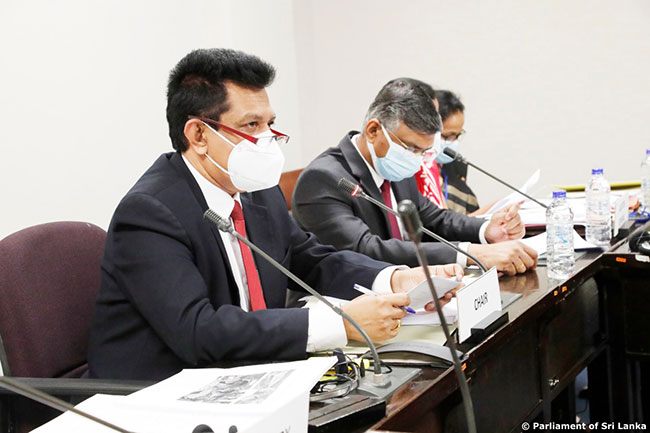
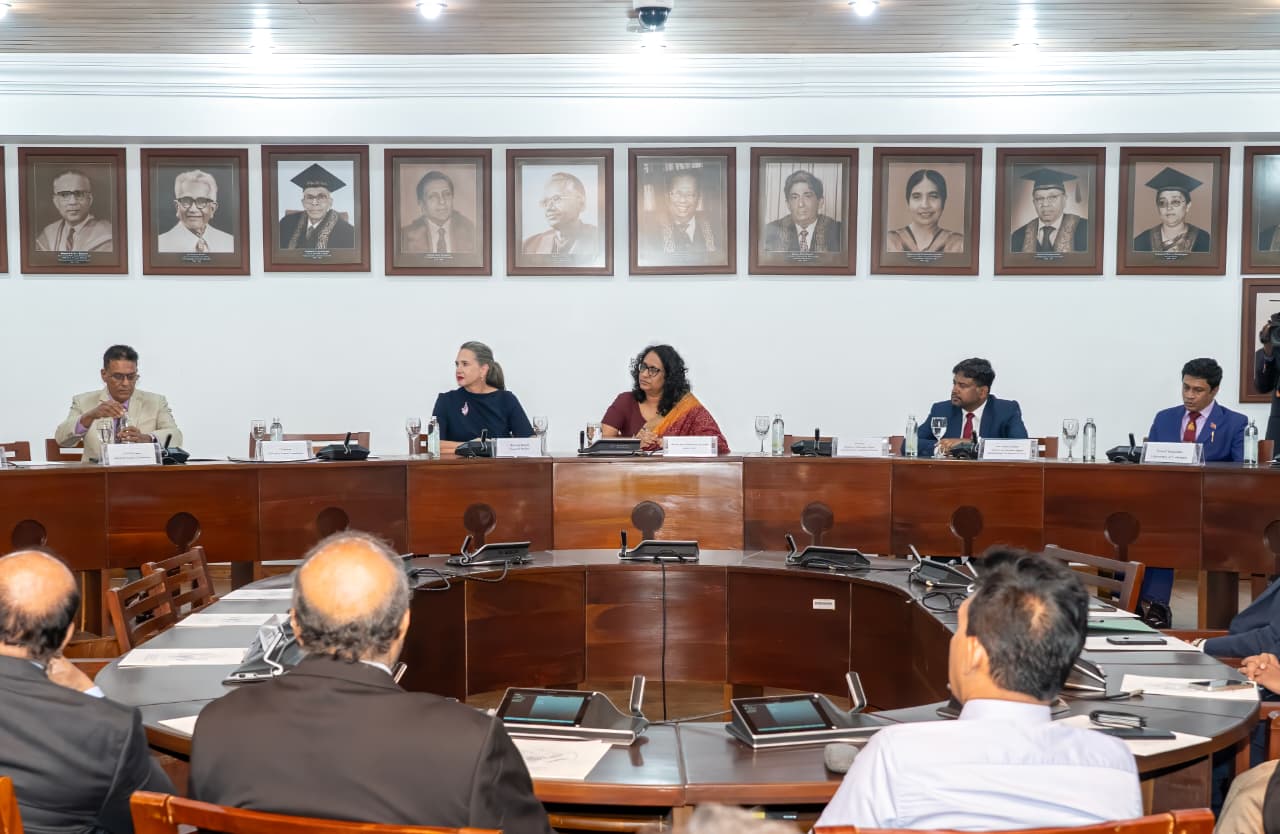
COPE session in progress (pic courtesy Parliament)

SLPP, SJB and UNP workers unite

The government cannot turn a blind eye to the Committee on Public Enterprises (COPE) disclosure of waste, corruption and irregularities at Sri Lanka’s premier investment agency, trade union sources say.

The Communication Department of Parliament Thursday afternoon issued a damning report on the Board of Investment (BoI) following a meeting the parliamentary watchdog committee had with the BOI’s top management headed by its Chairman Sanjaya Mohottala on the same day.

The COPE underscored the urgent need to take remedial measures, a senior spokesperson for the Progressive Workers’ Union Commercial and Industrial Services told The Island yesterday (12).

In spite of making representations to the government at the highest level, the union affiliated to the Sri Lanka Podujana Peramuna (SLPP) couldn’t prompt immediate intervention, the union official said.

According to him, altogether six trade unions including those affiliated to the SLPP, Samagi Jana Balavegaya (SJB) and the United National Party (UNP) have pledged their support at a meeting held on Sept 19.

The BoI comes under President Gotabaya Rajapaksa whereas State Minister D.V. Chanaka is responsible for site development.

Trade Unions representing the BoI recently discussed ways and means to address the embarrassing profligacy at the state agency, relating to various projects, sources said. The COPE exposure couldn’t have come at a better time, they said.

The trade union collective called for urgent intervention pointing out that the all-party group chaired by Prof. Charitha Herath, also of the SLPP questioned the rationale in the BOI decisions to spend over Rs 3 bn on two Export Processing Zones (EPZs) at Milleniya and Bingiriya, under controversial circumstances.

COPE should act on its findings, the trade unions said, urging political parties represented in the watchdog committee to push for remedial measures, the trade union collective said. However, they expressed concern over the government ignoring the important Parliamentary Committee’s findings.

Trade unions said that the report issued by the Communications Department of the Parliament hadn’t dealt with some crucial matters, though from time to time they took up contentious issues with the government. Referring to the recent recruitment of 29 management level persons at a much higher salary scale at a monthly cost of Rs 20 mn and allocation of about Rs. 76 mn to refurbish available offices at the World Trade Centre for the newcomers’ use, trade unions alleged even the basic infrastructure development and repairs had been neglected.

The trade unions also questioned the outsourcing of work currently undertaken by the BoI to outsiders at a very heavy cost to the state enterprise. As part of their overall strategy, the unions have launched a campaign to educate the BoI workers of the developments and what they alleged were attempts to enter into agreements with private organisations for the benefit of the latter.

Trade unions pointed out that unlike many other state enterprises, the BoI hadn’t asked for Treasury assistance as it was financially stable. But, relentless and reckless spending could cause a catastrophe, trade unions said, calling for urgent action.

They also alleged manipulation of the cabinet of ministers by those managing the BoI now.


Continue Reading
Advertisement
Click to comment

Leave a Reply

Your email address will not be published. Required fields are marked *

News

Prof. Pieris says Buddha Dhamma recognised as source of law under Constitution

Published

on

G.L. Peiris

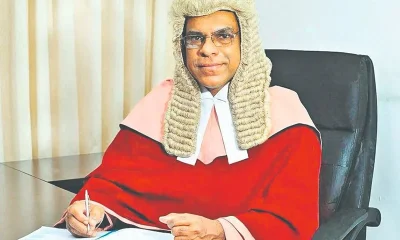
Former Minister and People’s Joint Opposition Convener Prof. G.L. Peiris has challenged the assertion that the Supreme Court’s determination on the 22nd Amendment to the Constitution would be based solely on law and not Buddhist teachings, arguing that such a position is inconsistent with Article 9 of the Constitution and established judicial precedent.

In a special statement, titled “Buddhist Doctrine as a Source of Law in Sri Lanka”, Prof. Peiris has said the issue had arisen during the 22nd Amendment determination proceedings when Ven. Balangoda Kassapa referred to the Buddha Dhamma in his submissions.

According to Prof. Peiris, the Chief Justice responded that the determination would be made on the basis of the law and not Buddhist teachings.

Describing this as a “cavalier dismissal” of the Buddha Dhamma. Prof. Peiris has said it is contrary to Article 9, which gives Buddhism the foremost place and requires the State to protect and foster the Buddha Sasana.

Full text of the statement: In the 22nd Amendment determination proceedings, Venerable Balangoda Kassapa, in his submissions, made reference to the Buddha Dhamma. His Lordship the Chief Justice, in reply, made the strong assertion that the determination would be made on the basis of the law and not Buddhist teachings. This cavalier dismissal of the Buddha Dhamma is totally inconsistent with Article 9 of the Constitution and its authoritative interpretation in judicial decisions.

I. Authoritative Sri Lankan Judicial Authority A few examples may be cited.

In the Antiquities Amendment Bill, the Supreme Court, in its determination, observed: “The expression Buddha Sasana is wider than Buddhism and includes the entire establishment, together with objects and places of religious practices and worship of Buddhists”.

In Re the Thirteenth Amendment to the Constitution and the Provincial Councils Bill, 1987 2 Sri Lanka LR 312, Wanasundera J, referring to the term Buddha Sasana, said that it was “a compendious term encompassing all ancient, historic and sacred objects and places which have from ancient times been associated with the religious practices and worship of Sinhala Buddhists”.

It is clear that the Buddha Sasana is not confined to matters of ritual or practice, but includes the substance of Buddhist teachings. This is borne out clearly in other judgments of the Supreme Court.

An explicit example is the determination of the Supreme Court in the Ayurveda Amendment Bill, SCSD, numbers 22-35/2023, where the Court declared: “We hold that Buddha Sasana in Article 9 of the Constitution includes the dhamma, principles and teachings of Buddhism, including in particular recognized and undisputed codifications of the teachings of Lord Buddha”.

There are several other passages in the judgment which offer strong authority on the point.

The Court declared: “We determine that the word Buddha Sasana in Article 9 is a compendious term and includes the entire establishment of Buddhism as defined above. We conclude that the Tripitaka, consisting of the Vinaya Pitaka, the Sutta Pitaka and the Abhidhamma Pitaka, falls within the word Buddha Sasana. Hence the State has a duty inter alia to protect and foster the Tripitaka”.

The Court was uncompromising in its declaration that “While retaining the word Buddhism to denote the religion to which foremost place has been accorded in the Republic, the word Buddha Sasana was used to impose a duty on the State to protect and foster the entire establishment of Buddhism”.

The Court’s approach is very clear from the following passage: “We must proceed to interpret Article 9 of the Constitution on the basis that this change was intentional on the part of the legislature. It was meant to cover an area wider than Buddhism”.

II. International Judicial Authority

There is valuable material in the jurisprudence of the International Court of Justice at The Hague.

Judge C. G. Weeramantry, in his dissenting opinion in the ICJ’s 1996 advisory opinion on the legality of the threat or use of nuclear weapons, said that Buddhism could provide an important humanitarian perspective when considering the legality of nuclear weapons. The judge cited as his source the work by Walpola Rahula, entitled What the Buddha Taught, 1959.

Similarly, Judge Weeramantry, in his separate opinion in the maritime delimitation in the area between Greenland and Jan Mayen case, 1993, commented on the international legal concept of equity. In this connection, he referred to “the elaborately researched concept of fairness and justice in Buddhism”.

Continue Reading

News

GR leaves FCID after making statement over MiG deal

Published

on

Former President Gotabaya Rajapaksa left the Financial Crimes Investigation Division (FCID) last evening after making a statement for several hours in connection with the ongoing investigation into the controversial procurement of MiG fighter aircraft.

Rajapaksa arrived at the FCID Headquarters yesterday morning after being summoned by investigators to assist with the inquiry into the procurement and related financial transactions involving the aircraft acquired for the Sri Lanka Air Force.

He was questioned for several hours before leaving the premises later in the day.

Meanwhile, former Air Force Commander Air Chief Marshal Roshan Goonetileke also appeared before the FCID on Thursday to provide a statement in connection with the same investigation.Goonetileke left the FCID after being questioned for more than five hours.

Continue Reading

News

Dengue cases top 97,000 in 2026

Published

on

Sri Lanka has recorded 97,027 dengue cases so far this year, with 1,536 cases reported during the first part of September, according to the National Dengue Control Unit.

The dengue death toll has also risen to 74, highlighting the continuing threat posed by the mosquito-borne disease.

The Western Province has recorded the highest number of cases, with 51,180, followed by the Southern Province with 14,036, the Central Province with 8,958, and Sabaragamuwa with 7,998.

At district level, Gampaha has recorded the highest number of cases at 20,622, followed by Colombo with 19,168.

Kandy has reported 7,199 cases, while Matara and Kalutara have recorded 6,186 and 6,218 cases, respectively.

The Health authorities continue to identify 40 Medical Officer of Health (MOH) areas across the country as high-risk zones.

The National Dengue Control Unit has urged the public to remain vigilant and take necessary measures to prevent mosquito breeding, particularly as dengue transmission continues to affect several parts of the country.

Continue Reading

Trending