
News
AUKUS threat to countries like Sri Lanka, says China’s Ambassador


AUKUS, a trilateral security pact among Australia, the United Kingdom and the United States, would create a security risk for Sri Lanka and others in the region, Qi Zhenhong, Chinese Ambassador to Sri Lanka said in a statement.
He added that this move was a violation of the Non-Proliferation of Nuclear Weapons Treaty (NPT) which many countries entered into in the 1970s.
Zhenhong said that Australia’s construction of nuclear submarines violated the commitments it made when signing the South Pacific Nuclear Free Zone Treaty, and also will cause serious breaches in the efforts of ASEAN countries to build a nuclear weapon-free zone and the Indian Ocean to create a “Zone of Peace”. In addition, AUKUS attempts to engage in maritime hegemony, might lead to a new round of regional arms race, thus undermining the precious peace situation in the region and casting a shadow over the security, stability and prosperity in the region
“Nuclear submarines frequently entering the Indian Ocean will escalate the nuclear arms race or some hegemonies ganging up in clique and forcing small and medium-sized countries to take sides, will inevitably bring huge security risks to Sri Lanka. Therefore, the international community, especially regional countries, should pay serious attention to and resolutely oppose this bad behaviour, which seriously undermines regional peace and stability, accelerate the arms race, and undermines international nuclear non-proliferation efforts. We should bring the hanging Sword of Damocles back into its sheath, and jointly safeguard international peace, security and stability,” he said.
Given below are excerpts of his statement: “Recently, the United States, Britain and Australia announced the establishment of AUKUS, a trilateral security pact which will provide Australia with at least eight nuclear-powered submarines. This is like holding up a “Sword of Damocles” on the heads of countries in the Pacific-Indian Ocean regional countries, which has aroused widespread doubts and deep concerns from the international community, and a great threat of nuclear proliferation, arms race and more unstable regional and international security situation.
“Firstly, the move is a serious violation of the spirit of the Treaty on the Non-Proliferation of Nuclear Weapons (NPT) which brings great risks of nuclear proliferation. The NPT which entered into effect in 1970 is regarded as the cornerstone of the global nuclear non-proliferation regime by the international community. However, the Treaty lacks clear provisions regarding the transfer of nuclear reactors for submarines, and the safeguards system of the International Atomic Energy Agency (IAEA) is unable to verify whether the relevant materials are used to develop nuclear weapons. The United States, Britain, and Australia had exploited these weaknesses. In addition, the American and British nuclear submarines use weapons-grade highly enriched uranium with an abundance of over 90%. Exporting nuclear submarines to Australia means that a large number of highly sensitive nuclear materials and technologies are transferred without the effective safeguard of IAEA, which will inevitably bring the risk of proliferation of nuclear technologies and nuclear materials. On September 17th, the Indonesian government issued a statement stressed the importance of Australia’s commitment to continue meeting all of its nuclear non-proliferation obligations, and called on Australia to maintain its commitment towards regional peace, stability and security.
“Secondly, this move may induce a new round of arms race, which will undermine regional prosperity and stability. As a country straddling the Indian Ocean and the Pacific Ocean, Australia’s construction of nuclear submarines in defiance of the world completely violates the commitments it made when signing the South Pacific Nuclear Free Zone Treaty, and also will cause serious breaches in the efforts of ASEAN countries to build nuclear weapon-free zone and the Indian Ocean to create a “Zone of Peace”. In addition, AUKUS attempts to engage in maritime hegemony, which may introduce a new round of regional arms race, thus undermining the precious peace situation in the region and casting a shadow over the security, stability and prosperity in the region. Russian President Vladimir Putin said the AUKUS, a security partnership between Australia, Britain and the United States, “undoubtedly” undermines regional stability. Indonesian Foreign Minister Retno Marsudi said that Indonesia does not want an escalating arms race and power projection in the region that will threaten security and stability. Meanwhile, Malaysian Prime Minister Datuk Seri Ismail Sabri Yaakob expressed Malaysia’s stance on AUKUS when he received a telephone call from Australian Prime Minister Scott Morrison, saying it would be a “catalyst for a nuclear arms race in the Indo-Pacific region. As a country within ASEAN, Malaysia holds the principle of maintaining ASEAN as a Zone of Peace, Freedom and Neutrality, and urges all parties to avoid any provocation and arms competition in the region.”
“Thirdly, this move promotes a barefaced “double-standard” and forms racist “small clique”. The United States and Britain launched the notorious Iraq War on the unwarranted charge of suspecting the development of weapons of mass destruction, and do not allow Iran and North Korea to possess nuclear weapons, but turn a blind eye to the development of nuclear weapons by their ally Israel and provide nuclear submarines to another ally Australia. Under the barefaced “double-standard”, they piece together the “Anglo-Saxon” military cooperation clique with racism and cold war color, and wantonly played and trampled on international rules. According to the Atlantic Monthly, AUKUS is in effect a new “Anglo” military alliance. “The three nations have fought together for most of the past 100 years and are core members of the Five Eyes intelligence-sharing alliance. The announcement (of AUKUS) only reinforces its belief in the difference between Europe and the Anglo-Saxon world.”
“China believes that nuclear weapons, the Sword of Damocles hanging over mankind, should be completely prohibited and thoroughly destroyed over time to make the world free of nuclear weapons. China has always maintained its nuclear power at the lowest level required by national security, and has always made every effort to maintain the international non-proliferation system and actively promoted the multilateral arms control process. The establishment of a small security clique by the United States, Britain and Australia, frantically probing at the edge of nuclear proliferation, opening the Pandora’s Box of the arms race, and undermining peace and stability in the Pacific and Indian Ocean regions, is a reversal of history trend, which has already been widely questioned and condemned by the international community including its own country and neighboring countries.
“Recently, an American nuclear submarine crashed in the South China Sea and went unreported, a hit and run accident sending out a very realistic warning. Although no nuclear leakage caused by this accident has been confirmed yet, its nature is very serious, and there are great hidden dangers in nuclear proliferation and nuclear safety, which will lead to a nuclear disaster if it is not done well. Sri Lanka is located at the center of Indian Ocean. No matter, its nuclear submarines frequently entering the Indian Ocean, the nuclear arms race escalating, or some hegemonies ganging up in clique and forcing small and medium-sized countries to take sides, it will inevitably bring huge security risks to Sri Lanka. Therefore, the international community, especially regional countries, should pay serious attention to and resolutely oppose this bad behavior, which seriously undermines regional peace and stability, accelerate the arms race, and undermines international nuclear non-proliferation efforts. We should bring the hanging Sword of Damocles back into its sheath, and jointly safeguard international peace, security and stability.”

Latest News
Sun directly overhead Neriyakulam, Punewa, Kebithigollewa, Pankulam and Sinhapura at about 12.10 noon today (31)


The sun is going to be directly over the latitudes of Sri Lanka from 28th of August to 07th of September due to its apparent southward relative motion.
The nearest places of Sri Lanka over which the sun is overhead today (31) are Neriyakulam, Punewa, Kebithigollewa, Pankulam and Sinhapura about 12.10 noon.


… highlights injustice caused to Justice R. Gurusinghe
The Bar Association of Sri Lanka (BASL) has alleged that due to the failure on the part of President Anura Kumara Dissanayake to fill the existing vacancies in the Supreme Court, a Senior Justice of the Court of Appeal, Justice Dhammika Ganepola, retired at the age of 63 without being considered for, or granted, a promotion to the Supreme Court, to which he was well entitled. The BASL pointed out at the time of Ganepola’s retirement there were four vacancies in the Supreme Court.
In a letter dated 17 August, 2026, addressed to President Dissanayake, the BASL declared that the failure to promote and recognise Ganepola’s distinguished judicial service, resulting in his retirement at the age of 63, is indeed a loss to the Judiciary.
A top BASL spokesman told The Island yesterday (30) that the Bar Council, over the weekend, had decided to release the hitherto confidential letter.
The official said that they also wanted to remind the President of his assurance given to BASL, on 12 August, 2026, that vacancies in the Supreme Court and Court of Appeal would be filled as soon as possible, within a month.
The following is the text of the BASL letter, signed by Rajeev Amarasuriya, President, BASL, and its Secretary Nalin De Silva: “We write further to our letters dated 29th December 2025 and 30th June 2026 in relation to the above, to which we have not received any response.
We also refer to our meeting with Your Excellency on 12th August. As discussed during the meeting, there have been vacancies in the Supreme Court since May 2025, and the number of vacancies has now increased to four (04). There are also four (04) vacancies in the Court of Appeal. These are all matters we have already written to Your Excellency about.
Your Excellency informed the BASL Delegation when we met that you would be taking steps to make recommendations to fill these vacancies as soon as possible, within a month.
We write to reiterate the importance of giving due consideration to the criteria set out in our aforesaid letter dated 29th December 2025. We also wish to emphasise that, in making judicial appointments and promotions, seniority should be given due priority, in keeping with longstanding practice, until such time there are objective and defensible guidelines governing the assessment of merit.
The only justifiable departure to this criterion would be where there exists a specific and recognized demerit in respect of the particular Judge concerned or such other known compelling circumstances that are objectively identifiable such as where a Judge has previously been overlooked for promotion unfairly or conversely, where a Judge has been unfairly previously granted promotions above others.
This approach will safeguard both the integrity of the Judiciary and the trust reposed in it by the public.
Further, while there has been considerable discussion and representation by the Government regarding the importance of retaining experienced judges, as reminded to Your Excellency at our said meeting that, only a few months ago on 8th May 2026, a Senior Justice of the Court of Appeal, Justice Dhammika Ganepola, retired at the age of 63 without being considered for, or granted, a promotion to the Supreme Court, to which he was well entitled, and in which there were four vacancies at the time.
The failure to promote and recognise his distinguished judicial service, resulting in his retirement at the age of 63, is indeed a loss to the Judiciary.
We also drew Your Excellency’s attention at the said meeting to the fact that the Senior-most Justice of the Court of Appeal, Justice R. Gurusinghe, who joined the Judicial Service in 1996, who also Acted in the Office of President of the Court of Appeal (appointed by Your Excellency) on 11th May 2026, is due to retire at the end of this month. In fact, we learnt through the Media that Her Ladyship then Chief Justice Justice Murdu Fernando, PC, had previously in July 2025 recommended to Your Excellency the promotion of Justice R. Gurusinghe to the Supreme Court, but the same is pending from that time.
He too is well deserving of promotion to the Supreme Court and has already been recommended by the former Chief Justice, and his case must also receive due and urgent consideration before his impending retirement.
We hope that Your Excellency will take due note of and give due regard to the concerns of the Bar, as well as to the established principles, practices and conventions governing judicial appointments, when taking steps to fill these vacancies.
On this, Your Excellency is already open to the accusation that these vacancies have been kept open, to fill with favourites of the Government which is yet another serious indictment on the independence of the judiciary which accusation would be confirmed if recommendations are made outside established practice.
Moreover, the BASL expresses grave concern that withholding promotions of Judicial Officers for extended periods of time places undue pressure on Judicial Officers in the discharge of their duties and constitutes both directly and indirectly, interference with the independence of the Judiciary, in addition to the strain obviously caused to the dispensation of justice in other Courts and the stifling and delay of career progression of Judges legitimately entitled to promotions.
We do hope that Your Excellency would take due note and cognizance of the foregoing when effecting these judicial promotions which have been long overdue and which have already adversely impacted the efficiency and effectiveness of the administration of justice.”
The BASL has copied the letter to Prime Minister Dr. Harini Amarasuriya, Speaker Dr. Jagath Wickremaratne, Opposition Leader Sajith Premadasa and all members of the Constitutional Council.

Opposition Leader Sajith Premadasa on Saturday (29) challenged the government to hold the long-delayed Provincial Council elections, saying the polls would provide an opportunity to gauge the level of public support enjoyed by the administration.
Addressing a farmers’ meeting in Tissamaharama, Hambantota, Premadasa also criticised the latest Rs. 17 per kilogram increase in wheat flour prices, warning that it would push up the prices of bread, bakery products and other flour-based food items and place further pressure on households already struggling with the rising cost of living.
He said Sri Lanka ranked 120th among 130 countries in an international comparison of minimum wages, arguing that wages remained inadequate to meet the escalating cost of living.
Premadasa also questioned official assessments of living standards, asking whether a person could survive for an entire month on Rs. 17,315, a figure he attributed to the Department of Census and Statistics.
He claimed that between 30 and 40 percent of the population was living in poverty and called for a clear programme to help affected families improve their economic conditions.
Turning to the proposed 22nd Amendment to the Constitution, which seeks to increase the retirement age of superior court judges, the Opposition Leader accused the government of attempting to undermine judicial independence and interfere with democratic institutions.
He also criticised the government’s handling of poverty, employment, agriculture, healthcare and investment, saying more effective measures were needed to provide relief to people facing economic hardships.Premadasa called for stronger policies to attract foreign direct investment and urged the government to formulate a national strategy for developing the tourism industry.

Sri Lanka lose Women’s Champions Trophy hosting rights

Iran attacks US bases in Jordan after US strikes Larak Island

Showers will occur in the Western, North-western and Sabaragamuwa provinces and in Galle, Matara, Kandy and Nuwara-Eliya districts.

Sun directly overhead Neriyakulam, Punewa, Kebithigollewa, Pankulam and Sinhapura at about 12.10 noon today (31)

BASL takes exception to Justice Ganepola being denied a place in SC

Sajith challenges govt. to hold PC polls

‘Dates have the highest sugar content to fight Coronavirus’

Sunday Island 27 December – Headlines

#SundayIsland 17th December – Headlines

Sunday Island – 28th March

Sunday Island Headlines – 21 March

Sunday Island – 21st February – Headlines
-

 News7 days ago
Missing doctor’s body found in Mahiyanganaya
-

 News7 days ago
Australia declines to release Finance Secy Suriyapperuma’s citizenship details
-

 News4 days ago
Eight politicians in drug kingpin probe
-
 News7 days ago
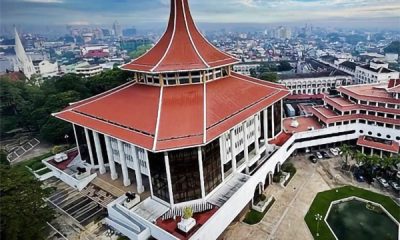
22A: BASL suggests CJ recuse himself from hearing petitions
-

 Features2 days ago
“Wrap Me Up in My Blazer”— A Gentlemanly Bradby Reminiscence
-

 Business4 days ago
Sri Lanka opens up: A new season of direct connectivity
-

 Features6 days ago
Insights from Chieftains of Uva: Genealogy of two Kandyan Families – Part II
-

 Features4 days ago
Redefining ageing in Sri Lanka