
News
COP26 regional ambassador at the Colombo Development Dialogues

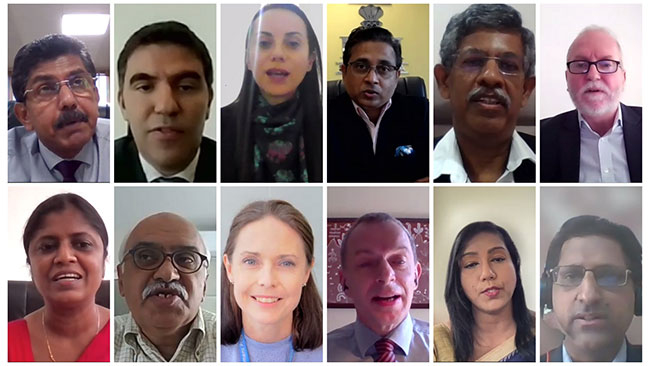
The Colombo Development Dialogues on Green Development, an initiative of the Ministry of Environment, together with the United Nations Development Programme (UNDP) in Sri Lanka, and other co-convening partners, successfully concluded recently.
A UNDP has said: Building on rich discussions, spread over two weeks, the final two sessions, held on Oct 21 and 22, sought to explore green financing possibilities and frame a multistakeholder approach to green development.
With a special address from the UK government’s COP26 Regional Ambassador to Asia-Pacific and South Asia, Ken O’Flaherty, highlighted the importance of countries adopting greener growth trajectory to avoid a spike in greenhouse gas emissions as well as how Government, private sector, and others, including the general public, have a vested interest in pursuing climate action. The COP26 summit, currently taking place in Glasgow until mid-November, will convene a broad spectrum of stakeholders to accelerate action towards the goals of the Paris Agreement and the UN Framework Convention on Climate Change. This year’s summit is expected to be decisive– with many stakeholders believing this year’s event to be the final global opportunity to agree on climate change controls and the ramifications of planetary pressures caused by unsustainable development practices.
The session on green financing, featuring prominent government stakeholders such as, T.M.J.Y.P. Fernando, Deputy Governor, Central Bank of Sri Lanka, who spoke on the role and contribution of the finance sector towards leveraging green finance for development, and Central Bank’s commitments for sustainable financing. This was discussed in the context of a ‘Roadmap for Sustainable Finance in Sri Lanka’ launched by the Central Bank of Sri Lanka with the financial assistance of the Biodiversity Finance Initiative (BIOFIN) of UNDP along with technical assistance of the International Finance Corporation (IFC), in consultation with multiple other key stakeholders.
Thomas Beloe, Chief of Programme, UNDP Finance Sector Hub, emphasised the need to bridge the SDG financing gap and the inefficient allocations of resources such as through continuous investments in carbon-intensive sectors, thus stressing the need for a systemic change to incorporate sustainable development at its core.
In addressing the need for a multistakeholder approach to green development, Sanjaya Mohottala, Chairman, Board of Investment of Sri Lanka, outlined the aim and vision of the Government as well as opportunities from and challenges to green financing and green investment through collaboration. Bringing in a private sector perspective, Manjula De Silva, Secretary General and CEO, Ceylon Chamber of Commerce, stressed upon the importance of monetary incentives and concessionary financing for a sustainable transition of traditional business practices to develop better corporate citizens.
The government’s commitment and drive to take this initiative forward was further emphasised by Dr. Anil Jasinghe, Secretary to the Ministry of Environment and the Presidential Task Force (PTF) on ‘Creating a Green Sri Lanka with Sustainable Solutions to Climate Change’ at the closing session, who spoke to how this multistakeholder Mobilisation Platform will facilitate not only the overall implementation of a National Framework for Green Development in Sri Lanka, but will also support to the realization of other specific plans of action, including the Nationally Determined Contributions and the National Environment Action Plan, among others yet to be developed by the PTF.
The final two sessions also featured Mr. Reda Souirgi, Country Director, French Development Agency; Jonathan Drew, Managing Director, ESG Solutions, Global Banking, HSBC; Hajar Alafifi, Chairperson and Managing Director, Unilever Sri Lanka Limited; Dr. Hong-Sang Jung, Director, K-Water in Daejeon, Republic of Korea; Bettina Heller, Programme Officer, Consumption and Production Unit, UNEP; and Robert Juhkam, Resident Representative, UNDP Sri Lanka.
Panelists also included Dr. Dushni Weerakoon, Executive Director, the Institute of Policy Studies; Gulshan Vashistha, Regional Investment Lead – Asia-Pacific, Global Green Growth Institute; Ranga Pallawala, National Climate Finance Advisor, Commonwealth Secretariat; Victor Antonypillai, Country Officer, International Finance Corporation (IFC), Stuart Rogers, Interim Chief Executive Officer, HSBC; Dr. Kokila Konasinghe, Director, Centre for Environmental Justice; Mushtaq Memon, Regional Coordinator for Resource Efficiency, Asia-Pacific office, UNEP; Dr. A. Sivakumar, General Manager, Regulatory Affairs South Asia, Unilever; Kumudini Vidyalankara, Director, Climate Change Secretariat, Ministry of Environment; and Dr. Rene Van Berkel, Representative of the United Nations Industrial Development Organisation for Sri Lanka, Bhutan, India, Maldives, and Nepal.
The Colombo Development Dialogues on Green Development brought together 20+ partners and close to 40 speakers joining from nearly 10 countries across four days. The dialogues aimed to reaffirm Sri Lanka’s climate and environmental commitments, by encouraging policymakers to consider bringing cohesion to diverse green initiatives and creating a multistakeholder platform to support the positioning of green development in the country as an urgent and all-encompassing priority.
Aligned with the foci of the Sustainable Development Goals, the dialogues helped frame narratives on innovative policy making, sustainable financing, and multi-stakeholder collaboration that will allow key stakeholders to articulate policy underpinnings to support the formulation of a National Framework for Green Development in Sri Lanka.


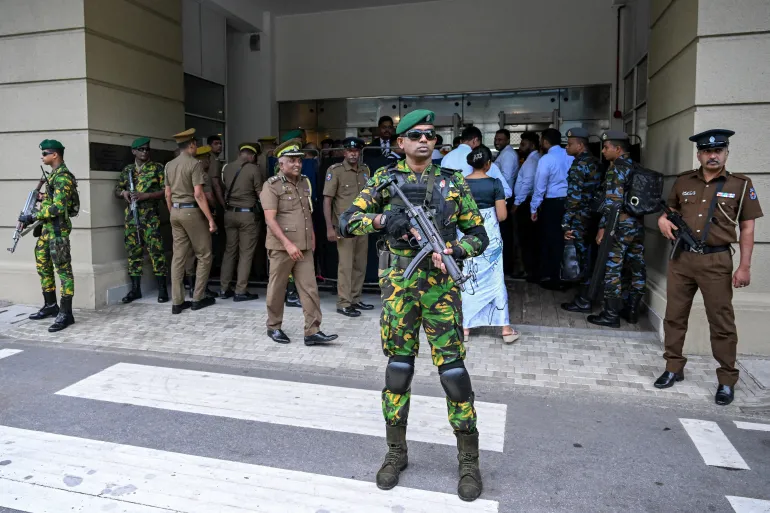
The High Court has convicted 14 of the 24 men accused of being directly involved in the 2019 Easter Sunday bombings, which killed 279 people.
The three-judge bench read out its decision on Tuesday after a five-year trial and said sentencing would take place later, the AFP news agency reported.
The charges included murder and conspiracy to commit terrorism.
Nine others were acquitted, while another defendant was found guilty of only some of the charges, the court said.
[Aljazeera]
By Shamindra Ferdinando
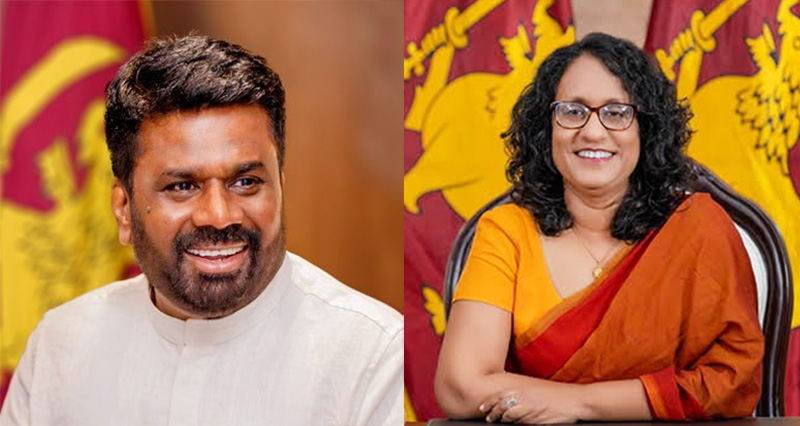
The ruling NPP yesterday (21) dismissed claims of a widening rift, within the government, over the proposed 22nd Amendment. Asked whether the NPP was concerned over a section of the Opposition alleging Prime Minister Dr. Harini Amarasuriya and two dozen MPs taking a view contrary to that of the party in this regard, authoritative party sources said some persons were propagating speculation for their own interest.
Declaring that there was absolutely no issue regarding the controversial Amendment, sources emphasised once it was tabled in Parliament, it would be passed with 2/3 majority.
Sources dismissed claims that out of its 159-member parliamentary group a section of NPPers was opposed to the government move. According to an influential Opposition activist, there are 57 JVPers and 66 NPPers in the government group and the rest contested the last parliamentary polls, having aligned with the JVP.
Ministerial sources told The Island that the government was confident of going ahead with the 22nd Amendment and Judicature (Amendment) Bills. Sources said that the NPP was not bothered about the Opposition protests in and outside Parliament.
Speaker Dr. Jagath Wickremaratne is expected to disclose the confidential ruling that he received from the Supreme Court in respect of more than 65 petitions for and against the 22nd Amendment and Judicial Amendment Bills. The enactment of the 22nd Amendment would pave the way for extending the retirement age of Supreme Court judges, from 65 to 67 years, and Court of Appeal judges, from 63 to 65 years.
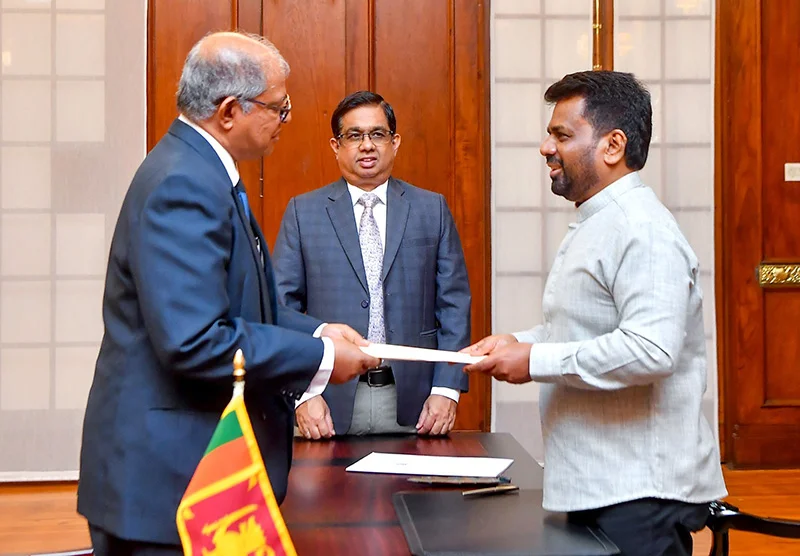
President Anura Kumara Dissanayake has appointed Court of Appeal Judge Mayadunna Sri Mevan Anthony Edirimannasuriya Corea as the Acting President of the Court of Appeal.
The appointment has been made as President’s Counsel Nalin Rohantha Abeysuriya, who currently serves as President of the Court of Appeal, will be overseas until the 24th.
Accordingly Justice Mayadunna Corea was sworn in as Acting President of the Court of Appeal before President Anura Kumara Dissanayake at the Presidential secretariat last morning (21).
Secretary to the President Dr Nandika Sanath Kumanayake was also present at the occasion.

High Court convicts 14 over deadly Easter bombings

Mandhana, Shafali and Ghosh lead dominant India to Asian Games gold

Fatima Sana and Umm-e-Hani secure bronze for Pakistan in Asian Games

India bat first in Asian games womens cricket final

Showers about 100mm will occur in the Western, Sabaragamuwa, Central and North-western provinces and in Galle and Matara Districts

Govt. confident of 2/3 majority despite NPP split speculation

‘Dates have the highest sugar content to fight Coronavirus’

Sunday Island 27 December – Headlines

#SundayIsland 17th December – Headlines

Sunday Island – 28th March

Sunday Island Headlines – 21 March

Sunday Island – 21st February – Headlines
-

 News6 days ago
US embassy won’t comment on IGP’s probe into joint drug raid
-

 News5 days ago
Bid for Basil’s extradition nears final stage: Police
-

 News4 days ago
Shanakiyan urges urgent action over reported death sentence for Lankan in Saudi Arabia
-

 Business6 days ago
All-new Bolero MaXX unveiled in Sri Lanka
-

 News3 days ago
Namal Rajapaksa Buddhist gambit fails, bail denied
-
 Opinion6 days ago
A journalist who wrote across the divide
-

 Editorial7 days ago
More fuel price shocks shrouded in secrecy
-

 Sports7 days ago
MAS Holdings, official clothing sponsor of Sri Lanka team at Aichi–Nagoya 2026 Asian Games