
Editorial
Pigs might fly


Wednesday 3rd November, 2021
The government has reportedly claimed that the so-called one-country-one-law Presidential Task Force (PTF) will play only an advisory role. A member of the PTF is reported to have said the outfit has no powers to make laws and it will only make recommendations. Anyone with an iota of knowledge of legislative affairs knows that a task force is not vested with powers to make laws. But according to the gazette carrying the presidential proclamation at issue, the PTF has been appointed ‘to make a study of the implementation of the concept, ‘One Country, One law; within Sri Lanka and prepare a draft Act for the said purpose’. Thus, it is clear that the PTF has been assigned to prepare ‘a draft Act’, which, in our book, means a draft Bill to be published to enable consultation and pre-legislative scrutiny of proposed legislation. It could be considered part of the law-making process.
As for the one-country-one-law concept, what the people basically demanded was that nobody be allowed to remain above the law. Ruling politicians and their kith and kin enjoy legal immunity to all intents and purposes thanks to the prevailing culture of impunity. They are free to attack opponents, carry out rackets, and help themselves to public funds. This has happened during the past several decades.
Sri Lanka’s predicament reminds us of George Orwell’s dystopian novella, Animal Farm, where the ruling pigs declare, “All animals are equal, but some animals are more equal than others,” and remain above the law. What Sri Lankans actually want is to have the culture of impunity ended so that the ‘political pigs’—no disrespect intended for the harmless hoofed mammals—will be denied legal immunity, and treated like everyone else before the law.
Following every regime change, legal action is instituted against the members of the losing side for various offences such as the abuse of power, theft of public funds, corruption and even murder. Court cases drag on for years, and before they are concluded, the accused return to power. Thereafter, the cases against them are withdrawn on flimsy grounds, and the Attorney General cuts a pathetic figure by trying to justify his or her decisions to discontinue legal action. There has been a severe erosion of public faith in the legal and judicial processes owing to their manipulation by politicians.
It was to restore the rule of law, and public faith in the legal and judicial processes that civil society organisations, opinion leaders, the media, etc., have been asking for the discontinuation of the existing culture of impunity. True, the existence of various personal laws has become problematic, and a remedy should be adopted, but what needs to be done immediately, in keeping with the wishes of the public, is to end the existing culture of impunity, which benefits only the rich and the powerful.
How can we expect the concept of ‘One country, One law’ to be implemented under a government, which engineers the termination of legal and judicial action against its members, and appoints to key positions convicted criminals and other such elements after giving them presidential pardons? During the tenures of President Mahinda Rajapaksa, President Maithripala Sirisena and the incumbent President Gotabaya Rajapaksa, convicted drug dealers, murderers and a person serving a jail term for contempt of court, have been given presidential pardons. These three leaders are in the current administration, which is making a public display of its commitment to making one law for the whole country.
The government would have the public believe that it is all out to restore the rule of law. And pigs might fly.



The Sri Lanka Navy, on Thursday night, brought ashore 204 crew members of the IRIS Bushehr, another Iranian naval vessel facing the danger of a possible US torpedo attack. They were rushed to the Navy’s Welisara camp, and the ship was taken to the Trincomalee Harbour. The crew of the ship consists of 53 officers, 54 cadet officers, 48 senior ratings, and 23 junior sailors. President Anura Kumara Dissanayake hurriedly summoned a media briefing, on Thursday night itself, to announce the successful completion of the rescue mission. He and his government deserve praise for their intervention to save the Iranian ship and its crew. Kudos to them.
However, it is being argued in some quarters that if the Sri Lankan government had stopped dilly-dallying and plucked up the courage to grasp the nettle on Wednesday, when the Iranian frigate, IRIS Dena, sought refuge in Sri Lankan waters while being pursued by a US submarine, the distressed vessel and the lives of all its crew members could have been saved. The US attack killed more than 100 sailors; there were only about 35 survivors, who were rescued by the Sri Lanka Navy and Air Force. The Opposition told Parliament on Thursday that the ill-fated vessel had been kept waiting for 11 hours since it first asked for permission to enter Sri Lankan waters.
There are numerous claims and counterclaims about the sinking of the IRIS Dena, and a probe must be conducted into the incident and the allegations that its request for permission to reach the Galle Harbour had gone unheeded. Much is now known about the tragic incident as well as its aftermath, but the circumstances that led to it lack clarity. Hence, we repeat, the need for a thorough investigation to get to the bottom of it.
The general consensus is that it was India’s responsibility to ensure the safety of the IRIS Dena, which had taken part in a naval exercise, as one of its guests. Instead, the vessel found itself in a situation where it was left with no alternative but to set sail, endangering itself and its crew. There is reason to believe that India could have leveraged its influence over Washington, as a Quad member, to prevent a submarine attack in the Indian Ocean, and that Colombo should have actively sought India’s intervention to save the ship and its crew.
The US torpedo attack has left India red-faced as a self-appointed guardian of the Indian Ocean. The thinking in regional defence circles is that the US nuclear sub that carried out Wednesday’s attack, blindsided India, which takes pride in being a strategic partner of Washington. India, which jealously guards its maritime backyard and even pressures Sri Lanka to deny permission for Chinese research vessels to operate there, could not save its Iranian guest in the same zone. Nothing could be more ironic than the fact that, according to media reports, anti-submarine warfare drills were part of the recent naval exercise hosted by India with Iran, the US and others as guests.
It is possible that the diplomatic fallout from Wednesday’s cowardly torpedo attack, international opprobrium over the massacre at sea, India’s humiliation as one of the strategic allies of the US, etc., compelled the Pentagon to spare the second Iranian vessel in its crosshairs in India’s backyard and let Sri Lanka carry out Thursday night’s rescue operation, which the NPP government is crowing about.
It is incumbent upon India and other nations in the region to join forces to preserve peace in the Indian Ocean vis-à-vis emerging threats. Sri Lanka’s policy ought to be that all vessels, including naval ships on non-combat missions, which are either in distress or seeking port calls for other reasons, can enter its territorial waters with permission. The need for competent political leaders and diplomats, capable of helping the country navigate sensitive issues, avoiding torpedoes, cannot be overstated.

Saturday 7th March, 2026
Parliament yesterday voted to extend the State of Emergency, with 108 ayes and eight nays. Most of the Opposition MPs were not present in the House, as usual. Such is their dedication to the discharge of their legislative duties. The same goes for the government MPs who were absent. The government and the Opposition are making a strong case, albeit unwittingly, for doing away with the MPs’ attendance allowance.
The Opposition has rightly decried the extension of the State of Emergency, calling it a threat to democracy and the people’s rights and freedoms. The government has sought to rubbish this argument. Prime Minister Dr. Harini Amarasuriya has asked the Opposition to back its claim with facts, daring it to furnish information about any individuals who may have been unfairly arrested or subjected to repression under the emergency regulations during the past three months. The President and other ruling party leaders continue to face strong criticism from the media, yet the government has taken no action to suppress press freedom, she has said. What guarantee is there that the government will not abuse the Emergency regulations if push comes to shove? After all, Deputy Minister of Public Security Sunil Watagala once directed the police to use the Emergency regulations to deal with those responsible for propaganda attacks on government politicians. Perhaps, what prevented the police from carrying out his order was the political backlash that sent the government reeling. JVP/NPP politicians are being exposed for corrupt deals, much to the detriment of the interests of the JVP/NPP, and therefore the possibility of the emergency regulations being abused to suppress the media institutions that the government has no control over cannot be ruled out.
There are compelling arguments against Emergency regulations. Even laymen are aware that they undermine fundamental rights and freedoms, weaken the rule of law, reduce parliamentary oversight, help silence dissent, create a climate of fear, lend themselves to abuse due to vague provisions, lead to human rights violations, and normalise suppression. In a country like Sri Lanka, which has witnessed the abuse of even ordinary laws and regulations under successive governments, a state of Emergency is as dangerous as a straight razor in the hands of a mad monkey, as a local saying goes.
Power not only corrupts but also has the ability to transform Jekylls into Hydes. When politicians savour it, their love for democracy, justice and fair play flies out of the window. Hence the most vociferous campaigners for democracy in the Opposition demonstrate their dictatorial tendencies upon being voted into power. This, we have seen during the last several decades. The UNP leaders who came to power in 1977, promising to uphold democracy and create a righteous society, suppressed democracy in every conceivable manner and institutionalised election malpractices, political violence and corruption. The SLFP-led People’s Alliance, which sought a mandate to govern the country, pledged to eliminate corruption and state terror, but ended up being a metaphor for corruption and political violence, after being ensconced in power. Mahinda Rajapaksa was an internationally known campaigner for democracy and human rights when he was an Opposition MP, but after his elevation to the presidency, his government practised the very antithesis of what he had preached during his Opposition days. Now, we have the JVP/NPP leaders extending Emergency regulations on some flimsy pretext, unashamedly defending their decision to do so.
There is no justifiable reason for the government to keep on extending the State of Emergency, which was declared in the aftermath of the landfall of Cyclone Ditwah about three months ago. The fact that the Opposition asked the government to do so is no reason why the country should be kept under a state of emergency rule indefinitely.
By extending the state of emergency, the JVP-NPP government has laid bare its true face. So much for its solemn pledge to ensure a radical departure from the rotten political culture, and strengthen democracy.
Friday 6th March, 2026
Only about 35 crew members of an Iranian frigate survived a torpedo attack by the US, off Galle, on Wednesday. More than 100 Iranians are believed to be dead. The Sri Lanka Navy and Air Force rescued the survivors and brought ashore about 85 bodies of the victims of the US attack. The sinking of the Iranian naval vessel, the IRIS Dena, which was on a non-combat mission, and the brutal act of killing so many naval personnel, thousands of kilometres away from the conflict zone, must be condemned unreservedly.
The NPP government led by the JVP, which would condemn the US and the western bloc at the drop of a hat during its Opposition days, has not explicitly criticised Wednesday’s incident. The Opposition yesterday asked in Parliament whether the Iranian vessel had come under attack while waiting for permission to reach the Galle harbour. Its question went unanswered. The government resorted to prevarication.
It is believed that the US did not inform India of its move to launch Wednesday’s attack in the Indian Ocean. The sinking of the IRIS Dena, which was Indian Navy’s guest, has become not only a huge embarrassment but also as a strategic concern to New Delhi, for the attack was carried out in an area where India projects its dominance as a regional leader. Has a Quad member got short shrift from the US?
Most of all, the IRIS Dena was returning from India, where it took part in an international fleet review, together with vessels from 40 other nations including the US and Russia. The naval exercise was conducted in Visakhapatnam, where the Indian Navy’s Eastern Naval Command is headquartered. This has made the sinking of the IRIS Dena and the killing of its crew members even more unacceptable. Strangely, India has refrained from explicitly condemning the incident.
If the US thinks Iranian assets anywhere in the world are legitimate targets, can Iran be blamed for adopting a similar approach, in dealing with the US and its interests? The Middle East conflict is not going to end in a few weeks or months with the conclusion of the ongoing US-Israeli bombing spree. Iran has vowed to take revenge.
Much has been spoken about the Indian Ocean as a Zone of Peace during the past five decades or so, but it is fast becoming a conflict zone for all intents and purposes. The peace-zone doctrine is based on several core principles such as demilitarisation, non-aggression, freedom of navigation, removal of foreign bases, regional cooperation, and the promotion of international peace and security. It was intended to prevent smaller states from being dragged into conflicts that are not of their own making and preserve regional stability. Wednesday’s US submarine attack in Sri Lanka’s exclusive economic zone should be viewed against the backdrop of the Indian Ocean peace zone concept.
The expansion by the US of the theatre of its current military operations against Iran beyond the Gulf region and the presence of a US submarine in Sri Lanka’s exclusive economic zone pose a serious threat to international trade routes in this part of the world. This is why India’s position on the issue of offensive US military action in the Indian Ocean matters.
The NPP government also gave evasive answers when the Opposition demanded to know whether another Iranian naval ship in Sri Lanka’s exclusive economic zone was also in danger, and whether it would be given permission to enter Sri Lanka’s territorial waters. The civilised world must help Sri Lanka ensure that another Iranian vessel in imminent danger is not left to its fate and condemn the brutality of the self-righteous unequivocally.

UK to charter flight for British nationals out of Dubai

Heavy rains and flooding kills at least 23 in Nairobi

Rapper-politician Balendra Shah unseats Nepal’s ex-PM as he heads for victory

Triumph and disaster: India, New Zealand and a trophy for one

Sutherland’s sublime century and Hamilton’s night-time burst flatten India

Trump says US does not need UK aircraft carriers for Iran war

‘Dates have the highest sugar content to fight Coronavirus’

Sunday Island 27 December – Headlines

#SundayIsland 17th December – Headlines

Sunday Island – 28th March

Sunday Island Headlines – 21 March

Sunday Island – 21st February – Headlines
-

 Features6 days ago
Brilliant Navy officer no more
-
 News2 days ago
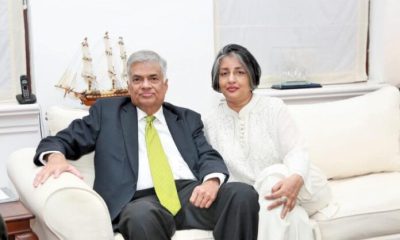
University of Wolverhampton confirms Ranil was officially invited
-

 Opinion6 days ago
Sri Lanka – world’s worst facilities for cricket fans
-

 News3 days ago
Legal experts decry move to demolish STC dining hall
-

 Features6 days ago
A life in colour and song: Rajika Gamage’s new bird guide captures Sri Lanka’s avian soul
-

 News2 days ago
Female lawyer given 12 years RI for preparing forged deeds for Borella land
-

 Business4 days ago
Cabinet nod for the removal of Cess tax imposed on imported good
-

 News1 day ago
Wife raises alarm over Sallay’s detention under PTA