
Life style
Recorded history of mankind in restored and colourised black and photos

Canadians, Englishmen, and Americans affected the tides of the war by storming the beaches of Normandy! Many young men knew they might never return home once they joined the fight. Sgt. Jensen worked with the 626th engineer light equipment company. He said that other soldiers didn’t even know where they were going until they arrived. It told us everything we needed to know. It really surprised us to be heading to Normandy. We were either at high school or jobs after high school. We were not soldiers, at least not yet.
Teenage German Soldier In Distress After His Capture
 It is difficult to find WWII photos that are not emotionally charged. Look at this photo of 16-year-old German soldier Hans-Georg Henke. He was captured on April 3, 1945, by the US 9th Army. It seems his parents died a year earlier, and that tragic event made him join the Luftwaffe. John Florea, the photographer, described the boy as shocked and crying. He was a young boy who went through the worst of the war.
A German Soldier In A Dugout During The Great War
The war was a massive trench fight. In the Civil War, soldiers dug trenches to provide defense and give them a place to fight from. In Belgium and France, soldiers had to stay in the trenches for weeks on end resulting in “trench foot” and assorted other diseases. Rats were constant companions. Further, the trenches offered only limited protection from heavy artillery shelling and no protection at all from poison gas attacks. Soldiers had to rise from the ditches to engage the enemy. Unfortunately, in front of them was usually an open field (often mined) with little cover, and they were likely to be wounded or killed as they advanced. Note in the photo that this soldier has apparently cut a helmet in half and attached a portion to his neck and lower face area in hope of protecting these areas from shrapnel and bullets. He also carries a “potato masher” hand grenade on his belt and a formidable bayonet attached to his rifle.
Paratroopers Of Easy Company Chilling At Adolf Hitler’s Home
You see men laughing and having a great time. It is even better than you thought. The soldiers in Easy Company had been chilling in Hitler’s castle in the Bavarian Alps. In the miniseries “Band of Brothers”, you will see this particular scene. Hitler purchased many homes across Europe, including this one in Berchtesgaden. It was bombed on April 25, 1945. On May 4, SS troops set the hiding bunker on fire just hours before U.S. troops entered the bunker through secret tunnels. The soldiers rewarded themselves by stealing the beer and getting drunk.
Lawrence Of Arabia In Real Life
Lawrence found himself in an unlikely position during the Great War. He was a British demolition artist who worked with Arab rebel allies to destroy isolated Ottoman bridges. Lawrence of Arabia, he was. He committed assaults on 79 bridges on the railway and demolished them. Railways were so damaged that some parts still show traces of the attacks.
Japanese Military Commander
In Traditional Armor
A photo by Felice Beato in 1863. It was hand-colored in the original version. He took full-length portraits in the studio because he was intrigued by traditional costumes and cultural traditions. His photos of Japan came with vignetting that made them more painterly. This photo was taken of Koboto Santaro, a Japanese commander. We don’t know what he has in his hand, but stay away.
The Red Army Liberated The Auschwitz-Birkenau
When the Soviet Army arrived at Auschwitz on January 27th, 1945, they found a warehouse of belongings. They found syringes, needles, prosthetic limbs, and shoes. Then they found out it was full of sick and starving people the Nazis had left behind. Elisavetskii was one of the first soldiers to go into the camp, “They rushed toward us, shouted, fell on their knees, kissed our boots, and threw their arms around our legs.”
A Soldier Heading Home After
The War
Ernst Haas, in a photo essay called “Homecoming,” showed the desperation and confusion in Europe in the aftermath of the Holocaust. A Soldier
A Civil War Veteran In Pennsylvania
The Civil War veterans were still around in the 20th century. In 1956, the last one of them passed away. If they could follow orders and hold a gun, they went to war regardless of their age. The survivors were able to tell a lot of stories to the kids in their later years. This photo was taken in 1935.
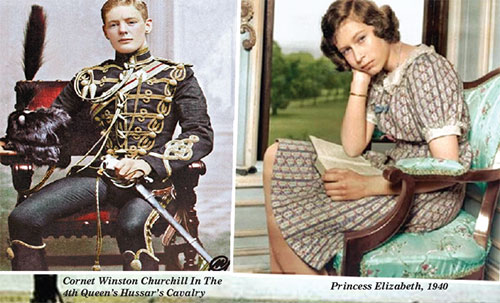
Cornet Winston Churchill In
The 4th Queen’s Hussar’s Cavalry
Winston Churchill is best known for his dedication to England. As a young man, he was part of the 4th Queen’s Hussar’s Calvary. He was 21 years old in this photo.
The Seaforth Highlanders And Dog In French Trench
The Great War was unmatched in its brutality and carnage. Soldiers from all over the world were often extremely underprepared for war. However, The Seaforth Highlanders of Scotland stepped up to fight. They became known as the Northern Scottish Brigade after the merger of the 78th Highlanders and the 72nd Highlanders. The men originally served in India, but were reassigned to France. Later moved to Palestine and Iraq.
A Young Woman Called Eunice Hancock With A Compressed-Air Grinder In An Aircraft Plant
Men were in the war against Germany and Japan. Women filled in the voids in the job market by taking jobs in utilities, transportation, and manufacturing. Almost 2 million women went to work to make armaments and machine parts for the war effort. The working women in the labor force increased from 27% to 37%. A Young
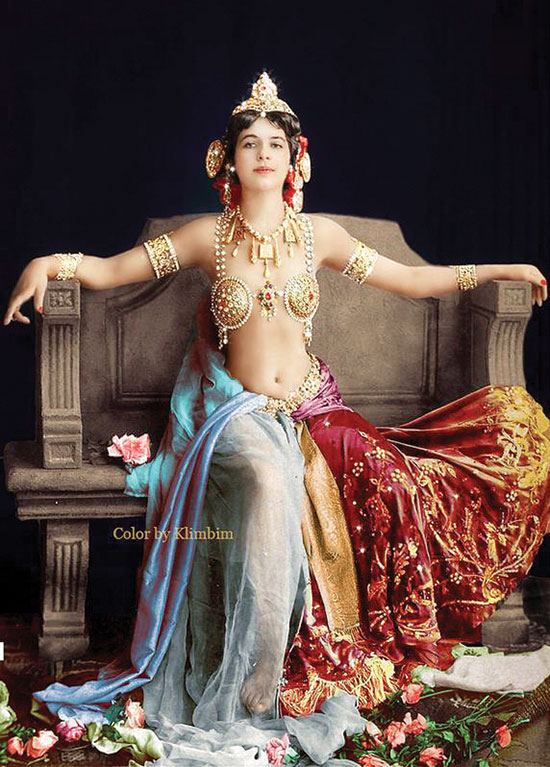
Mata Hari Was A True Icon
The lovely Mata Hari was a spy and dancer storming the planet. People named her a democrat, a courtesan, and more! This is what the National Ballet director and choreographer Ted Brandsen has to tell about her: “What intrigued us is the tale of a woman with an intense lust for life and a strong instinct to live, reinvent and change herself. She had a lot of terrible stuff happening to her, and she tried to spin it somehow to find her way out.”
 Mata Hari Blew The French Firing Squad A Kiss
Mata Hari became a spy during the Great War. She combined sex and espionage in her life. She started out with some talent for impersonation. During her early career, she masqueraded as Lady MacLeod, the child of an English lord. As a spy she only lasted a few days. On the 15th of October, she was shot to death by a firing squad. She wore no blindfold and blew a kiss to the men.
Men Of The 1st Infantry Division Leaving England For Normandy On D-Day
The Battle of Normandy went on from June 1944 to August 1944. The parties in Western Europe battled for supremacy, and the fight was not easy. We doubt that the 156,000 soldiers knew that the fighting would go on for nearly a month. It began on June 6 but was meant to begin earlier. The operation was delayed due to bad weather. Eisenhower’s final speech was to the brave troops, “You’re about to embark on the Great Crusade.” Your eyes are upon the world.
Dutch Resistance Fighters On The Streets Of Breda After Its Liberation
The world was shocked when Germany invaded Europe in 1939. The Nazis were much faster and more violent than anyone imagined. Resistance fighters from different regions banded together to help liberate their countries. The Dutch underground provided intelligence, radio communications, and household sabotage. In 1944, the south was liberated. The north was not liberated for another 8 months.
King Ferdinand and Queen Marie of Romania In Dover, England
Marie of Romania was born in Edinburgh, Scotland in the year 1875.
It was only 18 years later that she married Crown Prince Ferdinand and became an Eastern European monarch. Researchers have found that she was extremely influential in Ferdinand choosing to ally with the British rather than the Germans. They spent over two decades in Romania before they travelled over to Western Europe to perform royal duties on a diplomatic tour. It was 1924 when they visited Belgium, France, Switzerland and the United Kingdom. “Apart from the common aims, which we pursue, there are other and dear ties between us. Her Majesty the Queen, my dear cousin, is British born,” King George V offered when speaking about the couple.
Princess Elizabeth Wanted To Help With The War Effort
It was the peak of WWII, and everyone was feeling patriotic, wanting to help with the war effort. Even Princess Elizabeth is no exception! She nagged her father, the King, into allowing her to help out. After turning 18, she obtained the permission she needed to train as a truck driver and mechanic, as a part of the Women’s Auxiliary Territorial Service. Now the Queen of the United Kingdom (among other territories), we think it is awesome that she desired so greatly to do physically help her country back then.
A German Soldier Duo And Their Donkey
We all know how pig a part animals played during the war. They were used to carry injured soldiers, weaponry and ammunition back and forth and between checkpoints. They were also used to clear out the land. Horses, donkeys, mules, dogs among many other animals were all used during the horrific events of war. The soldiers pictured were prepared for their upcoming battle; even their horse was prepared also.
A Russian Sniper
The Russian sniper pictured below is Roza Georgiyevna Shanina. She was an active sniper during WWII and was only one of many Russian women active in the military at the time. She was special however. A volunteer, she was a sharpshooter. By the end of war she had 59 confirmed kills, some feat. She was tragically killed in 1945 during the East Prussian Offensive.
Princess Elizabeth, 1940
Prior to becoming the Monarch of the UK, Elizabeth was very much once a Princess, and a teenager. If you look below, you can see a photograph of her reading a book in a beautiful day-off frock, casually relaxing by a window. The attention to detail by the coloring of this photo is pretty amazing.



Representation matters:
By Ifham Nizam
“There are no books written about pirates with prosthetic limbs, sporting blades, or racing wheelchairs—that is, until now,” says award-winning international children’s author Jann Weeratunga, whose Polly’s Piralympics series is challenging conventional ideas about who gets to be the hero in children’s literature.
For Weeratunga, representation is not simply about placing a disabled character somewhere in a story. It is about putting that character at the centre—leading, competing, winning, making friends, overcoming challenges and, most importantly, having adventures on their own terms.
Her books are designed not merely to be read, but to be experienced. Through interactive pages, children can colour, draw, write and respond to the stories, leaving something of themselves behind as they explore themes, ranging from disability and bullying to friendship, resilience and family.
At the heart of her growing literary brand is Polly’s Piralympics, a series in which disability is not presented as a limitation, but as part of a character’s identity and adventure.
The inspiration came from an unexpected moment during the closing speech of the 2012 London Paralympic Games by Sir Philip Craven. He recalled a young boy looking at an illustration of a pirate with an eye patch, a hook, a parrot and a wooden leg.
When his mother asked who the figure was, the boy replied that because the man had only one leg, “he must be an Olympian.”
The story moved Weeratunga deeply.
That moment of innocent perception—where disability was associated with sporting achievement rather than limitation—sparked the idea of Polly and her extraordinary Piralympic world.
In the series, Polly, a bird-napped African parrot, finds herself bullied in a Scottish pet shop before being rescued by Captain Hake. Their shared one-eyed view of the world becomes the beginning of an unusual friendship. Captain Hake teaches Polly the ways of a pirate, while Polly creates the Fellowship of Pirates and the Pirates Paralympics.
Soon, pirates from around the world are competing in events ranging from three-legged races and climb-the-rigging gymnastics to walk-the-plank diving and even a MasterChef competition.
It is an imaginative world, but behind the humour and adventure lies a serious message about inclusion and leadership.
Weeratunga recalls one school visit that brought home to her exactly why the books mattered.
A student with a prosthetic leg embraced her and said: “Thank you for writing these books for me, Auntie.”
The words left her overwhelmed.
“That was why I had written these books,” Weeratunga reflects.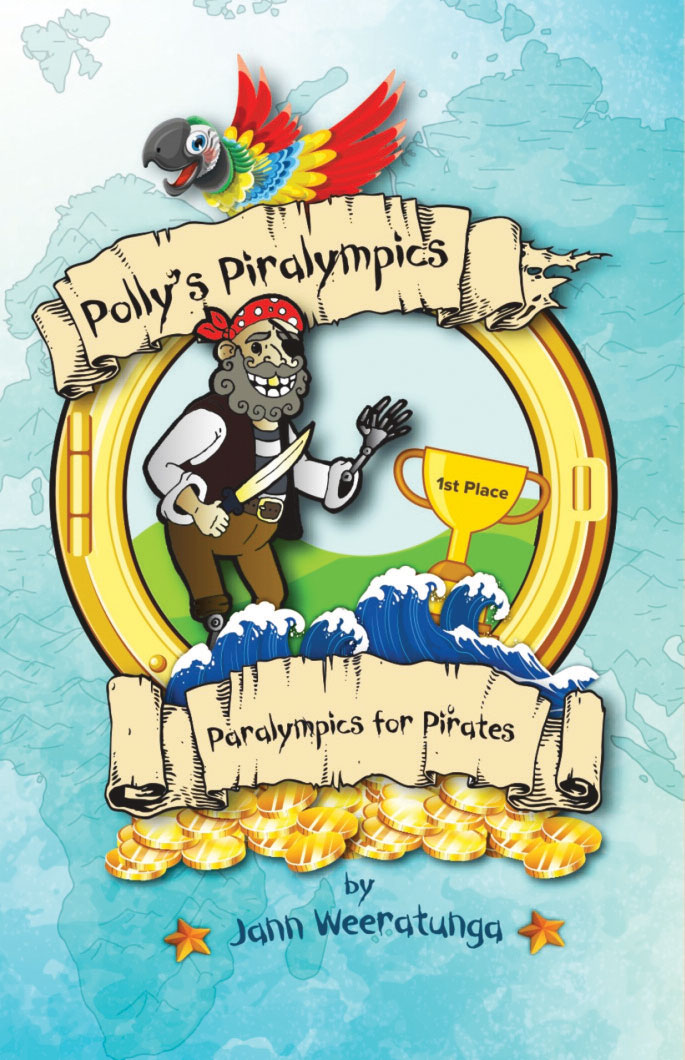
Her journey towards becoming an author, however, began long before Polly sailed into the world of children’s fiction.
Earlier in her life, Weeratunga was a Scout Leader in the UK, where volunteering became a way of life. She subsequently spent a decade in Sri Lanka, falling in love not only with a Sri Lankan, but with the country itself.
After her husband died just four years into their marriage, she joined five other women to establish a small school in Senarathwela to teach English to those who wanted to learn. Many of her pupils, subsequently, found employment at the newly opened Victoria Golf Course.
When she returned to Sri Lanka in 2025 and revisited the village and golf course, she found a landscape transformed by new roads, homes, shops and businesses. But the people she had taught remained.
“The village is unrecognisable, with new roads, homes, shops and businesses, but my dear pupils were still there as Caddies, Caddy Master and Golf Pro. I was so proud of them,” she says.
Her connection with Sri Lanka deepened further during one of the country’s darkest moments.
On Boxing Day 2005, while holidaying in the UK with her recently widowed mother, Weeratunga was woken by the words: “Something terrible has happened in Sri Lanka.”
She rushed to the television and witnessed the devastating aftermath of the Indian Ocean tsunami.
That very day, she established a non-profit organisation to raise funds and take relief to Sri Lanka. With support from local McDonald’s franchises, schools in Ferndown, the Mayor of Ferndown, freight companies and her friend Mr Wijekoon, a local Grama Niladhari, she helped rebuild lives in Arugam Bay.
The experience was hands-on and deeply personal. A family’s home had been swept away, and days were spent persuading surfers to help construct a future for her adopted family.
A Montessori was established on the hill, within the Buddhist temple grounds, while evenings were spent crafting, building and working with a small but effective generator.
Meals of rice and curry, prepared by the family’s sisters, using provisions donated from Senarathwela, brought the long days to a close.
When Weeratunga returned to the family, in 2025, she was able to see how far they had come.

Jann Weeratunga
Today, living in South Africa, she continues to draw inspiration from the landscape around her.
“Travelling—it leaves you speechless and then turns you into a storyteller,” she says, echoing the famous words attributed to Ibn Battuta.
And storytelling has become her way of opening conversations with a new generation.
While Polly’s Piralympics remains the flagship of her children’s publishing brand, Weeratunga’s wider collection explores a range of issues that matter to children and parents.
Terry and the Bully gives children practical and empowering ways to stand up for themselves, transforming a difficult subject into a story through which young readers can explore courage and self-confidence.
In Evie Visiting Grandma, children encounter the sensitive experience of visiting a loved one who now lives in a residential home. Rather than avoiding a potentially difficult subject, the story gently opens the door to conversations about ageing, family and change.
Terry the Toucane explores another universal childhood experience—the challenge and beauty of being different. Its central message is simple: being different should never prevent us from developing deep and lasting friendships.
Then there is Captain Bluebird, a resilient and entertaining adventure exploring what happens when Captain Bluebird receives a brand-new ship.
Across the collection, Weeratunga combines entertainment with meaningful life lessons, while her interactive approach gives children an opportunity to become participants rather than passive readers.
They can colour illustrations, draw pictures and respond to pages, making each reading experience personal.
That approach also gives the books an added value for parents and educators. They can become conversation starters—helping adults discuss subjects that children may find difficult to raise directly.
For Weeratunga, this is part of the larger purpose of her work.
Her books seek to fill a gap in children’s literature where diverse characters are not simply included for the sake of inclusion, but are given agency, personality and leadership.
In Polly’s Piralympics, disabled characters are not watching from the sidelines. They are the stars.
They lead.
They compete.
They win.
They champion their own adventures.
And that, ultimately, is the brand Weeratunga is building: children’s stories in which every child can find a place, a voice and perhaps even a little courage to become the hero of their own story.
Representation matters.
For young readers in Sri Lanka, Weeratunga’s books are now available through Sarasavi Bookshop, Vijitha Yapa Bookshop, M. D. Gunasena and Expo Graphics, Battaramulla.

By Zanita Careem
Music, laughter and a generous spirit filled Raflfles Hotel Colombo as Heart to Heart sing along brought together a vibrant gathering for an evening of melody, friendship and giving. The elegant ballroom reverberated with familiar lyrics as guests joined in, sang along and simply let their hair down. Adding to the infections atmosphere was the talented Rajiv and Clan, whose lively performance kept the energy soaring and had the gathering singing to some much loved favourites.
Keeping the evening moving with plenty of wit and warmth was the compere Mirzab Sherifdeen who ensured there was never a dull moment between the music, laughter and spontaneous sing-along moments, Guests were also treated to prizes galore adding an extra element of excitement to an already festive evening. There was cheers as winners stepped forward to collect their prizes, while friends and families aplauded and celebrated every winning moment.
Yet beneath all the sparkle was the meaningful purpose of Heart to Heart Trust Fund, founded by Dr. Rajitha Y de Silva and Dr. Ruwan Ekanayake, bringing people together in support of a cause built on compassion and care.
The dedications and the volunteering was evident throughout the evening with their commitment adding a special warmth to this special event.
Adding to the evening’s indulgence was a sumptous spread of cuisine by the Raffles, Hotel with an enticing selectiom that kept guests happily returning for more. From savoury favourites to tempting desserts, the food complemented the festive mood perfectly.
As the final song faded and the evening drew to a close, there was a quiet sense of gratitude. Behind the music, laughter, prizs and beautiful memories was a cause built as compassion, a cause that has continued to touch lives through the dedication of Dr. Rajitha de Silva and everyone who has stood beside him in the journey of Heart to Heart.
And as guests left Raffles Hotel with the last melodies still lingering in the air the most beautiful note of the evening remained – the sound of hearts earning for hearts. At the very heart of Hearts to Heart is Dr. Rajitha whose compassion has become the soul of the initiative. Dr. Rajitha’s work reminds us that medicine is not only about repairing what is broken. It is about giving people the courage to believe in tomorrow. And perhaps that is the greatest gift he offers. This spirit was beautifully reflected throughout the evening.It was a beautiful evening of music, friendship and generosity, with every contribution going towards a worthy cause- keeping alive a legacy built one one simple but powerful belief that every heart deserves a chance to beat on.
-
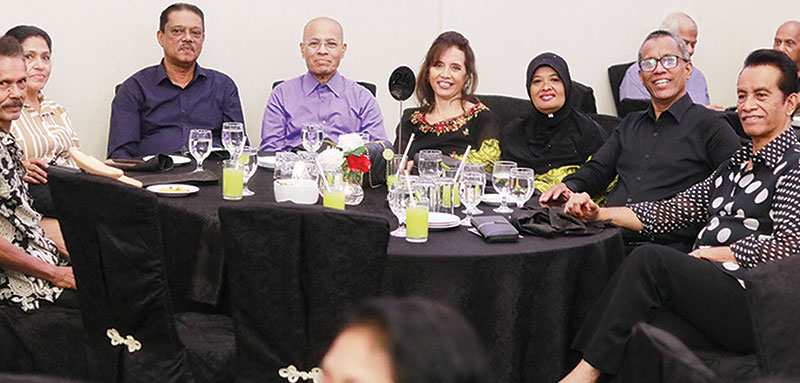
- Ramzi Rahaman with friends and family enjoying an evening of music
-

- Sarath Wimalaratne, Chandra and Bunny Bohoron
-

- Brigadier Bohoron
-

- Shanti Fernando shares a warm and happy moment with volunteers, adding to the camaraderie and cheerful spirit
-
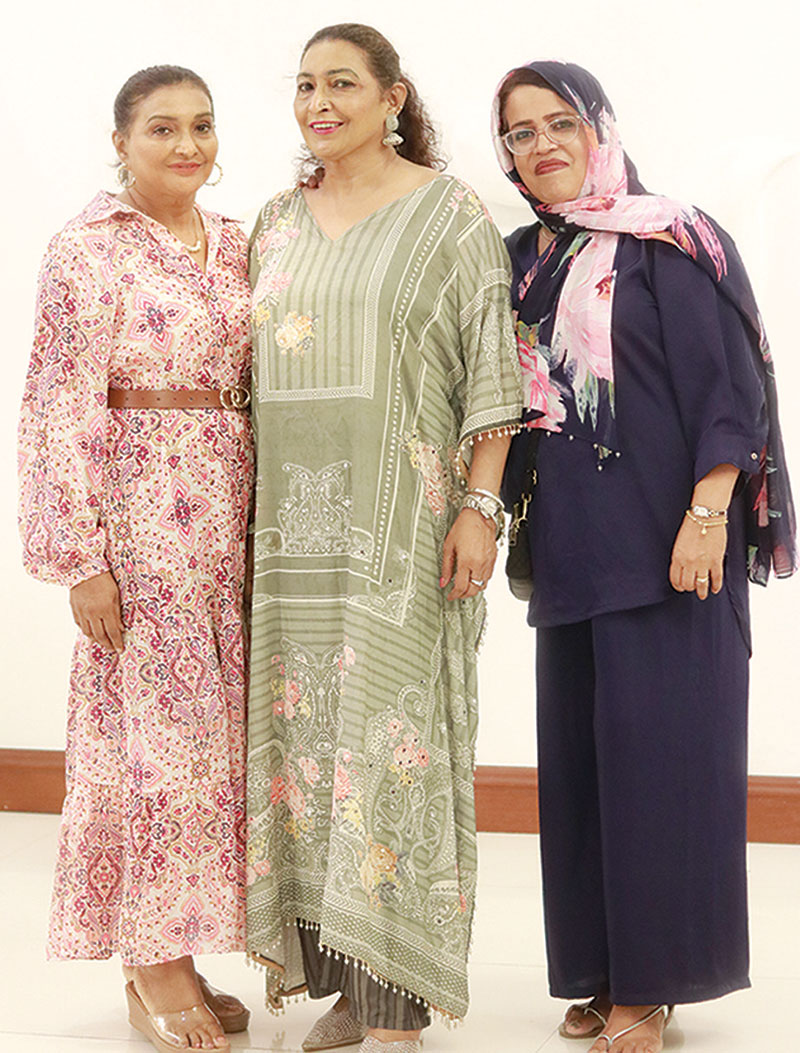
- Shahana, Sherin and Shahareen
-

- Lakshmie with her graceful moves
-

- Onitha Gurugalle with Arujana Ranasinghe
-

- Cardiologist and Senior Consultant Dr. Ruwan Ekanayake
-

- Dr. Rajitha Y de Silva and Dr. Arunie
-
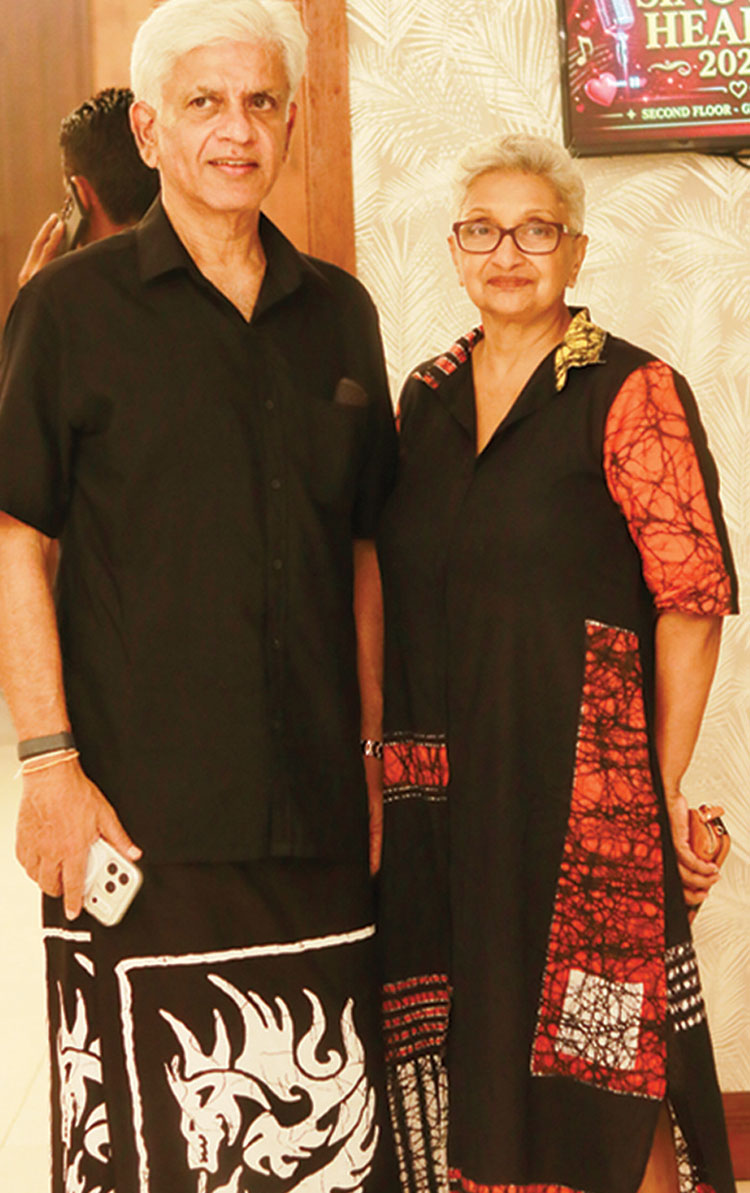
- Former Cricketer with spouse
-

- A guest takes centre stage

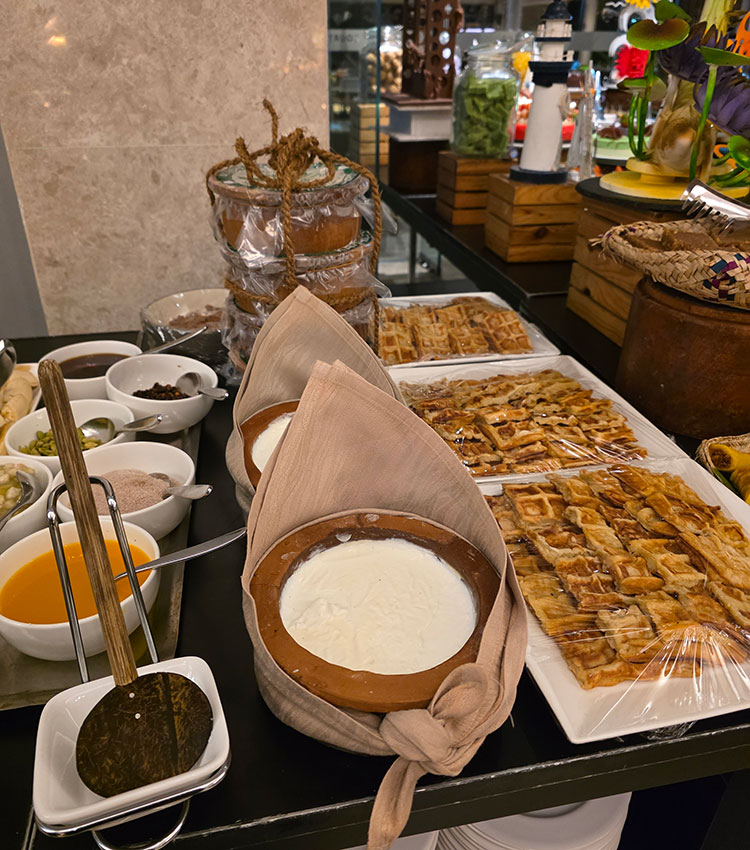
Taste of Ceylon opened its doors at Beira Kitchen, Courtyard by Marriott Colombo, on September 3rd; a festival of Southern, Central, Uva and Northern regional food, brought together on one table.
Four Regions, One Unforgettable Table
Each night, guests moved between four distinct culinary worlds. From the South came the deep, coconut-rich flavours of malu abulthiyal and Negombo pork curry with pineapple, alongside a lively fish polla roti action station. The Central province brought Kandalama lake fish, black octopus curry and carrot kalupol; dishes rooted in the region’s lakes and forests. Uva’s table leaned rustic and warming, with village chicken stew, prawn curry with murunga, and a coconut pittu drawing steady queues. And from the North came bold, unmistakable flavours of Jaffna crab curry, Jaffna mutton curry, and a dosai action station that quickly became one of the evening’s most talked-about corners.
Layered around the four regional stations was a spread that told its own story of Sri Lankan hospitality, from belimal herbal welcome drinks and a bread corner stretching from curry leaves rolls to kurakkan viyana rolls, to a dessert corner where watalappan, wood-apple coconut wandu and king coconut jelly sat alongside a full spread of traditional Sri Lankan sweets like kokis, athirasa and aluwa.
What the guests had to say
The feedback on opening night carried a common thread: guests were struck by just how different each region’s food tasted, side by side, on the same table. What could easily have blurred into “just Sri Lankan food” instead came through as four distinct culinary identities; the fire of the North, the coastal warmth of the South, the earthiness of the Central hills, and the rustic comfort of Uva, each unmistakably its own.
A Word from the team
Reflecting on the festival, the team at Courtyard by Marriott Colombo shared that Taste of Ceylon was designed from the start to be more than a menu. It was meant to be an experience guests could travel through, one region at a time, without leaving Beira Kitchen. Judging by the response over the four nights, that’s exactly how it landed.
There were many rave reviews and as the Taste of Ceylon experience at Beira Lake drew to a close, the flavours, aromas and vibrant spirit of Sri Lanka lingered on.

Charani, Shafali power India past Japan and into Asian Games semi-finals

Athapaththu and Dilhari muscle Sri Lanka past Malaysia in mismatch

Abhishek Sharma hits record T20 ton as India beat Afghanistan by 127 runs

Trump administration approves sale of F-35 jets to Saudi Arabia

Banton steers England into unassailable 2-0 series lead

Showers expected in the Western, Norrh-western and Sabaragamuwa provinces and in Galle, Matara, Kandy and Nuwara-Eliya Districts.

‘Dates have the highest sugar content to fight Coronavirus’

Sunday Island 27 December – Headlines

#SundayIsland 17th December – Headlines

Sunday Island – 28th March

Sunday Island Headlines – 21 March

Sunday Island – 21st February – Headlines
-

 Latest News7 days ago
Sri Lanka thwart Fatima Sana challenge to secure Asia Cup final spot
-

 News6 days ago
Gnanasara Thero absconding after SC ruling
-

 News7 days ago
Ammunition cache found in old Kandy bungalow
-

 News7 days ago
Prof. Pieris says Buddha Dhamma recognised as source of law under Constitution
-

 News6 days ago
Green Climate Fund (GCF) Regional Dialogue for East and South Asia will be held from 14 to 17 September 2026 at Cinnamon Life at City of Dreams Hotel, Colombo
-

 Opinion5 days ago
From Galkissa (Mount Lavinia) to Tambuttegama
-

 Latest News6 days ago
ITS Giuseppe Garibaldi’ departs Colombo
-

 Business6 days ago
HNB Finance strengthens Board with four independent directors