
Editorial
Justitia in tears

Thursday 28th October, 2021
Power befogs governments, and makes them muddle along, impervious to reason. When intoxicated with power, politicians think they cannot be wrong and resort to ill-conceived actions, and box themselves into a corner, in the process. This, we have witnessed under all governments with steamroller majorities.
President Gotabaya Rajapaksa is no stranger to controversy. This time around, he has triggered an avalanche of criticism by appointing General Secretary of the Bodu Bala Sena (BBS) Ven. Galagodaaththe Gnanasara Thera, of all people, as the head of a 13-member Presidential Task Force (PTF) to ‘make a study of the implementation of the concept, One country; One law, and prepare a draft Act for the said purpose’. The PTF is also required to study the draft Acts and amendments prepared by the Ministry of Justice and submit a proposal, we are told.
The other members of the PTF are Prof. Dayananda Banda, Prof. Shanthinandana Wijesinghe, Prof. Sumedha Siriwardana, N.G. Sujeewa Panditharathna, Attorney-at-Law Iresh Senevirathne, Attorney-at-Law Sanjaya Marambe, Eranda Navarathna, Pani Wewala, Moulavi Mohamed, Mohamed Inthikab, Kaleel Rahuman and Azeez Nizardeen. Why hasn’t anyone been appointed to represent the Tamils? There should be members to look after the interests of all communities including the Veddas. The need for an outfit tasked with such a serious task to be inclusive cannot be overemphasised.
It defies comprehension why the President has handpicked as the head of the PTF a person who was granted a presidential pardon while serving a sentence for contempt of court, which in other words means causing an affront to the dignity of the judiciary. How come the President thinks a person sentenced to jail for violating the law is fit to carry out his one-country-one-law project?
Opinion may be divided on what led Gnanasara Thera to commit contempt of court, in 2016, and languish in prison. He has been hailed in some quarters for taking up the cudgels on behalf of some military intelligence personnel, but by no stretch of the imagination could this be cited in extenuation of the offence of disrupting court proceedings. If everyone starts doing so, courts will not be able to function. However, it will be remiss of anyone who is flaying Gnanasara Thera to turn a blind eye to a far worse incident that took place in the Colombo High Court about a decade ago. When the judgment in the White Flag case was delivered on 18 Nov. 2011, a group of lawyers and outsiders went berserk, smashing court furniture and threatening judges; the police had to rush in to protect them. Nobody was prosecuted for that ugly scene, which the Bar Association of Sri Lanka, and all those who are fighting for the independence of the judiciary chose to ignore. However, two wrongs do not make a right.
The idea behind the one-country-one-law programme is to ensure that the law of the land applies to everyone equally. So, a person who has shown disrespect for the law and the judiciary and been jailed for that is ipso facto disqualified from heading the PTF in question. This, however, is not the only reason why the President’s wisdom of making the controversial appointment stands questioned.
Hasn’t anyone in the government read the report put out by the Presidential Commission of Inquiry (PCoI), which probed the Easter Sunday attacks? The PCoI has, in Chapter 22 titled, Contributory Factors, recommended that the Attorney General consider whether criminal proceedings can be instituted against Ven. Gnanasara Thera. It has also recommended that the BBS be proscribed because its actions pose a threat to religious harmony. Observing that ‘some of Gnanasara Thera’s actions and utterances have contributed to Muslim youth taking to extremism and joining Zahran’, the PCoI says: “It was in evidence that Zahran used the speeches and actions of the Thero to rally support for his cause. In the final video made by Zahran spelling out the reasons for the attacks, reference is made to the actions of the Venerable Galagoda Aththe Gnanasara Thero … The actions of Ven. Galagoda Aththe Gnanasara Thero resulted in reciprocal radicalization of Muslim youth.”
Is it that the President has not taken the PCoI findings and recommendations seriously? However, some recommendations have already been carried out. Criminal proceedings have been instituted against former Defence Secretary Hemasiri Fernando and ex-IGP Pujith Jayasundera.
Why weren’t the PCoI recommendations taken into consideration when the aforesaid controversial appointment was made? An explanation is called for.



Friday 28th August, 2026
Sri Lanka boasts a hydraulic heritage dating back more than two millennia and has a long history of harnessing water for agriculture and human settlement, but its urban water bodies are struggling with pollution. It has tamed rivers and built huge reservoirs since Independence, but lakes and canals in its urban centres have become watery versions of the Augean Stables, demanding a Herculean effort to restore them. No government has proved equal to the task. Among these polluted water bodies are two lakes; one is located close to the western seafront, and the other nestles in the hills.
Lake Gregory, a watery jewel adorning green-clad Nuwara Eliya, is as much a paradox as pleasure turning to poison in Keats’ Ode on Melancholy, which speaks of “beauty that must die” and “joy … bidding adieu”. Beneath its placid surface lurks a danger invisible to visitors drawn to its scenic beauty.
The Central Environmental Authority (CEA) has said Gregory Lake is highly polluted, and its water could pose serious health risks, according to Nuwara Eliya District Coordination Committee Chairman Manjula Suraweera Arachchi, MP. He has told the media that the CEA presented its findings about lake pollution at a recent committee meeting. That Lake Gregory is facing a serious deterioration in water quality, with agricultural and urban pollution contributing to its degradation, is public knowledge, but nobody seems to care.
The pollution of Lake Gregory is mainly due to fertilisers, pesticides and other agrochemicals washed from agricultural land and urban wastewater and runoff. Studies conducted by universities have identified sewage, domestic waste and organic matter as significant sources of pollution. But no action has been taken to block these sources of pollution.
Lake Gregory is a vital wetland ecosystem as well as a major tourist attraction. Tourists, both local and foreign, do not consider a trip to Nuwara Eliya complete without a boat ride in this scenic lake. They risk exposure to splashes of polluted water. It has been reported that the Ministry of Environment, the Urban Development Authority and the Irrigation Department are working on measures to address the problem. This is good news, but when they will clean up the lake is anybody’s guess. It is hoped that they will not go on talking indefinitely as pollution worsens. Thousands of people will continue to enjoy water sports and recreational activities, ranging from relaxed paddle boats to high-speed jet skis in the lake, unaware of health risks. Shouldn’t at least an official warning of severe water pollution be issued?
There are many countries from which Sri Lanka can learn how to keep its urban lakes clean. Malaren in Sweden and Lake Geneva, Switzerland, serve as the best examples. Singapore’s Marina Reservoir also provides a striking example of managing an urban water body in a densely built-up city. Some developing countries, too, have successfully restored polluted urban lakes, but only a few can match Stockholm’s example of maintaining a major urban lake as a high-quality source of drinking water. What Sri Lanka needs most to maintain its urban water bodies properly is a political will to do so.
Beira Lake is perhaps worse than Lake Gregory. Its pollution is mostly due to untreated or partially treated sewage, illegal sewer connections, urban runoff, solid waste and industrial discharges. Recent research has revealed excessive levels of organic pollutants, nutrients and, in some areas, heavy metals in the lake, which also promotes algal growth responsible for its green appearance.
The success of projects to clean up Beira and Lake Gregory hinges on the elimination of the sources of pollution. Experts have stressed the need to identify and block illegal sewage and wastewater connections entering the lakes and their storm-water network besides intercepting polluted stormwater and diverting it for appropriate treatment.
One can only hope that urgent action will be taken to put an end to the toxic legacy of the two vital lakes.

Thursday 27th August, 2026
The world is bracing itself for a historic El Niño event, which is very likely to be the strongest ever measured, “breaking records by a considerable and dangerous margin”, experts have warned. The World Health Organization, World Meteorological Organization (WMO) and World Food Programme are urging nations to be prepared for extreme weather conditions and their impact on health, food and energy systems.
Sri Lanka apparently believes in disaster response rather than disaster preparedness. It usually does not heed warnings or expert opinion. Unlike in the past, today, the world is lucky that El Niño is no longer unpredictable. About three months ago, WMO issued the first warning of the unfolding El Niño event. Sri Lanka should have sprung into action immediately afterwards.
The Ministry of Trade, Commerce, Food Security and Cooperative Development has reportedly launched a programme to ensure an uninterrupted supply of essential food items and stable prices amidst the possible global impact of the current El Niño phenomenon. It held a meeting, chaired by Minister Wasantha Samarasinghe, on Tuesday, to discuss ways and means of handling issues affecting food availability. According to media reports, the officials present at the meeting were of the view that the impact of El Niño on Sri Lanka could be minimal, but action had to be taken to face the food issues that might arise from possible disruptions to agricultural production in other countries and the resultant price escalations.
It has been reported that Tuesday’s meeting was attended by Ministry Secretary K. A. Wimalenthirarajah, Consumer Affairs Authority Chairman Hemantha Samarakoon, Cooperative Wholesale Establishment Chairman Kosala Wilbhava and Lanka Sathosa Chairman Ravindra Fernando, along with other officials and representatives of food importers. The government should involve all stakeholders in discussions on working out a strategy to accomplish the difficult task of ensuring food security, especially during disasters. A multi-sectoral approach is required, with the participation of officials and experts drawn from various fields such as trade, agricultural and irrigation and meteorology, and farmers’ organisations.
No room must be left for optimism in planning for disaster mitigation, and the country must always be ready for the worst-case scenario. In fact, the dry zone is already facing a severe water crisis, and the prevailing drought has caused widespread crop losses there. Reservoirs are drying up fast in those parts of the country while precipitation is high in some areas, especially in the central hills. El Niño is known to drive such extreme and erratic weather conditions.
The success of any strategy to mitigate the impact of El Niño or any other adverse weather or climate event hinges on timely anticipatory action, which alone can prepare a country for the impact of droughts, floods or heat waves on its public health and agriculture.
Experts have pointed out the steps Sri Lanka needs to take urgently in view of El Niño events. They include strengthening early-warning systems, adjusting planting dates and crop choice, promoting drought- and heat-tolerant crop varieties, improving irrigation efficiency, harvesting and storing more water, diversification of agriculture and rural incomes, and strengthening food storage and distribution systems. Why rainwater harvesting is not promoted in all parts of the country as a national priority is the question. It can help mitigate water issues to a considerable extent.
Meanwhile, a national strategy needs to be formulated to address the key factors that affect Sri Lanka’s agriculture sector and food security. They have been identified as adverse weather and climate shocks, low agricultural productivity, economic and forex constraints, high cost of production, disaster-related damage to food infrastructure, post-harvest losses and wildlife depredation. Sri Lanka is believed to lose roughly 20% to 30% of its fruits and vegetables after harvest, while wildlife is estimated to account for about 40% of annual crop damage.
Drought has already taken a heavy toll on food crops in the dry zone, with paddy bearing the brunt. Hence the government’s focus must be on maintaining buffer stocks of paddy. The current El Niño event is expected to continue into early 2027, but its effects will be felt even afterwards.
It defies comprehension why the government has allowed paddy/rice to be used for manufacturing animal feed and beer. Farmers’ demand for higher prices for their produce and a shortage of maize may have led the government to do so, but it should have heeded the warnings of a possible food shortage. Paddy production is bound to drop during the prevailing drought in the main rice producing areas affected by the prevailing drought, as it is highly water intensive, and therefore its diversion to animal feed or beer production must be stopped.
Wednesday 26th August, 2026
The Public Utilities Commission of Sri Lanka (PUCSL) has warned of possible power cuts due to the prevailing El Niño phenomenon. It has said demand for electricity could rise steeply under the prevailing weather conditions, with power generation declining, if water levels in the hydropower reservoirs recede drastically. One may recall that long before the onset of El Niño, experts predicted that power cuts would have to be imposed as substandard coal stocks, procured allegedly in a fraudulent manner, had led to a generation shortfall at the Norochcholai coal-fired power complex. They also pointed out that it would not be feasible to increase the output of hydropower and oil-fired power plants indefinitely to compensate for the shortfall. But the government ignored expert opinion for political reasons. Going by the PUCSL warning, the situation has now come to a head, and the government is apparently left with no alternative but to impose power cuts.
Curiously, Director of the Water Management Secretariat of the Mahaweli Authority Nilantha Dhanapala sounded optimistic about reservoir water levels when he addressed the media the other day. He said the Mahaweli reservoirs were at 55% of capacity, with those used for hydropower generation and irrigation at 64% and 52%, respectively. Water levels in reservoirs under the Irrigation Department had reached 49% of capacity, he said, noting that the Mahaweli, Walawe and Kelani systems were at 54%, 57% and 93%, respectively. He described the overall reservoir levels as “good”. If so, why is the PUCSL so concerned about the major hydropower reservoir water levels to the extent of warning of possible power cuts?
As for the PUCSL warning, there are two possibilities. Either the picture is not as rosy as Dhanapala has made it out to be, and the government cannot sustain hydropower generation at the current level due to the impact of El Niño, or there is enough water in the hydropower reservoirs, as claimed, but the cost of running oil-fired power plants has become unbearable.
Prime Minister Dr. Harini Amarasuriya has recently informed Parliament that fuel import expenditure significantly increased during the first half of the current year, compared to the corresponding period in 2025. She has said that about USD 3,168 million was spent on fuel imports during the first six months of 2026, but fuel cost only USD 1,995 million during the first half of 2025.
Chairman of the Sectoral Oversight Committee on Infrastructure and Strategic Development, SJB MP S. M. Marikkar, has told Parliament, quoting from a PUCSL report, that due to substandard coal imports, Norochcholai was unable to generate about 300MW of power needed to meet electricity demand between Jan. 1 and June 30, 2026, resulting in additional expenditure of Rs. 8,536 million on oil-fired power generation to make up for the shortfall.
Instead of having the coal procurement scam under his watch probed urgently in keeping with his promise to ensure transparency and accountability, President Anura Kumara Dissanayake sought to obfuscate the issue by appointing a Presidential Commission of Inquiry to investigate coal procurement from 2009 to 2026. JVP General Secretary Tilvin Silva said in his May Day speech this year that the Presidential Commission would exonerate those from the NPP government of wrongdoing and find those from the opposition guilty. Subsequently, he apologised to the Commission for his remarks at issue, but they can be considered a Freudian slip that revealed the government’s real intention.
According to the Central Bank data, the massive increase in the country’s fuel bill is due to several key factors, such as a surge in international oil prices owing to the Iran conflict, higher import volumes, and higher expenditure on refined petroleum products. These are no doubt causative factors, but the fact remains that the shortfall in Norochcholai’s coal-fired power generation also forced the country to rely more heavily on costly oil-fired power generation, adding to its fuel import expenditure. The Ceylon Petroleum Corporation (CPC) admitted in April that it had bought three shipments of diesel between the last week of March and the second week of April at prices of between USD 288 and USD 281 per barrel. It did so following a revelation by HSBC Group’s CEO, Georges Elhedery, that the highest price he had seen paid for a barrel of oil was USD 286—and that it went to Sri Lanka. Critics claimed that the government had purchased those diesel shipments at extremely high prices because it was desperate to keep diesel-fired power plants running to make up for the drop in Norochcholai’s power output. The additional fuel used for operating oil-fired power plants to compensate for Norochcholai generation shortfall and its cost need to be estimated.
Power cuts are bound to take a heavy toll on the country’s economic recovery efforts. They could lead to lower production, higher costs, weaker exports, and ultimately slower economic recovery. There is no way the government can deny the fact that the questionable coal procurement deals have led to a shortfall in power generation, higher cost of electricity, increased tariffs and the prospect of power cuts.

It’s still a queendom, but Sri Lanka are more than just Athapaththu now

Namibia T20I tri-series: Youth, depth and a continental dream take centre stage

Tharanga storms past 92m in Zurich

Iran, Qatar hold Hormuz talks amid int’l hopes dialogue with US will resume

Russell breaks world 100m hurdles record in Zurich

Sun directly overhead Kokkuvil, Nallur, Kodikamam and Nagar Kovil at about 12.11 noon today (28)

‘Dates have the highest sugar content to fight Coronavirus’

Sunday Island 27 December – Headlines

#SundayIsland 17th December – Headlines

Sunday Island – 28th March

Sunday Island Headlines – 21 March

Sunday Island – 21st February – Headlines
-

 Business7 days ago
SriLankan Airlines makes ShakthiSAT Mission possible for talented Sri Lankan student
-
 Features6 days ago
My secondary schooling after Royal Primary
-

 Features6 days ago
From the First to the 22nd: A short history of Amendment Politics and Reform Frustrations
-

 Latest News6 days ago
Tharanga edges out Chopra in 88m javelin battle
-

 News4 days ago
Missing doctor’s body found in Mahiyanganaya
-
 Features6 days ago
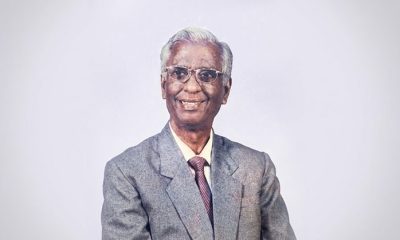
How Shelton Kodikara became first Professor of International Relations
-
 Features6 days ago
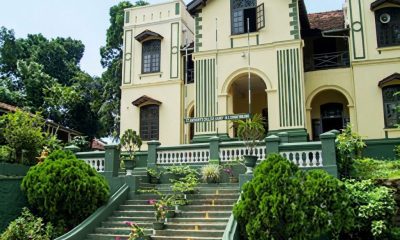
How St. John’s College Shaped Panadura for 150 Years
-
 News4 days ago
Australia declines to release Finance Secy Suriyapperuma’s citizenship details