
Business
CDB concludes first digital art competition ‘CDBRankatiSiththamRoo 2021’ on a high note


Citizens Development Business Finance PLC (CDB), Sri Lanka’s premier financial services provider, launched ‘CDB RankatiSiththamRoo 2021′ in commemoration of world children’s day with the aim of inspiring young minds to express themselves and create. The initiative concluded on a high note on October 9, 2021, via a Facebook live stream. The participants’ submissions for the islandwide Digital Art Competition were exhibited prominently, followed by an interactive session for the children.
To develop the necessary cognitive skills, children must be able to express themselves creatively at a young age. However, due to the current pandemic, children are confined to their homes, with fewer opportunities to express themselves creatively. Understanding this, CDB established a platform for them to freely express themselves. The final event, led by veterans RenukaBalasooriya and Prageeth Rathnayake, was more than a mere exhibition; it also included an interactive knowledge sharing session for the children.
‘CDB RankatiSiththamRoo 2021’, was open to children 5-12 years of age. There were three winners selected from an overwhelming number of over 1000 registered participants. The 1st Place was awarded to Chamika Thehan, Age – 5 Years from Anuruddha Kumara National College, Nawalapitiya, Nethru Sadilka, Age – 8 Years from GonagalaMadyaVidyalaya, Galle and GangulDanodya, Age – 12 Years Dharmashoka College, Ambalangoda, were awarded 2nd and 3rd places respectively.
Commenting on the initiative, the host of the event, RenukaBalasooriya said; “CDB has curated an ideal activity by organizing this event for the children, especially amidst the current pandemic situation. Art is a special subject that teaches many things. I believe motivating the children to put on their thinking caps is great. It gives an opportunity to be creative in a time where there is uniformity in their lifestyles during the pandemic. I wish the organization all the very best and hope ‘RankatiSiththamRoo’ is conducted annually.”
Commenting further on the initiative, the judge of the event, PrageethRathnayake added; “It was mesmerizing to see the creative minds the future of our country carries. The art submissions were not mere sketches; all the drawings had a story behind their artwork. With the ongoing pandemic situation, the children have been housebound for a long time period, and children this young must have been adversely affected. There were deep thoughts and stories behind each drawing, and as the judge, I decided to put myself in their shoes when selecting the best. Selecting the best was tough, as all of them were beautiful. CDB has done great in initiating such an event for the children”.
Citizens Development Business Finance PLC (CDB) is a publicly quoted corporate leader positioned among the Ten Best Sustainable Companies, Top Thirty Businesses and Top Five Largest Non-Banking Financial Institutions in Sri Lanka with an islandwide presence, driven by a state-of-the-art technological platform that has revolutionized the way financial transactions are performed. To learn more, visit www.cdb.lk



by Dr. Dayanath Jayasuriya, PC Former Chairman, Securities and Exchange Commission
Background
The Financial Action Task Force (FATF) Recommendations set out a comprehensive and consistent framework of measures which countries should implement in order to combat money laundering and terrorist financing, as well as the financing of proliferation of weapons of mass destruction. Countries have diverse legal, administrative and operational frameworks and different financial systems, and so cannot all take identical measures to counter these threats.
The FATF Recommendations, therefore, set an international standard, which countries should implement through measures adapted to their particular circumstance
Beneficial ownership
With a view to strengthen Anti- Money laundering (AML) controls to be in compliance with global standards set by the FATF, Sri Lanka recently introduced beneficial ownership provisions into the Companies Act1. This was followed by a set of rules. The Cabinet has approved amendments to the Trusts Ordinance No. 9 of 1917.
Efforts to unmask the beneficial owners are ubiquitous both in developed as well as developing economies. These initiatives are timely because Sri Lanka’s effectiveness in applying AML requirements are due to be evaluated shortly by a mission fielded by FATF. Sri Lanka still has bitter memories of the fate of the country having being placed on the ‘grey list’ on two occasions in the past. Since then much water has flown under the bridge due to the untiring efforts of the Central Bank Governor and the staff of the Financial Intelligence Unit (FIU),
At a recent a seminar two speakers, both of whom who had previously held key positions in the Securities and Exchange Commission criticized the beneficial ownership rules. One was of the view that this would be a disincentive to attract foreign investors and the other argued that it would be an unfair burden on company secretaries.
The keynote speaker, Dr. Mrs. Subhani Keerthiratne, Director, FIU had to devote much of her speech to disabuse the minds of the listeners. Even prior to the enactment of the beneficial ownership provisions and rules, Sri Lanka was not able to attract many foreign investors. On the other hand, better transparency by disclosing beneficial owners, will probably help new investors to favorably consider Sri Lanka for investment purposes.
Empirical studies clearly demonstrate the added advantage in disclosing beneficial ownership. According to an Organization for Economic Cooperation and Development (OECD) working Paper by Professor Erik P.M. Vermeulen of Business and Financial Law, at Tilburg University:
“..on the misuse of corporate vehicles, which arguably poses a major challenge to good corporate governance. Stakeholder rights (e.g. employees and creditors) cannot be properly exercised if ultimate decision- be identified. The accountability of the board may also be seriously endangered if stakeholders and the general public are unaware of decision-making and ultimate control structures. Finally, regulators and supervisory agencies have a strong interest in knowing beneficial owners – in order to determine the origin of investment flows, to prevent money laundering and tax evasion and to settle issues of corporate accountability.”
Other studies have supported these findings.
The views of Professor Barry Rider OBE of Jesus College Cambridge in reviewing my new book entitled Beneficial Ownership – the dynamics of unmasking beneficial ownership in the fight against economic crime, are worth repeating here:
Arguably the greatest stumbling block for those attempting to prevent and address serious crime is the practical and legal difficulties in determining who owns and controls what. While criminals have always attempted to hide their identity, now that the tracing and interdiction of wealth associated with criminal and subversive activities has become so important the ability to fix beneficial ownership has become of crucial importance.
Dr Dayanath Jayasuriya’s new book – Beneficial Ownership – the dynamics of unmasking beneficial ownership in the fight against economic crime (2025) provides a unique perspective. It not only contains the relevant legal and regulatory material but offers practical and topical advice to the investigator – whether he or she be a lawyer, regulator, law enforcement officer or in compliance and risk management. Dr. Jayasuriya PC draws on half a century of highly relevant practical experience at an international and domestic level, to assist the reader in addressing this important yet thorny issue.
It is now counter-productive to condemn the efforts of the Sri Lankan government to unmask beneficial ownership, particularly in the context of rising crime rates, corruption and foreign exchange violations. As this article was being completed, the headlines on the cover page of Weekend Mirror of 10 October 2026 raised the following issue:
Sri Lanka’s Rising Black Economy and Corruption?
It cannot be gainsaid that this is a crucial issue the country now faces.
NGOs- above the law?
It was only in 1980 that Sri Lanka introduced legislation regarding the registration of organizations under the Voluntary Social Service Organizations (Registration and Supervision) Act No. 31 of 1980. All Non-Governmental Organizations registered under the Companies Act No. 07 of 2007 had to re-register with the National Secretariat for Non-Governmental Organizations. The legal framework left much to be desired; in fact, some diaspora groups sympathetic to the cause of the LTTE in the 30 year separatist war found little or no difficulty in funding the LTTE that was a proscribed organization in several countries. Since 2026 an attempt has been made to introduce a new Non-Governmental Organisations (Registration and Supervision) Bill.
The following extracts from a media report2 highlight the growing opposition to some of the clauses in the Bill.
A few local NGO activists and four UN Special Rapporteurs have warned that the proposed Non-Governmental Organisations (Registration and Supervision) Bill 2026, reportedly intended to help Sri Lanka meet international counter-terrorist financing standards ahead of its mutual evaluation this month, is inconsistent with those very standards set by the Financial Action Task Force (FATF), as well as with the right to freedom of association.
…Sri Lanka was placed on the FATF’s ‘Grey List’ of jurisdictions with strategic deficiencies in October 2017, following a review that began in October 2016. The listing prompted the European Commission to designate Sri Lanka a high-risk third country in February 2018, and the FATF removed the country from the list only in October 2019.
An adverse finding can raise Sri Lanka’s borrowing costs, restrict its relationships with international banks and add compliance costs and monitoring that weigh on the banking sector and wider economy, Neelan Tiruchelvam Trust Chairperson Ambika Satkunanathan said on 17 September at the launch of the Sri Lanka Civil Society FATF Shadow Report.
At the same event, Global NPO Coalition on FATF Co-Chair Sangeeta Goswami cited reduced access to correspondent banking relationships, the links through which local banks process international payments, and diminished international assistance, warning that such stakes push countries to over-comply, adopting restrictions well beyond what the FATF standard requires. The Bill is intended to replace the Voluntary Social Services Organisations Act of 1980.
The communication, dated 28 September, was signed by UN Special Rapporteur on the promotion and protection of human rights and fundamental freedoms while countering terrorism Ben Saul, UN Special Rapporteur on the promotion and protection of the right to freedom of opinion and expression Leopoldo Maldonado Gutiérrez, UN Special Rapporteur on the rights to freedom of peaceful assembly and of association Gina Romero, and UN Special Rapporteur on the situation of human rights defenders Andrea Bolaños Vargas.
The latest draft, of June 2026, adds provisions to monitor NGOs for compliance with counter-terrorist financing and anti-money laundering standards. It has not been made public and is undergoing restricted stakeholder consultations.
Under the Bill, all NGOs must register with a Competent Authority, and operating unregistered would be an offence carrying a fine of up to Rs. 1 million. Directors and office bearers of corporate bodies would bear criminal liability, which the experts said reverses the burden of proof. Registration would be valid for three years, with no deadline for the authority to decide on applications or renewals, no appeal against refusal, and a bar on starting activities until registration is granted.
The experts said this conflicts with the principle that associations need no State authorisation to be protected under Article 22 of the International Covenant on Civil and Political Rights (ICCPR). They cited a Human Rights Council resolution requiring registration to be transparent, accessible, expeditious, inexpensive and open to appeal, and to avoid re-registration.
The Bill’s scope covers nearly all civil society, from trusts and micro-finance NGOs to any group of five or more people engaged in social service, advocacy or consensus building, including informal community groups and volunteer networks. The authority may also force otherwise exempt bodies to register specific non-religious projects. The experts said the Bill makes no distinction by size or scope, placing a disproportionate burden on small, grassroots and minority organisations.
Among the obligations under Section 15, NGOs must “align with the policies of the Government”, avoid activities that affect sovereignty or territorial integrity, refrain from political advocacy with NGO funds during pre-election periods, notify the authority before any crowd-funding and follow Central Bank instructions. The experts said the policy alignment clause, together with the authority’s power to ‘liaise with NGOs to make them part of the development of the country’, risks suppressing minority and alternative views and chilling dissent, stressing that freedom of association also protects controversial and politically sensitive work.
On terrorist financing, the experts said blanket regulation of all NGOs is inconsistent with the risk-based approach required by FATF’s revised Recommendation 8, under which measures must target only organisations shown to be at risk. They pointed out that Sri Lanka’s national risk assessment of January 2026 found the sector’s inherent risk to be low to medium, with limited evidence of proven terrorist financing by NGOs, and that the assessment weighed irrelevant factors such as the absence of provisions to “depoliticise” international NGOs. FATF standards hold that most NGOs pose no such risk and that self-regulation may suffice, they added.
Those who have objected to the proposed Bill have obviously overlooked that the objective is not to over-regulate but to have a balanced approach through a risk-based approach as advocated by FATF.
Developments in Norway
Some extremists cite Norway as a good example where with minimal controls terrorist funding is kept under control. Norway’s latest FIU report3, however, discloses how such activities still take place and that more and more young persons are behind these activities.
Conclusion
The measures taken or proposed to be taken by Sri Lanka should not be undermined by domestic or diaspora groups supporting any particular ethnic, religious or minority group or any particular ideology. The country’s priority is not to over regulate but to promote peace and harmony among its citizens and improve their well-being and happiness through better governance.
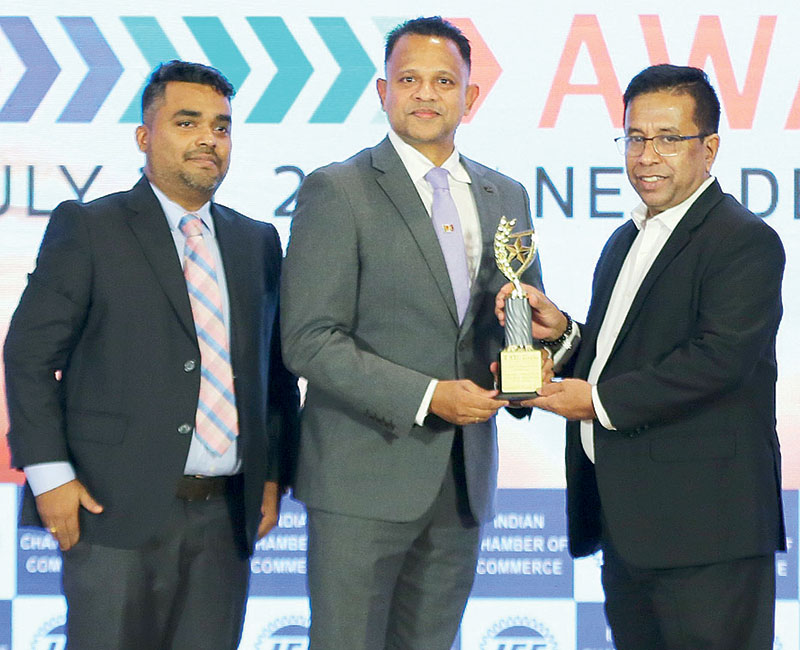
Sampath Bank PLC has been recognised for its use of Artificial Intelligence (AI) and Machine Learning (ML), receiving a Special Appreciation Award for AI/ML Implementation in Banking at the ICC Emerging Asia Banking Conclave & Awards 2026 in New Delhi, India.
The bank was the only Sri Lankan financial institution to receive the recognition at the regional awards organised by the Indian Chamber of Commerce (ICC).
The awards recognise financial institutions across the BIMSTEC region for excellence and innovation, with the AI/ML category focusing on the effective use of emerging technologies to improve performance, operational efficiency and long-term value.
The awards were assessed by an independent panel of former banking and regulatory leaders, with PwC India serving as process reviewer.
Sampath Bank Chief Business Intelligence Officer Darshin Pathinayake said the award reflected the bank’s commitment to using data, analytics, AI and ML to improve customer engagement, operational efficiency, risk management and decision-making.
Pathinayake and Principal Data Scientist Kiruparan Balachandran represented the bank at the event.
Pathinayake also participated in a panel discussion on trust, technology and transformation, which covered digital transformation, cyber resilience, regulatory developments and collaboration among banks, fintech companies and technology partners.
The bank said AI and ML were increasingly being used to understand customer needs, streamline processes and develop more relevant financial solutions.

Commercial Bank of Ceylon has partnered with Payable (Pvt) Ltd and Mastercard to introduce ‘Soundbox’, an audio-enabled digital payment device aimed at micro, small and medium-sized businesses.
The bank said the solution was designed to help small merchants, many of whom continue to depend largely on cash, adopt digital payments through an affordable and simple payment acceptance mechanism.
Soundbox enables merchants to accept contactless card payments and QR-based transactions across major card networks and QR schemes. It provides an audio confirmation for each successful transaction, allowing merchants to verify payments instantly without interrupting their work. QR transactions are also credited immediately, the bank said.
Commercial Bank Managing Director and CEO Sanath Manatunge said the solution would help remove barriers faced by small merchants by combining affordability, instant onboarding, real-time transaction visibility and multiple payment options in a single device.
Payable Co-Founder and CEO Yohan Wijesiriwardane said the initiative aimed to ensure that small businesses had access to the same digital payment facilities as larger retailers.
Mastercard Country Manager for Sri Lanka Mahesha Amarasuriya said the initiative would support financial inclusion and help Sri Lanka move towards a cash-lite economy.
The bank said Soundbox would also reduce the need for multiple payment terminals while improving transaction transparency, cash management and customer convenience.

Pakistan quicks seal win after Salman Agha ton sets tone

Record 1,600 students take Russian Classical Ballet examination in Sri Lanka

Half a million people join protests in France, but some turn violent

Deadly fire breaks out at Canada military base

Showers or thundershowers will occur in most parts of the island after 1.00 p.m.

Buddhist hierarchy demands prison perks for monk convicts

‘Dates have the highest sugar content to fight Coronavirus’

Sunday Island 27 December – Headlines

#SundayIsland 17th December – Headlines

Sunday Island – 28th March

Sunday Island Headlines – 21 March

Sunday Island – 21st February – Headlines
-

 Latest News6 days ago
Nissanka’s return headlines Sri Lanka’s Test squad against Pakistan
-

 Latest News7 days ago
Farhan and Sadaqat help Pakistan seal series in style
-

 Features7 days ago
Intake 16: 45 years of duty and honour
-

 News7 days ago
Malwathu Chapter issues statement on talks with President over Gnanasara Thera’s robes
-

 News7 days ago
CP alleges NPP has taken the blame for illegal US sanctions on Iranian vessels
-

 News5 days ago
Sri Lanka, India caught in US-Iran ship crisis
-

 Opinion7 days ago
How long can Sri Lanka remain silent on its demographic crisis?
-

 Latest News5 days ago
Kusal Mendis’ unbeaten 87 hands Sri Lanka consolation win