
Sports
‘Warriors Sevens’ to end rugby drought


by a Special Sports Correspondent
Probably for the first time in the history of Sri Lanka rugby a-seven-a-side tournament-featuring division one clubs- will be played on October 30 and 31 in Colombo without the presence of spectators.
Rugby, like most other sports, has felt the blow from the Covid 19 pandemic and there hasn’t been any rugby activity for the past one and half years except for a friendly rugby encounter which featured players from Sri Lanka Air Force and CH & FC a few months ago.
The truth is that Sri Lanka Rugby (SLR) failed to start rugby in the island during the pandemic even though some other sports associations did. Track and Field, tennis, table tennis, cricket and badminton managed to have activities for the players and National Olympic Committee managed to send the island’s representatives to contest the Olympic Games which was held in Japan a few months ago. Even at the Olympics there was a rugby sevens event and Fiji won the title underscoring the fact that rugby can be held during difficult times like this if the necessary precautions and health guidelines are followed.
SSP Nizam Jamaldeen, one of the organisers of the upcoming club rugby sevens- titled ‘Warriors Rugby Sevens’-said that players taking part in the tournament would be going into a bio bubble and the tournament would be played under strict health guidelines and without spectators. “The players have suffered without rugby for almost two years now, so the Police and the security forces were asked to organise a seven-a-side tournament. We have the blessings of Sri Lanka Rugby and Sri Lanka Society of Rugby Football referees and sponsors. Dialog is one of the sponsors and the organisers are optimistic in finding more sponsors before the tournament kicks off,” said Jamaldeen who is also a former national rugby player and a present rugby administrator.
According to the organisers of the tournament the teams that have accepted invitations to contest the tournament are Police Sports Club A, Police Griffins, Sri Lanka Air Force A, Sri Lanka Air Force B, Navy Sports Club A, Navy Sports Club B, Army Sports Club A, Army Colts, CH & FC and Havelocks Sports Club.
Interestingly Kandy Sports Club and Ceylonese Rugby & Football Club have decided against taking part in the tournament due to lack of time to prepare for the event.
Sri Lanka was running the risk of losing a good number of players due to rugby inactivity before this tournament came along. And this tournament greatly serves the task of keeping the players in the game. Most players are in the game because it’s a lucrative occupation and the absence of rugby activities has made them shelve their boots and find other forms of employment that have no connection to rugby.
SLR, some time back, wanted to tie up with Sri Lanka Air Force and have a club rugby sevens tournament, but that never got off the ground with the authorities citing the pandemic as the key reason among other issues for the event being a non-starter.
In rugby all over the world the season starts with a seven-a-side tournament because that’s the method used to select promising players to form the pool for the upcoming gruelling 15-a-side rugby season. According to the organisers of the ‘Warriors Rugby Sevens’ the national rugby selectors would be present at the games to select the national pool for future overseas assignments.
Sri Lanka’s rugby sevens has a decorated history. From the day Policeman K.F Jenkins introduced the abbreviated form of rugby to Sri Lanka on February1, 1931 the islanders have picked up the game with the enthusiasm that a child has for a new toy and enjoyed a fair share of luck at the international scene too.
It must be mentioned here that the fifteen-a-side version of rugby was played in the island before that and its ‘little brother’ (Rugby sevens) though arriving later proved to be a better bet for the pint-sized islanders when locking horns with hefty players in the international scene.
Rugby sevens, unlike today, didn’t know what professionalism was and Asian teams made good progress and could be counted when contesting the much looked forward to Hong Kong ‘Sevens’ tournament. Sri Lanka had the honour of contesting the maiden event of this tournament in 1976 and was a regular till other Asian and African teams moved up in rankings and shoved Sri Lanka out of contention. Sri Lanka won the ‘Bowl’ Competition in 1984. Sri Lanka is not a regular at the professionally organised World Rugby Sevens Series where the stop at Hong Kong is just one of the legs in a series where there are nine other stops when the players starting travelling and playing.
It’s good that the forces and the Police are in the forefront and organising this sevens rugby tournament. But critics would sure have their reservations because without CR&FC and Kandy SC the event will definitely lack the sparks and glamour. For the record the players from Kandy had wanted to field a team at the upcoming tournament under the name Kandy ‘Lions’, but their request was turned down along with several other similar requests coming, of course from Division B sides, because the authorities were not going to take responsibility for the players’ welfare given the challenging health situation in the country.
Spectators will have to catch the action from Police Park on these two days from televisions at their living rooms at home. Rugby needs the spectators, cheering and that sense of camaraderie, but the times don’t permit any of that. Rugby has its way of connecting and given the ‘new normal’ spectators would soon find a way to relate to rugby on the tv screen and find contentment. Let the games begin!



The Rose Bowl, which has been awarded to the winner of ODI series between the women’s teams of Australia and New Zealand since 1985, has now been expanded to include T20Is as well.
New Zealand’s three match T20I tour of Australia, which begins on Sunday at the North Sydney Oval, will be the first T20I edition of the Rose Bowl. The teams will get to face off again for the trophy in March 2027 when they meet again for three ODIs, also in Australia.
For Rose Bowl series that include matches in both white-ball formats, the trophy will go to the team with the most wins overall. In case of a drawn series, the current holder will retain the trophy.
“The Rose Bowl is a prestigious trophy that holds a lot of meaning to current and past players, and it’s a series we’ve always taken a lot of pride in competing in,”Catherine Campbell, NZC’s chief cricket operations officer and a former New Zealand player, said. “With so much T20I cricket now being played, this is a brilliant opportunity to keep the Rose Bowl relevant and to build on the history between us and our Australian rivals.”
New Zealand captain Melie Kerr was excited by the broadening of opportunities to compete for the Rose Bowl.
“We’re all aware of what the Rose Bowl represents and the importance it holds in the White Ferns whakapapa [genealogy],” said Kerr. “Great players and teams have fought for it over the years and we’d love the opportunity to claim our own piece of that history.”
Australia have held the Rose Bowl continuously since wresting it back from New Zealand in 2000. Since that 3-0 win, Australia have won 18 times with one series – in 2008-09 – shared 2-2. Overall, Australia have won 26 of the 31 ODI series played for the Rose Bowl, with New Zealand winning three times and three series drawn.
North Sydney will host all three T20Is of the upcoming Rose Bowl series, on October 18, 20 and 22.
[Cricinfo]

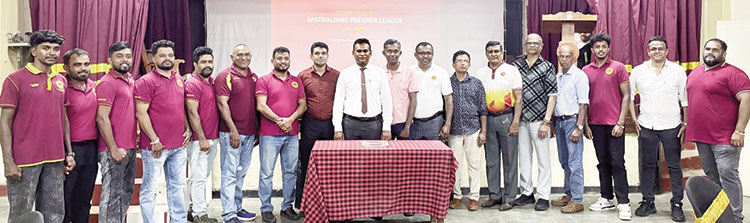
The inaugural Sastralian Premier League (SPL), a T10 cricket tournament aimed at strengthening the cricketing fortunes of Ananda Shasthralaya National School, Matugama, will get underway next month, bringing together eight teams.
Organised by the Old Sastralians Cricket Association in collaboration with the school, the tournament is designed to provide a platform for emerging talent while generating much needed financial support for the school’s cricket development programme.
Each franchise will be required to assemble a squad of 16 players, excluding the captain, with the competition featuring a unique set of regulations aimed at encouraging participation across different age groups.
Cricketers from other schools in the Matugama area will also have an opportunity to showcase their skills under the ‘Guest Players’ category. Each team can recruit up to six guest players, with four required to feature in the playing XI.
In a move designed to nurture the next generation, every team must include two current school cricketers in its squad, with at least one guaranteed a place in the playing XI.
The tournament will also accommodate experienced campaigners, with teams permitted to select five players over the age of 20 and three over 40. The provision to use an ‘Impact Player’ is another feature of the competition.
The eight teams have been divided into two groups. Group A comprises JSD Challengers, Jagath Express, Liveka Power Lions and Rexhill Warriors, while JPI Royals, Five Star Heroes, Marine Titans and Finnk Falcons make up Group B.
A total of 16 matches will be played across November 7, 8 and 15, with November 16 set aside as a reserve day.
Beyond the action on the field, organisers hope the tournament will provide a financial boost to school cricket while forging stronger ties between past and present cricketers.
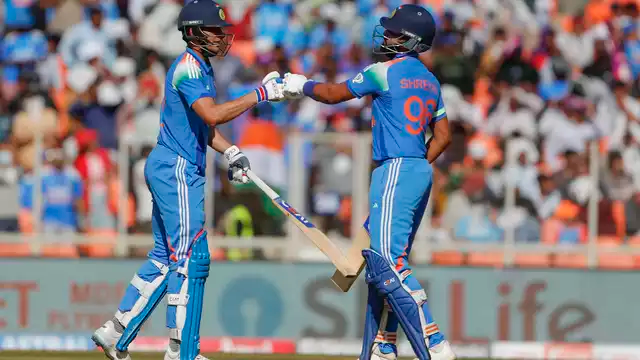
Squad for the first three ODIs: Shubman Gill [C], Rohit Sharma, Virat Kohli, Shreyas Iyer [VC], KL Rahul [WK], Nitish Kumar Reddy, Axar Patel, Naman Dhir, Anshul Kamboj, Gurnoor Brar, Ruturaj Gaikwad, Arshdeep Singh, Ishan Kishan [WK], Mohammed Siraj, Prasidh Krishna*, Kuldeep Yadav
Squad for fourth and fifth ODIs: Shreyas Iyer [C], Rohit Sharma, Virat Kohli, Tilak Varma, Ishan Kishan [WK, VC], Nitish Kumar Reddy, Axar Patel, Naman Dhir, Auqib Nabi, Gurnoor Brar, Ruturaj Gaikwad, Arshdeep Singh, Kumar Kushagra [WK], Mohammed Siraj, Yash Thakur, Kuldeep Yadav
[Cricbuzz]

Review of progress in reforms and modernisation of key state revenue-collecting institutions

Rose Bowl expanded to include Australia vs New Zealand T20Is

Trump claims US Navy blockade stops Iranian ships in Hormuz

Showers above 75 mm are likely at some places in the Western, Sabaragamuwa, Central and North-central provinces and in Trincomalee and Mullaitivu districts

Cut power bills by 3-5%, don’t hike them, consumers demand

Asgiri Mahanayake calls for immediate release of Gnanasara Thera

‘Dates have the highest sugar content to fight Coronavirus’

Sunday Island 27 December – Headlines

#SundayIsland 17th December – Headlines

Sunday Island – 28th March

Sunday Island Headlines – 21 March

Sunday Island – 21st February – Headlines
-

 News6 days ago
Sri Lanka escalates anti-graft drive with Shiranthi’s jailing
-

 News6 days ago
Iranian ships stranded, Lanka fears US sanctions
-

 Latest News5 days ago
Farhan and Sadaqat help Pakistan seal series in style
-

 Latest News4 days ago
Nissanka’s return headlines Sri Lanka’s Test squad against Pakistan
-
 Features5 days ago
Intake 16: 45 years of duty and honour
-
 News5 days ago
Malwathu Chapter issues statement on talks with President over Gnanasara Thera’s robes
-

 News6 days ago
Navi Pillay’s Lankan affairs in focus as she wins 2026 Nobel Peace Prize
-
 News5 days ago
CP alleges NPP has taken the blame for illegal US sanctions on Iranian vessels