
Sports
The Legend of Lucky Rogers

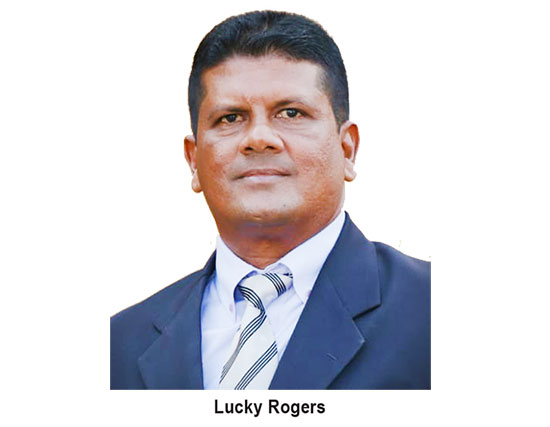
by Rex Clementine
Quietly, sit next to a coach giving a pep talk to Under-13 cricketers before a game and you will be left with anger and bewilderment as you eavesdrop. Coaches teach young kids some new tricks in the trade. ‘Appeal three times vociferously and there’s a good chance that you will get a decision in your favour that would have been otherwise given not out.’ That’s the current status of our school cricket. But then, there are also the rare coaches, the Lucky Rogers type. Here’s the Lucky Rogers story.
Ananda College had had a terrific season in 2009 having won 12 games. They were skippered by Dinesh Chandimal. The title was going to be decided in the crunch game between Ananda and Royal at Ananda Mawatha. Royal had KJP. Ananda were set to secure the title after being set a paltry target of 80. But cricket is a funny game. Ananda were shot out for 78. Ruchira Palliyaguru, currently an international umpire had given five leg before wicket decisions!
Well, the obvious choice is to nail the umpire. The term ‘umpire hora’ is common in our backyard. Five leg before wicket decisions in a crunch game! But Ananda boys played like gentlemen. Their coach Lucky Rogers had instilled in them that discipline and set the standards.
“To be honest, I expected a bit of bad blood. But to my surprise, every Ananda player walked up to me, shook hands and said ‘good game sir.’ Palliyaguru told The Island. ‘Then followed Ananda coach Mr. Lucky Rogers. He shook my hands and said thank you. That’s all. What a gentlemen.’
You don’t get many gents like Lucky Rogers. Ajantha Mendis played little cricket at school and his talent was spotted by Lucky Rogers at an academy. The rest they say is history as Mendis gave us some memorable moments running through India’s famed batting line up comprising Sehwag-Dravid-Sachin-Ganguly-Laxman.
The legend of Lucky Rogers is not associated with just coaching. He was a legend as a player too.
“I won the outstanding schoolboy cricketer of the year award (outstations) in the year 1988 and Lucky Rogers won it after me in 1989,” said Sanath Jayasuriya speaking to The Island. Well, that sums up the story.
Here’s bit of stats to drill Lucky Rogers greatness. He hails from Moratuwa. The famed cricket pillars of Moratuwa are St. Sebastian’s’ and Prince of Wales. But there’s a third force. Quite formidable one too; Moratu Vidyalaya. Lucky Rogers captained them at under-13, 15,17 and 19 levels. In his last year, he finished off with 1493 runs, in just ten games with an highest score of 264 not out. If you know bit of school cricket, those are stunning numbers. Not even matched by The Greatest; P.A. de Silva. Nobody else reached 1000 runs that season. Lucky did it in seven games. Mind blowing stuff.
Lucky Rogers was not just a stylish top order batsman. He was also a superb wicketkeeper. Highly rated by his contemporaries, hardly committing a blunder behind the stumps. When he opened batting, he was a class act, with an array of attractive strokes.
“I captained Sri Lanka Under-19 team to Bangladesh for the Asia Cup. We lost the finals to India captained by Sourav Ganguly. Lucky Rogers was a key figure in that side as we performed consistently well. When in the mood, Lucky could put best of bowling attacks to the sword,” recalled another Sri Lanka captain; Marvan Atapattu.
When Lucky Rogers got out of school, he was quite popular in the domestic circuit piling up runs for Moratuwa Sports Club. He made quite an impact as captain too as Moratuwa were promoted to Premier League from Sara Trophy. Lucky was jack of all trade; team’s leading batsman, wicketkeeper and skipper, who had the knack to make things happen, despite having limited bowling resources.
In 1990s, the wicket keeping gloves of the national cricket team exchanged hands between a few players; Gamini Wickramasinghe, Chamara Dunushinghe, Pubudu Dassanayake, Rumesh Kaluwitharana and Lanka de Silva. But Lucky Rogers never got a look in.
“Well, there were financial constraints facing my family and I decided to play league cricket in Australia so that I could earn a living by playing the sport and look after my family. I guess I missed out because of that,” Lucky Rogers told The Island.
Lucky represented North Cofield for seven seasons and won the Victorian Championships twice. He is hailed down under in cricket circles as much as here. Lucky credits the values he brought to the game thanks to the coaches he had; Mr. Bernard Perera, Mr. Chandana Mahesh and Mr. Manjula Peiris. It reiterates a very pertinent point, the need to have quality coaches at school level.
Lucky Rogers is an example that you don’t have to play for Sri Lanka to leave an indelible mark in the game. He championed the cause of not so fancy teams as a schoolboy and in domestic cricket and later on when he took to coaching he taught the players finer points of the game, but more importantly to play the game in the right spirit. Men like him are rare and need to be celebrated.







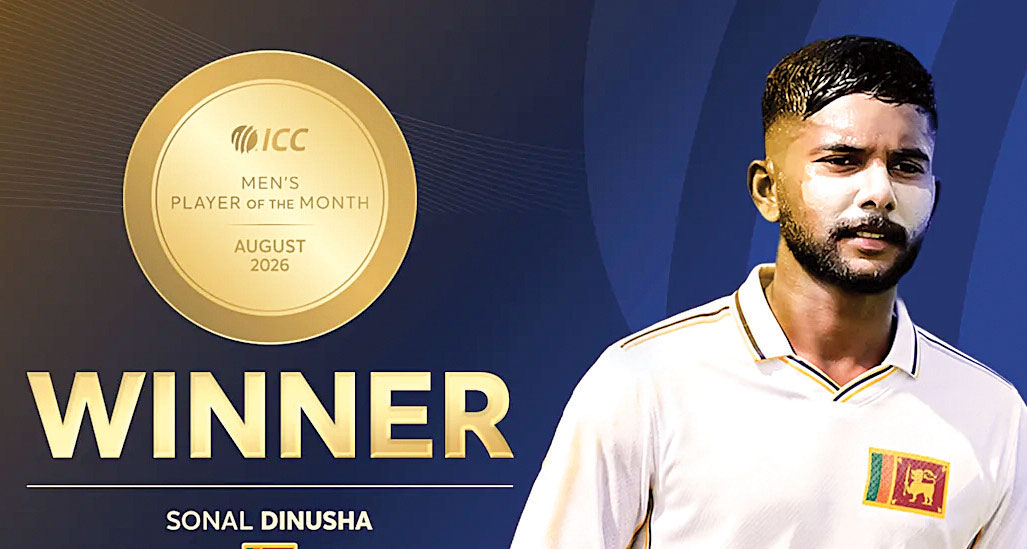
Sonal Dinusha has been named the ICC Men’s Player of the Month for August 2026.
This marks Dinusha being crowned with the accolade for the first time in his career.
Having played only three Tests for Sri Lanka coming into the ICC World Test Championship series against India, the left-handed batter was the leading run-getter in the two-match series.
Dinusha finished with 420 runs, averaging a spectacular 140, with three centuries and a half-century to his name.
“This recognition means so much to me, especially so early in my career, and I’m truly grateful to the ICC for this honour,” Dinusha said while reflecting on his latest achievement.
While Sri Lanka lost the first Test by 165 runs, Dinusha managed to score 100 in the first innings, followed by 84 runs in the second.
In the second Test, with the hosts battling to avoid a series sweep, Dinusha scored twin centuries in the two innings (103 and an unbeaten 133) to orchestrate a famous draw.
“The series against India will always hold a special place in my heart,” Dinusha added.
“Scoring three centuries was a dream come true, made even more meaningful by achieving them in Colombo and Galle in front of our home fans. “Although we didn’t get the overall result we hoped for, the way our team fought back in the second match showed the character, belief and determination we have as a side. I’m proud to have shared that fight with my teammates.
Dinusha made his Test debut for Sri Lanka last year, during the home series against Bangladesh.
In a short time, the all-rounder has made a big impact while representing his team in the longest format, an achievement he isn’t taking for granted.
“Representing Sri Lanka is a privilege I never take for granted, and this recognition gives me even more motivation to keep learning, improving and contributing to the team.
“I’ll continue to give my very best for Sri Lanka in the months and years ahead.”
The hosts managed to keep the series at 1-0, and Dinusha was named the Player of the Match in Colombo. [ICC]
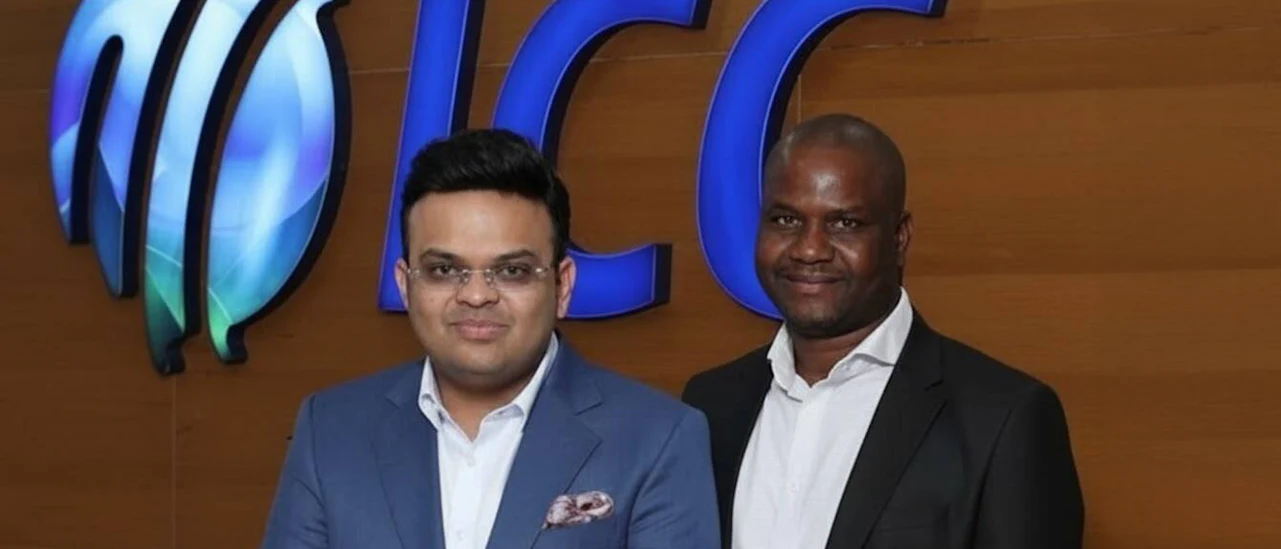
The International Cricket Council (ICC) has appointed Tavengwa Mukuhlani as its Deputy Chairperson through November 2027.
Mukuhlani, who currently serves as the Chairman of Zimbabwe Cricket and represents the nation on the ICC Board, is set to take over the position from Imran Khwaja, following the latter’s departure.
Mukuhlani serves on the ICC Finance and Commercial Affairs (F&CA) and Nominations Committees, and he chairs the HR and Remuneration Committee. He will become the first Zimbabwean to be appointed as the Deputy Chair of the ICC.
His appointment comes at a pivotal moment for African cricket as Zimbabwe prepare to co-host the ICC Men’s Cricket World Cup 2027 alongside South Africa and Namibia. Leveraging his extensive leadership at Zimbabwe Cricket and regional expertise, Mukuhlani will provide valuable direction as the ICC brings the flagship tournament back to Africa for the first time in 24 years.
ICC Chairman, Jay Shah said, “I warmly congratulate Tavengwa Mukuhlani on his appointment as Deputy Chair of the ICC. “His experience in cricket administration, understanding of the global game and commitment to its development will be invaluable to the ICC Board.
“Tavengwa has earned the confidence of his fellow Directors, and I look forward to working closely with him to strengthen cricket across our Members and create greater opportunities for the game to grow worldwide. His election is also a significant milestone for Zimbabwe, as he becomes the first Zimbabwean to serve as Deputy Chair.
“With cricket expanding globally and returning to the Olympic Games, strong leadership will be vital. I wish Tavengwa every success in his new role.”
Tavengwa Mukuhlani said, “I am deeply honoured by the confidence placed in me by my fellow ICC Board Directors and grateful for the opportunity to serve as Deputy Chair of the ICC. “I look forward to working closely with our Chairman, Mr. Jay Shah, whose leadership, energy and ambition have brought a clear sense of purpose to the ICC, with a strong focus on growing cricket, creating opportunities for our Members and reaching new audiences and markets.
“Cricket is entering an exciting period, particularly with its return to the Olympic Games and continued global expansion. I look forward to supporting our Chairman, Mr. Jay Shah and fellow board directors in advancing our shared priorities and serving the best interests of cricket globally.”
[ICC]
Latest News
Isle of Man teenage all-rounder Lucy Barnett ICC Women’s Player of the Month for August 2026

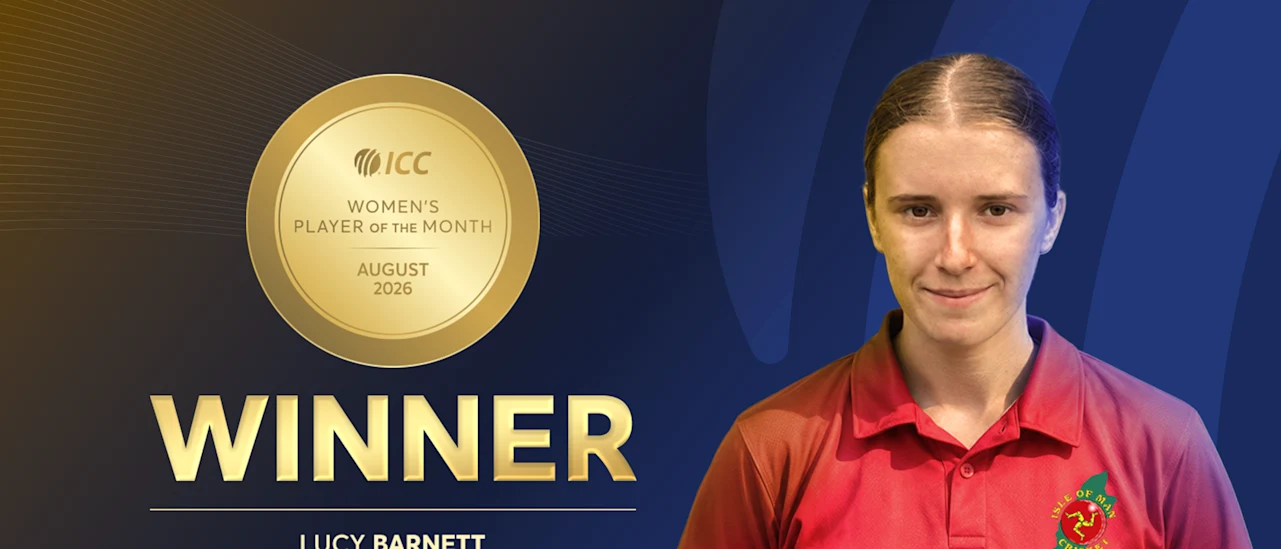
Lucy Barnett played a pivotal role in Isle of Man’s run to the Women’s Continental Cup final, finishing the tournament as the leading run-scorer.
The 19-year-old beat competitions from Suleeporn Laomi and Nannapt Koncharoenkai of Thailand to the award.
She enjoyed an outstanding campaign, registering a century and two fifties across the competition.
Barnett began with an unbeaten 71 against Romania, guiding Isle of Man to a comfortable run chase in just 13.1 overs.
After scoring only four runs against Greece, she responded in spectacular fashion against Norway, smashing an unbeaten 123 from 64 balls to help her side finish top of the group.
She also made an impact with the ball in those two matches, taking 1/8 against Greece and 1/11 against Norway.
Her strong run continued in the final against Turkey, where she was Isle of Man’s highest scorer with a 59, while also contributing two wickets for 22 runs.
Across four T20Is, Barnett amassed 257 runs at an exceptional average of 128.50 and a strike rate of 178.47.
With the ball, she claimed four wickets at an economy rate of 3.80 and an average of 14.25.
Speaking on the recognition, Barnett revealed the award gives her an added motivation to keep performing at the highest level.
“Winning the ICC Player of the Month award is an incredible feeling and, honestly, still feels a little unbelievable as I am making history of sorts for the Isle of Man,” Barnett said.
“I knew I had a strong month, but to be recognised ahead of so many others is something I’m immensely proud of and will cherish for a very long time.
“It’s a fantastic time for women’s cricket, and to have the spotlight on me now is a truly special feeling.
“I’m grateful to the ICC for this honour and to all my team-mates, coaches and officials who have made my international journey such an enjoyable and rewarding one.
“This award gives me even more motivation to keep pushing myself, and I hope to carry this form into the matches ahead and create many more special moments for my team.”
[ICC]

Bid for Basil’s extradition nears final stage: Police

High blood pressure, diabetes lead to about 80% of deaths in Sri Lanka

Ex-NTC chief in remand over 56 bus permits

Order for calling investment proposals for exploration, development of petroleum resources approved

Fuel market faces fresh pressure as Asian prices rise

Social justice in suspense: Sri Lanka’s welfare legacy in an era of austerity

‘Dates have the highest sugar content to fight Coronavirus’

Sunday Island 27 December – Headlines

#SundayIsland 17th December – Headlines

Sunday Island – 28th March

Sunday Island Headlines – 21 March

Sunday Island – 21st February – Headlines
-

 Latest News7 days ago
Shafali, Deepti power India into sixth T20 Asia Cup final
-

 Latest News6 days ago
Sri Lanka thwart Fatima Sana challenge to secure Asia Cup final spot
-

 News5 days ago
Gnanasara Thero absconding after SC ruling
-

 News6 days ago
Ammunition cache found in old Kandy bungalow
-

 News6 days ago
Green Climate Fund (GCF) Regional Dialogue for East and South Asia will be held from 14 to 17 September 2026 at Cinnamon Life at City of Dreams Hotel, Colombo
-

 News6 days ago
Prof. Pieris says Buddha Dhamma recognised as source of law under Constitution
-

 News7 days ago
Bambalapitiya Railway Station renovated under the “Dream Destination” project opened to the public
-

 Latest News6 days ago
ITS Giuseppe Garibaldi’ departs Colombo