
News
UN goes ahead with fresh probe, seeks funding for project


‘We are having info and evidence repository of 120,000 items’
UN Human Rights Commissioner Michelle Bachelet yesterday (13) said that her Office was going ahead with a fresh investigation in respect of Sri Lanka accountability issues. The declaration was made at the 48th session of the UNHRC.
In her oral update, Bachelet, the former Chilean President, urged the UN member states to provide funding required for the investigation.
Having strongly criticised Sri Lanka over accountability issues, Bachelet said that her Office had begun to implement the accountability-related aspects of Resolution 46/1, pending recruitment of an investigation team.
She said: “We have developed an information and evidence repository with nearly 120,000 individual items already held by the UN, and we will initiate as much information-gathering as possible this year. I urge Member States to ensure the budget process provides the necessary support so that my Office can fully implement this work.
“I encourage Council members to continue paying close attention to developments in Sri Lanka, and to seek credible progress in advancing reconciliation, accountability and human rights.”
The following is the text of her full statement:
I am pleased to update the Human Rights Council on Sri Lanka and the trends and issues identified in my last report. I acknowledge the inputs sent by the Government in preparation for this update, and I note the President’s statement in June that the Government is “committed to work with the UN to ensure accountability” and will implement “necessary institutional reforms.”
I look forward to seeing concrete actions to this effect – in line with the recommendations that have been made in our reports and by various human rights mechanisms – and my Office stands ready to engage.
I also encourage the swift and public release of the reports of the national Commission of Inquiry that was appointed in January 2021, which I understand will complete its mandate by the end of this year, so that its work and recommendations can be assessed.
The current social, economic and governance challenges faced by Sri Lanka indicate the corrosive impact that militarisation and the lack of accountability continue to have on fundamental rights, civic space, democratic institutions, social cohesion and sustainable development.
A new state of emergency was declared in Sri Lanka on 30 August, with the stated aim of ensuring food security and price controls, amid deepening recession. The emergency regulations are very broad and may further expand the role of the military in civilian functions. The Office will be closely monitoring their application.
I note with interest the President’s recent meeting with some civil society leaders, and I encourage broader dialogue and steps to open Sri Lanka’s civic space.
Regrettably, surveillance, intimidation and judicial harassment of human rights defenders, journalists and families of the disappeared has not only continued, but has broadened to a wider spectrum of students, academics, medical professionals and religious leaders critical of government policies. Several peaceful protests and commemorations have been met with excessive use of force and the arrest or detention of demonstrators in quarantine centres.
New regulations on civil society groups are being drafted, and it is widely feared that they will further tighten restrictions on fundamental freedoms. I urge that the draft be made public to allow the broadest possible discussion.
I am concerned by developments in judicial proceedings in a number of emblematic human rights cases. They include the Attorney General’s decision not to proceed with charges against former Navy commander Wasantha Karannagoda in the case of the enforced disappearances of 11 men in 2008 and 2009.
Despite various inquiries, the victims of the Easter Sunday bombings in 2019 and religious leaders continue to call urgently for truth and justice, and a full account of the circumstances that permitted those attacks.
The President’s recent pardon of a former member of parliament, Duminda Silva, who was convicted for killing a politician in 2011, also risks eroding confidence in the rule of law and judicial process.
I am deeply concerned about further deaths in police custody, and in the context of police encounters with alleged drug criminal gangs, as well as continuing reports of torture and ill-treatment by law enforcement officials.
In March, new “de-radicalization” regulations were issued that permit arbitrary administrative detention of individuals for up to two years without trial. I note that the Supreme Court has issued an interim stay order on their enforcement while it considers fundamental rights petitions to challenge the decree. The Government has also prescribed or listed over 300 Tamil and Muslim groups and individuals for alleged links to terrorist groups.
In June, 16 prisoners who had been convicted under the problematic Prevention of Terrorism Act, and who were nearing the end of their sentences, were pardoned. An Advisory Board has been established to which detainees under the Act can apply for their cases to be reviewed, and I urge a speedy resolution to these long-standing cases.
The Government has reaffirmed its intention to revisit the Act and established a Cabinet sub-committee for this purpose. However, I am deeply concerned about the continued use of the Act to arrest and detain people.
Lawyer Hejaaz Hizbullah has now been detained for 16 months under the Act without credible evidence presented before a court. Likewise, Ahnaf Jazeem, a teacher and poet, has been detained without charge since May 2020. I urge an immediate moratorium on the use of the Act, and that a clear timeline be set for its comprehensive review or repeal.
A National Policy for Reparations was approved in August, and reparation payments and reconciliation programs have continued. The Office of Missing Persons has also continued to operate – with a sixth regional office opened in Kilinochchi – but it needs to inspire confidence among victims. I stress again the importance of transparent, victim-centred and gender sensitive approaches, and that reparations programs must be accompanied by broader truth and justice measures.
I note also that last month, the Global Alliance of National Human Rights Institutions decided to initiate a special review of the national Human Rights Commission to determine its compliance with the Paris Principles, indicating its concerns about the appointment process of the Commission and its effectiveness in discharging its human rights mandate.


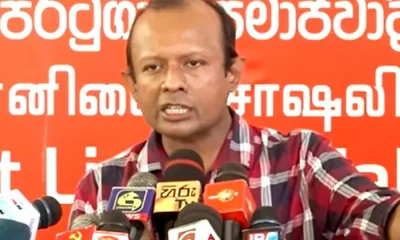

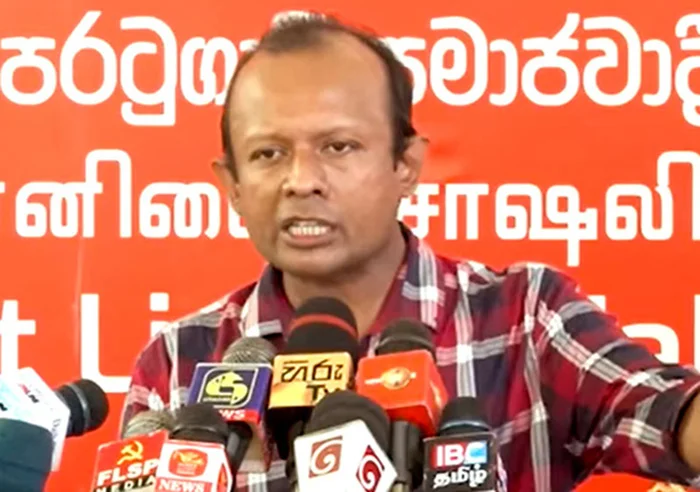
The Frontline Socialist Party (FSP) yesterday accused the government of seeking to use the proposed Protection of the State from Terrorism Act (PSTA) to suppress popular political activity, claiming that some of its provisions were more repressive than those of the Prevention of Terrorism Act (PTA).
FSP Education Secretary Pubudu Jayagoda told a media briefing, in Nugegoda, that the definition of terrorism in the Bill was so broad that it could be used to label almost any form of popular political activity as terrorism.
He said the Bill’s approach to defining terrorism was based largely on attempts to compel a government, or an international organisation, to do, or refrain from doing something, rather than on internationally recognised criteria, such as killings, causing serious bodily harm, kidnapping or acts intended to spread terror among the public.
Jayagoda also alleged that the Bill transferred substantial powers from the judiciary to the executive, while extending powers of arrest, investigation and detention to the armed forces, in addition to the police.
He claimed that the government had sought to portray the Bill as a replacement for the PTA while retaining or introducing provisions that could facilitate political victimisation and repression.
The FSP also questioned the government’s decision to proceed with the Bill, despite having previously sought public views on an earlier draft.
Jayagoda said a draft had been published earlier this year, with the period for public submissions ending on February 28, but the Bill subsequently gazetted was essentially the same draft with some provisions rearranged.
Jayagoda also referred to a letter reportedly sent by Attorney-at-Law Saliya Peiris, a member of a Committee, chaired by President’s Counsel Rienzie Arsecularatne, that had been appointed to draft the legislation. He said Peiris had stated, in the October 06 letter, that changes had been made to the draft prepared by the Committee.
“This means that even the Committee, appointed to prepare the Bill, was a deception,” Jayagoda alleged.
He said that the PSTA was fundamentally similar to the Anti-Terrorism Bill introduced by the previous government, in 2023, which the National People’s Power (NPP) opposed and challenged in court.
“If the NPP opposed that Bill then and is now bringing the same legislation before Parliament, the government must explain its position,” he said.
Jayagoda called on NPP MPs to oppose the PSTA in Parliament and urged trade unions and other groups to build a broad public movement against the legislation.
He challenged the government to an open debate on the Bill.
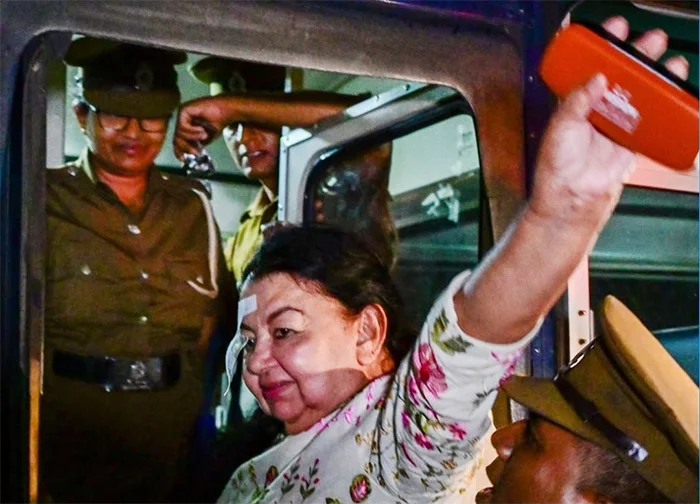
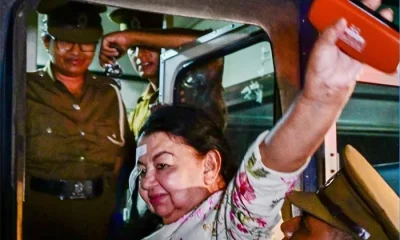
Former First Lady Shiranthi Rajapaksa was yesterday remanded until 13 October after being produced before the Colombo Magistrate’s Court following her arrest by the Commission to Investigate Allegations of Bribery or Corruption (CIABOC).
Shiranthi, wife of former President Mahinda Rajapaksa, was arrested at her residence on Poorwarama Road, Kirulapone, after CIABOC officers recorded a statement from her for nearly two hours.
According to the CIABOC, the arrest was made over allegations that Rs. 10 million obtained from the National Savings Bank through the Siriliya Saviya organisation was misappropriated.
The money was allegedly obtained to provide a Computed Tomography (CT) scanner to the children’s hospital. Investigators allege that the scanner was not provided and that the funds were instead unlawfully used.
CIABOC is investigating alleged offences under the Public Property Act and corruption-related provisions in connection with the transaction and other financial activities involving Siriliya Saviya, which was headed by Rajapaksa.
Rajapaksa returned to Sri Lanka on Monday night on a flight from Malaysia after travelling overseas for medical treatment. She left for Singapore on 16 September after being admitted to a private hospital in Colombo on 15 September following an illness.
She had been due to appear before the Financial Crimes Investigation Division (FCID) on 13 October in connection with its investigation into the financial affairs of Siriliya Saviya.
Meanwhile, her lawyers filed an anticipatory bail application before the Maligakanda Magistrate’s Court on Monday, seeking an order preventing her arrest in connection with the FCID investigation.
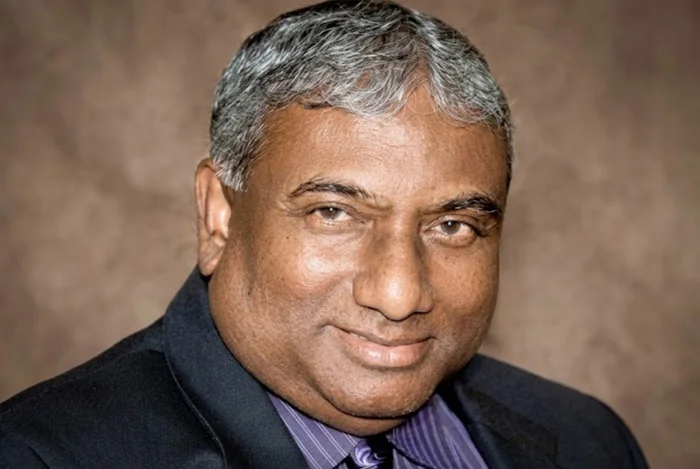
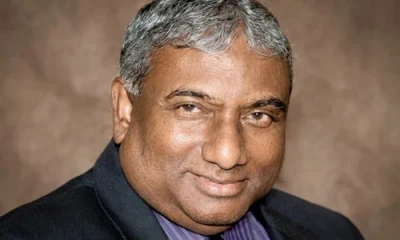
Former National Savings Bank (NSB) Chairman Pradeep Kariyawasam was yesterday granted bail by the Colombo Magistrate’s Court following his arrest by the Commission to Investigate Allegations of Bribery or Corruption (CIABOC).
Kariyawasam, husband of former Chief Justice Shirani Bandaranayake, was arrested in connection with the Bribery Commission’s investigation into the ‘Siriliya Saviya’ account linked to former First Lady Shiranthi Rajapaksa.
The investigation concerns financial activities involving the Siriliya Saviya initiative, which was headed by Rajapaksa, wife of former President Mahinda Rajapaksa.
CIABOC is continuing investigations into the alleged financial irregularities relating to the account.

Showers above 100 mm are likely at some places in the Western, Sabaragamuwa, Central, Uva and Southern provinces and in Anuradhapura district

PSTA worse than PTA: FSP

Shiranthi R remanded until 13 Oct.

Former NSB Chairman Kariyawasam granted bail

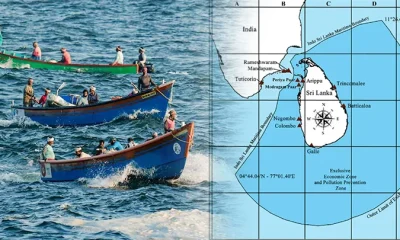
Katchatheevu row: India SC urges fishermen to avoid Sri Lankan waters

Remembering Juvenal, Coke, Acton and Machiavelli

‘Dates have the highest sugar content to fight Coronavirus’

Sunday Island 27 December – Headlines

#SundayIsland 17th December – Headlines

Sunday Island – 28th March

Sunday Island Headlines – 21 March

Sunday Island – 21st February – Headlines
-

 Editorial6 days ago
Colombo Port drug bust: The plot thickens
-

 Features4 days ago
The first woman in the foreign service or Ceylon Overseas Service it was then called
-

 Editorial5 days ago
Fuelling discontent and protest
-

 News3 days ago
Geneva takes up Sallay’s case and govt. ignores opportunity to answer accusations
-
 Foreign News5 days ago
Ten injured after car crashes into rugby supporters in Australia
-

 Latest News5 days ago
Tharindu Rathnayake, bowlers secure Asian Games Bronze for Sri Lanka
-

 News4 days ago
Nearly 20 Iranian tankers stranded off Lanka amid US sanctions
-

 Features3 days ago
Sri Lanka Cricket Bill: Governance reform is not yet a cricket strategy